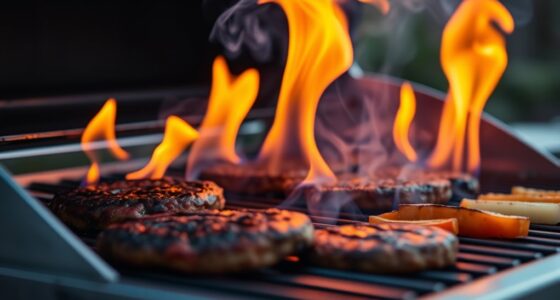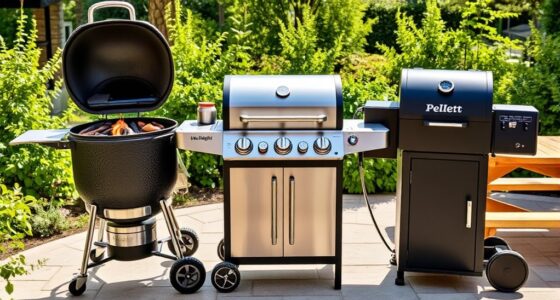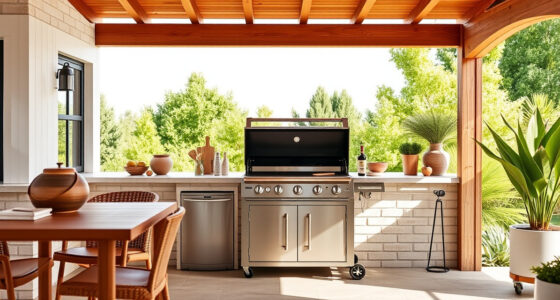
To grill indoors safely, guarantee your smoke detectors are working properly, and keep them away from the grill or have a hush feature to prevent false alarms. Use your kitchen exhaust fan or open windows to maintain good airflow, and add portable air purifiers if needed. Always position the grill away from flammable materials, keep a fire extinguisher nearby, and never leave it unattended. For essential safety tips and setup ideas, continue exploring these important guidelines.

Get kitchen gear delivered free with Prime
- Fast, free delivery on millions of items
- Prime Video, Amazon Music and more included
- Member-only deals all year
Key Takeaways
- Ensure smoke detectors are working and placed away from the grill to minimize false alarms.
- Use a powerful exhaust fan and open windows to maximize ventilation during grilling.
- Keep a fire extinguisher nearby and never leave the grill unattended.
- Regularly clean the grill to prevent grease fires and check ventilation systems before use.
- Use long-handled tools and wear heat-resistant gloves to prevent burns and injuries.
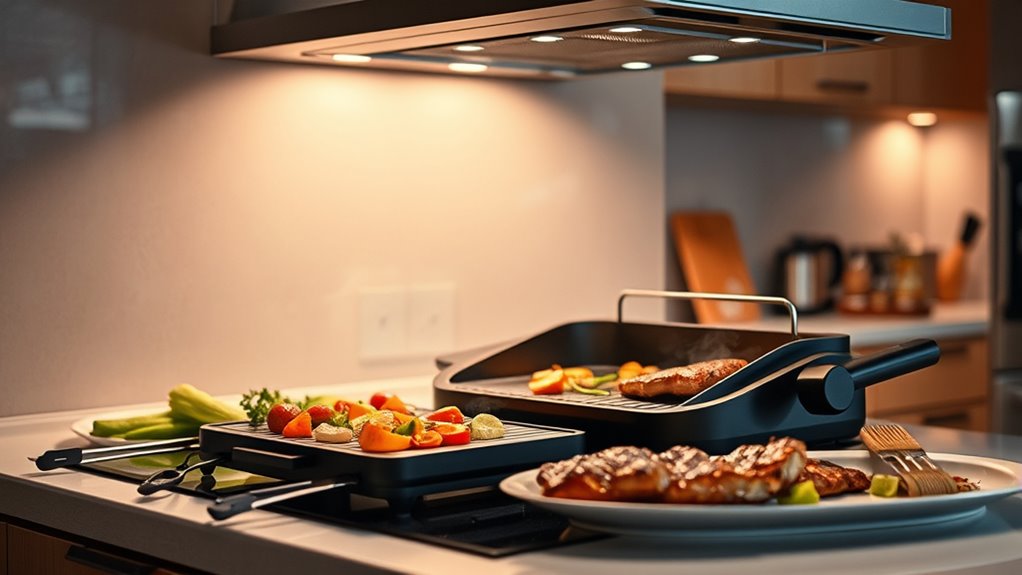
Grilling indoors can be a great way to enjoy flavorful meals year-round, but it’s essential to prioritize safety. One of the most important precautions is ensuring your smoke detectors are functioning properly before you start cooking. Smoke detectors act as your first line of defense, alerting you quickly if smoke or fire begins to develop. Test them regularly and replace batteries as needed so you won’t be caught off guard. Keep in mind that some cooking fumes and smoke can set off detectors, so consider installing detectors with a hush feature or placing them at a safe distance from the grill. This way, you can avoid unnecessary alarms while still maintaining safety.
Ensure smoke detectors work properly and are placed safely before indoor grilling.
Ventilation is equally critical when grilling indoors. Without proper ventilation, smoke and fumes can quickly build up, making the air unpleasant and potentially dangerous. Use your kitchen’s exhaust fan if it’s powerful enough to handle smoke, and keep windows open whenever possible. If your space has a dedicated ventilation system, ensure it’s clean and working efficiently — it should effectively draw out smoke and odors. You might also consider adding a portable air purifier with a HEPA filter to help remove airborne particles and improve air quality. Always avoid grilling in confined spaces with poor airflow, as this increases the risk of smoke inhalation and even carbon monoxide buildup if using certain types of grills.
When setting up your indoor grilling station, position the grill near a ventilation source and away from flammable materials. Keep a fire extinguisher nearby, and familiarize yourself with how to use it in case of emergency. Never leave the grill unattended while it’s in use, and make sure that children or pets are kept at a safe distance. Use long-handled tools to avoid burns and splatters, and wear appropriate protective gear like heat-resistant gloves. Remember that even with all safety measures in place, indoor grilling still involves risks, so always stay alert and prepared.
In addition, regularly clean your grill to prevent grease buildup, which can ignite unexpectedly. Check that your smoke detectors are active and respond quickly, and double-check your ventilation system before turning on your grill. Incorporating proper safety technology such as high-quality smoke detectors can significantly enhance your safety measures. By taking these simple but essential steps, you’ll create a safer environment for indoor grilling, allowing you to enjoy delicious, smoky meals without worry. Prioritizing smoke detectors and ventilation is key to making your indoor grilling experience safe and enjoyable all year round.
Frequently Asked Questions
Is It Safe to Use a Charcoal Grill Indoors?
No, it’s not safe to use a charcoal grill indoors. Grill safety is vital, and charcoal produces dangerous carbon monoxide and fumes that can quickly accumulate in enclosed spaces. Always guarantee proper indoor ventilation if you’re using any grill indoors, but for charcoal, it’s best to avoid indoor use altogether. Instead, opt for electric or propane grills designed for indoor use to keep your space safe.
What Ventilation Is Necessary for Indoor Grilling?
A little ventilation goes a long way, so you need to prioritize fresh air when indoor grilling. Make certain your space has a powerful ventilation system or exhaust fan that can remove smoke, fumes, and odors effectively. Keep windows open if possible, and use a range hood that vent directly outside. Good air quality depends on proper ventilation, so don’t skip this step—your health and safety depend on it.
Can I Use a Propane Grill Inside My Apartment?
You shouldn’t use a propane grill inside your apartment because it’s unsafe. Indoor grilling safety requires proper ventilation, which propane grills lack. Using one indoors can lead to dangerous carbon monoxide buildup, risking health and fire hazards. Instead, opt for electric grills designed for indoor use, ensuring you follow all manufacturer instructions for ventilation and safety. Always prioritize safety to enjoy grilling without risking your well-being.
How Do I Prevent Smoke Alarms From Going Off?
Think of smoke detector interference as a stubborn gatekeeper that needs convincing. To prevent your smoke alarms from going off, make certain of proper ventilation, like using exhaust fans or opening windows, to improve indoor air quality. Regularly clean smoke detectors to remove dust and grease, and avoid excessive smoke or fumes while grilling. These steps keep your indoor air fresh and your alarms silent, letting you enjoy your meal without interruptions.
What Are the Best Indoor Grilling Tools and Accessories?
You should invest in quality grill accessories like a non-stick grill pan and a reliable indoor grill. Use cooking utensils such as tongs, spatulas, and basting brushes to handle food easily. Look for accessories designed for indoor use, like drip trays and temperature probes, to guarantee safety and convenience. These tools help you achieve great results while keeping your indoor grilling safe, efficient, and enjoyable.
Conclusion
Just like Icarus learned when he flew too close to the sun, taking shortcuts with safety can lead to disaster. But by following these simple tips, you’ll enjoy delicious grilled meals indoors without risking harm. Remember, safety is your shield, and patience is your guide. When you respect the limits and handle your grill carefully, you create a moment of triumph—warm, smoky flavors and peace of mind—without the danger. Grill smart, stay safe, and savor every bite.
Halloween Picks
halloween
As an affiliate, we earn on qualifying purchases.