
To make your charcoal last longer, focus on controlling airflow by adjusting vents for steady, moderate oxygen flow. Store your charcoal properly in a dry, airtight container to prevent moisture from reducing efficiency. Arrange the coals neatly in a mound or use a chimney starter for quick, even ignition. Keep the temperature steady by using a lid and avoiding high flames. For more tips on boosting efficiency, continue exploring these proven techniques.
Key Takeaways
- Store charcoal in a dry, airtight container to prevent moisture absorption and maintain ignition efficiency.
- Use a chimney starter for quick, even lighting and reduced fuel waste.
- Arrange charcoal in a compact, stable mound to improve airflow and combustion.
- Adjust vents and dampers to control airflow, maintaining steady, low heat for longer burn times.
- Keep the lid closed as much as possible to retain heat and extend charcoal burn duration.
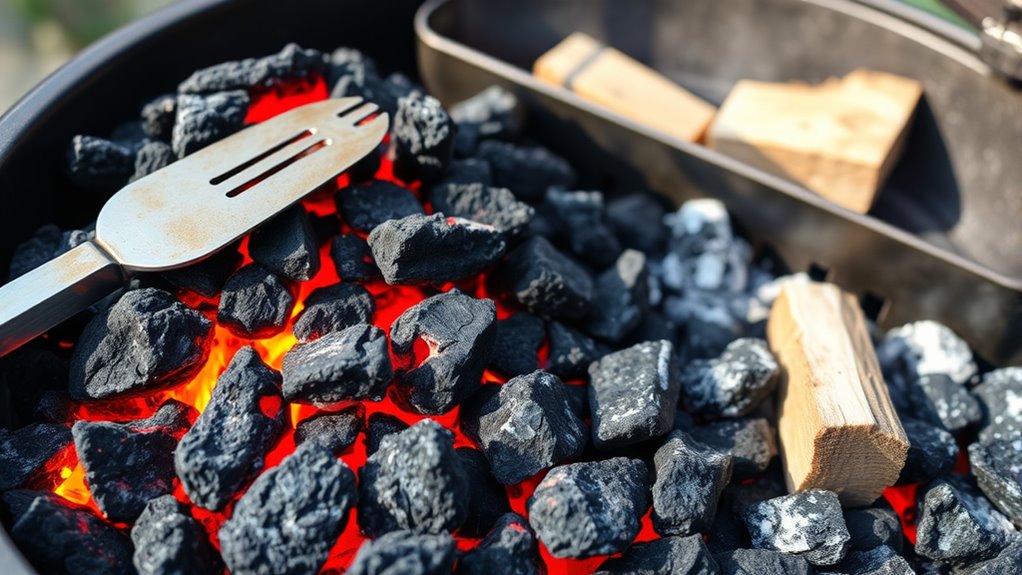
If you want your charcoal to burn longer and save money, there are simple steps you can take to maximize its lifespan. One of the most effective ways is through airflow optimization. Proper airflow controls how efficiently your charcoal burns. When your grill or fire pit has good ventilation, oxygen reaches the coals evenly, promoting a steady, consistent burn. Avoid overcrowding the fire chamber, as too many coals packed closely together can suffocate the burn and cause uneven combustion. Use adjustable vents or dampers to fine-tune airflow—opening them slightly allows just enough oxygen for a controlled burn, while closing them slightly can slow the burn rate when you want longer-lasting heat. Remember, the goal is to maintain a steady, moderate airflow that keeps your charcoal burning efficiently without wasting fuel.
Optimize airflow with vents and avoid overcrowding for longer-lasting, efficient charcoal burns.
Additionally, understanding how airflow dynamics influence combustion can help you better control your burn rate and fuel efficiency. Equally important is how you store your charcoal. Proper charcoal storage prevents moisture absorption, which can substantially reduce its burning efficiency. Always keep your charcoal in a dry, airtight container or a sealed plastic bag if possible. Moisture causes the charcoal to produce more smoke and burn less effectively, leading to wastage. If you purchase charcoal in bags, store the unopened bags in a cool, dry place away from humidity and rain. Once opened, transfer the charcoal into a sealed container to prevent exposure to air and moisture. Keeping your charcoal dry ensures it ignites easily and burns longer once lit, giving you more heat per load.
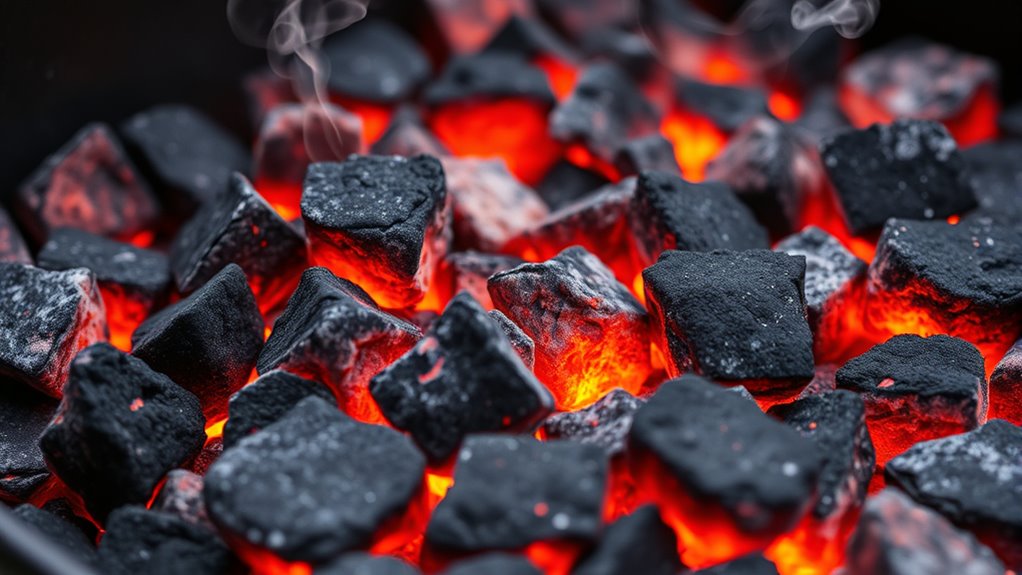
In addition to airflow and storage, consider how you stack and arrange your charcoal. Creating a stable, well-organized mound or pile helps improve airflow within the fire. Avoid loose or uneven arrangements that restrict oxygen flow. Using a chimney starter can also help you ignite your charcoal more efficiently, reducing the need for excess lighter fluid that can cause uneven burns and waste fuel. Once your coals are glowing and covered in ash, spread them evenly across the grill for consistent heat. This even distribution ensures all coals burn uniformly, extending their lifespan and improving fuel efficiency.
Finally, adjusting your cooking technique can also make a difference. When you need longer heat, try to maintain a lower, steady temperature instead of high, fluctuating flames. Using a lid to trap heat maximizes the energy from your charcoal, making it last longer. Combine these strategies—airflow optimization, proper charcoal storage, organized stacking, and mindful cooking—to get the most out of your charcoal and save money over time.
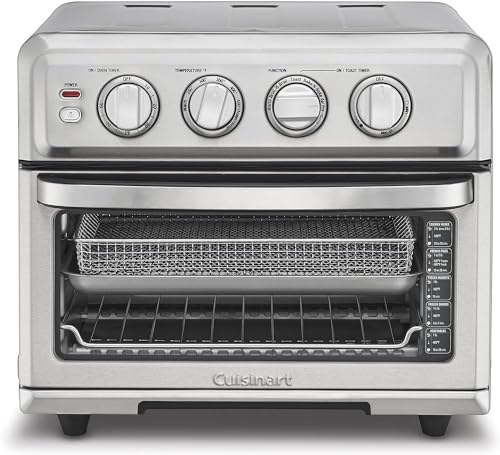
Cuisinart Air Fryer Toaster Oven, 1800W, 8-in-1 with Air Fry, Convection, Broil & Warm, 0.6 Cubic Feet, 60-Minute Timer, TOA-70NAS, Stainless Steel
- Cooking Functions: Air fry, toast, bake, broil, grill, warm
- Large Capacity: Toast 6 slices, air fry 3 lbs., 12" pizza
- Easy Operation: Adjustable temperature, 60-min timer, toast shade
As an affiliate, we earn on qualifying purchases.
Frequently Asked Questions
Can I Reuse Leftover Charcoal for Future Grilling Sessions?
Yes, you can reuse leftover charcoal for future grilling sessions. To do so, store charcoal properly in a cool, dry place in an airtight container or a sealed bag to prevent moisture from ruining it. When you’re ready to grill again, carefully collect the reusable pieces, remove any ash or debris, and you’ll have some charcoal ready to use, saving you money and reducing waste.
What Types of Charcoal Burn the Longest?
You’ll find that lump charcoal tends to burn longer than briquettes because of its natural composition. Hardwood lump charcoal, especially dense types like oak or hickory, offers the best burn duration, giving you more grilling time with fewer refuels. Avoid softer woods or inferior briquettes, as they burn quickly. Choosing high-quality, dense hardwood charcoal maximizes burn duration, so you get more efficient, longer-lasting heat for your grilling sessions.
How Does Weather Affect Charcoal Burning Efficiency?
You’ll notice that weather considerably affects your charcoal’s efficiency. For example, temperature fluctuations can cause inconsistent burning, reducing fuel life by up to 30%. Humidity impacts how well charcoal ignites and sustains combustion, making it burn faster or unevenly. To maximize efficiency, keep your grill sheltered from wind and moisture, and try to cook in stable weather conditions. This way, you’ll get the most out of every load.
Is It Better to Cover or Leave Charcoal Uncovered?
It’s better to leave your charcoal uncovered to improve air circulation, which helps it burn more efficiently. Covering it traps moisture, increasing moisture retention and causing the charcoal to smolder instead of burn steadily. Keeping it uncovered allows excess moisture to escape, ensuring better airflow and combustion. If weather is rainy or humid, use a breathable cover to protect against moisture while still allowing some air circulation for ideal burning.
Can Adding Lighter Fluid Improve Charcoal Longevity?
Think of lighter fluid as a spark that can either ignite a blaze or burn out quickly. Adding lighter fluid can improve charcoal longevity by helping your coals ignite faster and burn more evenly, extending their life. However, too much can cause rapid flare-ups, wasting fuel. Use it sparingly to control the burn, ensuring your charcoal lasts longer and maintains steady heat for your grilling adventure.

Ninja Digital Air Fry Countertop Oven, 8-in-1, XL, Silver, SP101
- Digital Crisp Control Technology: Precise temperature, heat, and airflow control
- 8-in-1 Versatility: Multiple cooking functions in one appliance
- Powerful 1800-Watt Oven: High-performance cooking capacity
As an affiliate, we earn on qualifying purchases.
Conclusion
Remember, a little patience and proper care can go a long way. By controlling airflow, avoiding overloading your grill, and letting your charcoal burn steadily, you’ll get more bang for your buck. Just like a slow and steady hand wins the race, your efforts will stretch your fuel farther. So, take your time, stay attentive, and enjoy the flavorful results. After all, good things come to those who wait—and your charcoal will thank you.
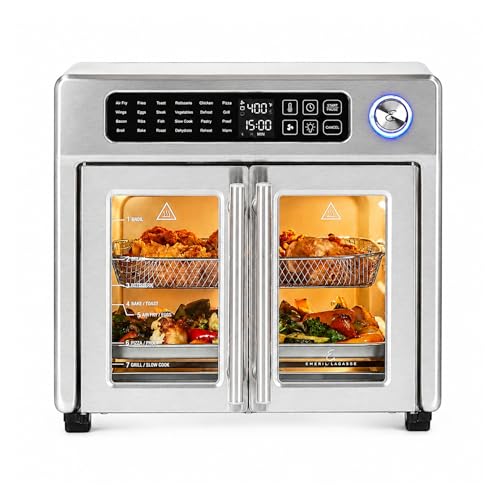
Emeril Lagasse 26QT French Door Multi-Function Air Fryer Toaster Oven
- Versatile Air Fryer and Multi-Cooker: Cooks a variety of meals
- Automatic Toast Shutoff: Prevents burnt toast with auto shutoff
- Indicator Lights for Toasting: Red for toasting, blue when done
As an affiliate, we earn on qualifying purchases.