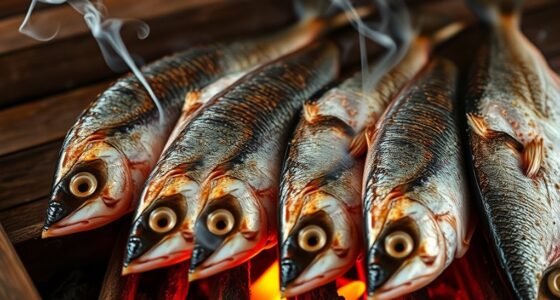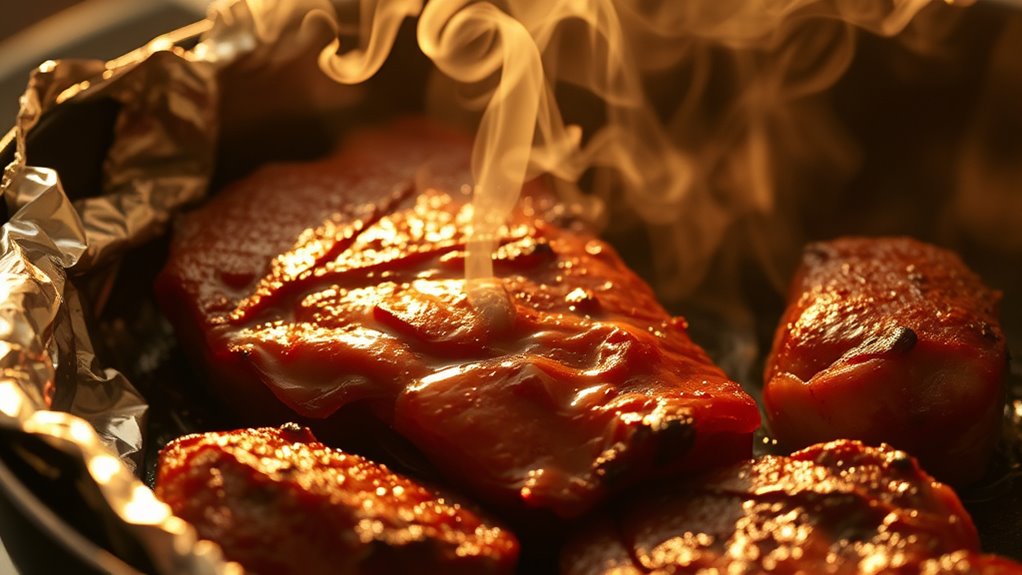
When deciding whether to wrap in foil, use pans, or leave your meat bare, consider your flavor and texture goals. Wrapping speeds up cooking, retains moisture, but limits smoke contact, reducing the smoke ring. Pans promote smoke exposure but need monitoring to prevent dryness. Bare smoking offers maximum smoke absorption and the best smoke ring, ideal for deep smoky flavor. To master the right technique for your barbecue, keep exploring the details ahead.
Key Takeaways
- Wrap with foil for thicker cuts needing moisture, quick cooking, and tenderness; it limits smoke ring development.
- Use pans or racks when you want direct smoke contact, better smoke ring results, and enhanced smoky flavor.
- Go bare for maximum smoke exposure, authentic smoke ring formation, and richer smoky flavor.
- Rest unwrapped or loosely wrapped to allow smoke to settle and juices to redistribute without losing moisture.
- Choose wrapping for speed and moisture retention; opt for bare smoke or pans to maximize smoke ring and smoky flavor.
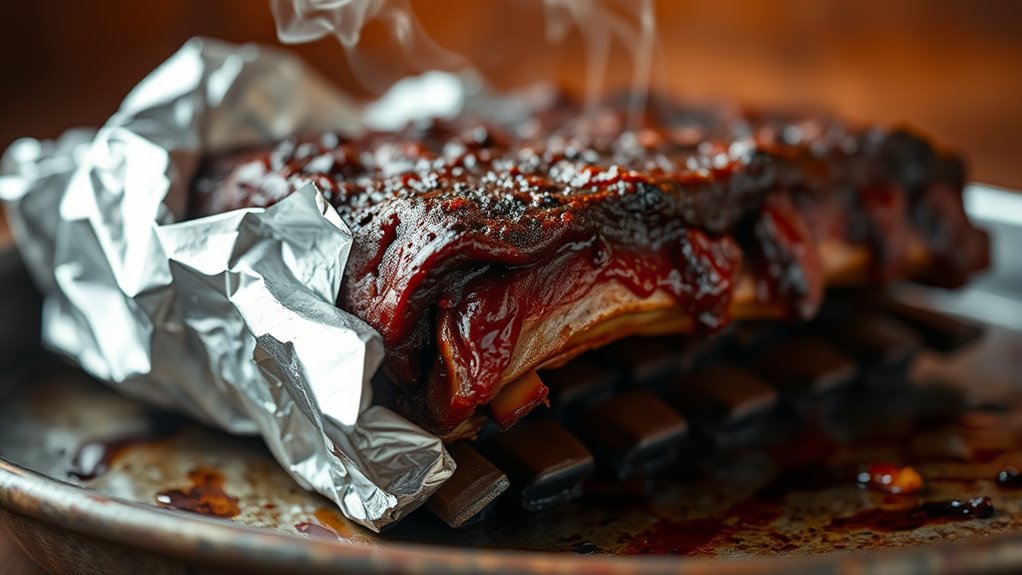
When it comes to smoking food, you might wonder whether to wrap your ingredients in foil, cook them directly on pans, or let them absorb the natural flavor of bare smoke. Each approach affects the final product differently, especially when it comes to developing a perfect smoke ring and ensuring the meat stays juicy. If you’re aiming for that deep, pink smoke ring, understanding resting techniques is essential. After the smoking process, letting your meat rest properly allows the smoke to settle and the juices to redistribute, which enhances flavor and texture. Resting techniques involve wrapping the meat loosely in foil or letting it sit uncovered, depending on the cut and your preferences. Proper resting prevents the meat from losing too much moisture and helps the smoke ring set, giving your dish that authentic, appealing look.
When you’re working with bare smoke, the smoke ring formation becomes more pronounced because the meat is directly exposed to smoke without barriers. The chemical reaction between the myoglobin in the meat and the nitrogen dioxide in the smoke creates that characteristic pink ring. To maximize this effect, it’s best to maintain consistent temperature and smoke exposure during cooking. If you choose to wrap your meat in foil, it’s often done to speed up cooking or retain moisture, but it can diminish the smoke ring since the smoke’s contact is limited. Conversely, using pans can be beneficial for certain foods but might not promote the same smoke ring development.
The decision to wrap or leave your meat unwrapped depends on your goals. Wrapping with foil traps moisture and accelerates cooking, which is handy for thicker cuts or when you want tender, moist results quickly. However, it also limits the smoke’s ability to penetrate the meat, potentially reducing the smoke ring. Cooking directly on pans or racks allows more smoke contact, promoting better smoke ring formation and a richer smoky flavor. But it also requires more attention to prevent dryness, which is where resting techniques come into play. After smoking, resting under loose foil or in a warm place lets residual heat continue to work, redistributing juices and completing the smoke ring development.

Reynolds Wrap Pitmaster's Choice Extra Thick Foil for Grilling, 18 Inch Grill Foil, Withstands High Heat, Extra Wide, 37.5 Total Sq. Ft.
- Package Includes: 25ft x 18in extra thick foil roll
- Extra Wide Coverage: 18-inch width for large cuts
- Superior Strength: Withstands high-heat grilling
As an affiliate, we earn on qualifying purchases.
As an affiliate, we earn on qualifying purchases.
Frequently Asked Questions
How Does Wrapping Affect Meat Tenderness and Moisture Retention?
Wrapping your meat helps preserve moisture and enhances tenderness by trapping juices inside. When you wrap, you prevent excessive evaporation, keeping the meat juicy and soft. This method is especially beneficial during long cooks, as it maintains moisture conservation and ensures a tender texture. You’ll notice a more flavorful, melt-in-your-mouth experience because the meat stays moist and tender throughout the smoking or roasting process.
When Is It Best to Use a Pan Versus Wrapping or Bare Smoke?
You should use a pan when you want to preserve flavor and develop a rich crust, especially during searing or finishing your meat. Wrapping is best when you need to retain moisture and tenderness over long cooks. Bare smoke works well for adding smoky flavor and a crispy exterior. Choose your method based on whether you prioritize flavor preservation, crust development, or moisture retention for the perfect result.
Can Wrapping Prevent Meat From Developing a Smoky Flavor?
Wrapping your meat is like sealing a letter; it prevents smoke penetration, so the rich smoky flavor doesn’t fully infuse. If you want a deep, smoky taste, avoid wrapping early. However, if your goal is tender meat without overwhelming smoke, wrapping can preserve moisture and limit smoke exposure, balancing flavor infusion. So, yes, wrapping can prevent meat from developing a pronounced smoky flavor, depending on when and how you do it.
What Are the Risks of Over-Wrapping or Over-Panning Meat?
Over-wrapping or over-panning meat risks dulling its flavor, as it limits smoke penetration and moisture evaporation. This can extend your cooking time unnecessarily, leading to overly tender or even mushy meat. You might also miss out on developing a desirable crust or bark. To preserve ideal meat flavor and achieve the perfect texture, use wrapping or pans judiciously, balancing moisture retention with smoke exposure.
How Do Different Materials for Pans Influence Cooking Outcomes?
Different pan materials greatly influence your cooking outcomes. Aluminum pans excel in heat conduction, offering quick, even heat that helps you achieve tender results. Cast iron pans are durable and retain heat well, perfect for high-temperature searing. Stainless steel pans provide steady heat but may require more attention. Choosing the right material depends on your cooking style, as it affects heat distribution and pan longevity, ensuring better control over your meat.

ROTTAY Baking Sheet with Rack Set (2 Pans + 2 Racks), Stainless Steel Cookie Sheet with Cooling Rack, Nonstick Baking Pan, Warp Resistant & Heavy Duty & Rust Free, Size 16 x 12 x 1 Inches
- Healthy Material: Made of high-quality stainless steel
- Chemical-Free Baking: No chemical coatings, rust-free
- Corrugated Surface: Reduces sticking and promotes even baking
As an affiliate, we earn on qualifying purchases.
As an affiliate, we earn on qualifying purchases.
Conclusion
Choosing between foil, pans, or bare smoke is like selecting the right path in a journey—each offers a different destination for your meat’s flavor. Wrapping symbolizes protection, pans represent control, and bare smoke invites pure, unadulterated essence. Your decision shapes the story your meat tells. Trust your instincts, embrace the symbolism, and let each method be a chapter in your culinary adventure—where patience and choice craft something truly memorable.
Reynolds Wrap Pitmaster's Choice Extra Thick Foil for Grilling, 18 Inch Grill Foil, Withstands High Heat, Extra Wide, 37.5 Total Sq. Ft.
- Package Includes: 25ft x 18in extra thick foil roll
- Extra Wide Coverage: 18-inch width for large cuts
- Superior Strength: Withstands high-heat grilling
As an affiliate, we earn on qualifying purchases.
As an affiliate, we earn on qualifying purchases.

Iron Forge Tools Smokeless Fire Pit Ring Outdoor Insert 36 Inch Round Steel
- Heavy-Duty Steel Construction: Thicker and stronger than standard rings
- Smokeless, Efficient Burn: Engineered for better airflow and less smoke
- Permanent Fixed Installation: Designed for long-term outdoor use
As an affiliate, we earn on qualifying purchases.
As an affiliate, we earn on qualifying purchases.