Smoking and grilling differ mainly in how they cook your food: smoking uses low, slow heat with smoke infusion for tender, smoky flavors, ideal for tougher cuts, while grilling uses high, direct heat for quick searing and bold tastes, perfect for steaks and vegetables. Each method needs different equipment and delivers distinct textures and flavors. If you want to master both techniques, you’ll find plenty of tips ahead that can help elevate your cooking skills.
Key Takeaways
- Smoking uses low, slow heat and smoke infusion over several hours, while grilling employs high, direct heat for quick cooking.
- Smoking is suited for tougher cuts like brisket and ribs, whereas grilling is ideal for thinner cuts such as steaks and chicken breasts.
- Smoking enhances smoky flavors through wood smoke and long marinade periods; grilling imparts charred, caramelized flavors rapidly.
- Smoking maintains lower temperatures (~225°F) over hours; grilling operates at higher temperatures (~450°F or more) for shorter durations.
- Smoking emphasizes patience and flavor complexity; grilling focuses on quick, high-heat results with a focus on searing and browning.
The Basic Techniques Behind Smoking and Grilling
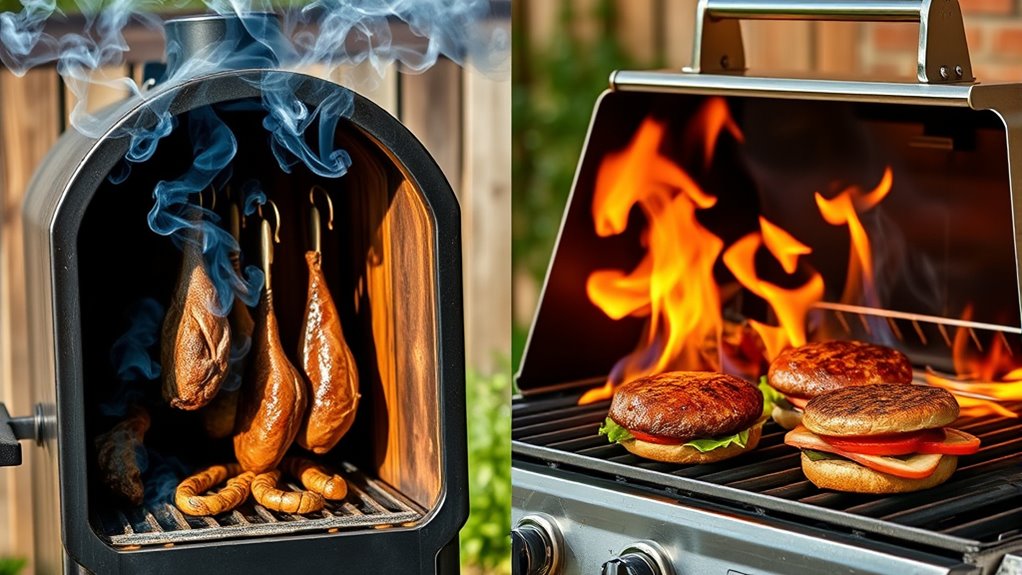
While smoking and grilling both involve cooking over direct or indirect heat, their techniques differ considerably. When you prepare for smoking, you focus on marinade preparation to infuse flavors slowly over hours, allowing the meat to absorb smoky goodness. Grilling, on the other hand, typically involves quick cooking at high temperatures, emphasizing searing and caramelization. After you finish cooking, post cooking cleanup becomes important. With smoking, cleanup may involve removing ash and managing wood chips, while grilling often requires cleaning grates to prevent flare-ups and residue buildup. Both methods demand attention to detail in preparing ingredients and maintaining equipment, but the key difference lies in the slow, flavor-rich process of smoking versus the fast, fiery nature of grilling.
Differences in Equipment and Setup
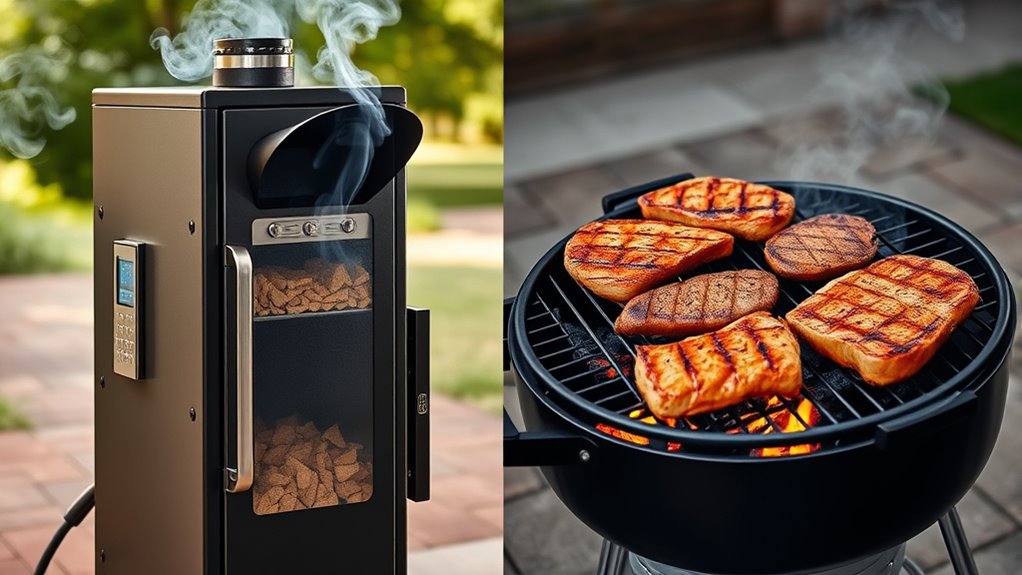
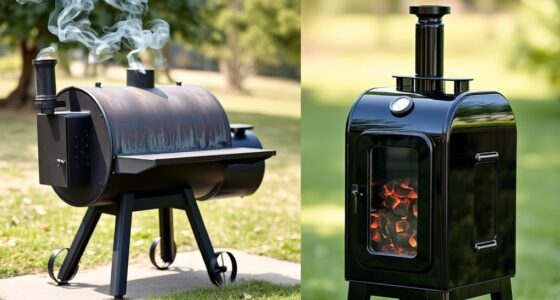
The equipment and setup for smoking and grilling differ considerably because each method requires specific tools to achieve ideal results. For smoking, you’ll need smoke equipment like smokers or offset pits, which hold wood chips or pellets to produce consistent smoke. The setup involves controlling airflow and maintaining low temperatures over a long period. Grilling, on the other hand, relies on a grill setup—either charcoal, gas, or electric—that heats quickly and offers direct heat for searing. Grills are typically more portable and easier to set up for short cooking sessions. While smoking emphasizes steady, low heat with smoke infusion, grilling focuses on high, direct heat for rapid cooking and charring. These distinct equipment choices shape the entire cooking process for each method.
Cooking Times and Temperature Control
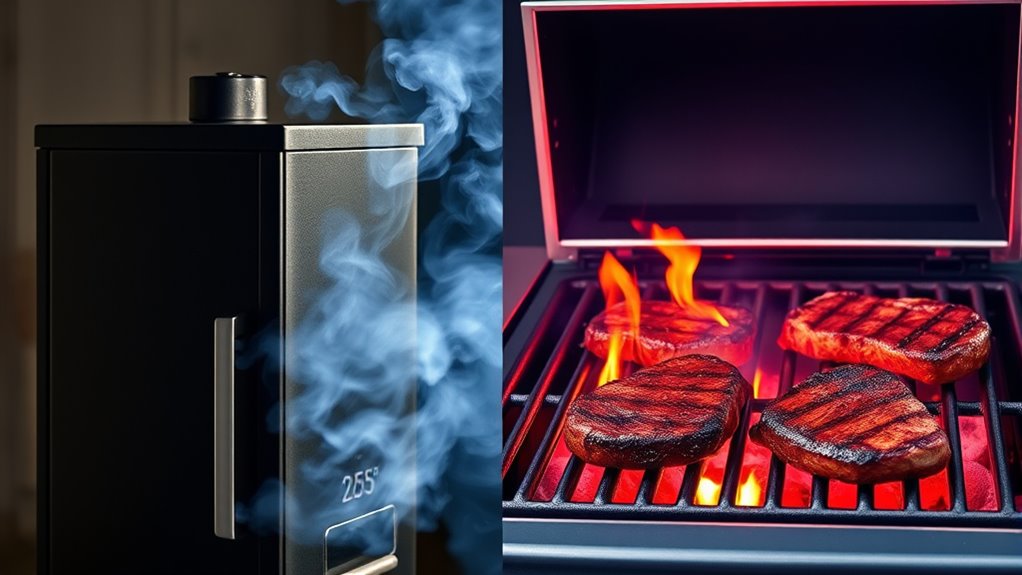
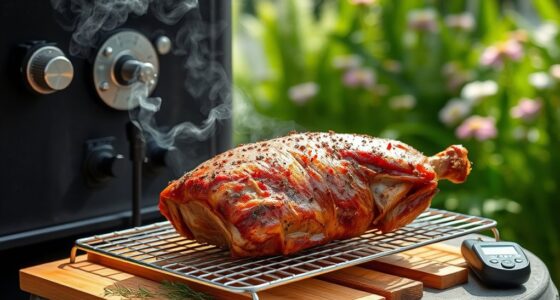
Cooking times and temperature control vary markedly between smoking and grilling, impacting the final flavor and tenderness of your food. When smoking, you typically cook at lower temperatures—around 225°F—using wood chips to add smoky flavor gradually. You’ll need patience, as smoking can take several hours depending on the meat, so precise temperature gauges are essential to maintain consistent heat. Grilling, by contrast, involves higher temperatures—often 450°F or more—and shorter cooking times. You can monitor these temps easily with built-in or external temperature gauges. Wood chips are less common in grilling but can be used for added smoke flavor. Overall, smoking demands careful temperature management over a longer period, while grilling offers quick, high-heat cooking with immediate temperature control.
Flavor Profiles and Ingredients Used
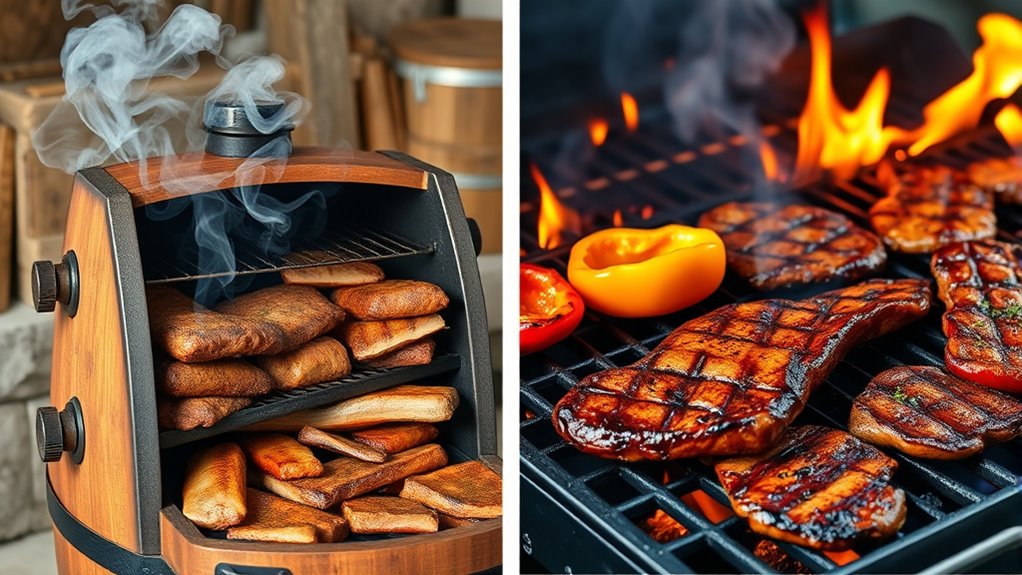
Smoking and grilling produce distinct flavor profiles by employing different ingredients and techniques. When you smoke food, the smoke flavor infuses the meat, creating a rich, smoky taste that varies based on the type of wood used. Marinade ingredients play a key role in flavor development, often including spices, herbs, and acidic components that tenderize and add depth. Grilling, on the other hand, relies on direct heat, which imparts a charred, caramelized flavor. The ingredients used for marinades in grilling tend to focus on quick-acting flavors like citrus, garlic, and soy. Both methods emphasize different flavor dynamics — smoking emphasizes a deep, smoky aroma, while grilling highlights bold, grilled tastes through high heat and caramelization.
Types of Food Best Suited for Each Method
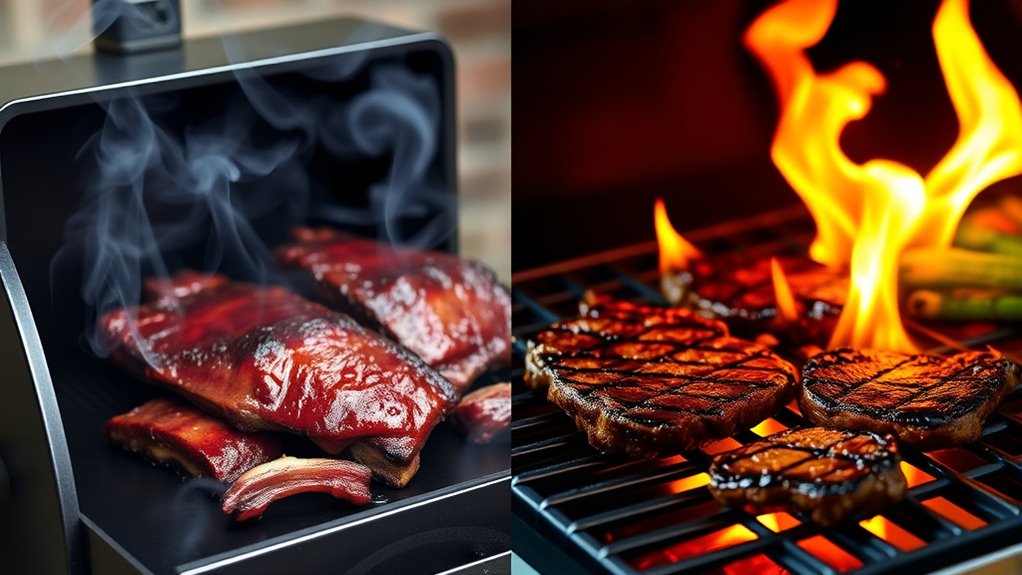
Different types of food respond uniquely to smoking and grilling, making each method ideal for certain dishes. For smoking, tougher cuts like ribs, brisket, and pulled pork work best because the slow process tenderizes the meat and enhances deep flavors. These meats benefit from marinade pairing that complements their smoky profile, such as sweet or spicy rubs. Grilling suits thinner cuts like steaks, chicken breasts, and seafood, which cook quickly and develop a flavorful char. For serving suggestions, smoked meats shine with hearty sides like baked beans or coleslaw, while grilled items pair well with fresh salads or grilled vegetables. Knowing which foods respond best to each method helps you choose the right technique and create memorable meals.
Nutritional Aspects and Health Considerations
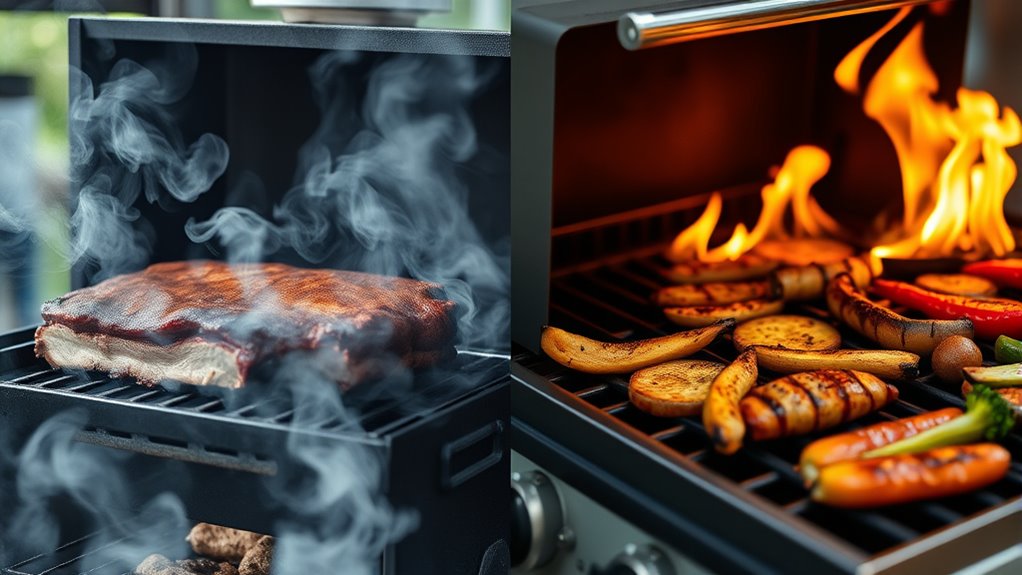
When you choose between smoking and grilling, you should consider how each method affects the nutritional content of your food. Smoke compounds can add flavor but may also introduce health risks, so it’s important to understand their impact. Balancing the potential benefits and risks helps you make healthier choices while enjoying your favorite dishes.
Nutritional Content Variations
While both smoking and grilling can enhance flavor, they also influence the nutritional content of your food in distinct ways. Smoking often results in lower cooking temperatures and longer durations, which can help preserve certain nutrients but may also lead to the formation of potentially harmful compounds affecting smoking health implications. Grilling, on the other hand, typically involves higher heat and shorter cooking times, promoting better grilling nutrient retention, especially of vitamins and minerals that degrade with prolonged heat. However, grilling’s direct exposure to high temperatures can cause nutrient loss and create charred areas, which might contain carcinogens. Understanding these differences helps you choose cooking methods that best preserve the nutritional value of your meals while considering health implications.
Impact of Smoke Compounds
Smoke compounds formed during smoking and grilling can considerably impact both the nutritional quality of your food and your health. These compounds, such as polycyclic aromatic hydrocarbons (PAHs) and heterocyclic amines (HCAs), result from the combustion process and can pose health risks over time. However, they also contribute to flavor infusion, giving smoked and grilled foods their distinctive taste. While smoke compounds can enhance your culinary experience, they may also alter the nutritional profile by introducing potentially harmful substances. To balance flavor and health, it’s essential to control cooking temperatures and duration. Using proper techniques can help you enjoy the rich flavors of smoked and grilled foods without excessive exposure to harmful smoke compounds.
Health Risks and Benefits
Have you ever wondered whether the flavors you love from smoking and grilling outweigh potential health risks? Both methods can produce health concerns, such as secondhand smoke exposure, which can harm those nearby. Grilled meats often contain carcinogens formed when fat drips onto hot surfaces, creating harmful compounds. Smoking, however, introduces more carcinogen formation due to prolonged exposure to smoke and combustion byproducts. Despite these risks, both techniques can be part of a balanced diet if done responsibly. Choosing lean meats, avoiding charring, and ensuring proper ventilation reduce health hazards. Remember, moderation is key. While these cooking styles bring rich flavors, being aware of their health implications helps you make better choices for your wellbeing.
Tips for Perfecting Your Smoke and Grill Creations

Achieving perfect smoke and grill creations requires attention to detail and a few essential techniques. Start with marinade techniques to infuse flavor and tenderize your meat, ensuring it’s juicy and flavorful. Pay attention to presentation styles—colorful garnishes and neatly sliced portions make your dish more appealing. Maintain consistent heat and use a meat thermometer to avoid overcooking or undercooking. Keep your smoke or grill lid closed to preserve heat and smoke, and adjust vents for ideal airflow. Here’s a quick comparison to guide you:
| Smoke | Grill |
|---|---|
| Uses low, slow heat for tender, flavorful results | Uses high heat for quick, charred finishes |
| Emphasizes smoke infusion for deep flavor | Focuses on direct heat for searing and browning |
| Longer cooking times | Shorter, more immediate cooking |
| Ideal for ribs, brisket, and pulled pork | Best for steaks, burgers, and vegetables |
| Requires patience and attention to detail | Quick and straightforward, but still needs technique |
Frequently Asked Questions
Can You Combine Smoking and Grilling in One Cooking Session?
Yes, you can combine smoking and grilling in one session, creating a unique flavor pairing. Start by smoking your meat to infuse deep, smoky flavors, then finish it on the grill for a crispy, caramelized exterior. This method allows you to enjoy the best of both worlds, enhancing your dish’s taste and texture. Just make certain you maintain proper temperature zones for both cooking methods to achieve perfect results.
Which Method Is More Energy-Efficient for Large Quantities?
Did you know that grilling uses roughly 20% less energy than smoking? For large quantities, grilling tends to be more fuel-efficient because it heats up faster and requires less sustained energy. Smoking, with its longer cook times, consumes more energy overall. So, if you’re aiming to save on energy consumption and optimize fuel efficiency for large batches, grilling is your best bet.
How Do Weather Conditions Affect Smoking and Grilling?
Weather conditions greatly influence your smoking and grilling efforts. Humidity effects can make it harder to maintain consistent temperatures, so you might need to adjust your vents or add dry wood to keep the smoke steady. Wind considerations require you to shield your equipment or reposition it to prevent heat loss or flare-ups. Always monitor weather closely and adapt your technique to guarantee your cooking remains even and safe, regardless of the elements.
Are There Safety Risks Unique to Smoking or Grilling?
You should be aware of fire hazards and smoke inhalation risks when smoking or grilling. Fire hazards arise if you don’t monitor your equipment properly, especially near dry leaves or flammable materials. Smoke inhalation can occur if you’re too close to the smoke or if ventilation isn’t adequate. Always keep a fire extinguisher nearby, ensure proper ventilation, and never leave your grill or smoker unattended to stay safe.
What Are the Common Mistakes to Avoid With Each Method?
Think of your cooking techniques as guiding stars—focusing on flavor profiles and avoiding common mistakes elevates your skills. With smoking, don’t rush the low-and-slow process; with grilling, don’t forget to preheat and clean your grill. Overcrowding can trap moisture and hinder flavor, so give your food space. Keep an eye on temperature and timing to prevent overcooking or undercooking, ensuring delicious results every time.
Conclusion
Whether you choose smoking or grilling, remember that each method offers a unique journey—like two roads leading to unforgettable flavors. Embrace the differences, experiment fearlessly, and let your passion guide you. In the end, it’s not just about the food, but the memories you create around the fire. So, pick your path, master it, and savor every bite—because in the world of grilling and smoking, your culinary story is waiting to be told.