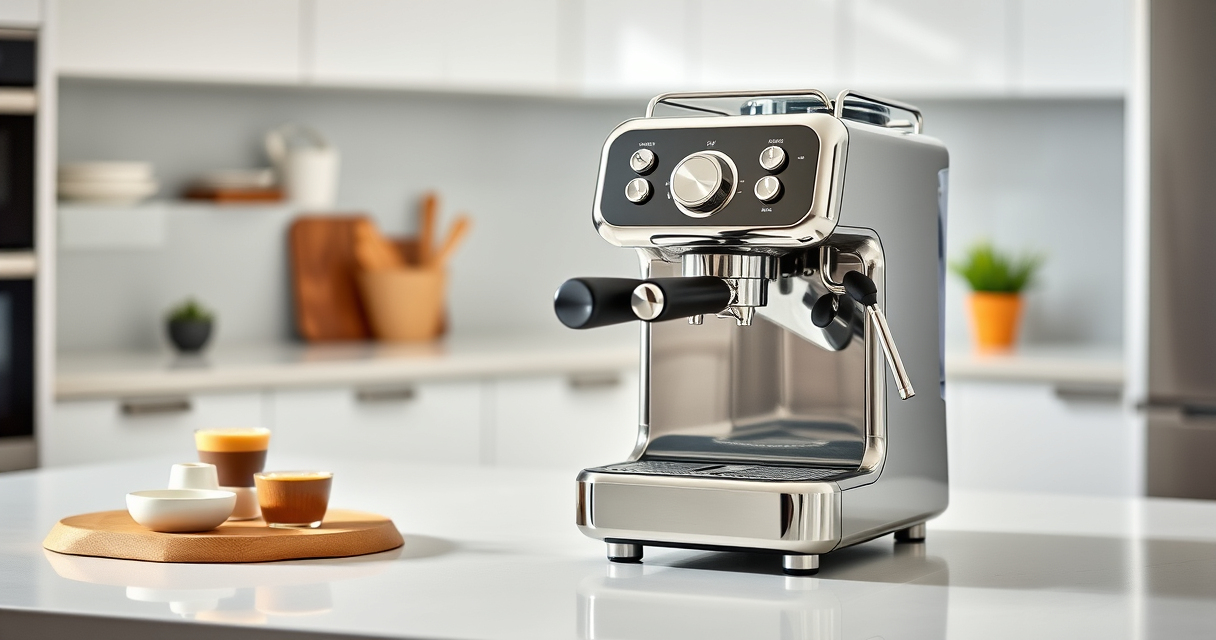
For home baristas who want a capable all-around setup, I rank the Breville Barista Pro as my best overall pick for its built-in grinder and hands-on workflow; the Breville Barista Express is a strong alternative for a more traditional pace, while the De’Longhi Magnifica Evo suits anyone who favors one-touch convenience. The central choice is between controlling each shot yourself and letting an automatic machine handle more of the work. Built-in grinders can simplify the setup, but they also tie your grinder choice to the machine. Milk systems, counter space, and cleaning demands matter just as much as pressure claims. Read on for the full breakdown, selection tips, and answers to common buying questions.

Get kitchen gear delivered free with Prime
- Fast, free delivery on millions of items
- Prime Video, Amazon Music and more included
- Member-only deals all year
Complete the kit


Key Takeaways
- The Breville Barista Pro leads this lineup for baristas who want an integrated grinder and more direct control without choosing separate equipment.
- The Barista Express offers a more measured manual workflow, while the Pro is the better fit for buyers who put a faster, more streamlined routine first.
- The De’Longhi Magnifica Evo and KitchenAid KF7 prioritize push-button drink making over the shot-by-shot involvement offered by semi-automatic machines.
- The KitchenAid semi-automatic with integrated burr grinder sits between bare-bones entry machines and more involved barista setups by combining manual brewing with grinder convenience.
- Touchscreens and cold-brew functions on several listed models add drink options, but buyers should weigh those extras against workflow, cleaning, and the espresso controls they will actually use.
| KitchenAid Semi-Automatic Espresso Machine with Integrated Burr Grinder |  | Best for Hands-On Home Baristas | Model: KES6551BK | Machine type: Semi-automatic | Grinder: Integrated burr grinder with smart dosing | VIEW ON AMAZON | See Our Full Breakdown |
| CASABREWS 3700 Essential Stainless Steel Espresso Machine with Steam Wand |  | Best Compact Entry to Manual Espresso | Machine type: Semi-automatic espresso machine | Pump pressure: 20 bar | Power: 1350 watts | VIEW ON AMAZON | See Our Full Breakdown |
| De’Longhi Magnifica Evo Automatic Espresso Machine with Milk Frother |  | Best for One-Touch Drink Variety | Model: Magnifica Evo | Machine type: Automatic espresso machine | Color: Silver | VIEW ON AMAZON | See Our Full Breakdown |
| KitchenAid KF7 Fully Automatic Espresso Machine, Stainless Steel | 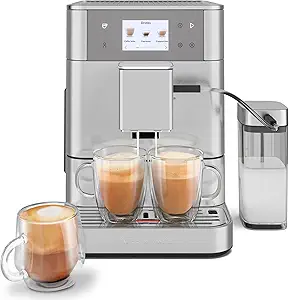 | Best Premium Automatic Convenience | Model: KF7, KES8557 | Machine type: Fully automatic espresso machine | Construction: Metal-clad | VIEW ON AMAZON | See Our Full Breakdown |
| Arecovas Espresso Machine with 20-Bar Pressure, Touch Screen, and Milk Frother |  | Best Compact Machine with Shot Controls | Machine type: Semi-automatic espresso machine | Pressure: 20 bar | Power: 1300 watts | VIEW ON AMAZON | See Our Full Breakdown |
| Canoly Fast Cold Brew Espresso Machine with Grinder and Capsule Handle, Black |  | Best for Brewing Variety | Grinder: Built-in conical burr grinder | Grind settings: 44 | Cold brew time: 50–300 seconds | VIEW ON AMAZON | See Our Full Breakdown |
| Breville Barista Express Espresso Machine, Brushed Stainless Steel |  | Best for Hands-On Espresso Craft | Model: BES870XL | Grinder: Integrated precision conical burr grinder | Water tank capacity: 67 oz | VIEW ON AMAZON | See Our Full Breakdown |
| atatix Espresso Machine with Milk Frother |  | Best Compact Starter | Pressure: 20 bar | Temperature control: NTC precision control, 90–96°C | Preheat time: 30 seconds | VIEW ON AMAZON | See Our Full Breakdown |
| 20-Bar Espresso Machine with Milk Frother, Touchscreen, and Cold Brew Function |  | Best for Guided Controls | Pump pressure: 20 bar | Power: 1350 W | Temperature control: PID | VIEW ON AMAZON | See Our Full Breakdown |
| Breville Barista Pro Espresso Machine with Grinder, Brushed Stainless Steel |  | Best Premium All-in-One | Model: BES878BSS | Grinder: Integrated precision conical burr grinder | Heating system: ThermoJet; reaches extraction temperature in 3 seconds | VIEW ON AMAZON | See Our Full Breakdown |
| espresso machines for home baristas top picks tip | Grinder | Power | Water tank capacity | Model |
|---|---|---|---|---|
| KitchenAid Semi-Automatic Espr | Integrated burr grinder with smart dosing | 1500 watts | — | KES6551BK |
| CASABREWS 3700 Essential Stain | — | 1350 watts | 43.9 ounces | — |
| De’Longhi Magnifica Evo Automa | Conical burr | — | — | Magnifica Evo |
| KitchenAid KF7 Fully Automatic | Built-in with automatic smart dosing | — | — | KF7, KES8557 |
| Arecovas Espresso Machine with | — | 1300 watts | 1.2 liters (41 ounces) | — |
| Canoly Fast Cold Brew Espresso | Built-in conical burr grinder | — | 1.8 L | — |
| Breville Barista Express Espre | Integrated precision conical burr grinder | 1600 W | 67 oz | BES870XL |
| atatix Espresso Machine with M | — | — | — | — |
| 20-Bar Espresso Machine with M | — | 1350 W | 45 oz | — |
| Breville Barista Pro Espresso | Integrated precision conical burr grinder | 1680 W | 67 oz | BES878BSS |
More Details on Our Top Picks
KitchenAid Semi-Automatic Espresso Machine with Integrated Burr Grinder
The integrated burr grinder with smart dosing makes this a strong fit for home baristas who want to manage extraction without buying a separate grinder. Its 58mm portafilter brings a familiar, substantial format to puck preparation, while the multi-angle steam wand gives more control over milk texture than the automatic milk system on the KitchenAid KF7. Fast-heating technology also cuts the wait between switching the machine on and making a drink. The tradeoff is a more involved routine: grinding, dosing, tamping, and steaming still call for practice. At 23.5 pounds, it is also less convenient to move than a compact countertop machine. I’d choose it over the CASABREWS 3700 when an integrated grinder and larger portafilter matter more than portability.
Pros:- Integrated burr grinder with smart dosing simplifies grinding and portioning.
- 58mm portafilter supports a substantial, hands-on puck-preparation workflow.
- Multi-angle steam wand allows manual milk texturing for different drinks.
- Fast-heating technology reduces the wait before brewing.
Cons:- Semi-automatic brewing requires hands-on preparation and practice.
- At 23.5 pounds, it is cumbersome to move or store.
Best for: Home baristas who want an integrated grinder, a 58mm portafilter, and manual control over espresso and milk preparation.
Not ideal for: Buyers who want one-touch drinks or need to move the machine regularly; its semi-automatic workflow takes practice, and its weight makes relocation less convenient.
- Model:KES6551BK
- Machine type:Semi-automatic
- Grinder:Integrated burr grinder with smart dosing
- Portafilter:58mm
- Water capacity:2.5 liters
- Power:1500 watts
- Dimensions:11 x 13.1 x 15.4 inches
- Weight:23.5 pounds
- Construction and color:Metal; Cast Iron Black
Our verdict“Choose this KitchenAid if you want a grinder-equipped machine that leaves espresso and milk preparation in your hands, rather than automating the drink as the KitchenAid KF7 does.”
CASABREWS 3700 Essential Stainless Steel Espresso Machine with Steam Wand
The CASABREWS 3700 keeps the setup straightforward for someone learning semi-automatic espresso: add ground coffee to the included one- or two-cup filter, brew, then use the steam wand for milk. Unlike the KitchenAid Semi-Automatic, it has no integrated grinder, so buyers can choose their own grinder but must plan for that extra step and equipment. Its 43.9-ounce removable tank and drip tray make routine refilling and cleanup easier, and the compact design suits a home counter or office. The listed 20-bar pump is not a substitute for grinder control or a pressure gauge, which this model lacks. A first-use cycle is also required before brewing. I’d pick it for an uncomplicated starting point, not for the most informative or adjustable barista workflow.
Pros:- Compact design suits home counters and office setups.
- Removable 43.9-ounce tank and drip tray simplify refilling and cleaning.
- Includes stainless steel one-cup and two-cup filters.
- Steam wand supports milk frothing for espresso-based drinks.
Cons:- No integrated grinder, so fresh grinding requires separate equipment.
- No pressure gauge to show brewing pressure.
- A first-use cycle is needed before brewing.
Best for: New home espresso makers who already have ground coffee or a separate grinder and want a compact machine with a steam wand.
Not ideal for: Buyers seeking an all-in-one grinder setup or clear pressure feedback; it has no built-in grinder or pressure gauge.
- Machine type:Semi-automatic espresso machine
- Pump pressure:20 bar
- Power:1350 watts
- Voltage:120 volts
- Water tank capacity:43.9 ounces
- Coffee input:Ground coffee
- Included filters:One-cup and two-cup stainless steel filters
- Milk frothing:Steam wand
- Color:Silver
Our verdict“Pick the CASABREWS 3700 for a compact, ground-coffee setup with a steam wand, but choose the KitchenAid Semi-Automatic if you want a grinder built in.”
De’Longhi Magnifica Evo Automatic Espresso Machine with Milk Frother
The Magnifica Evo is the clearest choice here for buyers who want a broad menu without manually preparing every shot. Its seven one-touch recipes cover drinks such as espresso, cappuccino, latte macchiato, and iced coffee, while “My Latte” lets users customize a recipe. The conical burr grinder offers 13 settings, so it still provides some adjustment that a simpler ground-coffee machine like the CASABREWS 3700 cannot make on its own. Its LatteCrema system handles milk automatically, trading the manual texturing practice offered by the KitchenAid Semi-Automatic for convenience. That automation leaves less direct control over each step, and the supplied product details do not specify tank capacity or machine dimensions, making counter fit and refill planning harder to judge. Removable, dishwasher-safe parts help with routine cleaning.
Pros:- Seven one-touch recipes include espresso, cappuccino, latte macchiato, and iced coffee.
- Conical burr grinder provides 13 grind settings.
- LatteCrema system textures dairy and alternative milks.
- Removable, dishwasher-safe parts simplify maintenance.
Cons:- Automatic preparation offers less hands-on control than the KitchenAid Semi-Automatic.
- Provided product details do not specify water tank capacity or dimensions.
- Built-in automatic drink preparation may not suit baristas who want to practice manual milk texturing.
Best for: Households that want several one-touch espresso and milk drinks, including iced coffee, with grinder and milk preparation built into the machine.
Not ideal for: Home baristas who want to hand-dose, tamp, and texture milk themselves, or buyers who need confirmed dimensions and tank capacity before choosing.
- Model:Magnifica Evo
- Machine type:Automatic espresso machine
- Color:Silver
- Grinder:Conical burr
- Grind settings:13
- One-touch recipes:7
- Milk system:LatteCrema
- Cleaning:Removable, dishwasher-safe parts
Our verdict“Choose the Magnifica Evo if drink variety and automated milk preparation matter more than the manual control available from the KitchenAid Semi-Automatic.”
KitchenAid KF7 Fully Automatic Espresso Machine, Stainless Steel
The KitchenAid KF7 is the hands-off counterpart to the KitchenAid Semi-Automatic: its built-in grinder uses smart dosing, and the dual drink delivery system automatically heats and froths milk. That makes it better suited to households that want repeatable personalized drinks without practicing manual steaming. The removable bean hopper is a useful difference from a fixed-bean setup, since it makes refilling or switching beans easier. Compared with the De’Longhi Magnifica Evo, the product details here emphasize hopper access and personalized milk drinks rather than a stated number of recipes or grind settings, so buyers seeking a clearly listed menu may prefer the De’Longhi. The main practical catch is the separate milk container, which adds another component to manage. I’d favor the KF7 for convenience and bean flexibility, not for hands-on espresso craft.
Pros:- Built-in grinder with automatic smart dosing reduces manual preparation.
- Removable bean hopper makes refilling and changing beans easier.
- Automatically heats and froths milk for personalized drinks.
- Metal-clad construction provides a durable exterior.
Cons:- Requires a separate milk container.
- Automatic workflow offers less hands-on control than the KitchenAid Semi-Automatic.
- Provided product details do not list drink count, dimensions, or water capacity.
Best for: Households that want a fully automatic grinder-and-milk system and expect to refill or switch beans regularly.
Not ideal for: Manual-espresso enthusiasts or buyers who want to avoid handling a separate milk container; the KF7 automates preparation and adds a milk component to manage.
- Model:KF7, KES8557
- Machine type:Fully automatic espresso machine
- Construction:Metal-clad
- Bean hopper:Removable
- Grinder:Built-in with automatic smart dosing
- Milk system:Automatic frothing and heating
- Milk container:Separate container
- Color:Stainless steel
Our verdict“Choose the KF7 for automatic espresso and milk drinks with a removable bean hopper, but pick the KitchenAid Semi-Automatic if manual barista control is the priority.”
Arecovas Espresso Machine with 20-Bar Pressure, Touch Screen, and Milk Frother
The Arecovas stands out for putting PID temperature control, pre-infusion, and dedicated single-shot, double-shot, and Americano selections into a notably narrow listed footprint. Those controls give a hands-on user more defined brewing options than the basic CASABREWS 3700 description, while its touchscreen presents them in a direct format. The tradeoff is that it remains semi-automatic: buyers must provide ground coffee and handle grinding and tamping, unlike the grinder-equipped KitchenAid Semi-Automatic. Its 1.2-liter tank is also smaller than the KitchenAid’s stated 2.5-liter capacity, so multiple drinks mean more frequent refills. The product lists a compact 5.2-inch width, but its 2.6-pound weight is unusually low for this category; I’d verify that figure with the seller before relying on it for setup planning.
Pros:- PID temperature control and pre-infusion provide defined brewing controls.
- Touchscreen offers single-shot, double-shot, and Americano selections.
- Listed 5.2-inch width suits narrow counter spaces.
- Steam wand supports microfoam and latte art.
Cons:- Manual grinding and tamping require separate equipment and preparation.
- The 1.2-liter tank may need frequent refilling in multi-drink households.
- The listed 2.6-pound weight is unusually low for an espresso machine and merits verification.
Best for: Counter-space-conscious home baristas who want temperature and pre-infusion controls, a steam wand, and a dedicated Americano option.
Not ideal for: Households making many drinks between refills or buyers who want an integrated grinder; its tank is relatively small and grinding and tamping are manual.
- Machine type:Semi-automatic espresso machine
- Pressure:20 bar
- Power:1300 watts
- Water tank capacity:1.2 liters (41 ounces)
- Dimensions:12 x 5.2 x 11.9 inches
- Weight:2.6 pounds (as listed)
- Controls:Touchscreen with LED display
- Temperature control:PID algorithm with dual NTC sensors
- Brew selections:Single shot, double shot, Americano
Our verdict“Choose the Arecovas for a narrow counter and specified shot controls, but favor the KitchenAid Semi-Automatic if you want an integrated grinder and larger stated water capacity.”
Canoly Fast Cold Brew Espresso Machine with Grinder and Capsule Handle, Black
The Canoly is the most flexible choice here for home baristas who want to switch between espresso-style drinks, quick cold brew, and different coffee formats. Its built-in conical burr grinder with 44 settings gives more grind adjustment than the atatix, while support for beans, pre-ground coffee, and capsules makes it easier to accommodate different routines. Cold brew runs in 50–300 seconds, a distinct advantage over the Breville Barista Express, which focuses on hands-on espresso rather than rapid cold brew. Adjustable temperature and shot time add room to tune extraction, but the broad set of modes may feel like extra setup for someone learning espresso. The steam wand requires practice, and capsule compatibility may be limited, so I would choose it for range rather than a simple, standardized workflow.
Pros:- 44 grinder settings support a wide range of coffee and extraction adjustments
- Brews cold coffee in 50–300 seconds
- Accepts fresh beans, pre-ground coffee, and capsules
- Adjustable brew temperature and shot time provide control over extraction
Cons:- Multiple modes and adjustments can make setup less approachable for beginners
- Capsule compatibility may be limited
- Steam wand technique takes practice
Best for: Home baristas who want one compact machine for adjustable espresso, quick cold brew, and beans, grounds, or capsules
Not ideal for: Beginners who want a straightforward espresso routine or capsule users who need confirmed compatibility with a particular capsule system
- Grinder:Built-in conical burr grinder
- Grind settings:44
- Cold brew time:50–300 seconds
- Brew temperature:187°F–209°F
- Shot time:10–60 seconds
- Pump pressure:20 bar
- Water tank capacity:1.8 L
- Portafilter size:51 mm
- Width:9.6 inches
Our verdict“Choose the Canoly if you value brewing-format flexibility and fast cold brew more than a simple, dedicated espresso workflow.”
Breville Barista Express Espresso Machine, Brushed Stainless Steel
The Barista Express earns its place for buyers who want the core home-barista routine—grinding, dosing, pulling a shot, and texturing milk—without purchasing a separate grinder. Its integrated conical burr grinder doses directly into the portafilter, and PID temperature control with low-pressure pre-infusion supports a more deliberate extraction process than the atatix’s preset single- and double-shot modes. Compared with the Barista Pro, it lacks the listed three-second ThermoJet heat-up and LCD guidance, so it suits patient learners better than anyone focused on speed. A manual steam wand gives room to develop microfoam and latte-art skills, but it also adds work to every milk drink. This is not a push-button option: preparation and cleanup take attention, and the included accessories do not remove the learning curve.
Pros:- Integrated grinder sends freshly ground coffee directly into the portafilter
- PID temperature control and low-pressure pre-infusion support controlled extraction
- Manual steam wand allows practice with microfoam and latte art
- Includes portafilter, baskets, tamper, milk jug, and cleaning accessories
Cons:- Grinding, dosing, extraction, and milk texturing require hands-on effort
- Manual workflow has a learning curve for beginners
- Does not list the Barista Pro’s ThermoJet three-second heat-up
Best for: New and developing home baristas who want an integrated grinder and manual control over espresso and milk texturing
Not ideal for: People who want automatic drink preparation, minimal hands-on work, or the faster listed heat-up of the Barista Pro
- Model:BES870XL
- Grinder:Integrated precision conical burr grinder
- Water tank capacity:67 oz
- Bean hopper capacity:1/2 lb
- Power:1600 W
- Voltage:120 V
- Portafilter:54 mm
- Controls:Adjustable grind amount and manual override; single or double shots
- Warranty:1-year limited
Our verdict“Pick the Barista Express if you want to learn a traditional grinder-to-portafilter workflow and are willing to put in the hands-on time.”
atatix Espresso Machine with Milk Frother
The atatix is the simpler entry point for someone who wants to practice espresso and milk drinks without committing to an integrated grinder or a larger machine. Its compact design and stated 30-second preheat make it appealing for a small counter and a quick coffee routine. Unlike the Canoly, it does not list a built-in grinder or multiple bean, ground, and capsule formats; that means buyers need to supply ground coffee or a separate grinder, but the machine’s controls are less sprawling. Auto single- and double-shot options offer a starting point, while manual extraction lets curious users adjust strength within a 102-second limit. The ABS-and-steel construction is less premium in feel than the all-stainless Breville machines, and its manual mode will not suit those seeking unrestricted shot timing.
Pros:- Compact design suits counters with limited space
- Automatic single- and double-shot modes simplify basic brewing
- Manual extraction provides some control over coffee strength
- NTC temperature control is specified across a 90–96°C range
Cons:- No built-in grinder is listed, so buyers need ground coffee or separate equipment
- ABS body may feel less premium than the stainless-steel Breville machines
- Manual extraction is limited to 102 seconds
Best for: First-time home espresso makers with limited counter space who want basic automatic shots and a steam wand
Not ideal for: Baristas who need a built-in grinder, all-metal construction, or manual extraction longer than 102 seconds
- Pressure:20 bar
- Temperature control:NTC precision control, 90–96°C
- Preheat time:30 seconds
- Materials:ABS and stainless steel
- Extraction modes:Automatic single/double shot and manual
- Manual extraction limit:102 seconds
- Automatic single shot:28 seconds; 25–40 g
- Automatic double shot:42 seconds; 55–85 g
Our verdict“Choose the atatix as a compact starter for basic espresso and milk drinks, not as an all-in-one grinder-and-brewer.”
20-Bar Espresso Machine with Milk Frother, Touchscreen, and Cold Brew Function
This touchscreen model suits buyers who want a more guided routine than the manual Breville Barista Express, but still want control over drink volume and a steam wand for milk. PID temperature control and low-pressure pre-infusion give it useful extraction features, while the touchscreen makes changing coffee volume less fiddly than relying on manual overrides. It also lists cold brew, a capability not specified for the Barista Express or Barista Pro, though the description does not provide a cold-brew time or method. The main practical gap is the unspecified grinder: unlike either Breville, this machine cannot be assumed to grind beans on demand. Its 45 oz tank is also smaller than the Breville models’ 67 oz reservoirs, so frequent drink makers should expect more refills. I’d favor it for guided controls, not an all-in-one bean-to-cup setup.
Pros:- PID control and low-pressure pre-infusion support consistent extraction
- Touchscreen allows customization of coffee volume
- Includes espresso, cold brew, and milk-frothing functions
- Removable water tank and detachable drip tray simplify cleaning
Cons:- A built-in grinder is not specified
- 45 oz water tank is smaller than the Breville Barista Express and Barista Pro tanks
- Cold-brew preparation details are not specified
Best for: Home coffee drinkers who want touchscreen volume controls, milk frothing, and listed cold-brew functionality in a stainless-steel machine
Not ideal for: Buyers who want an integrated grinder or make enough drinks that a 45 oz tank would require frequent refills
- Pump pressure:20 bar
- Power:1350 W
- Temperature control:PID
- Pre-infusion:Low-pressure
- Controls:Touchscreen with customizable coffee volume
- Functions:Espresso, cold brew, and milk frothing
- Water tank capacity:45 oz
- Material:Stainless steel
Our verdict“Choose this machine if touchscreen drink-volume controls and listed cold brew matter more than having a confirmed integrated grinder.”
Breville Barista Pro Espresso Machine with Grinder, Brushed Stainless Steel
The Barista Pro is the strongest fit here for a home barista who wants an integrated grinder and a faster start without giving up manual espresso and milk work. Its ThermoJet heating system reaches extraction temperature in 3 seconds, a clear speed advantage over the Barista Express, while the PID control and LCD guidance help keep the grinding-and-extraction routine organized. Both Breville models include a grinder and 67 oz tank, so the Pro’s case rests on quicker heating, guided progress, and its listed two-year limited warranty rather than a different basic workflow. It still asks the user to prepare the portafilter and texture milk by hand; the atatix is less feature-rich but offers automatic shot modes. The Pro also requires a 120 V supply, which limits where it can be used.
Pros:- Integrated conical burr grinder provides on-demand grinding with dose control
- ThermoJet reaches extraction temperature in 3 seconds
- PID temperature regulation is specified at ±2°C
- LCD guides grinding and extraction progress
Cons:- Espresso preparation and milk texturing remain manual
- Limited to 120 V
- More guided features do not remove the hands-on workflow
Best for: Committed home baristas who want an integrated grinder, rapid heat-up, guided controls, and manual control over espresso and milk
Not ideal for: People who want automatic drinks, hands-off milk preparation, or a machine compatible with power supplies other than 120 V
- Model:BES878BSS
- Grinder:Integrated precision conical burr grinder
- Heating system:ThermoJet; reaches extraction temperature in 3 seconds
- Temperature control:PID, ±2°C
- Water tank capacity:67 oz
- Bean hopper capacity:1/2 lb
- Power:1680 W
- Voltage:120 V
- Warranty:2-year limited product warranty
Our verdict“Choose the Barista Pro over the Barista Express if faster heat-up and LCD guidance justify keeping a fully manual barista workflow.”
How We Picked
I ranked these machines for the home barista rather than for feature count alone. My main criteria were the balance of espresso control and convenience, grinder integration where listed, milk preparation options, and how clearly each machine fits a distinct routine. I also weighed practical ownership factors: countertop footprint, likely cleaning demands, and whether extra drink modes add useful flexibility or simply more complexity.
The Breville Barista Pro takes the lead because its grinder-equipped, hands-on format makes a strong middle ground for buyers who want to learn and refine their shots. The Barista Express follows for people who prefer a less fast-paced manual routine, while the automatic De’Longhi and KitchenAid KF7 rank better for convenience-first households than for hands-on control. More affordable-looking compact or touchscreen options may suit specific needs, but their feature claims alone do not place them ahead of machines with a clearer barista-focused workflow. I treat the listed specifications as a guide to intended use, not proof that a machine will outperform another in every kitchen.
| espresso machines for home baristas top picks tip | Model | Machine type | Grinder |
|---|---|---|---|
| KitchenAid Semi-Automatic Espr | KES6551BK | Semi-automatic | Integrated burr grinder with smart dosing |
| CASABREWS 3700 Essential Stain | — | Semi-automatic espresso machine | — |
| De’Longhi Magnifica Evo Automa | Magnifica Evo | Automatic espresso machine | Conical burr |
| KitchenAid KF7 Fully Automatic | KF7, KES8557 | Fully automatic espresso machine | Built-in with automatic smart dosing |
| Arecovas Espresso Machine with | — | Semi-automatic espresso machine | — |
| Canoly Fast Cold Brew Espresso | — | — | Built-in conical burr grinder |
| Breville Barista Express Espre | BES870XL | — | Integrated precision conical burr grinder |
| atatix Espresso Machine with M | — | — | — |
| 20-Bar Espresso Machine with M | — | — | — |
| Breville Barista Pro Espresso | BES878BSS | — | Integrated precision conical burr grinder |
Factors to Consider When Choosing Espresso Machines For Home Baristas Top Picks Tips
Before choosing, decide how much of the espresso process you want to own. A machine can save time by automating steps, but it may give you less room to adjust your routine; a manual setup can teach you more while asking for extra practice and cleanup.
Choose Your Level of Control
Semi-automatic machines let you take a more active role in preparing each shot, which can be rewarding if you want to adjust your technique over time. Fully automatic machines are a better match when repeatable convenience matters more than controlling every step. A common mistake is buying a manual machine for its potential and then resenting the daily work it requires. Think about whether you enjoy learning a process or mainly want a dependable morning drink. If your household has both kinds of users, prioritize the person who will make coffee most often.
Treat the Grinder as Part of the System
A grinder has a major effect on how much control you have over espresso, so do not judge a machine by its brewing features alone. An integrated grinder can reduce counter clutter and simplify shopping, but it also limits your ability to replace or upgrade that part independently. Separate equipment gives you more flexibility, though it takes more space and adds another purchase to plan for. Before choosing, check whether the grinder can be adjusted in steps fine enough for your preferred coffee and workflow. Avoid assuming that every built-in grinder will suit every bean or skill level.
Match Milk Features to Your Drinks
If you regularly make cappuccinos or lattes, consider whether you want to steam milk yourself or have more of the drink preparation automated. A steam wand gives you room to practice texture and pouring, but it adds a learning step and needs prompt cleaning. An automatic milk feature can simplify repeat drinks, though its parts and cleaning routine deserve attention before purchase. Black-coffee drinkers may gain little from paying extra for elaborate milk functions. Choose for the drinks you actually make during a normal week, not an occasional menu experiment.
Look Beyond Pressure Numbers and Screens
Headline pressure figures and touchscreens are easy to compare, but they do not tell you on their own how enjoyable a machine is to use. Consider whether controls make routine tasks clear, whether settings are easy to change, and whether added drink modes fit your habits. Cold-brew capability may appeal to someone who wants variety from one countertop appliance, but it is not a substitute for a well-matched espresso workflow. A screen can make selection simple while adding little to shot quality. Prioritize functions you can name a regular use for.
Plan for Cleaning and Counter Space
Measure the space you have, including room to open hoppers, fill water reservoirs, and work comfortably in front of the machine. A compact body can be helpful in a small kitchen, but check whether its setup still leaves enough room for cups and milk preparation. Daily tasks such as emptying grounds, wiping a wand, and rinsing removable parts affect how likely you are to keep using the machine. Automatic milk and drink systems can add convenience alongside additional cleaning steps. Review the care instructions before deciding that a feature-rich model will be easier to own.
Pay More Only for a Real Workflow Gain
A higher-end machine makes sense when it solves a problem you encounter often, such as wanting a quicker manual routine, less hands-on drink making, or a more integrated setup. Extra modes and polished controls may be pleasant, but they are poor reasons to buy if they do not change your daily experience. If you are still learning whether you enjoy espresso, a simpler machine can leave room to develop skills before committing to a more elaborate setup. On the other hand, frequent users may value convenience enough to favor an automatic model. Write down your must-have drinks and steps before comparing features.
Frequently Asked Questions
Should I choose the Breville Barista Pro or Barista Express?
I would choose the Barista Pro if a more streamlined, grinder-equipped manual routine is the priority. The Barista Express makes more sense if you prefer a measured pace and want a hands-on machine without moving to a fully automatic system. Both suit people who want to participate in making espresso rather than simply select a drink. Compare their day-to-day controls and dimensions against your kitchen routine, not just their names or appearance. If convenience matters more than learning shot preparation, the De’Longhi Magnifica Evo is a different kind of fit.
Is a fully automatic machine a poor choice for someone who wants to learn espresso?
Not necessarily, but it offers a different kind of learning. A fully automatic model can help you explore drink preferences and establish a convenient routine, while a semi-automatic machine gives you more direct involvement in preparation. If your goal is to adjust shots and practice milk steaming, an automatic machine may limit the skills you can build. If your goal is to understand which drinks you enjoy before taking on more technique, automation can be a sensible starting point. Choose according to the process you want to learn, not the label alone.
Does buying a machine with a built-in grinder make a separate grinder unnecessary?
It can remove the need to shop for a separate grinder at the start, but that does not mean every integrated grinder will match your preferences indefinitely. Built-in designs save counter space and keep the workflow together, while a separate grinder offers more flexibility to change or upgrade one component. Consider how much you expect to adjust grind settings and whether you want to experiment with different beans. Also check how much room a separate grinder would occupy before ruling it out. The right choice depends on whether compact convenience or component flexibility matters more to you.
Are touchscreen and cold-brew features worth prioritizing?
They are worth prioritizing only if you expect to use them often. A touchscreen may make drink selection more approachable, but it does not automatically improve the espresso itself. Cold-brew functionality can broaden a machine’s role for households that want more than hot espresso drinks, yet it may add steps or care needs. Compare those extras with core needs such as grinder control, milk preparation, and a comfortable daily workflow. If you mostly drink espresso, spend your attention on those basics first.
Which type of machine is best for a small kitchen and a busy household?
Start by measuring the space around the machine, not only the appliance’s footprint; access to the water reservoir, grinder, and cup area matters too. An integrated grinder can reduce the number of items on the counter, while an automatic machine can shorten hands-on drink preparation for a busy household. A compact manual option may save space but still require time for grinding, steaming, and cleanup. Think about who makes coffee and how many drinks they prepare in a row. The best fit is the one that can stay accessible and keep pace with your actual routine.
Conclusion
For most home baristas seeking one machine that combines grinder convenience with active shot preparation, I recommend the Breville Barista Pro as best overall. The Breville Barista Express is my best value-style pick for buyers who want a more deliberate manual routine, while the KitchenAid KF7 and De’Longhi Magnifica Evo suit households that put easy, repeatable drinks ahead of hands-on control. Beginners who want to practice espresso technique can start with the KitchenAid semi-automatic with integrated burr grinder; those who mainly want a simple daily cup may prefer an automatic machine instead. For specific needs, consider the touchscreen or cold-brew models only if those functions fit your regular drinks, and favor a compact machine when counter space is the main constraint. Choose the workflow you will enjoy using every day, not the longest feature list.
Columbus Day / Indigenous Peoples' Day Picks
long weekend sales
As an affiliate, we earn on qualifying purchases.