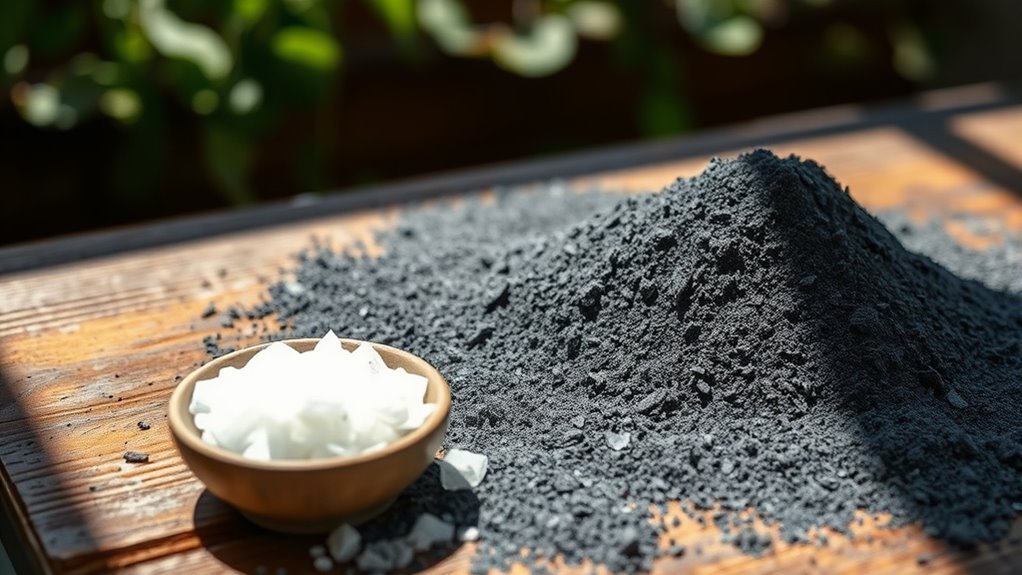

Charcoal ash can be quite useful if handled properly. You can sprinkle it on garden beds to boost soil nutrients like potassium and calcium or use it as a natural pest barrier against slugs, snails, and insects. It’s eco-friendly and cost-effective, turning waste into a beneficial resource. Just be sure to wait until it’s cool and use it sparingly to prevent soil imbalances. Keep exploring to learn more about safe and effective ways to use charcoal ash around your home.

Get kitchen gear delivered free with Prime
- Fast, free delivery on millions of items
- Prime Video, Amazon Music and more included
- Member-only deals all year
Key Takeaways
- Charcoal ash can be used as a soil amendment to improve soil fertility and supply essential nutrients like potassium and calcium.
- It serves as a natural pest deterrent by creating a physical barrier against slugs, snails, and other small pests.
- Reusing charcoal ash from barbecue or firepit leftovers promotes eco-friendly waste recycling and reduces the need for chemical pest controls.
- When applied carefully in moderation, ash can help balance soil pH and enhance plant growth, but excess can cause soil alkalinity issues.
- Properly cooled and handled ash is safe for disposal, but avoid using ash from treated or painted wood to prevent chemical contamination.

Have you ever wondered how you can put leftover charcoal ash to good use? Instead of tossing it out or letting it go to waste, you might be surprised by the practical ways it can help around your home and garden. One of the most effective uses for charcoal ash is as a soil amendment. When you sprinkle a thin layer of ash onto your garden beds, it helps improve soil quality by adding potassium, calcium, and other trace minerals that plants need to thrive. Just be cautious not to overdo it, as excess ash can raise soil pH and make it too alkaline for some plants. Mixing small amounts into compost or directly into the soil can boost fertility and encourage healthier plant growth. Keep in mind that charcoal ash is lightweight and easy to spread, making it a convenient addition to your gardening toolkit.
Beyond soil improvement, charcoal ash also plays a role in pest control. If you’re dealing with pests like slugs or snails in your garden, sprinkling a ring of ash around vulnerable plants can create a barrier that’s difficult for pests to cross. The abrasive texture and alkaline nature of the ash act as a deterrent, helping to keep these pests away naturally. It’s a simple, chemical-free method that doesn’t harm your plants or the environment. You can also use ash to discourage ants or other small insects from invading your outdoor spaces. Just make sure to reapply after heavy rain, as water can wash away the ash and reduce its effectiveness.
Using charcoal ash for pest control and soil amendment is not only economical but also eco-friendly. It’s a smart way to recycle leftovers from your barbecue or firepit, turning what might seem like waste into a valuable resource. Just remember to handle ash safely—wait until it’s completely cooled before touching or spreading it, and avoid inhaling the dust. Also, steer clear of using ash from treated or painted wood, as it might contain chemicals that aren’t safe for your garden or environment. When used correctly, charcoal ash becomes a versatile tool in your gardening and pest management routines, helping your plants grow stronger and pests stay at bay without relying on synthetic chemicals. So, next time you have leftover ash, think twice before discarding it—you might just find it’s a surprisingly useful asset around your home.
Frequently Asked Questions
Can Charcoal Ash Be Used as a Natural Fertilizer?
Yes, charcoal ash can be used as a natural fertilizer. You should sprinkle it sparingly in your garden to boost soil nutrients like potassium and calcium. It acts as a soil amendment, helping improve pH balance and drainage. Just remember, avoid applying too much, especially around acid-loving plants, and mix it well into the soil to benefit your garden’s health.
Is Charcoal Ash Safe for Composting?
Charcoal ash can be safe for composting if used carefully, as it adds potassium and minerals to your garden soil, improving plant nutrition. However, you should avoid adding large quantities since it raises soil pH and can harm plants. Mix it thoroughly with other compost materials and monitor your soil’s pH levels to guarantee a balanced environment that benefits your garden and promotes healthy plant growth.
How Do I Store Charcoal Ash Safely?
To store charcoal ash safely, you should use a metal container with a tight-fitting lid to prevent accidental fires. Make certain the ash is completely cool before handling, and avoid storing it near flammable materials. Follow storage precautions by keeping the container in a dry, well-ventilated area away from children and pets. This way, you minimize safety risks and maintain proper disposal or reuse practices.
Can Charcoal Ash Help Control Pests in My Garden?
Yes, charcoal ash can act as a pest deterrent and help with garden protection. You can sprinkle it around plants to keep pests like slugs and beetles away. The ash creates an unpleasant environment for pests, discouraging them from damaging your garden. Just be sure to apply it carefully and avoid excessive use, especially near plants sensitive to alkaline substances. This natural method can be a simple way to safeguard your garden.
Are There Any Health Risks From Handling Charcoal Ash?
Handling charcoal ash can pose health hazards if you’re not careful. Skin contact may cause irritation or dryness, so wear gloves when handling it. Inhalation of ash dust could irritate your respiratory system, especially if you’re sensitive or have allergies. To stay safe, wash your hands thoroughly after touching ash, avoid inhaling dust, and keep ash away from your face. Proper precautions protect you from potential health risks.
Conclusion
So, next time you toss out charcoal ash, remember it’s more than just waste—it’s a versatile ally. Think of it as a hidden treasure chest, waiting to be opened with simple tricks. I once used it in my garden, and within weeks, my plants thrived like never before. Just like a secret weapon, charcoal ash can boost your garden, clean your home, or even help with pests. Don’t overlook this humble ash; it’s worth a second look.
Halloween Picks
halloween
As an affiliate, we earn on qualifying purchases.