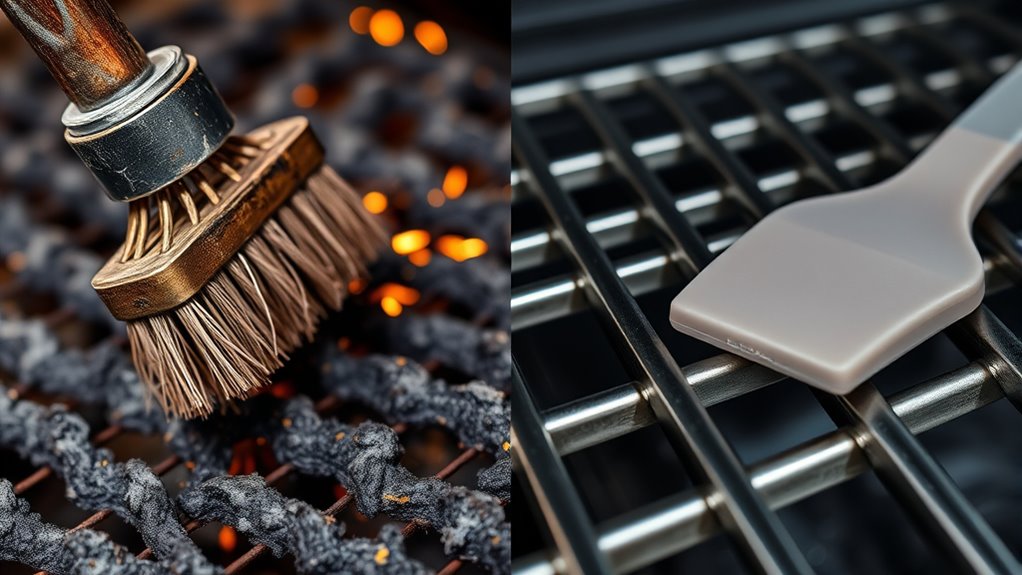

When cleaning your grill grates, a wire brush is often effective at removing stubborn residue, but it poses safety hazards like bristle detachment and eye injuries. Alternatives like silicone scrubbers or plastic scrapers are gentler, safer, and eco-friendly, though they may require more effort for tough buildup. Choosing the right tool depends on balancing safety, effectiveness, and longevity—if you want to discover more ways to keep your grill in top shape, keep exploring.

Get kitchen gear delivered free with Prime
- Fast, free delivery on millions of items
- Prime Video, Amazon Music and more included
- Member-only deals all year
Key Takeaways
- Wire brushes effectively remove tough residue but pose safety risks like wire bristles flying off and causing injuries.
- Alternatives like silicone scrubbers and plastic tools reduce damage to grill surfaces and lower injury hazards.
- Mechanical scraping tools, such as metal or plastic scrapers, provide safe, chemical-free cleaning options.
- Eco-friendly options like vinegar, baking soda, or biodegradable cleaners offer safer, sustainable cleaning methods.
- Proper tool selection balances cleaning efficiency, safety, durability, and environmental impact for optimal grill maintenance.
Effectiveness in Removing Residue and Debris
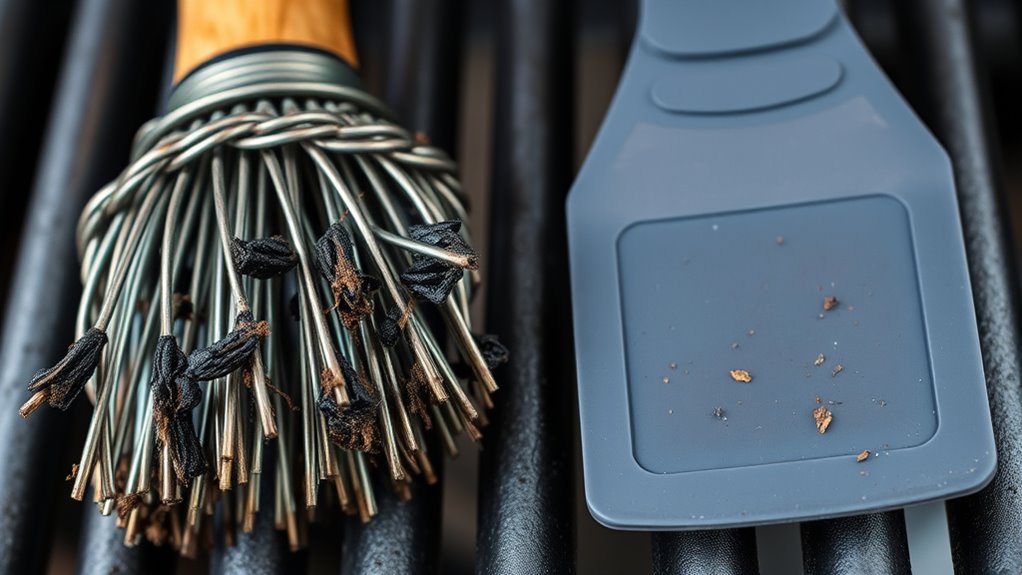
When it comes to cleaning grill grates, removing residue and debris effectively is essential for maintaining peak performance. Grill grate residue buildup can impair heat distribution and affect flavor. Using the right approach guarantees your grill stays clean and functional. Wire brushes are popular for their ability to loosen and remove stubborn debris quickly. However, cleaning chemical options offer an alternative, especially for hard-to-reach areas or delicate surfaces. These chemicals break down grease and char, making residue easier to wipe away. Combining mechanical scrubbing with chemical cleaners can maximize removal efficiency. Ultimately, your choice depends on the type of residue and your preference for chemical or manual methods. Ensuring thorough cleaning prevents buildup and keeps your grill in prime condition.
Safety Considerations and Risks
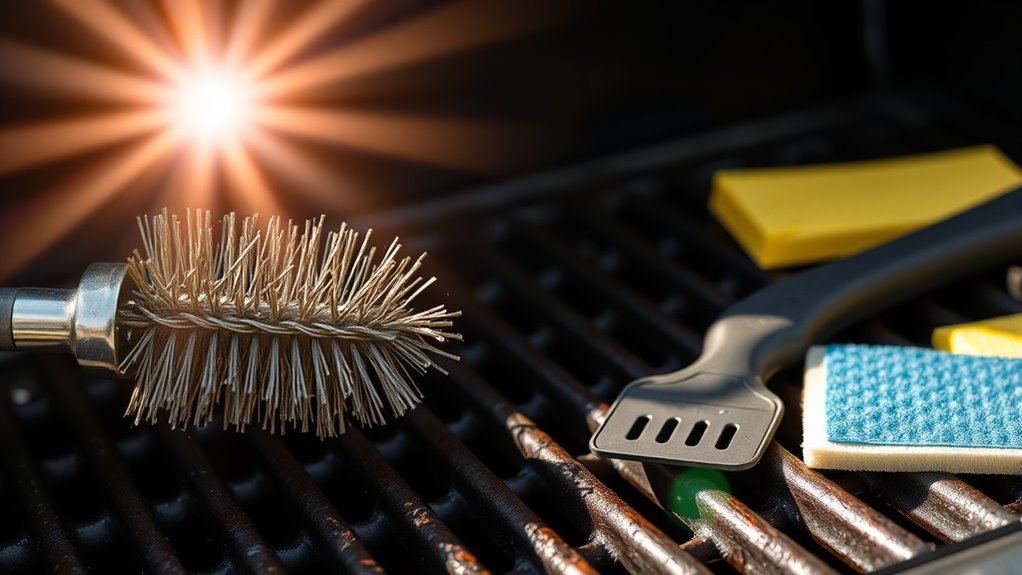
While cleaning grill grates, safety should always come first to prevent injuries and accidents. You need to be mindful of potential hazards, like chemical exposure from cleaning products or debris inhalation. Tool safety is vital—imagine these risks:
- Sharp wire bristles flying off and causing eye injuries.
- Using tools improperly, leading to cuts or burns.
- Chemical spills or splashes onto skin or eyes.
- Breathing in harmful dust or fumes from cleaning agents.
Always wear protective gear such as gloves and goggles, and inspect tools before use. Keep cleaning chemicals in well-ventilated areas, and avoid using damaged tools. Prioritize safety to enjoy a cleaner grill without risking your health or safety.
Environmental Impact of Cleaning Methods
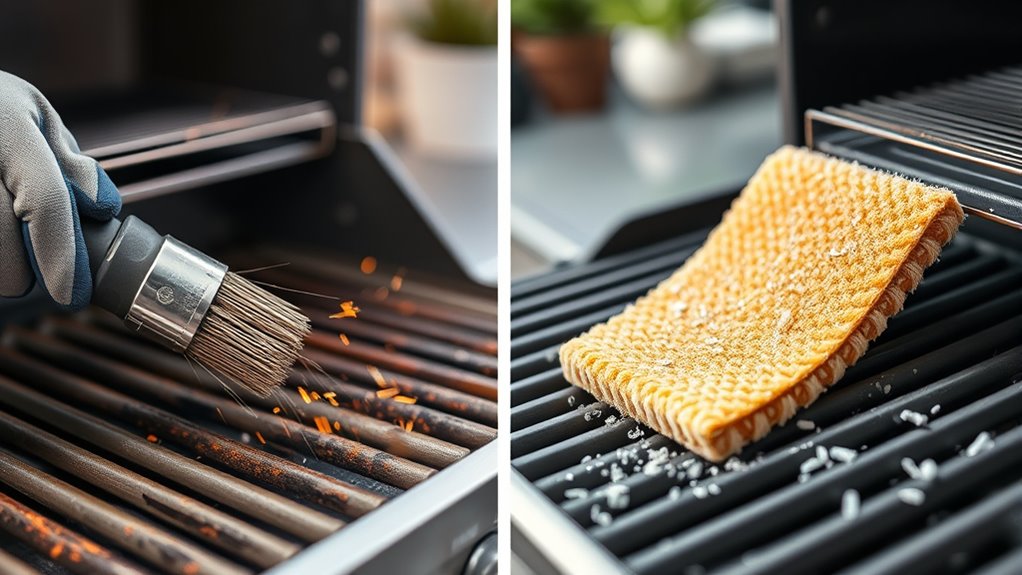
Choosing eco-friendly cleaning methods for your grill not only benefits the environment but also helps reduce your exposure to harmful chemicals. Using biodegradable options minimizes waste and pollution, ensuring products break down naturally without harming ecosystems. Reusable cleaning tools, like silicone scrubbers or steel brushes, cut down on single-use plastics and waste. These choices lower your carbon footprint and promote sustainability. Consider the table below:
| Method | Environmental Impact | Recommended Tools |
|---|---|---|
| Wire Brush | Less eco-friendly; potential waste | Reusable steel brushes |
| Biodegradable Scrubs | Breaks down naturally; eco-conscious | Silicone or plant-based |
| Chemical Cleaners | Often contain harmful chemicals; waste | Natural cleaning solutions |
Switching to environmentally mindful options helps protect the planet while keeping your grill clean.
Ease of Use and Convenience
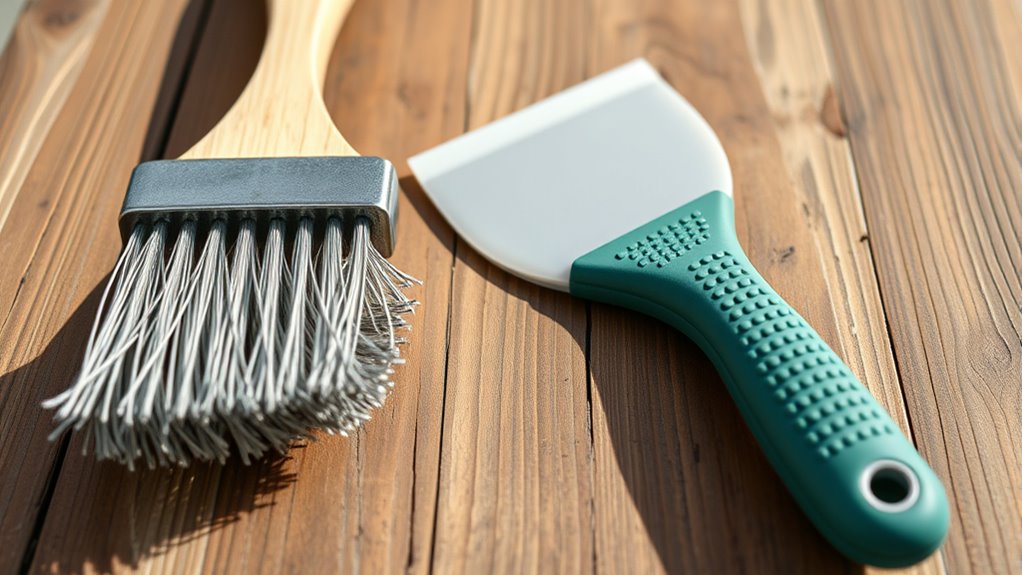
When it comes to cleaning grill grates, handling and maneuverability make a big difference in how easy the process feels. You’ll want tools that are lightweight and simple to control to reduce frustration. Plus, cleaning speed and effort are key—some methods cut down your time and energy, making grill maintenance more convenient.
Handling and Maneuverability
Handling and maneuverability are vital factors that influence how easily you can clean grill grates. Your grip strength and handling techniques determine how comfortable and efficient the process is. Imagine:
- Holding a sturdy wire brush with a firm grip, preventing slips.
- Navigating tight corners between grates with controlled movements.
- Applying consistent pressure without straining your wrist.
- Switching grips smoothly when reaching awkward angles.
A tool with a comfortable handle enhances grip strength, reducing fatigue. Good maneuverability means you can adjust your position easily, reaching all areas without hassle. Whether using a wire brush or an alternative, mastering proper handling techniques makes cleaning more effective and less tiring. Ultimately, ease of use hinges on how well you can handle and control your cleaning tool.
Cleaning Speed and Effort
Efficient cleaning of grill grates depends heavily on how quickly and easily you can complete the task. Using a wire brush can be fast, but it requires effort and caution to avoid damaging your grill seasoning or causing flare ups. Alternatives like scrapers or chemical cleaners often demand less physical effort and can cover larger areas at once, saving you time. Plus, some methods reduce the risk of accidental scratches or brush bristles left behind, which can ignite flare ups. With easier options, you spend less time cleaning and more time enjoying your food. If convenience is your priority, choosing a cleaning tool that balances speed with minimal effort can make maintenance less of a chore. This not only preserves your grill’s quality but also keeps your cooking safer and more enjoyable.
Durability and Cost of Cleaning Tools
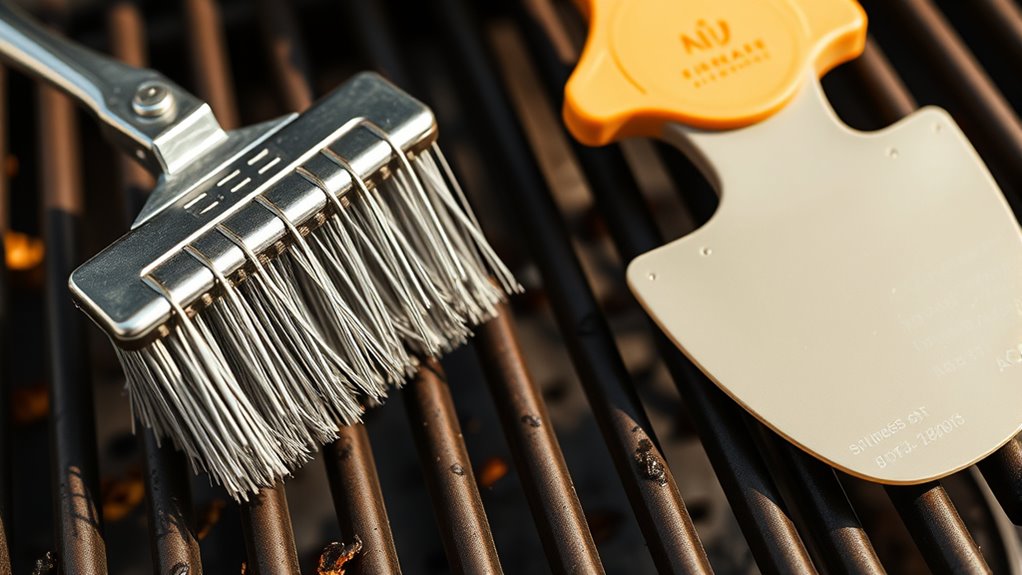
Choosing the right cleaning tools for your grill grates depends largely on their durability and cost. You want options that withstand repeated use without breaking the bank. Think about these options:
Select durable, cost-effective cleaning tools to keep your grill grates in top shape without overspending.
- A sturdy wire brush, which may cost more upfront but lasts longer with proper care.
- Scraper tools made of durable plastic or metal, offering good longevity at a reasonable price.
- Replacement brush heads, saving you money over time as you change only the worn parts.
- Chemical cleaners that, while inexpensive initially, might require more frequent purchases.
When considering budget considerations, balance durability with initial cost. Investing in higher-quality cleaning tools can save money long-term by reducing replacements, making your cleaning routine more economical and efficient.
Impact on Grill Grate Longevity
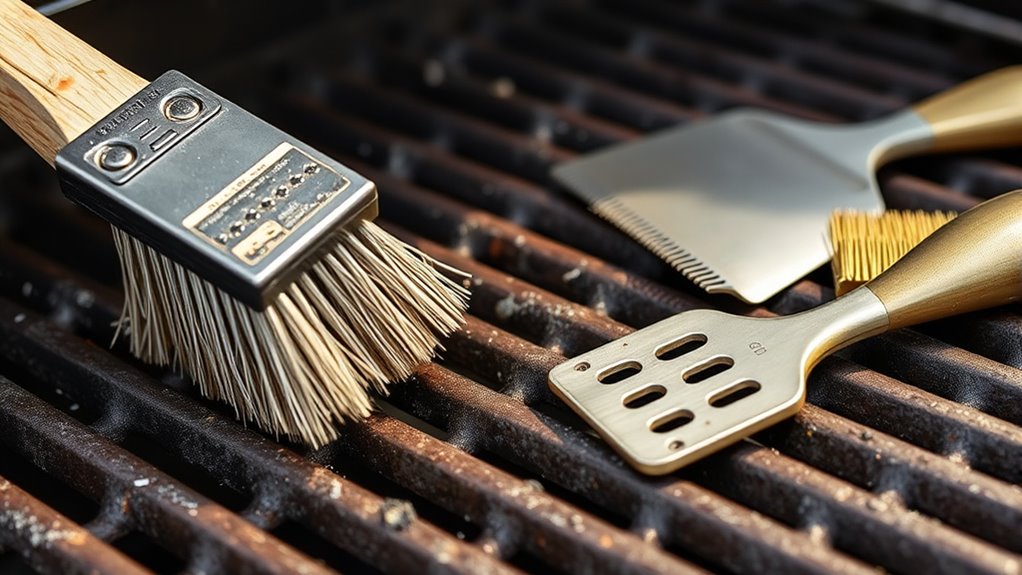
Using the right cleaning tools not only keeps your grill looking good but also directly affects how long your grill grates last. Aggressive tools like wire brushes can strip away delicate grill seasoning, exposing the metal and accelerating wear. This damage reduces the lifespan of your grates and can lead to rust or warping over time. Additionally, improper cleaning methods can compromise charcoal purity, causing debris or residues to build up and affect flavor. Using gentle alternatives helps preserve the integrity of the grill surface, maintaining its seasoning layer and preventing unnecessary corrosion. Proper cleaning techniques support longevity by reducing metal degradation and ensuring the grill stays in good condition longer. In turn, your grill remains efficient, safe, and enjoyable for many grilling seasons.
Alternative Techniques for Maintaining Your Grill
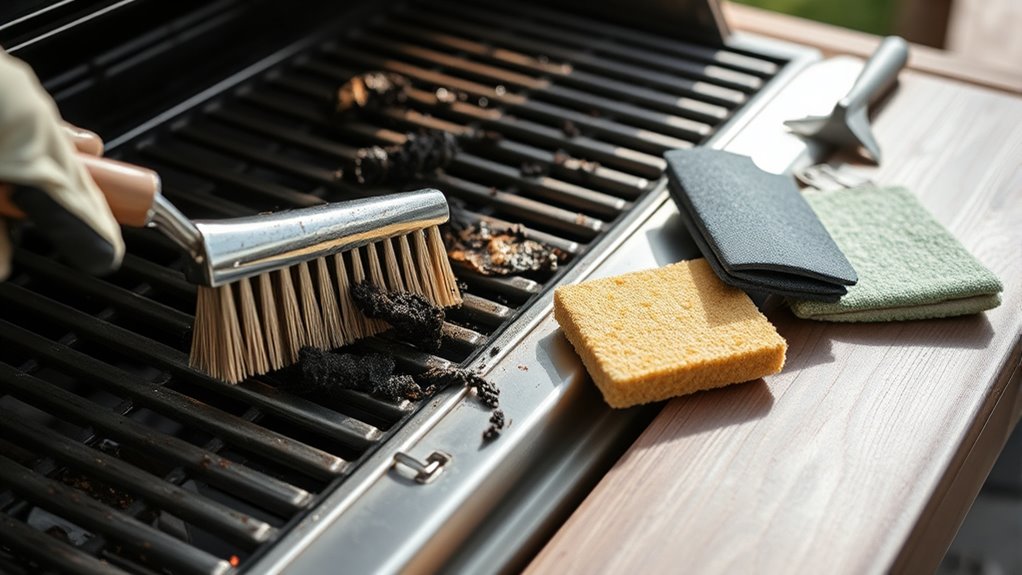
You can try natural cleaning solutions like vinegar or baking soda to keep your grill fresh without harsh chemicals. Using scraping tools regularly helps prevent buildup and makes cleaning easier. Incorporating simple maintenance tips and tricks guarantees your grill stays in top shape for every cookout.
Natural Cleaning Solutions
Have you ever considered natural solutions to keep your grill spotless? Using simple household items can effectively clean your grill without harsh chemicals. First, try sprinkling baking soda over the grates and spraying vinegar to create a bubbling reaction that loosens grime. Second, hot water and a stiff brush can help remove grease if you maintain proper grill grate seasoning. Third, aluminum foil balled up into a ball can scrub away stubborn residue when heated slightly. Fourth, maintaining the right cooking temperature prevents grease buildup, reducing cleaning needs. These natural methods preserve your grill’s surface and flavor, while avoiding damage. Regularly applying these techniques ensures your grill stays clean, flavorful, and ready for your next cookout.
Use of Scraping Tools
Scraping tools are essential for effectively maintaining your grill’s cleanliness, especially when dealing with stubborn residue. They help remove built-up food, grease, and chemical residues that can compromise flavor and safety. Using a scraper regularly can reduce the need for harsh chemical cleaners and extend your cleaning frequency. Choose a sturdy tool designed for grills to avoid damaging the surface.
| Tool Type | Benefits |
|---|---|
| Metal Scraper | Removes tough residues efficiently |
| Plastic Scraper | Gentle on delicate grates, reduces scratching |
Maintenance Tips and Tricks
Regularly maintaining your grill beyond scraping can extend its lifespan and keep it performing at its best. Here are some alternative tips to keep your grill in top shape:
- Apply fresh grill seasoning after each use to create a non-stick surface and prevent rust.
- Perform ash removal often by sweeping out accumulated ash from the bottom to ensure proper airflow and heat distribution.
- Use a damp cloth to wipe down grates and surfaces, removing grease and debris without harsh chemicals.
- Cover your grill when not in use to protect it from the elements and reduce the need for frequent cleaning.
These simple tricks help maintain peak performance, extend the life of your grill, and ensure delicious results every time.
Frequently Asked Questions
Which Cleaning Method Is Best for Different Types of Grill Grates?
You should choose your cleaning method based on your grill grate type. For cast iron, avoid wire brushes that can damage the surface; instead, use a nylon scrubber or coarse salt. Stainless steel grates handle wire brushes well but can be cleaned with a wire brush or scraper. Porcelain-coated options need gentle cleaning—avoid metal brushes to prevent scratching—so use a soft brush or a non-abrasive pad for best results.
How Often Should I Clean My Grill to Maintain Optimal Performance?
Think of your grill like a well-tuned instrument—you need to keep it in harmony. You should perform seasonal cleaning and adjust the cleaning frequency based on how often you grill. After each use, give the grates a quick brush, and deep clean every 3-4 months for peak performance. Regular upkeep prevents rust and buildup, ensuring your grill stays in excellent shape and ready for your next flavorful masterpiece.
Can Using a Wire Brush Damage the Coating or Material of Grill Grates?
Using a wire brush can pose risks to your grill’s coating and material, especially if you apply too much pressure. The wire bristles might scratch or damage the surface, leading to coating damage or exposing metal that can rust. To prevent these issues, consider gentler alternatives like nylon brushes or scrapers, which clean effectively without risking coating damage. Always inspect your grill after cleaning to ensure no bristles are left behind.
Are There Eco-Friendly Cleaning Products Suitable for Grill Maintenance?
Think of eco-friendly cleaning products as your grill’s gentle rain, nourishing without harm. You can easily find biodegradable cleaners and plant-based solutions that effectively clean your grill without damaging its surface or coating. These sustainable options cut through grease and grime while respecting the environment. So, yes—by choosing these natural, eco-conscious products, you safeguard your grill and the planet, ensuring delicious meals and a healthier world.
What Are the Signs That My Grill Grate Needs Replacing Rather Than Cleaning?
You should replace your grill grate if you notice significant grate corrosion or stubborn rust that doesn’t come off with cleaning. When the surface becomes pitted, warped, or fragile, it’s a sign the metal has weakened. If cleaning no longer restores the grate’s smoothness or if food begins to stick more, it’s time for a replacement. Ignoring these signs can compromise your grilling safety and food quality.
Conclusion
When it comes to cleaning grill grates, choosing the right method matters. Did you know that using a wire brush can remove up to 90% of residue effectively? However, safety risks like wire bristles ending up in your food are real. Alternatives like scraper tools or natural cleaners reduce hazards and environmental impact. By selecting the best method for you, you can keep your grill in top shape and enjoy delicious, safe meals every time.
Fall Picks
fall essentials
As an affiliate, we earn on qualifying purchases.