Covering your grill helps protect it from weather, rust, pests, and debris, extending its lifespan and maintaining its appearance. However, if not done properly, it could trap moisture or attract pests, leading to damage. To get the best results, choose a snug, high-quality cover, guarantee proper ventilation, and clean regularly. Want to know how to maximize your cover’s benefits and avoid pitfalls? Keep going for some useful tips and insights.
Key Takeaways
- Covering your grill protects it from weather, rust, and debris, extending its lifespan and maintaining appearance.
- Proper ventilation and fit are essential to prevent moisture buildup and pest infestation under the cover.
- Regular cleaning and inspection help avoid rust and damage caused by trapped dirt or food residues.
- Durable, waterproof covers made of vinyl or polyester offer better protection but require proper maintenance.
- Balancing protection benefits with potential risks involves choosing the right cover and practicing routine care.
Benefits of Covering Your Grill
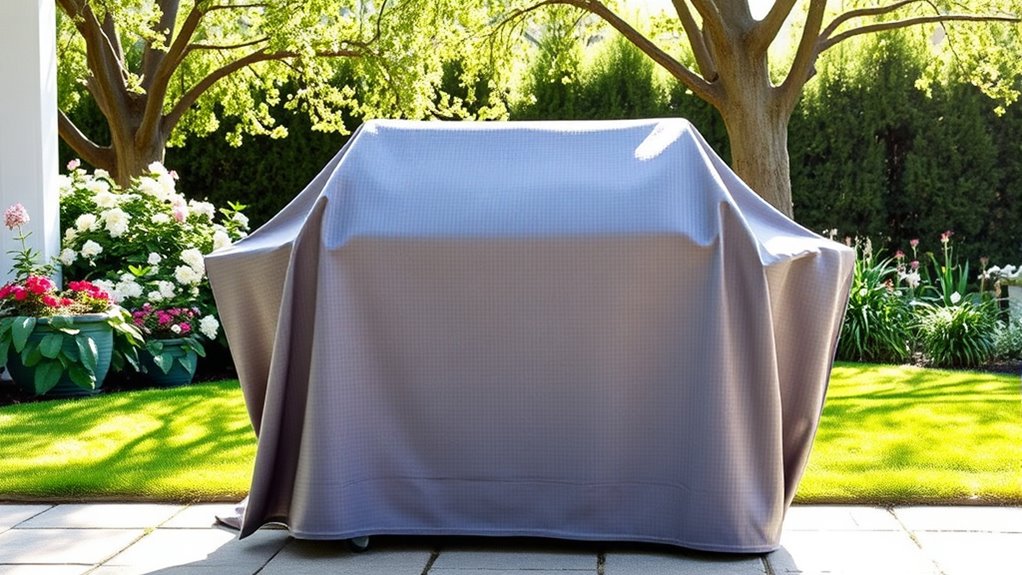
Covering your grill offers several practical benefits that can enhance your grilling experience. One key advantage is increased grill cover durability, which protects your equipment from harsh weather, rust, and corrosion over time. When selecting a cover, you’ll find various cover material options, such as vinyl, polyester, or woven fabrics, each offering different levels of protection and longevity. Durable materials resist tearing and fading, ensuring your cover stays effective season after season. A well-made cover helps maintain your grill’s appearance and functionality, saving you money on repairs or replacements. Plus, it keeps dust, debris, and pests away, making your grilling setup cleaner and more convenient. Overall, investing in a high-quality cover with the right material options extends your grill’s lifespan and enhances your outdoor cooking experience.
Potential Drawbacks and Risks
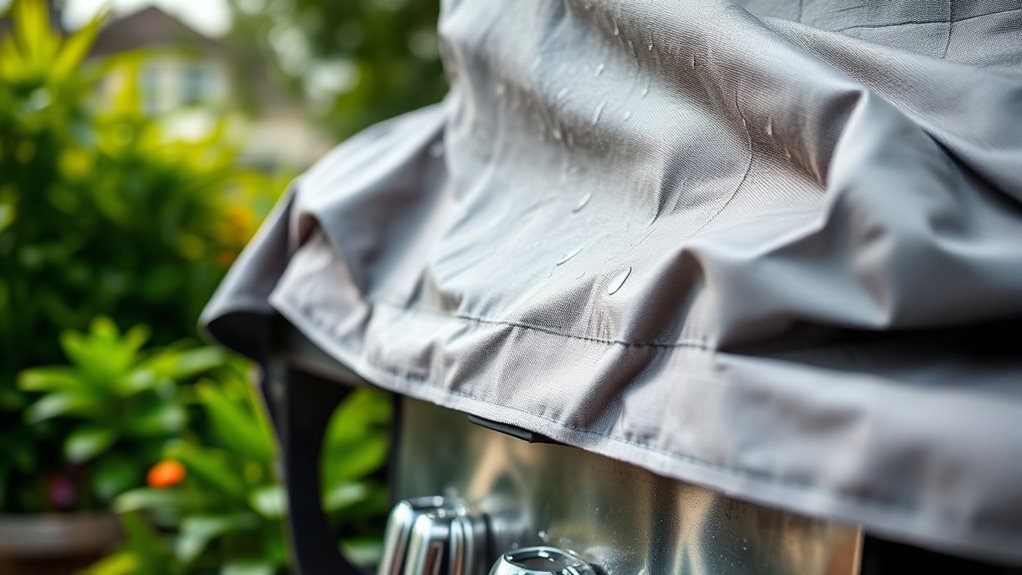
While covering your grill offers protection, it can also introduce some potential drawbacks and risks. One concern is that moisture can get trapped underneath the cover, which may lead to rust if the cover isn’t ventilated properly. This undermines rust prevention efforts and shortens your grill’s lifespan. Additionally, covering your grill can create a cozy environment for pests like insects or rodents, especially if food residues or grease are left behind. These pests may nest inside the cover or around the grill, creating sanitation issues. Improperly fitted covers might also trap dirt and debris, making cleaning more difficult. Ultimately, while covers help guard against the elements and pests, you need to be mindful of these risks and guarantee proper maintenance to avoid unintended damage.
Tips for Properly Covering and Maintaining Your Grill
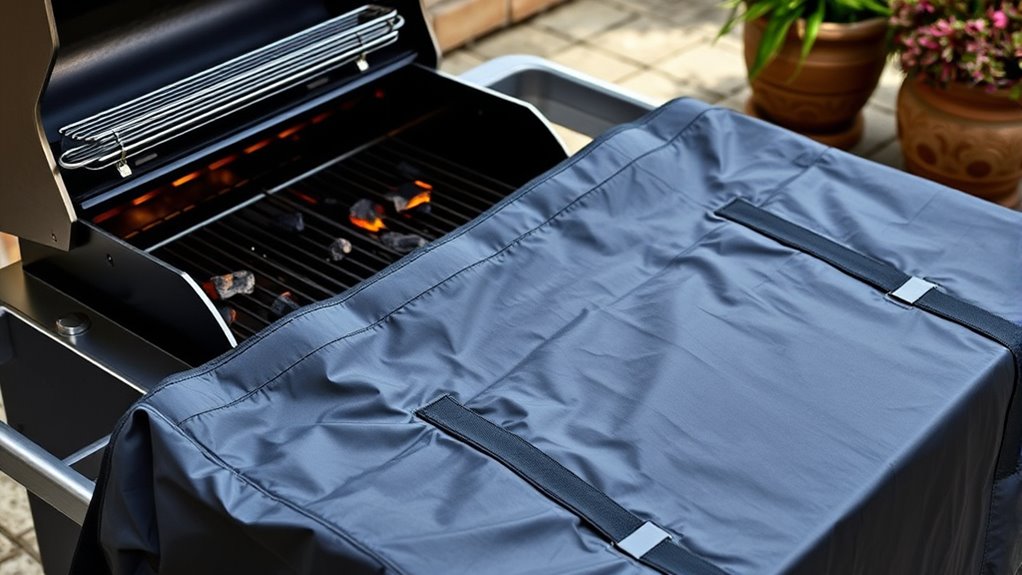
To guarantee your grill stays in top condition, proper covering and maintenance are key. Regular cleaning techniques, like scraping off grease and wiping down surfaces, prevent buildup and rust. When choosing a cover material, options range from waterproof polyester to heavy-duty vinyl or canvas, each offering different levels of protection. Make certain your cover fits snugly to keep out moisture, dirt, and debris. Remove the cover periodically to inspect for rust, corrosion, or damage, and clean the grill thoroughly before covering it again. Avoid leaving the cover in direct sunlight for long periods, as UV rays can degrade the material. Properly maintaining your grill with the right cover material options extends its lifespan and keeps it ready for your next cookout.
Frequently Asked Questions
How Often Should I Replace My Grill Cover?
You should replace your grill cover every 1 to 3 years to guarantee peak grill maintenance and cover longevity. Regularly inspect it for tears, mold, or fading, especially after harsh weather. If you notice significant wear, it’s time for a new cover to protect your grill effectively. Proper care and timely replacement help extend the life of both your grill and its cover, saving you money in the long run.
Can a Cover Improve My Grill’s Cooking Efficiency?
Yes, a cover can improve your grill’s cooking efficiency by enhancing heat retention. When you use a durable cover made from high-quality materials, it helps trap heat inside, reducing energy loss and maintaining consistent grill temperatures. This means faster cooking times and better results. Just guarantee your cover is well-maintained and fits properly to maximize its benefits, especially in protecting against weather elements that can affect its durability.
Are There Specific Covers for Different Grill Types?
Did you know that using a compatible grill cover can extend your grill’s lifespan by up to 30%? Yes, there are specific covers designed for different grill types, ensuring ideal fit and protection. You should check grill cover compatibility before purchasing to avoid damage or poor fit. Additionally, consider cover storage options that keep your cover dry and accessible, making maintenance easier and preventing mold or wear over time.
What Materials Are Best for Durable Grill Covers?
For a durable grill cover, choose materials like heavy-duty polyester, vinyl, or canvas, which offer excellent material durability and weather resistance. These materials stand up well to sun, rain, and wind, ensuring long-lasting protection. Additionally, look for customizable covers that fit your grill perfectly, providing better coverage and preventing damage. Investing in a high-quality, durable material with a tailored fit keeps your grill protected season after season.
Should I Cover My Grill in All Weather Conditions?
Yes, you should cover your grill in all weather conditions to guarantee weather protection. A good cover prevents damage from rain, snow, and sun, extending your grill’s lifespan. It also reduces the need for frequent cover maintenance, keeping it clean and intact. Even in mild weather, covering your grill shields it from dirt and debris, helping it stay in top shape and ready for your next cookout.
Conclusion
So, you might think covering your grill is just extra effort, but it actually saves you time and money in the long run. Ironically, neglecting to cover it could mean more rust, more cleaning, and more headaches. So go ahead, cover up—your future self will thank you when your grill still looks brand new, and you avoid those pesky rust spots. Sometimes, a little protection now prevents big problems later.