To install a built-in grill in your patio kitchen, plan carefully by choosing durable, weather-resistant materials like stainless steel or cast iron. Guarantee proper ventilation to direct smoke and fumes outside, following local codes and manufacturer guidelines. Position the grill with sufficient clearance from walls or overhangs to promote airflow and safety. Paying attention to these details helps create a safe, long-lasting outdoor cooking space—keep going to discover more essential tips.
Get ready for Prime Big Deal Days — try Prime free
Exclusive member deals on October 6–7, plus fast free delivery. Cancel anytime.
As an affiliate, we earn on qualifying purchases.
Key Takeaways
- Choose weather-resistant, durable materials like stainless steel or cast iron for longevity and outdoor resilience.
- Ensure proper ventilation with vent hoods and outdoor exhaust systems to safely direct smoke and fumes away.
- Maintain adequate clearance from walls and overhangs to promote airflow and meet safety codes.
- Follow local building regulations and manufacturer guidelines during installation for safety and compliance.
- Incorporate protective weatherproofing and maintenance routines to prolong the grill’s lifespan and appearance.
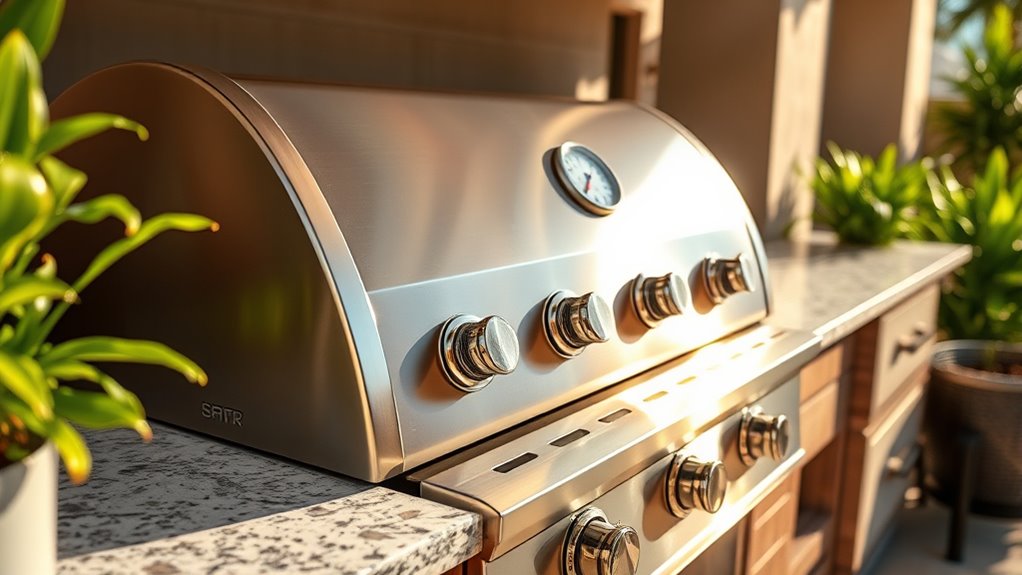
Adding a built-in grill to your patio kitchen can elevate your outdoor cooking experience and create a sleek, integrated look. When planning this upgrade, one of the most essential decisions involves choosing the right grill material. The material you select impacts durability, maintenance, and overall appearance. Stainless steel is a popular choice because it resists rust and corrosion, making it ideal for outdoor environments. Cast iron offers excellent heat retention but requires more maintenance to prevent rusting. Other options like aluminum or powder-coated steel can provide lighter weight and added weather resistance. Your choice should align with your climate, aesthetic preferences, and how much effort you’re willing to invest in upkeep.
Beyond materials, ventilation requirements are vital for safety and performance. Proper ventilation ensures that smoke, fumes, and heat are effectively directed away from your living space. When installing your built-in grill, you need to contemplate local building codes and manufacturer guidelines, which often specify minimum clearances from combustible materials and proper exhaust systems. Typically, an adequate vent hood that extends over the grill and vents to the outside is necessary to prevent smoke buildup and protect your patio’s structure. You’ll also want to confirm that the ventilation system is powerful enough to handle the amount of smoke your grill produces, especially if you plan to do a lot of high-heat cooking or smoking.
Proper ventilation is essential for safety and optimal grill performance.
Positioning your grill correctly in your outdoor kitchen is equally important. Placing it near a wall or under an overhang can restrict airflow and cause smoke accumulation, so make sure there’s enough clearance to allow for proper ventilation. You might need to incorporate a dedicated venting system or exhaust fan if natural airflow isn’t sufficient. Consult local codes and a professional if you’re unsure—these regulations are designed to keep your outdoor space safe and functional. Additionally, selecting weather-resistant materials for your grill can enhance durability and ensure your setup remains attractive over time, even in challenging outdoor conditions.
Remember that a durable, well-ventilated setup not only ensures safety but also prolongs the life of your investment. Proper planning around grill material selection and ventilation requirements will make your built-in grill a functional, attractive centerpiece for your outdoor kitchen for years to come.
stainless steel built-in outdoor grill
As an affiliate, we earn on qualifying purchases.
As an affiliate, we earn on qualifying purchases.
Frequently Asked Questions
What Is the Average Cost of Installing a Built-In Grill?
The average cost to install a built-in grill ranges from $3,000 to $7,000, depending on grill placement and features. You’ll want to contemplate outdoor cooking needs, material choices, and whether you need additional cabinetry or utilities. Keep in mind, professional installation ensures safety and proper setup, making your outdoor cooking experience enjoyable. Budget accordingly for customization and any extra accessories to enhance your patio kitchen.
How Much Space Is Needed for Proper Ventilation?
You’ll want at least 24 inches of ventilation requirements and a safe safety clearance around your built-in grill. Think of it as giving your grill room to breathe—nobody wants a fiery surprise! Adequate space guarantees proper airflow, reduces fire hazards, and keeps your patio kitchen safe. Skimp on this, and you risk smoke buildup or worse—so give your grill some room to shine and breathe easy.
Can I Customize the Grill’s Features and Accessories?
Yes, you can customize your built-in grill with various accessory options and features. Many brands offer grill customization, allowing you to select different burners, side shelves, or lighting options to suit your needs. You can also add accessories like rotisseries, warming racks, or smoker boxes. This flexibility lets you tailor your outdoor cooking setup, making it more functional and enjoyable for your specific grilling style.
What Permits Are Required for Installation?
Before you roll up your sleeves, don’t forget to verify local building codes and zoning regulations for your area. You’ll typically need a permit for installing a built-in grill, especially if it involves plumbing or electrical work. Visit your city’s building department or website to find specific requirements. Securing the proper permits ensures your project is legal and safe—think of it as a necessary quest, like in a classic adventure game.
How Do I Maintain and Clean My Built-In Grill?
To keep your built-in grill in top shape, regularly perform grill cleaning after each use, scrubbing grates with a wire brush and removing ash and debris. Follow maintenance tips like checking for gas leaks, cleaning burners, and inspecting parts for wear. This routine prevents buildup, guarantees even heat, and prolongs your grill’s lifespan, making outdoor cooking safer and more enjoyable for you.
As an affiliate, we earn on qualifying purchases.
Conclusion
As you finish installing your built-in grill, imagine the warm glow of fireside gatherings and the aroma of delicious foods filling your patio. Like a master chef in a bustling kitchen, you’ve created a perfect spot for family and friends to gather, share stories, and enjoy unforgettable moments. With your new grill in place, your outdoor space becomes a sanctuary of flavor and connection—ready to serve up memories as timeless as a summer sunset.
weather-resistant cast iron grill
As an affiliate, we earn on qualifying purchases.
As an affiliate, we earn on qualifying purchases.
patio kitchen built-in grill installation kit
As an affiliate, we earn on qualifying purchases.
As an affiliate, we earn on qualifying purchases.
NFL season / tailgating Picks
team gear
As an affiliate, we earn on qualifying purchases.