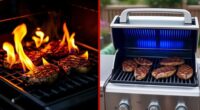
To keep your grill in top shape, replace burners when you notice rust, warping, uneven flames, or difficulty maintaining heat. Swap out grates if they develop rust, cracks, or become rough, affecting heat transfer. Change igniters if you experience weak sparks, no sparks, or buildup issues. Regular inspections and timely replacements prevent uneven cooking and safety hazards. Curious about specific signs and maintenance tips? Continue exploring to ensure your grill performs at its best.
Key Takeaways
- Replace burners when they show rust, warping, uneven flames, or difficulty maintaining temperature.
- Change grill grates if rust, cracks, or uneven surfaces develop, impairing heat transfer.
- Swap igniters that no longer produce sparks, have weak or inconsistent sparks, or show corrosion.
- Regularly inspect all parts and replace promptly to prevent safety hazards and uneven cooking.
- Follow manufacturer recommendations for replacement intervals and maintain parts through proper cleaning.

Replacing grill parts is a practical way to extend the life of your barbecue and guarantee it cooks your food evenly. Proper grill maintenance is essential, and knowing when to swap out components like burners, grates, and igniters can make a significant difference in performance. If you neglect these parts, your grill’s efficiency drops, and uneven heating may cause frustration or undercooked meals. Staying attentive to part replacement timing ensures you catch issues early before they turn into costly repairs or complete replacements.
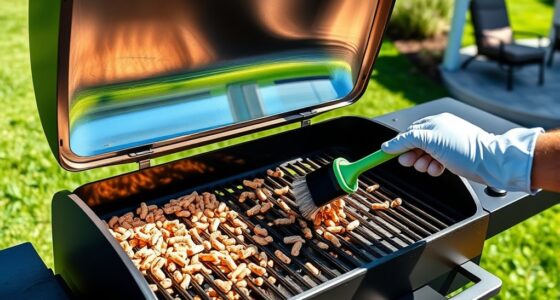
Burners are the heart of your grill’s heat source. Over time, they can corrode or become clogged with grease, rust, or debris, which impairs their ability to produce consistent flames. Regularly inspect your burners for signs of damage, such as rust spots, warping, or holes. If you notice uneven flames or difficulty maintaining temperature, it’s likely time for a replacement. Waiting too long can lead to inefficient cooking and increased gas consumption. Typically, burners should be checked annually, especially if you use your grill frequently, and replaced as needed to maintain ideal performance.
Inspect your burners annually for rust, warping, or holes to ensure efficient grilling and safety.
Grates are another critical component that influences your grilling experience. They can develop rust or become warped over time, especially if exposed to moisture or harsh weather. When cleaning your grill, look for cracks, excessive rust, or areas where the surface has become rough or uneven. Damaged grates not only hinder heat transfer but can also cause food to stick or fall through. In terms of part replacement timing, consider replacing your grates every few seasons or sooner if they show significant wear. Investing in quality grates can extend their lifespan but staying vigilant helps prevent uneven cooking.
Igniters are essential for quick, safe start-ups. Over time, they can become faulty due to dirt buildup, corrosion, or worn-out igniter tips. If you press the igniter button and see no spark or if the spark is weak and inconsistent, it’s time to replace it. Regularly cleaning your igniter and inspecting its components can prolong its life, but don’t delay replacing it if it’s no longer reliable. A malfunctioning igniter not only causes inconvenience but can also be dangerous if you try to light your grill with matches or other unsafe methods.
Additionally, keeping your grill components clean and well-maintained can significantly extend their lifespan and performance. Ultimately, understanding your grill’s maintenance needs and paying attention to part replacement timing keeps your barbecue functioning efficiently. Regular inspections and prompt replacements prevent larger issues and help you enjoy perfectly cooked meals every time. By staying proactive with these key parts, you extend your grill’s lifespan and ensure your outdoor cooking remains safe and enjoyable.
Frequently Asked Questions
How Often Should I Replace My Grill Burners?
You should replace your grill burners every 3 to 5 years, depending on usage and part longevity. Regular grill maintenance helps identify signs of wear, like uneven heat or rust, indicating it’s time for a replacement. Ignoring these signs can affect cooking quality. Keep an eye on your burners, and replace them promptly to guarantee ideal performance and safety during grilling season.
Can I Upgrade to Higher Quality Grill Parts?
Upgrading to higher quality grill parts is like giving your grill a fresh set of wings, boosting its performance and longevity. Yes, you can, and it’s worth it for better heat distribution and durability. Keep in mind, good grill maintenance extends the replacement timeline, so invest in premium burners, grates, and igniters when you notice performance dips. Quality parts enhance your grilling experience and keep your BBQ game strong season after season.
Are Aftermarket Parts as Reliable as OEM Replacements?
Aftermarket parts can be reliable, especially if you choose reputable brands, offering advantages like cost savings and wider selection. However, OEM replacements often guarantee OEM reliability, ensuring perfect fit and original quality. You should weigh these factors based on your budget and performance expectations. If you prioritize durability and exact fit, OEM parts are safer; but for affordability and variety, aftermarket options can serve you well when carefully selected.
What Are Signs My Grill Igniter Needs Replacing?
Ever wonder if your grill’s igniter is whispering for help? If you press the igniter button and it doesn’t produce a spark, or if the spark is weak or inconsistent, it’s time for igniter troubleshooting. Igniter replacement signs include difficulty igniting the grill, persistent clicking without a spark, or corrosion around the igniter. Don’t ignore these signs—address them promptly to keep grilling smooth and safe.
How Do Weather Conditions Affect Grill Part Longevity?
Weather conditions considerably impact your grill parts’ longevity. Exposure to moisture causes corrosion, reducing corrosion resistance and leading to rusting of burners, grates, and igniters. Extreme temperature effects, like high heat or freezing, can weaken materials and cause warping or cracking. To prolong their lifespan, cover your grill when not in use, store it in a sheltered area, and regularly inspect parts for signs of weather-related damage.
Conclusion
Keeping your grill in top shape is like tending a garden—you’ll enjoy the best results when you give it regular care. Replacing burners, grates, or igniters at the right time guarantees your grill performs like a well-oiled machine. Don’t wait until parts are completely worn out; instead, stay attentive to signs of wear. By doing so, you’ll keep your grilling experience smooth and flavorful, just like a perfectly cooked meal on a summer afternoon.