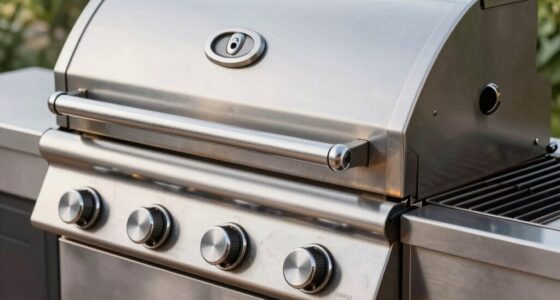
If you’re choosing between direct flame and infrared grilling, you’ll notice that direct flame gives you a smoky flavor with a traditional char, but it can cause flare-ups and uneven heat. Infrared grills heat quickly and evenly, producing precise searing with less smoke and a cleaner taste. While infrared reduces flare-ups and speeds up cooking, it may lack some smoky aroma. To discover how each method impacts flavor and safety, keep exploring the details.
Open a free Amazon Business account
Business pricing, bulk buying and tax-exempt orders.
As an affiliate, we earn on qualifying purchases.
Key Takeaways
- Traditional direct flame grilling produces a smoky flavor, while infrared grilling offers a cleaner taste with less smoke.
- Infrared grills heat quickly and evenly, reducing cook times compared to longer, more variable direct flame grilling.
- Direct flame grilling develops smoky aromas and crispy textures, whereas infrared emphasizes rapid searing and juiciness.
- Infrared grills generate fewer flare-ups and are safer, while traditional methods are more prone to flare-ups and hot spots.
- Choice depends on whether you prioritize smoky flavor and traditional cooking or quick, clean, and precise heat.

When it comes to grilling, choosing between direct flame and infrared methods can substantially impact your cooking results. One of the key differences is how each technique influences the smoke flavor and cook time of your food. If you love that rich, smoky aroma, traditional direct flame grilling often excels. With direct flames, you can create a distinct smoke flavor because the open flames and uneven heat cause fats and juices to drip onto the hot coals or burners, generating smoke that infuses your meat or vegetables. This process tends to require a longer cook time for thicker cuts, allowing flavors to develop fully. However, it also means you need to stay attentive, as flare-ups and hot spots can sometimes overcook or char your food prematurely. The level of heat control is generally more precise with infrared grilling, which can help in achieving the perfect sear without overcooking. Infrared grilling, on the other hand, heats up quickly and delivers even, high-intensity heat directly to the surface of your food. This rapid heating markedly reduces cook time, especially for thinner cuts, making it ideal when you’re pressed for time or grilling multiple items. Unlike traditional methods, infrared grills produce less smoke because they don’t rely on burning or smoldering charcoal or wood. As a result, they tend to have a more neutral smoke flavor, which some people prefer if they want to taste the natural flavors of their ingredients without additional smoky notes. If your goal is to replicate the smoky flavor of traditional grilling, infrared might fall short unless you add wood chips or other flavor enhancers. Another aspect to consider is how each method affects the texture and juiciness of your food. With direct flame grilling, the longer cook times and exposure to open flames can create a desirable crispy exterior while maintaining moisture inside. Infrared grills, with their intense but evenly distributed heat, can produce a beautifully seared crust in a shorter time without risking flare-ups or charring. This precision reduces the chances of overcooking and helps lock in juices, but it might not develop the same smoky crust or flavor as traditional methods. Additionally, grilling safety considerations differ between the two techniques, with infrared grills generally being safer due to fewer flare-ups and less open flame. Ultimately, your choice depends on what you prioritize—whether it’s the deep smoke flavor and slower cook time of direct flame grilling or the quick, even heat and cleaner flavor profile of infrared. Both have their strengths, but understanding how each impacts smoke flavor and cook time can help you select the best method for your grilling style and desired results.
infrared grill for outdoor cooking
As an affiliate, we earn on qualifying purchases.
As an affiliate, we earn on qualifying purchases.
Frequently Asked Questions
Which Grilling Method Is More Energy-Efficient?
Infrared grilling is more energy-efficient because it uses less fuel and heats up faster, reducing fuel consumption. You’ll notice a lower environmental impact since it produces fewer emissions compared to traditional direct flame grilling. When you choose infrared, you’re using energy more effectively, which not only saves you money but also helps protect the environment. So, for efficient and eco-friendly grilling, infrared is the better option.
Can Infrared Grills Reach Higher Temperatures Than Direct Flame Grills?
Imagine the thrill of reaching new culinary heights—infrared grills can indeed achieve higher temperatures than direct flame grills. Their infrared heat delivers intense, focused warmth, allowing for rapid searing and perfect browning. With their powerful flame intensity, you can effortlessly attain those sizzling temperatures, elevating your grilling game. So, if you’re chasing that perfect char, infrared grills might just be your ideal partner in creating mouthwatering masterpieces.
Are Infrared Grills Safer Than Traditional Flame Grills?
Infrared grills are generally safer than traditional flame grills because they pose fewer fire hazards and have lower safety concerns. They heat quickly and evenly, reducing the chance of flare-ups caused by fat drippings. Plus, their enclosed design minimizes open flames, making them a safer choice for indoor or outdoor grilling. Still, always follow safety guidelines to prevent accidents, regardless of the grill type you’re using.
How Does Cleaning Differ Between the Two Grilling Methods?
You’ll find that cleaning infrared grills is often easier because they produce less soot and flare-ups, keeping the grill surface cleaner. Use a grill brush and a damp cloth to maintain the surface regularly, focusing on removing grease and residue. For traditional flame grills, you might need more intensive cleaning tools like scrapers and degreasers. Consistent grill surface maintenance keeps both types functioning well and prolongs their lifespan.
Which Method Offers Better Flavor Retention for Meats?
Infrared grilling tends to preserve better flavor retention in meats because it produces less smoke, which can overpower delicate flavors. You’ll notice that marinade absorption remains more intact since the high heat cooks meat quickly without extensive smoke exposure. In contrast, direct flame grilling produces more smoke, which can enhance flavor but also risk burning the outside, potentially reducing the meat’s natural taste.
charcoal grill with smoke flavor
As an affiliate, we earn on qualifying purchases.
As an affiliate, we earn on qualifying purchases.
Conclusion
So, now that you know the key differences between direct flame and infrared grilling, the big question is—which method will elevate your next barbecue? Will you embrace the intense heat and smoky flavor of flames, or will you explore the precise control of infrared? The choice is yours, but remember—each has its secrets, and only one can truly unfasten the perfect cookout. Are you ready to discover what’s next? The grill awaits your decision.
gas grill with precise heat control
As an affiliate, we earn on qualifying purchases.
As an affiliate, we earn on qualifying purchases.
As an affiliate, we earn on qualifying purchases.
NFL season / tailgating Picks
team gear
As an affiliate, we earn on qualifying purchases.