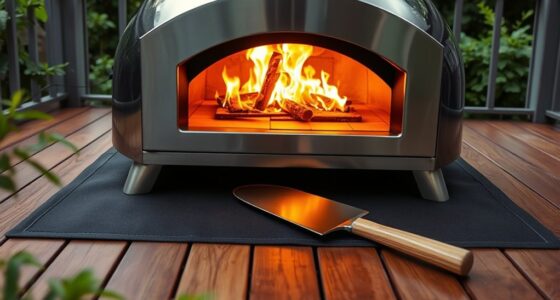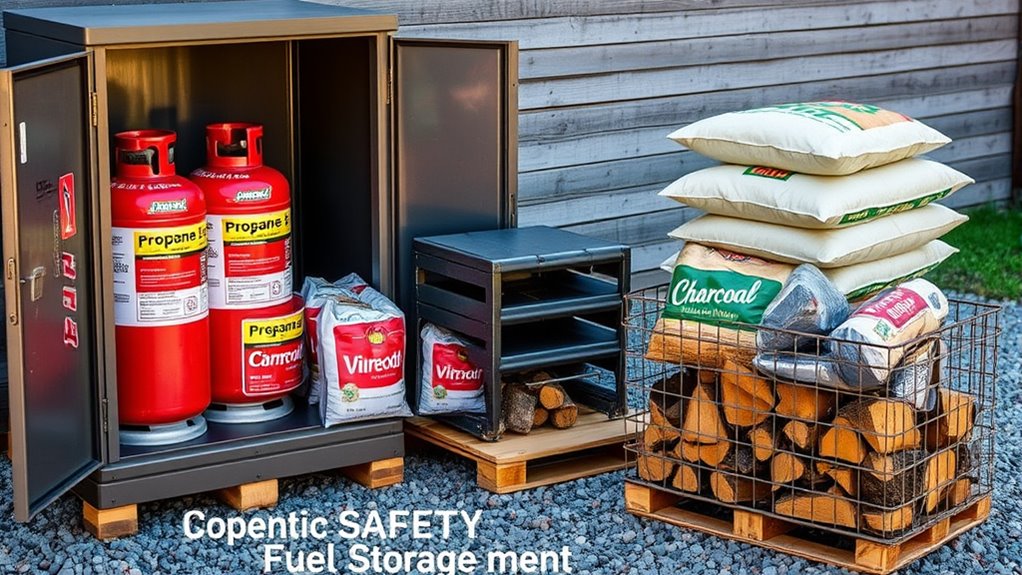

To store propane, charcoal, and wood safely, keep fuels outdoors in well-ventilated, designated zones away from heat, flames, and electrical sources. Use sturdy, approved containers and secure them upright during handling and transport. Maintain clear labels, inspect for leaks or damage regularly, and guarantee areas are fire-resistant with proper ventilation. Avoid indoor storage and always follow safety guidelines. If you want to learn more about ensuring safe storage practices, keep exploring these essential tips.
Key Takeaways
- Store fuels outdoors in well-ventilated, designated areas away from heat, flames, and living spaces.
- Use approved, durable containers labeled clearly and keep them upright on stable surfaces.
- Keep storage zones free of clutter, electrical sources, and ignition risks, with proper signage and restricted access.
- Handle and transport fuels in ventilated vehicles, securing containers to prevent spills or tipping.
- Ensure proper ventilation in storage areas to prevent fume buildup and reduce fire hazards.
Proper Storage Locations and Safety Zones
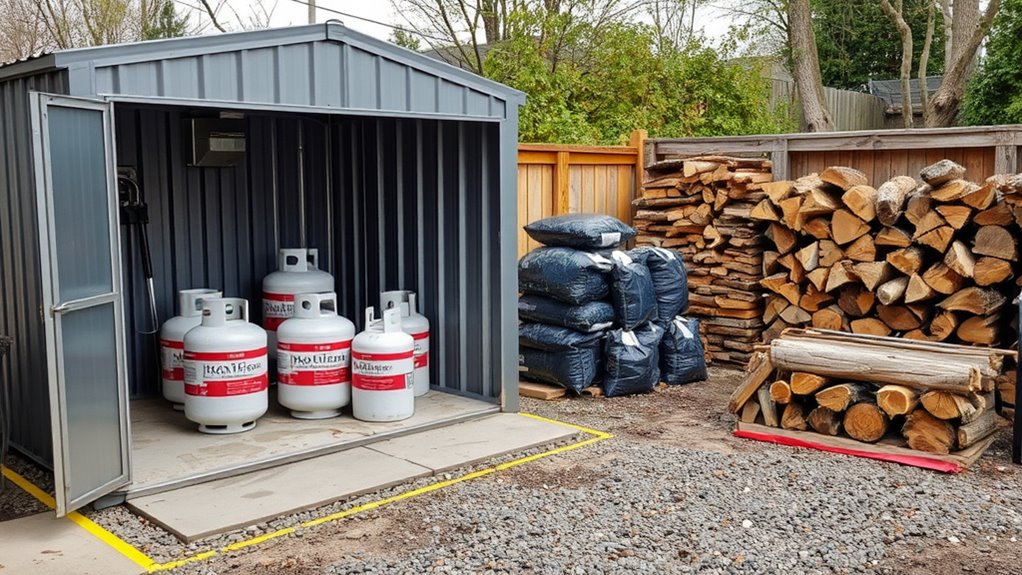
Choosing the right storage location is essential for safety, as improper placement can lead to accidents or fires. Follow storage guidelines carefully to ensure your fuel containers are stored in designated safety zones. These zones should be well-ventilated, away from heat sources, open flames, and electrical equipment. Keep fuel containers on level, stable surfaces to prevent spills or tipping. Avoid storing fuels indoors or in enclosed spaces where fumes can accumulate. Instead, select outdoor areas with minimal foot traffic, away from living spaces. Clearly mark and restrict access to these safety zones to prevent accidental exposure or ignition. Proper storage not only minimizes risk but also makes handling easier and safer when you need to access your fuels.
Handling and Transportation Precautions
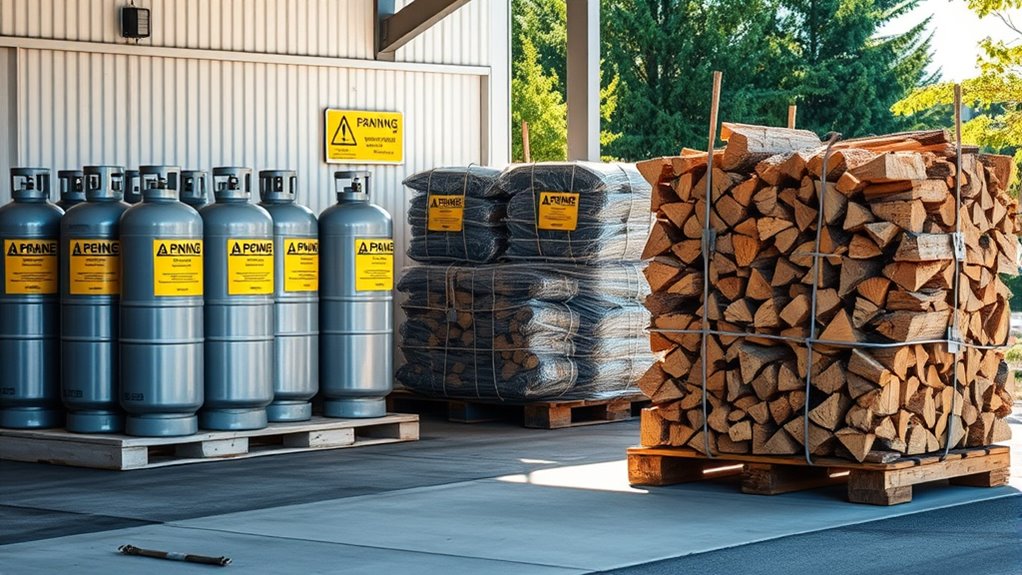
When handling and transporting fuel, it’s essential to follow strict safety precautions to prevent spills, leaks, or accidents. Proper labeling practices ensure everyone knows the contents and hazards of each container, reducing risks during transit. Use appropriate storage container types designed for fuel, such as approved propane tanks or durable, leak-proof containers for charcoal and wood. To stay safe, consider these steps:
Always label, secure, and ventilate fuel containers to ensure safe handling and transport.
- Clearly label all containers with contents and hazard warnings.
- Secure containers upright to prevent tipping or spills.
- Transport in well-ventilated vehicles, away from heat sources or open flames.
Container Selection and Maintenance
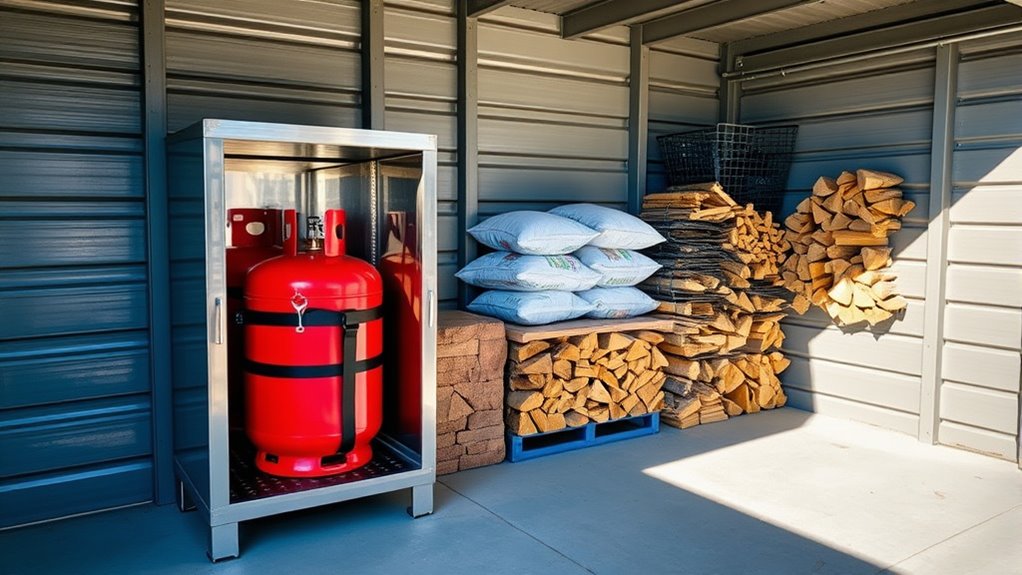
Selecting the right containers for fuel storage is vital to guarantee safety and prevent accidents. You must choose containers with high container durability to withstand environmental factors and regular use. Material compatibility is essential; ensure your container material suits the fuel type—metal for propane, approved plastics for charcoal or wood. Regular maintenance extends container lifespan and maintains safety. Check for corrosion, leaks, or damage periodically. Proper sealing prevents fumes and spills. Keep containers labeled clearly and stored upright in well-ventilated areas. Use the table below to compare key container features:
| Feature | Importance |
|---|---|
| Container Durability | Ensures longevity and withstands environmental stress |
| Material Compatibility | Prevents chemical reactions and deterioration |
| Seal Integrity | Stops leaks and fume escape |
| Maintenance Frequency | Maintains safety and detects early damage |
Fire Prevention Measures
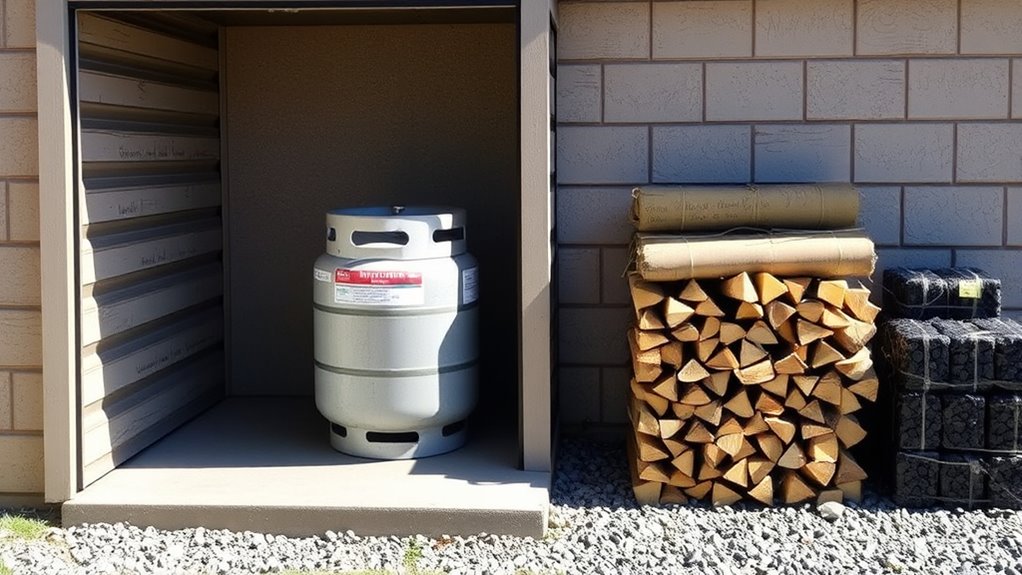
Have you taken steps to minimize the risk of fire during fuel storage? Fire prevention begins with implementing key measures. First, use fire-resistant materials around storage areas to contain any accidental sparks or heat. Second, eliminate ignition sources like open flames, smoking, or electrical devices nearby. Third, keep storage containers away from heat sources and direct sunlight, which can increase the risk of ignition. Regularly inspect your storage areas for potential hazards, such as frayed wiring or leaks. Properly labeling containers and maintaining clear, clutter-free zones reduce accidental damage and ignition risks. By following these measures, you create a safer environment and markedly lower the chance of fire during fuel storage.
Ventilation and Environmental Considerations

Proper ventilation plays a crucial role in preventing the buildup of hazardous fumes and reducing fire risks during fuel storage. Good airflow helps maintain air quality and minimizes odors, making your storage area safer and more comfortable. Make certain your storage space has vents or windows that can be opened easily to promote fresh air circulation. Use the table below to understand key ventilation features:
| Feature | Benefit |
|---|---|
| Ventilation Fans | Enhance airflow, control odors |
| Window Placement | Improve air exchange |
| Exhaust Vents | Remove fumes efficiently |
Focusing on proper ventilation not only keeps fumes at bay but also ensures odors are controlled, creating a safer environment for your stored fuels.
Regular Inspection and Emergency Preparedness

Regular inspections are essential to catch issues early and guarantee your fuel storage remains safe. Learn to recognize warning signs like leaks or corrosion, so you can act quickly. Make sure you have a clear emergency plan in place to protect yourself and others if an incident occurs.
Schedule Routine Inspections
Scheduling routine inspections is essential to maintaining safe fuel storage and ensuring that your emergency preparedness remains effective. Regular checks help verify compliance with storage regulations and keep safety signage visible and intact. To stay on top of safety, consider these key steps:
- Inspect storage containers for leaks, corrosion, or damage, ensuring they meet current safety regulations.
- Confirm that safety signage is clear, legible, and properly positioned to warn of hazards.
- Review your emergency plan, making sure fire extinguishers and safety equipment are accessible and functional.
Recognize Warning Signs
During routine inspections, paying close attention to warning signs can reveal underlying issues before they escalate. Look for signs like corrosion, leaks, or bulging in storage container types, which may indicate dangerous chemical reactions or deterioration. Faint odors, discoloration, or unusual noises also signal potential problems. Recognize that damaged containers or leaks increase the risk of fire or explosion. Regularly check for these signs to prevent accidents. Here’s a quick reference:
| Warning Signs | Possible Causes |
|---|---|
| Corrosion or rust | Chemical reaction with moisture |
| Bulging or dents | Internal pressure buildup |
| Faint chemical odor | Leaks or deteriorated seals |
| Discoloration or staining | Chemical reactions or leaks |
| Unusual noises | Gas escaping or container failure |
Stay vigilant to ensure safe storage and early detection of hazards.
Prepare Emergency Plans
To effectively manage fuel storage hazards, you must develop and implement thorough emergency plans that incorporate routine inspections. Regular checks help identify potential issues like chemical reactions or leaks that could lead to fires or explosions. Ensuring compliance with storage regulations minimizes risks and keeps you prepared. Your emergency plan should include:
- Scheduling frequent inspections to detect corrosion, leaks, or damage.
- Training everyone on proper response procedures for spills or fires.
- Keeping emergency equipment, like fire extinguishers and ventilation, accessible and functional.
Frequently Asked Questions
Can Propane Tanks Be Stored Indoors Safely?
You shouldn’t store propane tanks indoors because it’s unsafe. Indoor safety requires proper ventilation to prevent gas buildup, which can cause explosions or fires. If you must keep a propane tank inside temporarily, make certain it’s in a well-ventilated area away from heat sources, and never store it near open flames or electrical appliances. Always follow manufacturer guidelines and local regulations to keep yourself and your home safe.
How Long Can Charcoal Be Stored Without Spoiling?
Charcoal can be stored for up to two years if kept in a cool, dry place, but it’s a case of “better safe than sorry.” Over time, charcoal shelf life decreases, and spoilage signs include clumping, mold, or an off smell. You should discard it if it’s damp or shows any signs of deterioration. Proper storage guarantees your charcoal stays fresh and ready when you need it most.
Are There Specific Weather Conditions to Avoid Storing Wood Outside?
You should avoid storing wood outside during seasonal weather changes and temperature fluctuations. Exposure to rain, snow, or excessive humidity can cause mold, rot, and insect infestations. Sudden temperature shifts can also lead to moisture buildup inside the wood, making it harder to burn efficiently. Keep your wood in a dry, covered area, and elevate it off the ground to prevent moisture absorption and preserve its quality.
What Are the Signs of a Deteriorating Propane Container?
You notice rust or discoloration on the propane tank, and suddenly the valve leaks or you hear hissing sounds. These signs of tank corrosion and valve leaks indicate deterioration. If you see bulging, dents, or a foul odor, stop use immediately. It’s essential to handle these warning signs with care, as a compromised tank could pose serious safety risks. Regular inspections help prevent dangerous failures before they happen.
Is It Safe to Store Multiple Fuel Types Together?
You shouldn’t store multiple fuel types together because of fuel mixing risks and the need for storage separation. Mixing fuels like propane, charcoal, and wood can cause dangerous chemical reactions or fire hazards. Always keep each fuel type in its designated container, away from heat sources and in well-ventilated areas. Proper storage separation guarantees safety and prevents accidents, so never compromise on safe storage practices.
Conclusion
So, next time you’re playing fire marshal at home, remember—storing propane, charcoal, and wood isn’t just about avoiding explosions, it’s about impressing your neighbors with your “safety first” attitude. Because nothing says “I’ve got this under control” like a well-ventilated, properly stored, safety zone. After all, who wouldn’t want to turn their backyard into a bonfire zone—safely, of course? Stay smart, stay safe, and keep those flames where they belong!