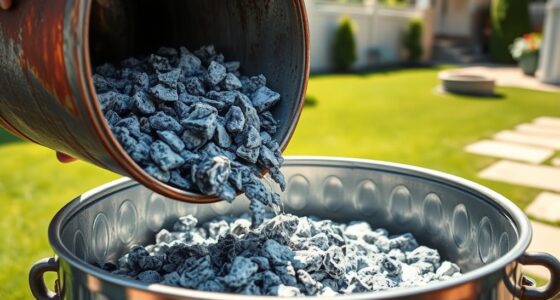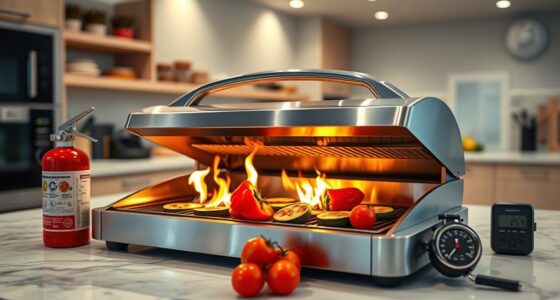
When using lighter fluid for charcoal, always follow the manufacturer’s instructions and use only the recommended amount to prevent flare-ups. Never pour fluid onto hot or already-lit coals, and don’t light damp or partially lit coals. Store lighter fluid safely away from children, pets, heat sources, and flames. Use long-handled tools and work in well-ventilated areas. Avoid common mistakes like re-igniting with excess fluid, and prioritize fire safety. Keep these tips in mind to enjoy a safe, efficient grilling experience.
Key Takeaways
- Always follow the manufacturer’s instructions and use only the recommended amount of lighter fluid.
- Never pour lighter fluid onto hot or burning charcoal to prevent flare-ups and accidents.
- Store lighter fluid in a cool, dry place away from children, pets, and heat sources.
- Use lighter fluid in well-ventilated areas and keep a fire extinguisher nearby during ignition.
- Avoid reapplying lighter fluid after initial lighting and do not use excess to minimize fumes and hazards.
Essential Do’s for Using Lighter Fluid Safely and Effectively

To use lighter fluid safely and effectively, you should always follow the manufacturer’s instructions carefully. This guarantees proper ignition and reduces fire safety risks. Use only the recommended amount of fluid—more isn’t better and can cause dangerous flare-ups. Keep the fluid away from heat sources and open flames when not in use. If you prefer, explore fuel alternatives like charcoal chimney starters or natural firelighters, which can minimize the hazards associated with lighter fluid. Always work in a well-ventilated area to prevent inhaling fumes. Storing lighter fluid properly, away from children and pets, adds an extra layer of safety. By following these do’s, you help prevent accidents and create a safer grilling experience for everyone involved.
Common Don’Ts to Avoid When Igniting Charcoal With Lighter Fluid
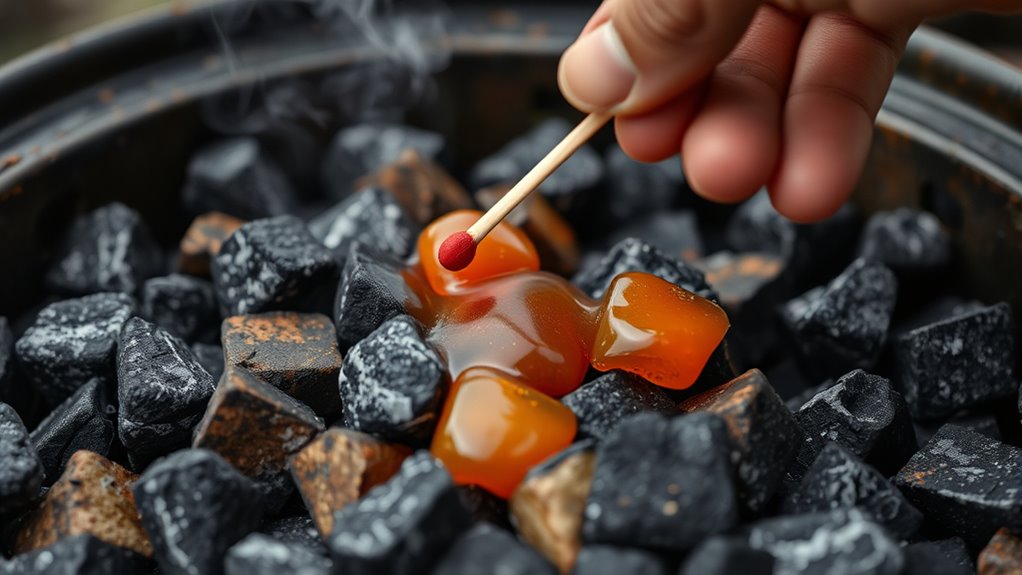
Avoid pouring lighter fluid directly onto hot or already-lit charcoal, as this can cause dangerous flare-ups and unpredictable fires. This practice considerably increases the fire risk, endangering your safety and that of others. Additionally, improper use can lead to environmental impact through excess chemicals released into the air and soil. To prevent these issues, avoid these common mistakes:
- Using too much lighter fluid, which creates excess fumes and waste.
- Applying lighter fluid on partially lit or smoldering coals, risking sudden flare-ups.
- Re-igniting charcoal with more lighter fluid after initial ignition, which can cause dangerous explosions.
Sticking to safe methods reduces fire risk and minimizes environmental harm, making your grilling experience safer and more eco-friendly.
Frequently Asked Questions
Can I Reuse Leftover Lighter Fluid on the Next Barbecue?
You shouldn’t reuse leftover lighter fluid on your next barbecue because it can be unsafe and ineffective. Lighter fluid reuse may lead to uneven lighting and unwanted chemical tastes. Instead, consider charcoal lighting alternatives like chimney starters, natural fire starters, or electric igniters. These methods are safer, cleaner, and more efficient. Always prioritize safety and proper lighting techniques to enjoy a delicious, hassle-free barbecue.
Is It Safe to Use Lighter Fluid Indoors or in Enclosed Spaces?
Using lighter fluid indoors or in enclosed spaces isn’t safe. You need proper ventilation, ample airflow, and open windows to reduce the risk of carbon monoxide buildup. Always prioritize indoor safety by avoiding matches or lighters near flammable fumes, ensuring ventilation requirements are met, and never using lighter fluid inside a confined area. Instead, opt for safer alternatives like chimney starters or electric starters designed for indoor use.
How Long Should I Wait After Applying Lighter Fluid Before Lighting?
You should wait at least 1 to 2 minutes after applying lighter fluid before lighting, guaranteeing the ignition timing is safe. This pause allows the fluid to soak in and reduces the risk of flare-ups. Always follow safety precautions by checking for excess fluid and avoiding any open flames nearby. If you notice a strong smell or visible fluid, wait longer to ensure it’s fully absorbed and safe to ignite.
Are There Alternative Methods to Light Charcoal Without Lighter Fluid?
You can use natural ignition methods like fire starters or chimney starters to light charcoal without lighter fluid. Electric starters are also effective; simply plug them in and place them beneath the charcoal. Both options eliminate the chemical smell and safety concerns associated with lighter fluid. These methods are quick, safe, and environmentally friendly, helping you start your grill efficiently without the need for harmful chemicals.
What Should I Do if Lighter Fluid Spills on My Skin or Clothing?
If lighter fluid spills on your skin, rinse immediately with plenty of water and soap to reduce irritation. For clothing stains, blot the area gently and wash the garment promptly with stain remover and laundry soap. Avoid rubbing the stain, as it can set. Always handle lighter fluid carefully to prevent spills, and wash affected skin or clothing thoroughly to minimize any potential harm or damage.
Conclusion
Remember, lighter fluid is like a wild spark—use it with care and respect. Follow the do’s, avoid the don’ts, and let your charcoal ignite smoothly like a gentle sunrise. When handled wisely, it transforms your grilling into a fiery dance, alive with flavor and fun. So, keep safety close and your flames steady, turning sparks into smoky symphonies that sizzle and sing. Your perfect cookout begins with mindful fire, fueling memories that burn bright.