To winterize your grill and smoker, start by thoroughly cleaning all surfaces, removing grease, food residues, and ashes, then scrub and wipe down internal parts. Protect against rust by applying oil and covering your equipment with weatherproof covers stored in a dry, sheltered spot. Drain all liquids, disconnect fuel sources, and inspect for damage. Elevate your setup off the ground to prevent moisture contact. Keep your equipment in top shape with tips you’ll find if you continue exploring.
Key Takeaways
- Thoroughly clean and dry all grill and smoker components to prevent rust and mold during storage.
- Apply a protective, high-temperature lubricant or oil to metal surfaces for corrosion resistance.
- Cover equipment with weatherproof covers and store in a dry, sheltered location off the ground.
- Disconnect and empty fuel tanks, and drain water from drip pans and grease traps to prevent freezing damage.
- Inspect for damage, repair loose or rusted parts, and ensure all parts are dry before storage.
Clean Your Grill and Smoker Thoroughly
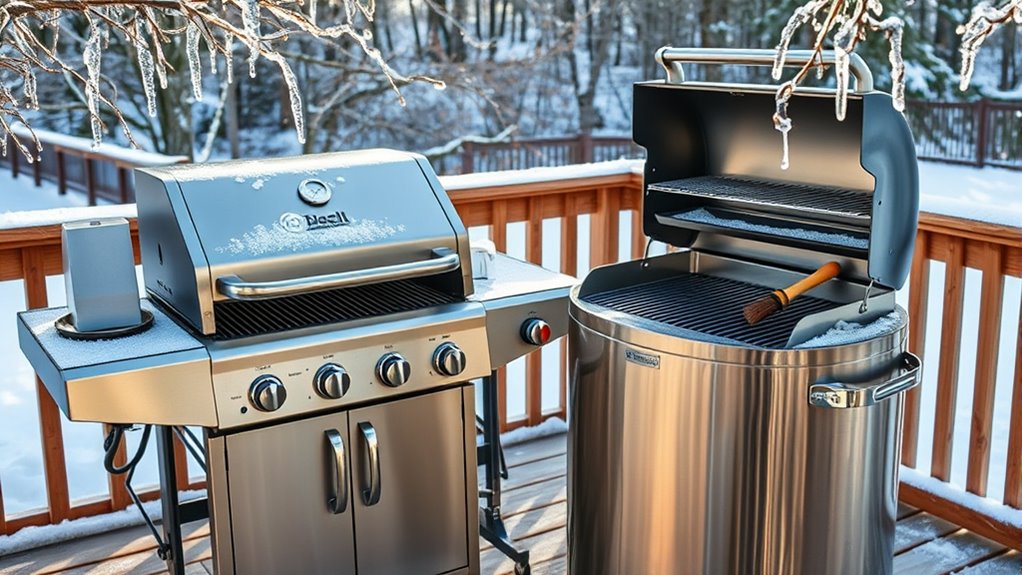
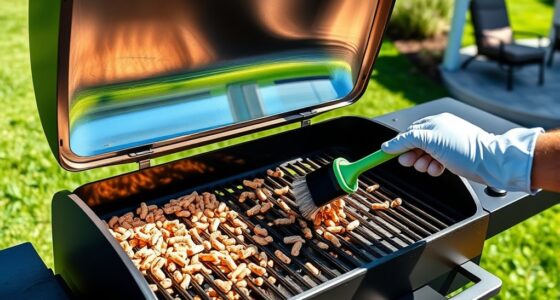
Before storing your grill and smoker for the off-season, it’s essential to clean them thoroughly. Proper grill maintenance begins with removing grease, food residues, and dirt that can cause rust or mold. Start by scrubbing grates with a wire brush or scraper to loosen buildup. Wipe down surfaces with warm, soapy water, paying close attention to corners and vents. During smoker inspection, check for grease drips or residue that could attract pests or cause corrosion. Clean out ash and debris from the interior, and ensure vents are free of obstructions. A clean grill and smoker not only prolong their lifespan but also make the next grilling season easier. Taking these steps guarantees your equipment stays in top shape during storage and is ready for use when warmer weather returns.
Remove and Dispose of Residual Ashes and Debris

Before storing your grill or smoker, make sure to remove all ashes and debris carefully. This step is essential for safety and preventing potential fire hazards. Always follow proper disposal methods and clean your equipment thoroughly afterward.
Safety First Precautions
Ensuring safety during off-season storage starts with removing residual ashes and debris from your grill or smoker. Leftover ashes can reignite if not fully cooled, posing fire safety risks. Also, debris can block vents or cause electrical issues if moisture gets trapped. Always wear gloves and a dust mask when cleaning to protect yourself. Make sure ashes are completely cool before disposal, and store them in a metal container away from combustible materials. Check for any exposed wiring or electrical components to prevent electrical safety hazards. Use the table below as a quick reference:
| Step | Safety Tip | Reason |
|---|---|---|
| Remove ashes | Make sure they are fully cooled before disposal | Fire safety risk |
| Clear debris | Keep vents and pathways clear | Prevent fire or electrical hazards |
| Inspect wiring | Look for damage or exposed wires | Electrical safety |
| Wear protective gear | Use gloves and masks during cleanup | Personal safety |
| Store ashes safely | In a metal container away from flammable objects | Fire prevention |
Proper Disposal Methods
After you finish grilling or smoking, it’s essential to properly dispose of residual ashes and debris to prevent fire hazards and maintain safety. Allow ashes to cool completely before handling. Once cooled, transfer ashes to a metal container with a tight-fitting lid. Check local recycling options—some areas accept metal ashes for recycling, reducing waste and environmental impact. Never dispose of hot ashes in plastic trash bins or leave them outdoors, as they could ignite nearby materials. If ashes contain remnants of hazardous waste, such as treated wood or chemical-laden debris, handle them according to local hazardous waste disposal guidelines. Proper disposal minimizes fire risks and guarantees safe, environmentally responsible cleanup. Always stay informed about your community’s regulations to avoid accidental hazards.
Cleaning and Maintenance
To keep your grill or smoker in top shape, it’s important to regularly remove and dispose of residual ashes and debris. This prevents buildup that can affect performance and safety. After each use, carefully scoop out ashes and debris, ensuring they’re fully cooled before disposal. Clean the interior surfaces to prevent rust and corrosion, especially if you plan to store your grill for the season. When storing, consider seasonal accessories that protect your equipment from dust and pests. Proper grill placement is essential—keep it in a dry, sheltered spot to avoid weather damage. Regular maintenance also includes checking hoses, vents, and grates. This routine helps your grill last longer and ensures it’s ready for your next cookout.
- Remove ashes carefully and safely
- Clean grates and interior surfaces
- Use seasonal accessories for protection
- Position your grill in a dry, sheltered spot
- Inspect for rust or damage
Deep Clean Grates and Internal Components

You need to remove any remaining food residue from the grates and internal parts to prevent rust and buildup. Use the right cleaners to guarantee a thorough clean without damaging your equipment. Once everything is spotless, dry all components completely before storing to keep them in top condition.
Remove Food Residue
Food residue can quickly build up on your grill and smoker’s grates and internal components, leading to rust, corrosion, and off-flavors if left unattended during the off-season. To prevent this, you need to remove food residue using proper cleaning techniques. Start by scraping off loose debris with a wire brush or scraper. Then, wipe down the surfaces with a damp cloth or sponge to loosen stubborn grime. For thorough cleaning, consider using warm soapy water or a vinegar solution on the grates and internal parts. Make sure to dry everything completely to prevent rust. Regular cleaning not only preserves your equipment but also makes your next grilling session more enjoyable. Keep these tips in mind for an effective off-season clean.
- Scrape off loose food residue with a wire brush
- Wipe surfaces with damp cloth or sponge
- Use warm soapy water or vinegar solution
- Dry all components thoroughly
- Regularly inspect for buildup
Use Appropriate Cleaners
After removing loose debris and wiping down surfaces, the next step is to use the right cleaners to thoroughly deep clean your grill and smoker’s grates and internal parts. Choose cleaning agents designed for grills, such as degreasing solutions, to cut through grease and residue effectively. For stubborn buildup, apply a heavy-duty degreaser and let it sit before scrubbing. Use a wire brush or scraper to loosen grime.
| Surface | Recommended Cleaner |
|---|---|
| Grates | Grill cleaner or degreasing solution |
| Internal components | Heavy-duty degreaser |
| Exterior surfaces | Mild soap and water |
Dry Thoroughly Before Storage
Ensuring your grill and smoker are completely dry before storing is essential to prevent rust and corrosion. Moisture prevention is key, especially if your storage environment is humid or damp. After cleaning, thoroughly dry all components, including grates, burners, and internal chambers, to eliminate water that could cause damage over time. Use a clean cloth or towel to wipe down surfaces and let parts air dry if necessary. Proper drying reduces the risk of mold and extends your equipment’s lifespan.
- Remove excess moisture with a dry cloth or towel
- Allow internal parts to air dry in a well-ventilated space
- Check for any lingering water in crevices or corners
- Consider using a fan to speed up drying if needed
- Store in a dry, low-humidity environment
Protect Against Rust and Corrosion
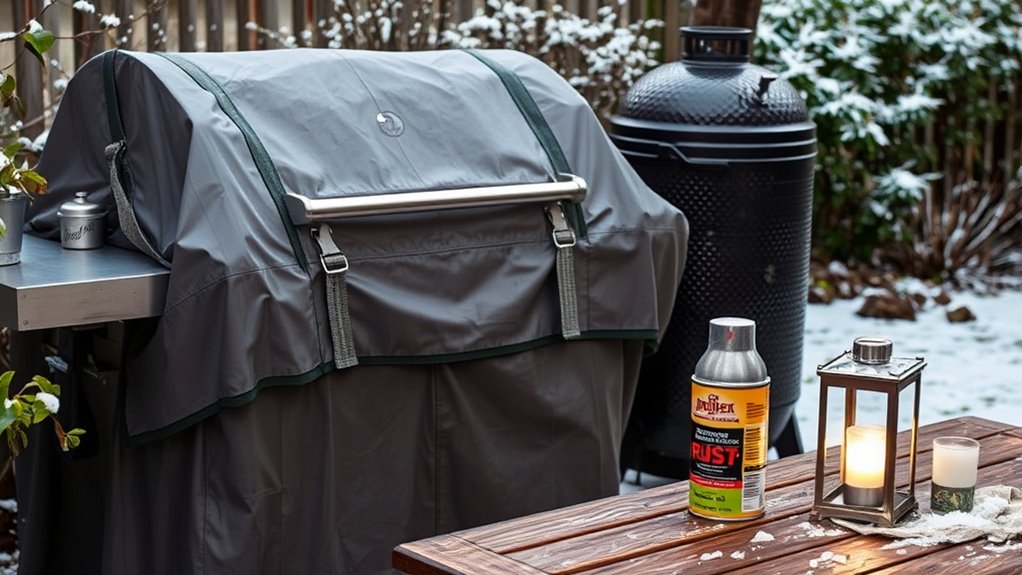
Rust and corrosion pose a significant threat to your grill and smoker during the off-season, especially if they’re left exposed to moisture. To protect against this, focus on seasonal maintenance and rust prevention. Start by applying a high-temperature, food-grade lubricant to metal surfaces to create a protective barrier. Store your grill in a dry, covered area or use a weatherproof cover to shield it from moisture. Regularly inspect and clean vents, grates, and burners to remove any buildup that could trap moisture.
| Step | Action |
|---|---|
| Apply protective coating | Use oil or specialty spray to prevent rust |
| Keep dry and covered | Store in a sheltered location or use a cover |
| Inspect regularly | Check for signs of corrosion and address early |
Check and Repair Any Damage or Wear

Before storing your grill or smoker for the off-season, it’s essential to carefully check for any damage or wear that could worsen over time. Use an inspection checklist to identify issues like rust spots, loose parts, or cracks. Prioritize repairs that impact safety and functionality, such as fixing gas leaks or replacing damaged grates. Look for worn or frayed wiring if your unit has electric components. Tighten loose screws or bolts to prevent further deterioration. Address any signs of corrosion early to prevent deep rust. Remember, a thorough inspection helps you focus on repair priorities, ensuring your equipment stays in good condition during storage. Taking these steps now saves you time and money when it’s time to fire it up again.
Drain and Store Liquids Properly
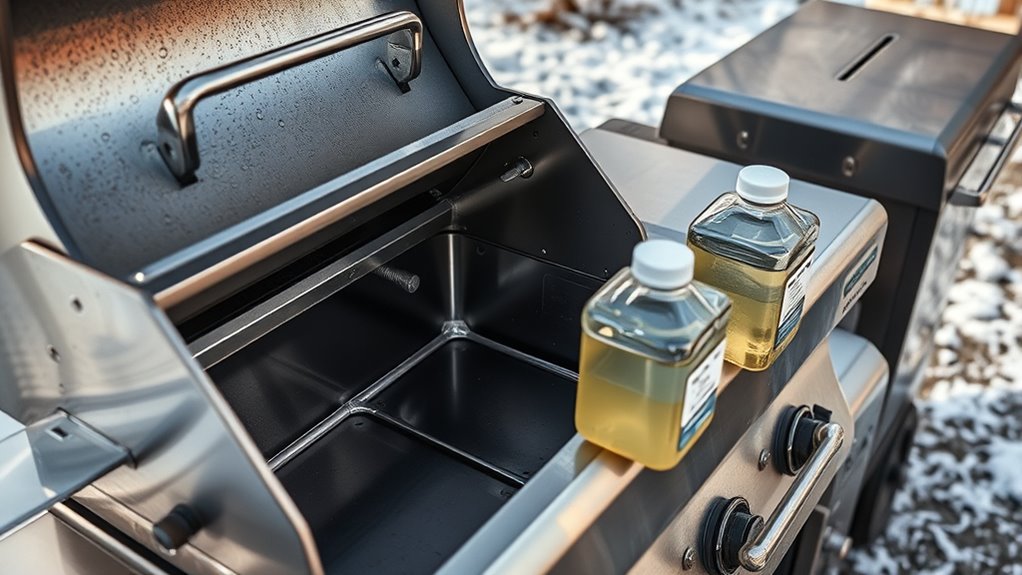
To prevent damage and leaks during off-season storage, you should drain all liquids from your grill or smoker thoroughly. Start with liquid drainage by emptying water from the drip pans, grease traps, and fuel reservoirs. Remove any leftover marinade or sauce from cooking surfaces and internal parts. Follow proper storage procedures by ensuring all liquids are fully drained to avoid freezing and expanding, which can cause damage. Use a clean cloth to wipe away residual moisture and prevent rust. If your smoker uses propane or other fuels, disconnect and store tanks separately in a cool, dry place away from direct sunlight. Proper liquid drainage helps protect your equipment, ensuring it stays in good condition until you’re ready to fire it up again.
Cover and Store Your Equipment Safely

Once you’ve drained all liquids from your grill or smoker, the next step is to protect your equipment from the elements. Proper cover and storage are essential for equipment protection during the off-season. Choose a high-quality, weather-resistant cover that fits snugly to prevent moisture and debris from getting inside. Store your equipment in a dry, sheltered area like a shed or garage, away from direct sunlight and harsh weather. Elevate your grill or smoker off the ground to prevent rust and damage. Regularly inspect the cover for tears or wear and replace it if needed. Keeping your equipment protected ensures it stays in good condition for next season and extends its lifespan.
Protect your grill or smoker with a weather-resistant cover and proper storage to extend its lifespan.
- Use a durable, weatherproof cover
- Store in a sheltered, dry location
- Elevate your equipment off the ground
- Check for cover damage regularly
- Keep the area free of debris
Prepare the Fuel and Accessories for Off-Season Storage

Ensuring your fuel and accessories are properly prepared is essential for a smooth off-season storage process. Start by safely emptying your grill or smoker of leftover fuel, such as propane or charcoal, to prevent leaks or corrosion. For propane tanks, turn off the valve and disconnect, then store the tank in a cool, ventilated area away from direct sunlight. If you use charcoal, let it burn out completely before cleaning out the ash. Next, focus on accessory organization—clean and dry all tools, grates, and racks to prevent rust and mold. Store these items in a dry, accessible container or bin. Proper fuel preparation and organized accessories make your spring setup easier and help extend the life of your equipment.
Tips for Starting Up Your Grill and Smoker in the Spring

After storing your grill and smoker over the winter, it’s time to get them ready for use again. Proper startup guarantees ideal grill maintenance and extends smoker longevity. Begin by inspecting for rust or debris, cleaning grates, and checking gas lines or charcoal supply. Lightly oil the grates to prevent sticking. Perform a test run to ensure burners ignite correctly and smoke output is steady. Adjust vents for proper airflow, which helps with temperature control. This process helps you identify potential issues early, saving you time and effort later. Good startup practices not only enhance your cooking experience but also prolong the life of your equipment. Keep these tips in mind to enjoy flavorful grilling and smoking all season long.
- Inspect and clean all components
- Check gas connections or charcoal availability
- Light the grill and smoker for a test run
- Adjust airflow vents
- Oil grates for easy cleaning
Frequently Asked Questions
How Do I Prevent Pests From Nesting in My Grill During Off-Season Storage?
To prevent pests from nesting in your grill during off-season storage, you should use pest prevention techniques like sealing any openings and cleaning thoroughly. Place nesting deterrents such as mesh covers or wire screens over vents and holes. Store your grill in a dry, covered area, and consider adding a pest-repellent spray around it. These steps help keep pests out and protect your grill until you’re ready to use it again.
What Are the Best Storage Locations to Prevent Damage From Winter Weather?
You should store your grill and smoker in a well-organized garage or under a sturdy backyard shelter to protect them from winter weather. Keep them away from direct snow, rain, and harsh winds by choosing a covered, dry space. Organize your garage to guarantee easy access and prevent accidental damage, or set up a weatherproof shelter in your yard for added protection. This keeps your equipment safe and ready for spring.
How Often Should I Perform Maintenance Checks During the Off-Season?
Did you know that neglecting routine inspections can lead to grill fires or rust damage? You should perform maintenance checks at least once a month during the off-season. Stick to consistent cleaning schedules, including wiping down surfaces and checking for corrosion or pests. Regular inspections help catch issues early, ensuring your grill and smoker stay in top shape and ready for use when warmer weather returns.
Can I Store My Grill and Smoker Indoors Safely?
You can store your grill and smoker indoors, but guarantee indoor safety by placing them in a well-ventilated area away from living spaces. Ventilation concerns are vital because residual gases or grease can pose fire hazards or emit harmful fumes. Always clean your equipment thoroughly, keep it unplugged, and avoid storing near heat sources. Following these precautions helps you store your grill and smoker safely indoors during the off-season.
What Are Eco-Friendly Ways to Dispose of Leftover Charcoal and Ashes?
Think of leftover charcoal and ashes as treasure waiting to be reused. You can recycle options like composting ashes if they’re free of chemicals or using them as natural pH adjusters in your garden. For safe ash disposal, let ashes cool completely, then place them in a metal container with a tight lid. Avoid trash fires and always check local regulations. This way, you turn waste into eco-friendly resources.
Conclusion
By winterizing your grill and smoker, you’re not just protecting your equipment—you’re ensuring delicious meals await you next season. Some believe the myth that neglecting winter storage ruins your gear, but with proper care, your grill can last for years. Take the time now; your future self will thank you when spring rolls around, and you’re ready to fire up again. Proper winterizing isn’t just maintenance—it’s a promise of great flavors to come.