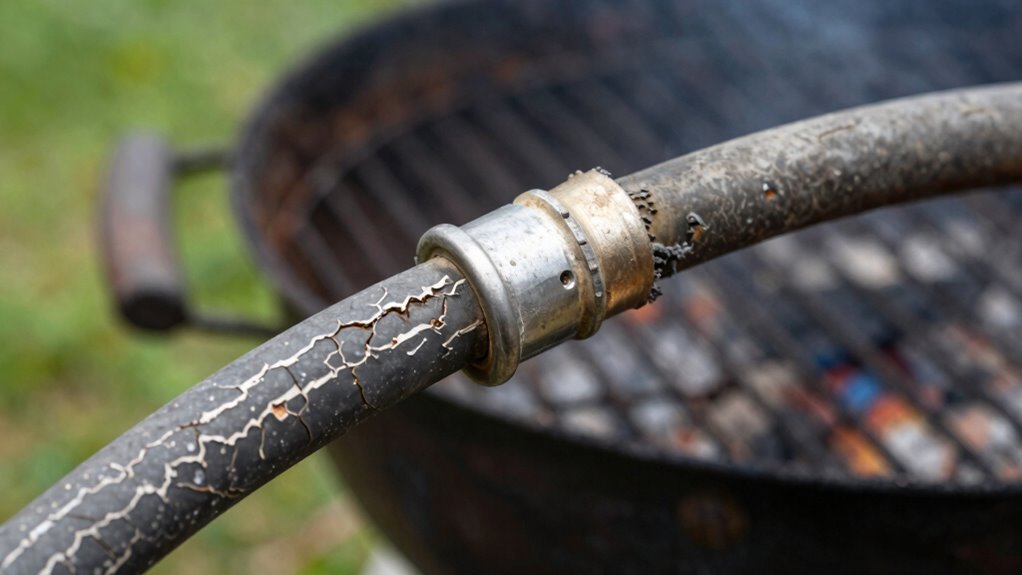

To tell if your grill hoses need replacing, regularly inspect them for cracks, brittleness, or discoloration. Look for swelling, burn marks, kinks, or holes that could cause leaks. Make sure the hoses aren’t swollen or damaged from heat or wear. Perform a leak test by applying soap and water—bubbles indicate a problem. If you notice any issues, replace the hoses immediately. Keep your grill safe and functioning well—learn more about proper maintenance now.
Key Takeaways
- Visible cracks, brittleness, or blistering indicate the hose needs replacing.
- Swelling, burn marks, or discoloration from heat damage are signs of deterioration.
- Kinks, bends, or small holes suggest the hose may cause leaks and require replacement.
- Regularly perform leak tests; bubbles during soap water application signal damage.
- Replace hoses immediately if any signs of wear or damage are detected during inspection.
Are you unsure if your grill hoses are still safe to use? It’s a common concern, especially if you’ve used your grill frequently. The good news is that inspecting your hoses regularly can prevent potential hazards. Safety precautions are essential whenever you’re working with gas appliances, so always turn off the propane tank and disconnect it before inspecting the hose. Wear gloves and work in a well-ventilated area to avoid inhaling any fumes or coming into contact with residual gas. Taking these maintenance tips seriously can help you spot issues early and keep your grilling experience safe.
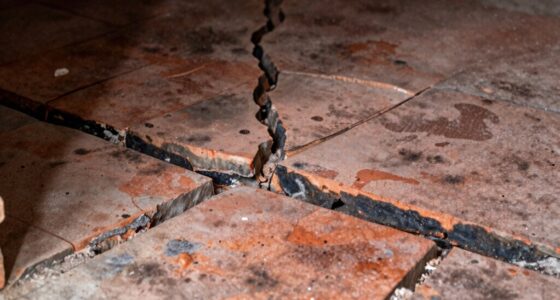
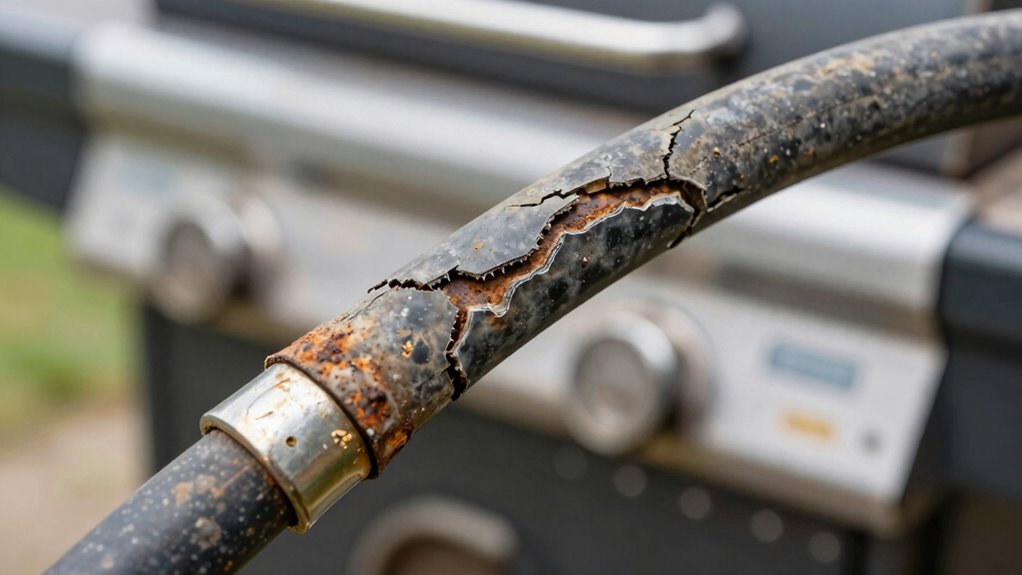
Start by visually examining the entire length of the hose. Look for cracks, brittleness, or obvious signs of wear. If the hose appears swollen or blistered, it’s a clear sign that it’s deteriorating and needs replacing. Also, check for any kinks or bends that could restrict gas flow. Discoloration or burn marks are signs of heat damage, which compromise the hose’s integrity. If you notice any of these issues, it’s best to replace the hose immediately. Remember, even small cracks or holes can lead to dangerous gas leaks, so don’t ignore minor damage. Regularly inspecting gas hoses can help you identify potential issues before they become serious safety hazards. Additionally, proper maintenance can extend the lifespan of your hoses and prevent unexpected failures. Incorporating routine inspections into your maintenance schedule can further ensure safety and performance.
Next, perform a simple leak test. With the gas turned on and the hose disconnected from the grill, apply a soap and water solution to the hose. Turn on the propane slightly and watch for bubbles forming. If bubbles appear, it indicates a leak, and the hose is no longer safe. In such cases, replacing the hose is the only option. It’s a straightforward test but crucial for safety. Moreover, using quality hoses from reputable manufacturers can ensure better durability and safety. Never attempt to repair a damaged hose with tape or other makeshift fixes; they won’t hold up and could cause dangerous leaks. Regular inspection and maintenance of grill hoses can help prevent unexpected failures and ensure safe grilling. Consider replacing hoses every few years as part of your routine upkeep, especially if your grill is exposed to harsh weather conditions.
As an affiliate, we earn on qualifying purchases.
Frequently Asked Questions
Can I Repair a Damaged Grill Hose Myself?
You can attempt to repair a damaged grill hose yourself if you’re comfortable with grill maintenance, but only if the damage is minor. First, make sure the hose is compatible with your grill model. Use a repair kit designed for gas hoses, and inspect for leaks or cracks. However, if the damage is extensive or you’re unsure, it’s safer to replace the hose altogether to prevent gas leaks or fires.
How Often Should I Inspect My Grill Hose?
You should inspect your grill hose at least once a month—it’s as essential as checking your own pulse! Regular grill maintenance ensures your hose’s durability and safety. Look for cracks, leaks, or corrosion, especially before heavy grilling seasons. Frequent inspections help catch issues early, preventing potential fires or gas leaks. Keep your grill in top shape by sticking to this routine, so you can enjoy safe, delicious barbecues all summer long.
What Safety Precautions Are Needed When Replacing a Hose?
When replacing a grill hose, you should wear gloves and safety goggles to protect yourself from potential gas leaks or accidental sparks. Always work in a well-ventilated area to reduce fire safety risks. Before starting, verify the gas supply is turned off to prevent leaks. Check for damage or corrosion on the hose, and tighten fittings securely to avoid leaks, reducing fire hazards during and after the replacement.
Are There Specific Tools Required for Hose Replacement?
Think of replacing your grill hose like tightening a snug belt; you’ll need specific tools to secure it properly. You’ll require a screwdriver or pliers to loosen and tighten hose clamps, ensuring a tight seal. A pressure gauge helps you check for leaks and proper pressure flow. Having these tools on hand makes the process smoother, helping you avoid dangerous leaks and keep your grill firing safely and efficiently.
Can Incompatible Hoses Cause Safety Hazards?
Incompatible hoses can definitely cause safety hazards, like gas leaks and fire risks. When you use a hose not designed for your grill, it might not fit properly or withstand the pressure, increasing the chance of leaks. These leaks can lead to dangerous gas buildup and potential fires. Always verify you’re using the correct, compatible hose to keep your grilling safe and avoid hazardous situations.
As an affiliate, we earn on qualifying purchases.
Conclusion
So, next time your grill hose leaks or smells funny, don’t wait for a smoky surprise—think of it as a little reminder from your grill that it’s time for a change. Ironically, ignoring these signs might save you a few bucks now, but could cost you a lot more later. Remember, a safe grill is a happy grill, and replacing those hoses before disaster strikes keeps your cookouts fun and fire-free.
As an affiliate, we earn on qualifying purchases.
As an affiliate, we earn on qualifying purchases.