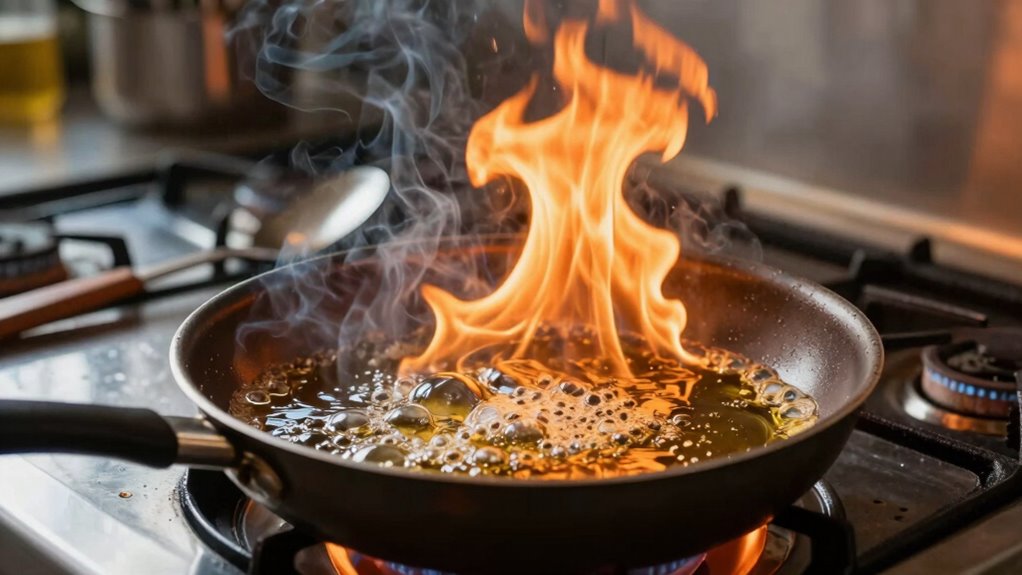

Grease fires start faster than most expect because cooking oil can quickly reach its flash point, especially when heated unevenly. Just a small rise in temperature produces flammable vapors that ignite easily, sometimes within seconds. Sparks from splashes or loose paper can ignite these vapors, causing rapid flames. Turning off the heat alone isn’t enough—you need to smother the fire safely. Stay alert and discover more ways to prevent and handle these dangerous fires.
Open a free Amazon Business account
Business pricing, bulk buying and tax-exempt orders.
As an affiliate, we earn on qualifying purchases.
Key Takeaways
- Oil can reach its flash point quickly due to uneven heating, causing rapid ignition.
- Flammable vapors are released suddenly at high temperatures, igniting with sparks or splashes.
- Small increases in temperature can push oil past its flash point unexpectedly.
- Sparks from accidents, like water splashes or loose paper, can ignite vapors instantly.
- Grease fires ignite and spread in seconds, often before anyone realizes the danger.

Grease fires can ignite and spread much faster than most people realize, often catching even experienced cooks off guard. When you’re cooking with oil, you might think a little patience or a quick glance is enough to prevent a problem. But the truth is, cooking oil can reach its flash point quickly, especially if you’re not paying close attention. The moment the oil gets too hot, it can ignite suddenly, turning your stovetop into a dangerous blaze in seconds. That’s why understanding fire safety when working with cooking oil is crucial. Recognizing how fast these fires start can help you react faster and prevent a small incident from turning into a disaster. Additionally, most people underestimate how quickly a grease fire can develop, as high temperatures cause oil to reach its flash point rapidly. Oil heats unevenly, and even a slight increase in temperature can push it past its flash point. Once this happens, the oil releases flammable vapors that can ignite with just a tiny spark—like a splash of water or a loose paper towel nearby. It’s a common misconception that water can put out a grease fire. In reality, adding water causes the oil to splatter and spread the flames, making the fire much worse. That’s why fire safety tips emphasize using a fire extinguisher labeled for kitchen fires or covering the pan with a metal lid or a baking sheet to smother the flames.
You might think that turning off the heat is enough if a fire starts. But in a grease fire, that’s not always the case. The fire can continue to burn even after the heat source is gone if it has enough oxygen. It’s essential to act quickly, but also calmly, to prevent the fire from spreading. Never try to move the pan outside or pour water on it—that’s a recipe for disaster. Instead, turn off the burner if you can, and then cover the fire with a metal lid or a damp towel to cut off its oxygen supply. Keeping a fire extinguisher nearby and knowing how to use it is part of good fire safety practices. Remember, the key is acting fast but safely, to prevent a small flame from turning into a dangerous blaze. Proper fire safety procedures and having the right equipment on hand can make all the difference in controlling the fire early. Being aware of cooking oil properties and behaviors can also help you better understand the risks involved and implement preventative measures.
Understanding how fast grease fires can ignite helps you stay prepared. Always pay close attention when heating oil, and never leave it unattended. Recognizing the signs of overheating and knowing the correct fire safety measures can make all the difference. Staying informed about fire hazards and safety procedures allows you to react appropriately and minimize damage if a fire does start. Stay vigilant, and don’t underestimate the speed at which a tiny spark can turn into a serious kitchen fire.
kitchen fire extinguisher for grease fires
As an affiliate, we earn on qualifying purchases.
As an affiliate, we earn on qualifying purchases.
Frequently Asked Questions
Can Using Water Help Extinguish a Grease Fire?
Using water on a grease fire is dangerous and can make the fire worse. Instead, you should grab a fire extinguisher rated for grease fires, like a Class K extinguisher, and follow safety precautions. Water causes the burning grease to splatter, spreading the fire. Always remember to turn off the heat source first, then use the extinguisher carefully, keeping your safety in mind to prevent injuries.
What Kitchen Items Can Cause Grease Fires?
Think of your kitchen as a battlefield, where cooking oil and kitchen towels can ignite chaos. Cooking oil is highly flammable, and if left unattended or overheated, it can quickly spark a fire. Kitchen towels, especially when soaked with grease, can catch fire easily if placed near hot surfaces or flames. Always stay attentive, keep flammable items away from heat, and never leave cooking unattended to prevent fires from erupting unexpectedly.
How Quickly Does a Grease Fire Typically Escalate?
A grease fire can escalate in just seconds, often within 30 seconds to a minute. As it quickly spreads, you should prioritize fire suppression methods like smothering with a metal lid or baking soda. Always follow safety precautions, such as turning off the heat and never using water, which can worsen the fire. Acting swiftly and calmly helps prevent extensive damage and keeps everyone safe.
Is It Safe to Try to Move a Grease Fire?
It’s not safe to try to move a grease fire. Fire safety experts advise against attempting to relocate it, as doing so can cause the fire to spread or worsen. Instead, focus on emergency response: turn off the heat source if you can, cover the flames with a metal lid or baking sheet to smother the fire, and call emergency services immediately. Staying calm and acting fast saves lives and property.
What Are the Long-Term Effects of Grease Fires on Appliances?
Grease fires can cause long-term appliance damage, leaving your stove or oven less efficient over time. Residual contamination from burned grease can also linger, making cleaning difficult and potentially affecting food safety. This buildup may lead to persistent odors or even future fire hazards if not thoroughly cleaned. Regular maintenance and professional inspection are essential to guarantee your appliances stay safe and functional after a grease fire.
stainless steel pot lid for smothering fires
As an affiliate, we earn on qualifying purchases.
As an affiliate, we earn on qualifying purchases.
Conclusion
So, next time you’re cooking, remember that a grease fire can ignite faster than a lightning bolt, turning your kitchen into a danger zone in the blink of an eye. Stay vigilant, never leave hot oil unattended, and keep a fire extinguisher nearby. By understanding just how quickly these fires can spiral out of control, you can prevent a disaster before it even begins. Don’t let your kitchen become a battleground—stay safe and cook smart!
As an affiliate, we earn on qualifying purchases.
As an affiliate, we earn on qualifying purchases.
NFL season / tailgating Picks
team gear
As an affiliate, we earn on qualifying purchases.