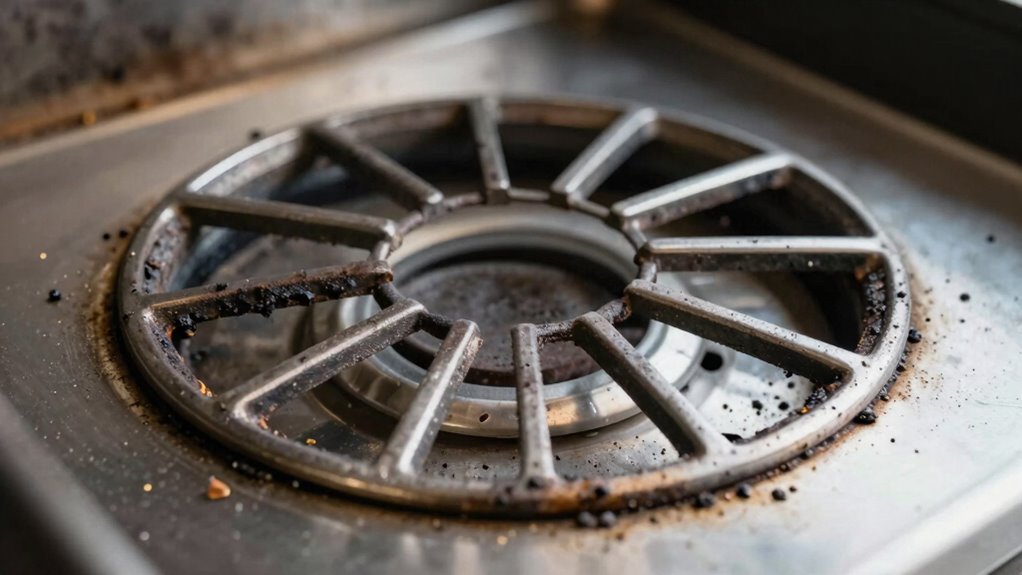

Grill burners clog because grease, food debris, rust, and dirt build up inside small holes and ports over time. You might notice uneven flames, flickering, or longer heats, which indicate trouble ahead. Catch these issues early by inspecting burners regularly, cleaning ports with a wire brush, and removing debris before cooking. Staying proactive can help maintain your grill’s performance and safety—continue exploring how to keep your burners clean and functioning well.

Get kitchen gear delivered free with Prime
- Fast, free delivery on millions of items
- Prime Video, Amazon Music and more included
- Member-only deals all year
Key Takeaways
- Grease, food debris, and dirt can clog burner ports over time, restricting gas flow.
- Rust and corrosion development inside burners contribute to blockages.
- Regular inspection with a flashlight helps identify obstructions early.
- Cleaning burner ports with a wire brush or pin prevents buildup and maintains performance.
- Signs like uneven flames or longer heating times indicate potential clogging needing prompt attention.
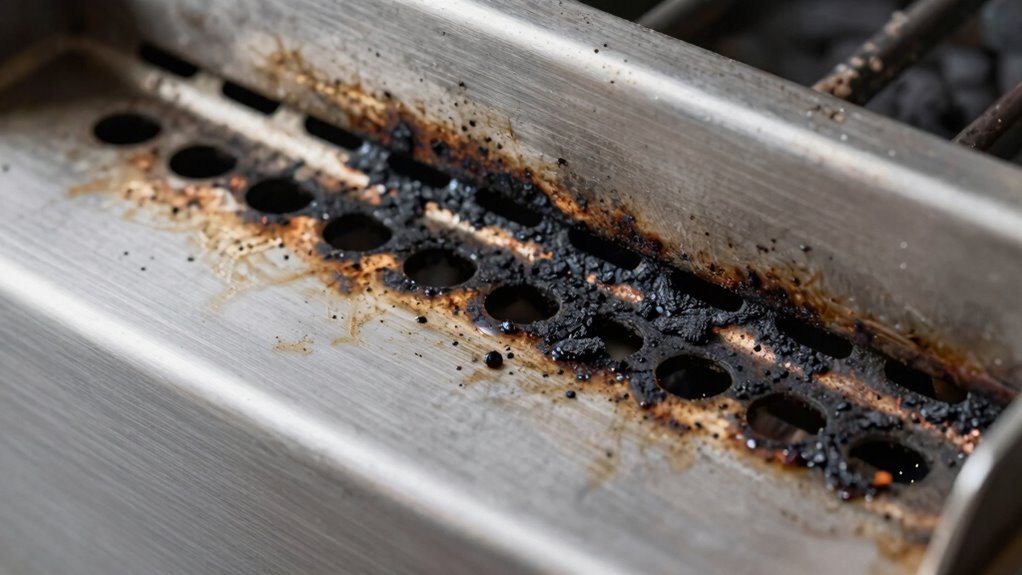
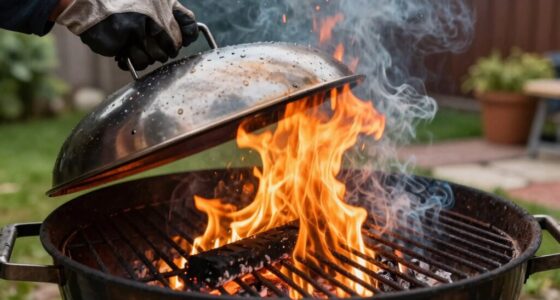
Grill burners can clog over time, often without you even noticing, which can lead to uneven heating or a complete loss of flame. When your burner becomes blocked, the fuel flow gets restricted, making it harder for gas to reach the burners evenly. This disruption affects flame stability, causing it to flicker, die out, or burn unevenly. Recognizing early signs of clogging is essential to maintaining a safe and efficient grilling experience.
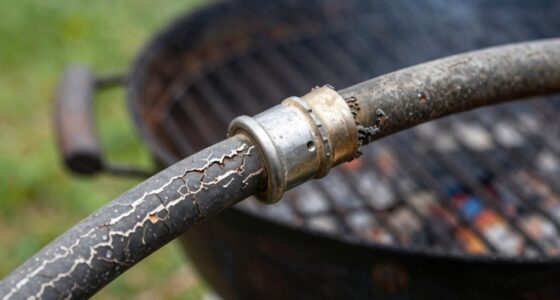
One of the main reasons burners clog is due to the buildup of grease, food debris, and dirt. These residues can settle inside the small ports or holes designed to release gas, gradually narrowing or blocking them altogether. Additionally, rust or corrosion can develop over time, further impeding fuel flow. If you notice that your flame is inconsistent or that the grill takes longer to heat up, it’s a clear indication that the burners might be partially clogged. Ignoring these signs can lead to more serious issues, such as uneven cooking or even unsafe flare-ups.
Grease, debris, and rust can block burners, causing uneven flames and unsafe flare-ups if ignored.
To catch clogging early, it’s a good idea to regularly inspect your burners before each grilling session. Remove the grates and burners, then use a flashlight to look inside the small holes. If you see any obstructions or a buildup of debris, clean them out promptly. A stiff wire brush or a pin can help dislodge dirt and grease from the ports without damaging the metal. Ensuring that fuel flow remains unobstructed is key to flame stability, which directly influences how evenly your food cooks. Regular maintenance can also help prevent the development of rust or corrosion, which can further block fuel pathways. Understanding fuel flow and how it impacts your grill’s performance can help you troubleshoot issues more effectively. Additionally, checking for clogged ports regularly can prevent more extensive problems down the line.
Products Worth Considering

Weber Lumin Portable Electric Grill, Black

Weber Q 1400 Portable Electric Grill, Gray

Breville Barista Pro Espresso Machine with Built-In Grinder, Brushed Stainless Steel
As an affiliate, we earn on qualifying purchases.
Frequently Asked Questions
Can Clogged Burners Affect Overall Grill Performance?
Clogged burners can considerably affect your grill’s performance by disrupting fuel flow and causing uneven flame stability. When burners clog, you might notice inconsistent heat, longer cooking times, or even flare-ups. Regularly inspecting and cleaning your burners helps guarantee proper fuel flow and stable flames, keeping your grill functioning efficiently. Catching clogs early prevents performance issues and prolongs your grill’s lifespan, making your cooking experience smoother and more enjoyable.
How Often Should I Inspect My Grill Burners for Clogs?
You should inspect your grill burners at least once a season, especially if you notice ignition issues or flame irregularities. Coincidentally, these signs often indicate clogs forming in the burners. Regular checks help catch blockages early, preventing uneven cooking and ensuring safe operation. By inspecting regularly, you’ll keep your grill functioning smoothly and extend its lifespan, making your grilling sessions more enjoyable without surprises.
Are Certain Foods More Likely to Cause Burner Clogs?
Certain foods, especially those with high fat content like burgers, sausages, and greasy marinades, are more likely to cause burner clogs. You should watch out for food residue and grease buildup around the burners after cooking. These residues can harden and block the gas flow over time. Regularly cleaning your grill and removing grease buildup helps prevent clogs, ensuring your burners stay clear and your grill performs well.
What Tools Are Best for Cleaning Clogged Burners?
Imagine giving your grill a gentle spa day—using the right cleaning tools makes all the difference in burner maintenance. You’ll want a soft wire brush, a toothbrush for tight spots, and a needle or paperclip to clear tiny obstructions. These tools help you keep your burners flowing smoothly, preventing clogs before they start. Regular cleaning with these essentials guarantees your grill stays in top shape and ready to impress.
Can Outdoor Weather Conditions Cause Burner Clogs?
Yes, outdoor weather conditions can cause burner clogs. Weather impact, like rain, humidity, and temperature fluctuations, can lead to rust and corrosion, which block burner ports. Moisture from outdoor conditions can also promote debris buildup inside the burners, restricting airflow. To prevent clogs, regularly inspect and clean your grill, especially after harsh weather, and cover it when not in use to shield it from outdoor elements.
Conclusion
By keeping an eye on your grill burners, you’re like a vigilant gardener tending to delicate plants—catching clogs early before they choke the flame. Regular cleaning clears away the debris that threatens to smother your fire’s glow, ensuring your grill stays vibrant and ready. Imagine the sizzle and aroma of perfectly cooked food, all because you’ve taken simple steps to prevent clogs. With care, your grill becomes a trusty partner in countless delicious barbecues ahead.