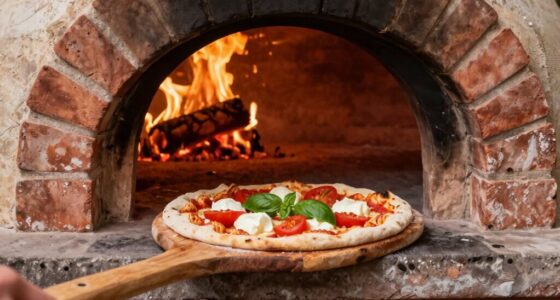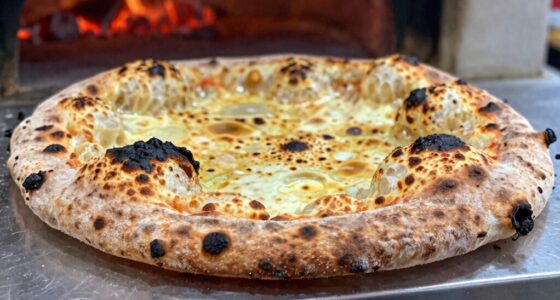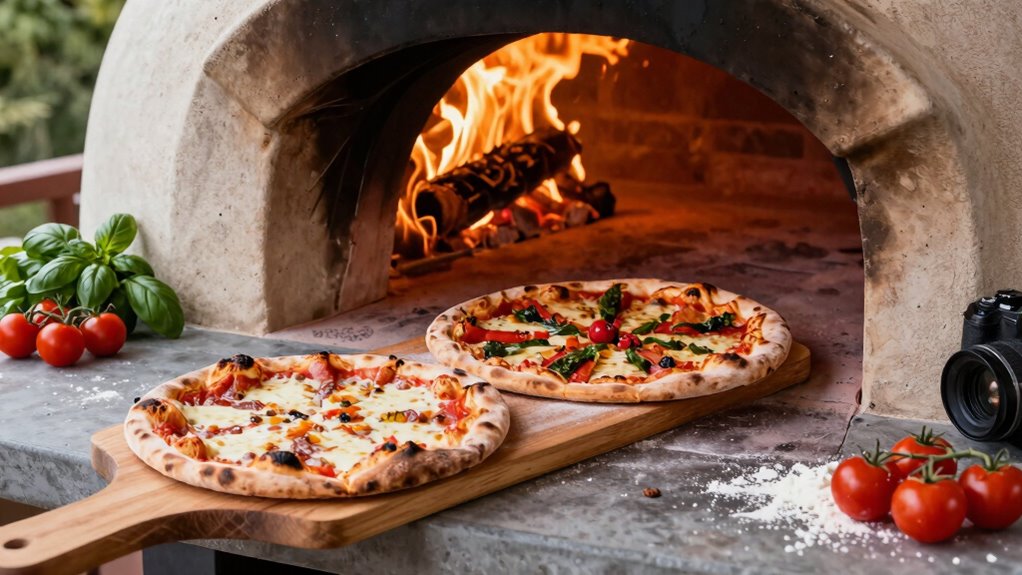

To choose the right pizza size for your outdoor oven, consider your oven’s heat capacity and your crust preference. Thinner crusts and larger sizes cook quickly in high-heat ovens, ideal for outdoor setups, while thicker crusts and smaller sizes work better at moderate temperatures. Think about how many people you’re serving and how toppings are distributed. If you want detailed tips to optimize your pizza experience, keep exploring how all these factors come together.

Get kitchen gear delivered free with Prime
- Fast, free delivery on millions of items
- Prime Video, Amazon Music and more included
- Member-only deals all year
Key Takeaways
- Match pizza size and crust thickness to your oven’s heat capacity and cooking time for optimal results.
- Use thinner crusts for larger pizzas in high-heat outdoor ovens for quick, even cooking.
- Select smaller or medium-sized pizzas with thicker crusts for moderate oven temperatures and dense toppings.
- Consider your guest count and appetite when choosing pizza size to ensure appropriate serving portions.
- Plan ingredient distribution carefully to prevent scorching and ensure even baking across different pizza sizes.
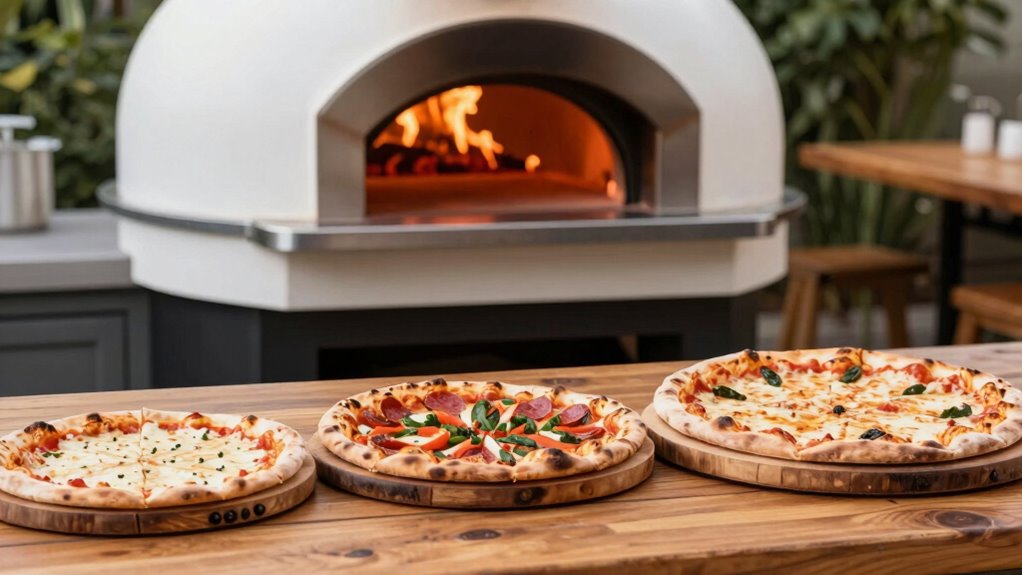
Have you ever wondered how to choose the perfect pizza size for your gathering? It’s a common question, especially when you’re aiming to impress your friends or family with homemade pizza from your outdoor oven. The key to making the right choice lies in understanding how pizza crust thickness and ingredient distribution come into play. These factors influence not only the overall taste and texture but also how well everyone gets a satisfying slice.
First, consider the crust thickness you prefer. Thinner crust pizzas tend to cook faster and are easier to handle in larger sizes, making them suitable for bigger gatherings where you want quick turnaround times. Thicker crusts, on the other hand, offer a heartier bite and can support more toppings without becoming soggy or difficult to eat. When selecting a size, think about how the crust will hold up during cooking. Larger pizzas with thick crusts require more even heat distribution to prevent burning the edges while ensuring the center cooks thoroughly. If your outdoor oven has a high heat, thinner crusts in larger sizes can be ideal. Conversely, if your oven maintains a moderate temperature, smaller or medium-sized pizzas with thicker crusts might work better.
Choose thinner crusts for larger pizzas in high-heat ovens, or opt for thicker crusts in smaller sizes for moderate temperatures.
Ingredient distribution is another vital aspect. A larger pizza means more surface area, which affects how toppings are spread out. You want to guarantee that each slice gets a balanced amount of ingredients, so avoid overloading large pizzas. Instead, distribute toppings evenly, starting from the center outward, to prevent ingredients from sliding off or burning during cooking. For outdoor ovens, which often have uneven heat spots, thoughtful ingredient placement helps prevent scorching and ensures even baking. Proper ingredient placement can significantly improve the final result, especially in ovens with uneven heat distribution. When choosing size, think about the weight and density of your toppings. Heavy, dense toppings like multiple cheeses or thick cuts of meat are better suited to smaller or medium pizzas so they don’t overwhelm the crust or cook unevenly. Additionally, understanding oven heat management can help you better adapt your pizza size and toppings for consistent results.
Additionally, consider how many people you’re serving and their appetite levels. If you’re hosting a big group, opt for larger pizzas but keep the toppings simple to maintain good ingredient distribution. For smaller groups or individual servings, smaller pizzas allow for more variety and control over ingredient placement. Remember, larger pizzas require longer cooking times and more precise heat management to achieve the perfect crust and evenly baked toppings. Smaller sizes are more forgiving and quicker to cook, especially in outdoor ovens with variable heat conditions. Using different baking methods can also influence how you approach pizza sizing and cooking times, ensuring you get a perfectly baked pie every time.
In the end, choosing the right pizza size boils down to balancing crust preferences, ingredient distribution, and your oven’s capabilities. With some planning, you can create delicious, perfectly cooked pizzas that satisfy every guest and make your outdoor pizza nights truly memorable.
As an affiliate, we earn on qualifying purchases.
Frequently Asked Questions
How Does Oven Temperature Affect Pizza Size Choice?
Oven temperature directly impacts your pizza size choice because higher oven heat cooks smaller pizzas quickly, creating a crispy crust and evenly melted cheese. With good temperature control, you can handle larger pizzas, ensuring they cook thoroughly without burning. If your oven heats unevenly, opt for smaller sizes to avoid undercooked centers. Adjust your pizza size based on oven heat and your ability to maintain consistent temperature control for perfect results.
What Pizza Size Is Best for Large Outdoor Gatherings?
For large outdoor gatherings, a 16 to 18-inch pizza is your best bet, like a feast on a platter. This size allows you to evenly spread the pizza crust and toppings, ensuring everyone gets a slice with balanced topping distribution. Larger pizzas reduce the number of pies you need to prepare, saving time and effort, while still providing enough slices to satisfy big crowds comfortably.
Does Dough Type Influence Optimal Pizza Size?
Yes, dough type influences the ideal pizza size. If your dough has high elasticity, you can stretch it larger without tearing, making bigger pizzas ideal. Thicker crusts, which provide more structure, also support larger sizes, while thinner crusts work better with smaller pizzas to prevent sogginess. Consider your dough’s elasticity and crust thickness when choosing size, ensuring your pizza holds together and cooks evenly in your outdoor oven.
How Do Cooking Times Vary With Different Pizza Sizes?
You might think larger pizzas always take longer to cook, but that’s not entirely true—pizza thickness and crust style play bigger roles. Thicker crusts or deep-dish styles require more cooking time regardless of size, while thin-crust pizzas cook quickly, even if big. So, when choosing your pizza size, consider these factors because a thin, small pizza can cook faster than a thick, large one. Adjust your cooking time accordingly for perfect results.
Can I Cook Multiple Small Pizzas Faster Than One Large?
Yes, cooking multiple small pizzas is usually faster than one large, since they require less cooking time and heat penetrates quicker. To manage this effectively, consider pizza storage and ingredient scaling—prepare small pizzas in batches to save time. Additionally, keep your oven temperature steady and use a pizza peel to rotate them efficiently. This way, you get delicious results without lengthy wait times.
As an affiliate, we earn on qualifying purchases.
Conclusion
Choosing the right pizza size for your outdoor oven is like finding the perfect dance partner—they need to move in harmony. Consider your oven’s capacity and your gathering’s size to strike that ideal balance. When you match the pizza size to your oven and occasion, every slice becomes a symphony of flavors, and your outdoor cooking experience turns into a memorable feast. So, pick wisely, and let your pizza adventures unfold effortlessly!
As an affiliate, we earn on qualifying purchases.
As an affiliate, we earn on qualifying purchases.
Fall Picks
fall essentials
As an affiliate, we earn on qualifying purchases.