
To get a crispy pizza bottom in your backyard oven, focus on proper dough fermentation for elasticity and flavor, and manage moisture by patting down toppings and pre-cooking high-water ingredients. Use high heat—aim for 700 to 900°F—and preheat a pizza stone or steel for even heat transfer. Slide the dough onto the hot surface and monitor closely to prevent over-baking. Keep these tips in mind, and you’ll make perfect, crispy crusts every time. For more tips, stay tuned.
Key Takeaways
- Preheat a pizza stone or steel in your backyard oven to at least 700°F before baking.
- Use properly fermented dough for better elasticity and crispiness.
- Manage topping moisture by patting ingredients dry and pre-cooking high-moisture toppings.
- Spread the dough thin and evenly to ensure uniform heat transfer and crisp crust.
- Bake on the hot surface, monitor closely, and remove once the crust is golden and crispy.
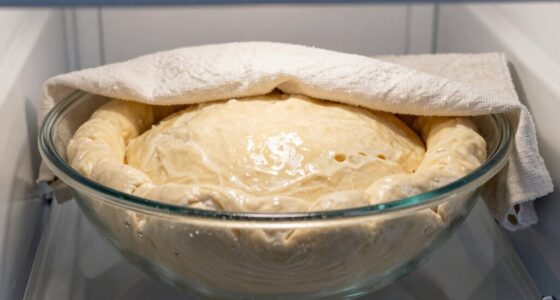
Getting that perfectly crispy pizza bottom might seem like a secret, but it’s actually about simple techniques you can master at home. One of the most critical steps is understanding dough fermentation. When you allow the dough to ferment properly, it develops better gluten structure and flavor. This process, usually done by letting the dough sit in the fridge for 24 to 72 hours, helps create a dough that’s easier to work with and yields a crispier crust. The longer fermentation breaks down the gluten, giving you a more elastic dough that can stretch thin without tearing. It also promotes even heat distribution during baking, contributing to that desirable crispy bottom.
Proper dough fermentation creates a tastier, more elastic crust that bakes evenly and becomes irresistibly crispy.
Another essential element is managing topping moisture. Too many wet ingredients, like fresh tomatoes or watery cheese, can create steam during baking, which softens the crust. To keep your pizza bottom crisp, avoid overloading with high-moisture toppings. Instead, pat down ingredients like tomatoes or mushrooms to remove excess water before adding them. Consider pre-cooking or roasting some toppings to reduce their moisture content, ensuring they don’t release steam when heated. This way, the crust retains its crunch, and your pizza doesn’t end up soggy.
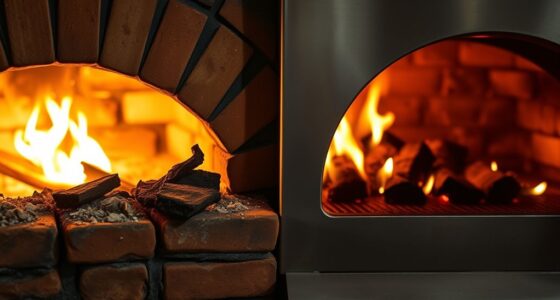
When baking in your backyard oven, temperature is also key. You want it hot enough—ideally between 700 to 900°F—to mimic professional pizza ovens. A high temperature helps quickly cook the crust, giving it that crispy exterior while keeping the inside tender. Preheat your oven thoroughly, and if possible, use a pizza stone or steel. These materials absorb and radiate heat evenly, providing the intense, direct heat needed for a crispy bottom.
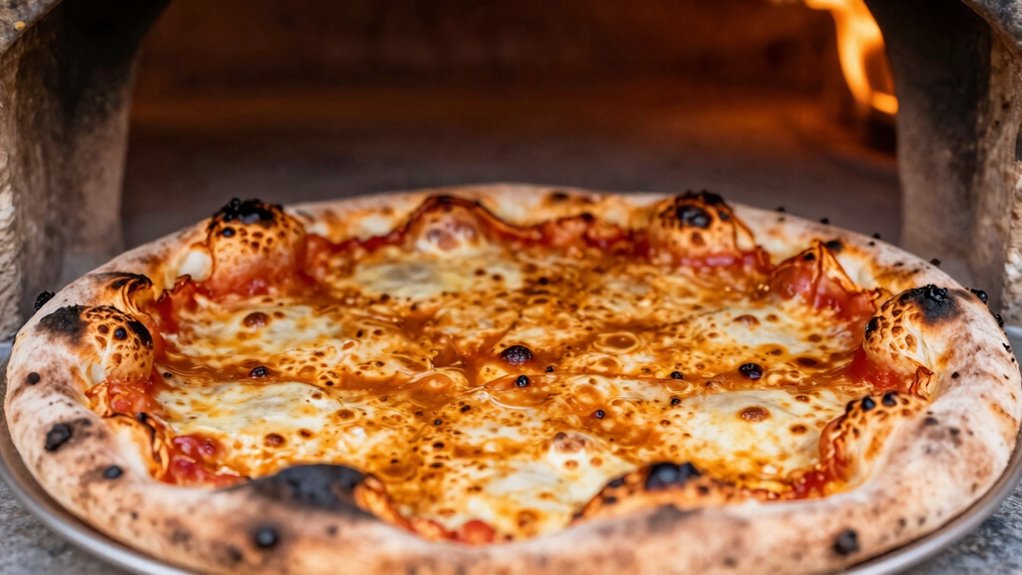
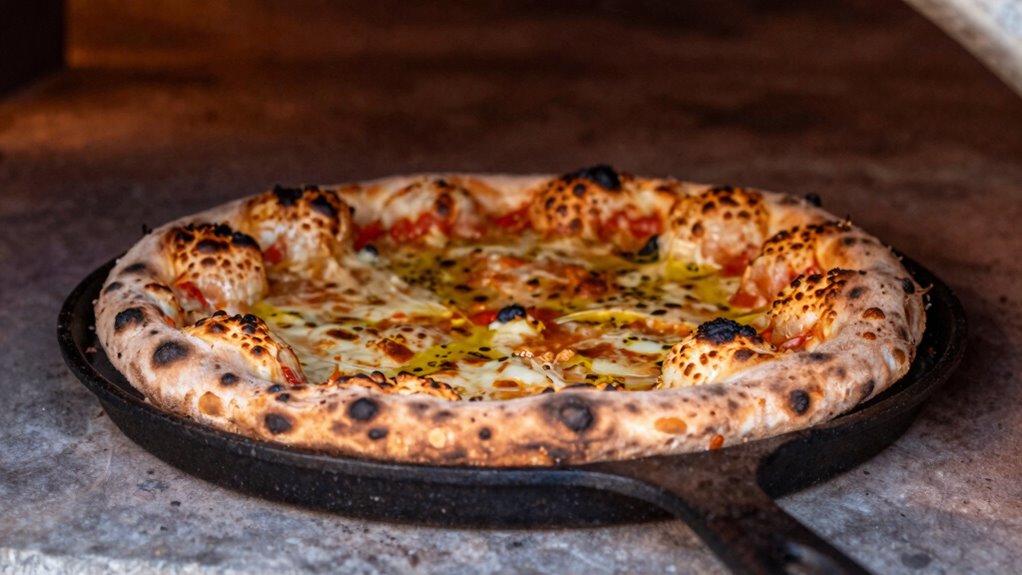
Timing and technique matter too. Slide your pizza onto the hot surface carefully, spreading the dough thin and evenly. Keep a close eye during baking; in a high-temperature oven, the pizza can cook rapidly, often in just a few minutes. Rotate it if needed to ensure even browning. Once the crust is golden and crispy on the bottom, and your toppings are cooked to your liking, remove it from the oven promptly to prevent over-baking.

Hans Grill Rectangular Pizza Stone, 15 x 12 Inch Cordierite Stone with Peel
- Material: Toughened porous cordierite stone
- Heat Resistance: Up to 1112°F (600°C)
- Versatile Use: For pizza, pies, bread, and more
As an affiliate, we earn on qualifying purchases.
As an affiliate, we earn on qualifying purchases.
Frequently Asked Questions
What Type of Dough Yields the Crispiest Crust?
For the crispiest crust, opt for a dough with lower hydration, around 60-65%, which helps it become crispier. Use a high-quality, high-protein flour like bread flour, as its gluten content creates a sturdy, chewy base that crisps well. Keep your dough thin and stretch it evenly. Combining low hydration with strong flour results in a crust that’s perfectly crispy, especially when baked in a backyard oven at high heat.
How Does Humidity Affect Pizza Crispiness?
Humidity impact plays a significant role in pizza crispiness by influencing dough moisture levels. When humidity is high, your dough absorbs more moisture, making it softer and harder to achieve a crispy bottom. To counter this, you should reduce dough hydration or adjust your baking temperature. Conversely, lower humidity helps maintain lower dough moisture, resulting in a crispier crust. Keep an eye on humidity to optimize your pizza’s texture.
Can I Use a Pizza Stone in a Backyard Oven?
Yes, you can definitely use a pizza stone in a backyard oven. It’s a fantastic pizza accessory for outdoor baking because it evenly distributes heat, helping you achieve a crispy crust. Make certain your pizza stone is preheated thoroughly before baking to prevent sticking and guarantee even crispiness. Using a pizza stone in your outdoor setup elevates your pizza game and gives you that authentic, restaurant-quality crust right in your backyard.
What’s the Ideal Oven Temperature for Crispy Pizza?
You should heat your backyard oven to around 500-550°F to achieve a crispy pizza. This high temperature guarantees the dough ferments properly, developing a good crust, while quickly evaporating excess moisture from toppings. Preheat your oven thoroughly, and use a pizza stone if possible. This combination helps create a crisp bottom and prevents sogginess, giving you that perfect, restaurant-quality crust every time.
How Long Should I Preheat My Backyard Oven?
Preheat your backyard oven for about 30 to 45 minutes to guarantee it reaches the ideal temperature for crispy pizza. Good oven insulation helps maintain consistent heat, making preheating more fuel-efficient and quicker. During preheating, your oven’s walls absorb heat, which improves fuel efficiency and keeps your pizza cooking evenly. This way, you get that perfect crispy bottom without wasting fuel or waiting too long.

ThermiChef 16" x 16" Pizza Steel – 1/4" Steel, 17.6 lbs
- Fast, Even Cooking: Cooks pizza in under 8 minutes with efficient heat transfer
- Generous 16×16 Size: Fits most standard ovens and 15-inch pizzas
- Optimal Thickness: 1/4 inch steel balances heat retention and weight
As an affiliate, we earn on qualifying purchases.
As an affiliate, we earn on qualifying purchases.
Conclusion
Next time you fire up your backyard oven, remember that a simple trick can transform your pizza. As you watch the golden crust turn crisp, it’s almost like the universe conspired to give you that perfect bite. With a little heat, patience, and a dash of luck, you’ll find yourself tasting the magic of a restaurant-quality pizza right in your own backyard. Sometimes, all it takes is a moment of coincidence to make a culinary masterpiece.

Gino Bambino Sourdough Pizza Starter Kit, Hand Stretched Stone Baked, 3 Crusts with Sauce, 45.72 oz
- Hand-stretched stone-baked crusts: Authentic flavor with 72-hour fermentation
- Includes 3 crusts and 3 sauces: Easy pizza preparation with premium ingredients
- Total weight 45.72 oz: Makes multiple family-sized pizzas
As an affiliate, we earn on qualifying purchases.
As an affiliate, we earn on qualifying purchases.

Ooni Karu 12 Multi-fuel Outdoor Portable Pizza Oven – Reaches 950°F and Cooks 12 Inch Pizzas in 60 Seconds. Versatile Wood or Propane Gas Fired Grill with Pizza Stone
- Custom Fuel Tray for Optimal Airflow: Maximizes airflow for high temperatures
- Cooks 12-Inch Pizza in 60 Seconds: Reaches 950°F for quick cooking
- Versatile Fuel Options: Use wood, charcoal, or gas with attachment
As an affiliate, we earn on qualifying purchases.
As an affiliate, we earn on qualifying purchases.