To make the perfect pizza, you need to control your oven’s temperature precisely. For authentic Neapolitan pies, aim for 450-500°C (840-930°F) on a pizza stone, while other styles like New York or thin-crust spots need lower temps around 250-350°C (480-660°F). Consistently monitor and adjust your oven, avoiding common mistakes like opening the door too often. Keep going, and you’ll discover how to optimize your heat for perfect results.
Key Takeaways
- The ideal temperature varies by pizza style, e.g., Neapolitan requires 450-500°C (840-930°F).
- Use infrared thermometers and calibrated thermocouples to accurately measure oven heat.
- Maintain consistent heat with proper calibration, airflow control, and monitoring throughout baking.
- Preheat thoroughly to avoid uneven cooking and ensure even heat distribution.
- High temperatures (450-500°F or more) produce crispy crusts, gooey cheese, and evenly baked pizzas.
The Basics of Oven Temperature and Its Impact on Pizza

Understanding the right oven temperature is essential because it directly affects how your pizza cooks. Proper oven calibration ensures your appliance heats accurately, helping you maintain consistent temperatures. Without calibration, your oven might have temperature fluctuations, leading to uneven cooking or burnt spots. These fluctuations make it harder to achieve that perfect crust and evenly melted cheese. When your oven isn’t properly calibrated, you might think it’s at a certain temperature, but in reality, it could be hotter or cooler. Regularly checking and adjusting your oven’s calibration helps prevent these issues. By controlling temperature fluctuations, you gain better consistency and can fine-tune your pizza baking process, ultimately producing a more delicious and perfectly cooked pie every time.
Ideal Temperatures for Different Types of Pizza
Different types of pizza require specific oven temperatures to achieve their ideal texture and flavor. For Neapolitan pizza, aim for 450-500°C (840-930°F) on a pizza stone to create a crisp crust with a tender interior. For New York-style, 250-290°C (480-560°F) works well, ensuring a chewy crust with good oven spring. Thin-crust pizzas benefit from 300-350°C (570-660°F) to crisp the dough quickly. For thicker, deep-dish styles, bake at lower temperatures around 200-230°C (390-450°F) to allow even cooking through the dough’s hydration. Remember, a well-preheated pizza stone enhances heat transfer, and higher dough hydration helps achieve a light, airy crust at these temperatures. Adjust these temps based on your oven’s capabilities for perfect results.
How to Measure and Maintain the Correct Oven Heat

To keep your oven at the right heat, you need reliable tools like an infrared thermometer to get quick temperature readings. Regularly check thermocouples to monitor the oven’s temperature consistency over time. Adjust the fire as needed to maintain steady heat, ensuring your pizza cooks perfectly every time.
Using a Infrared Thermometer
Using an infrared thermometer is an efficient way to measure your pizza oven’s temperature accurately. These tools provide quick, contactless readings, ensuring you get precise data on oven heat. To optimize temperature accuracy, follow these steps:
- Aim the infrared thermometer at the oven’s surface where the pizza will cook.
- Keep a consistent distance as recommended by the device’s instructions.
- Take multiple readings at different spots to ensure uniform heat distribution.
- Record the highest temperature to verify your oven hits the desired range.
Infrared thermometers make it easy to monitor and adjust your oven’s heat in real-time. Regular use helps maintain consistent temperature precision, which is vital for perfect pizzas every time.
Monitoring Thermocouples Regularly
Monitoring thermocouples regularly guarantees your pizza oven maintains the ideal temperature throughout the cooking process. Consistent temperature logging helps you catch fluctuations early, ensuring your pizza cooks evenly. Regular thermocouple calibration keeps readings accurate, preventing under- or over-heating. By tracking temperature data, you build a record of your oven’s performance, making adjustments easier over time. Check your thermocouples daily, especially before busy hours, to avoid surprises. Use the table below to understand how monitoring impacts your results:
| Effect of Monitoring | Emotional Benefit |
|---|---|
| Accurate readings | Confidence in perfect pizza |
| Early detection of issues | Peace of mind |
| Consistent temperature logs | Reliable results |
| Proper calibration | Trust in your oven’s performance |
| Reduced waste | Satisfaction in every slice |
Adjusting Fire for Consistency
Adjusting the fire is essential for maintaining consistent oven heat, which directly affects your pizza’s quality. Proper fire control and flame adjustment help regulate temperature fluctuations. To keep your oven at the right heat:
- Observe the flame size and color—aim for a steady, blue flame.
- Use your damper or air vents to increase or decrease airflow, controlling flame intensity.
- Adjust the fuel feed rate if your oven has a fuel valve, ensuring a stable fire.
- Regularly check the thermocouple to verify consistent temperature readings.
These steps help you fine-tune the fire, ensuring the heat remains uniform throughout your baking process. Mastering flame adjustment is key to producing perfectly cooked pizzas every time.
Adjusting Your Oven Settings for Optimal Results
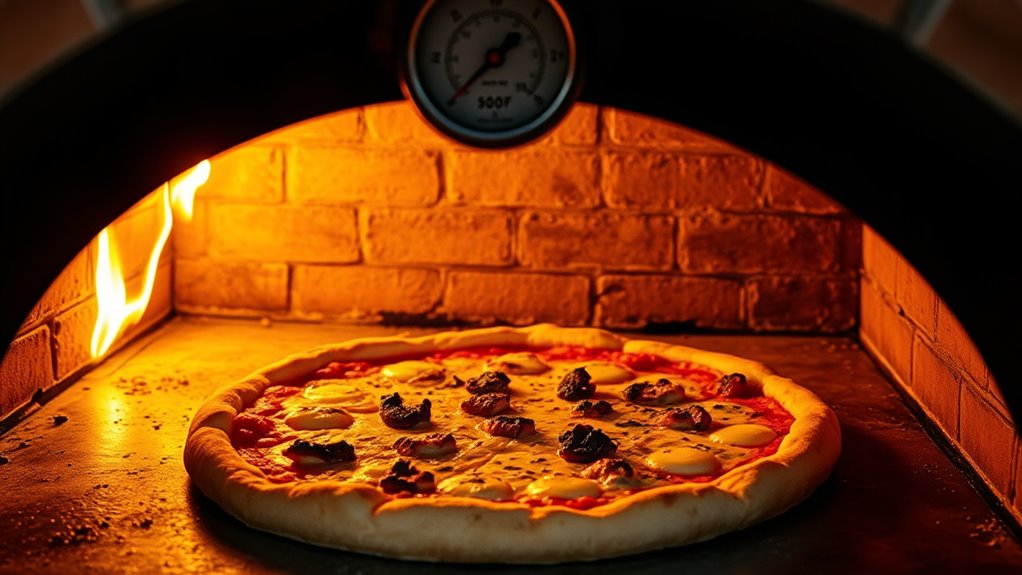
To achieve the perfect pizza crust, you need to fine-tune your oven settings rather than rely solely on default temperatures. Start by checking your oven’s calibration; many ovens aren’t perfectly accurate and may require adjustments. Use an oven thermometer to monitor actual temperatures, noting any temperature fluctuations during preheat and baking. If your oven runs hot or cold, consult the calibration instructions to make precise adjustments. Ensuring consistent heat helps produce a uniformly baked crust and prevents under- or over-cooking. Keep in mind that small temperature variations can impact your results, so regular calibration is key. By paying attention to these details, you’ll create a more reliable environment for baking perfect pizzas every time.
Common Temperature Mistakes and How to Avoid Them
One of the most common mistakes pizza makers make is using the wrong oven temperature, which can lead to undercooked or burnt crusts. Temperature fluctuations and improper calibration are often to blame. To avoid these issues, consider these tips:
- Regularly calibrate your oven to ensure accurate temperature readings.
- Use an oven thermometer to monitor actual heat, not just the dial setting.
- Avoid opening the oven door too frequently, which causes temperature drops.
- Preheat your oven thoroughly to stabilize the temperature before baking.
Tips for Achieving a Crispy Crust and Melty Cheese
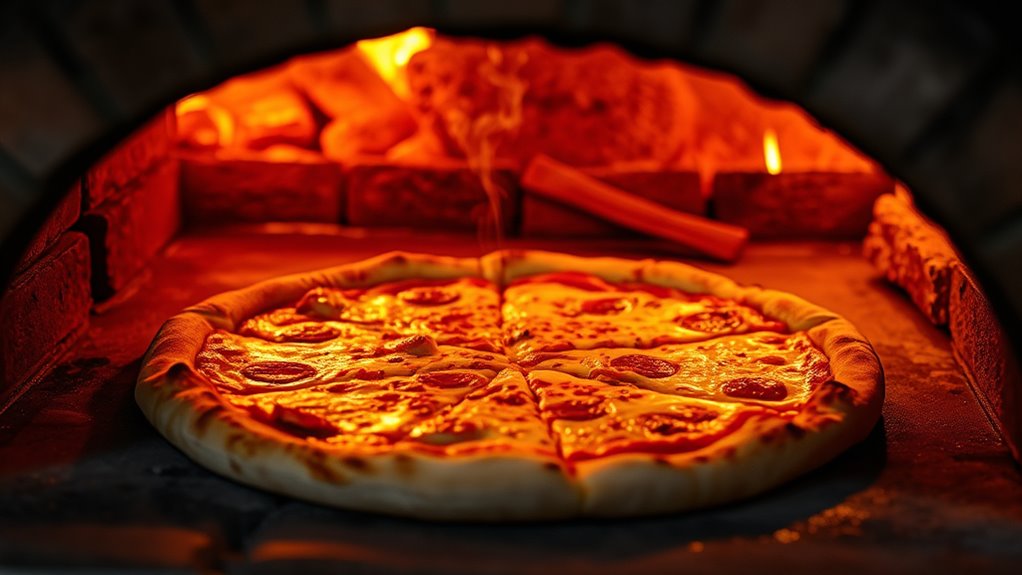
To get that perfect crispy crust and melty cheese, you need to focus on setting the right oven temperature. Your dough preparation techniques, like proper kneading and resting, also play a big role. Finally, watch your baking duration closely to make certain the crust crisps up without burning and the cheese melts evenly.
Proper Oven Temperature
Achieving the perfect pizza crust and melty cheese hinges on setting the right oven temperature. Proper oven temperature guarantees even heat distribution and prevents uneven cooking. To optimize results, consider these tips:
- Ensure your oven has good insulation to maintain consistent heat.
- Use a pizza stone or steel to improve heat transfer and mimic a traditional brick oven.
- Preheat your oven thoroughly, at least 45 minutes, for stable temperature.
- Keep the oven door closed during cooking to maintain heat and prevent temperature drops.
Dough Preparation Techniques
Getting your dough just right is essential for a crispy crust and melty cheese. Start with proper kneading techniques to develop gluten, which gives your crust structure and chewiness. Use a gentle, consistent motion, avoiding over-kneading, to keep the dough elastic. The fermentation process is equally important; allowing your dough to rest and rise slowly enhances flavor and creates a lighter, airier crust. Cover the dough during fermentation to prevent drying out, and aim for at least one to two hours, or longer for better flavor. Proper kneading and fermentation set the foundation for a crisp exterior and gooey interior, ensuring your pizza turns out perfectly every time. Pay attention to these steps for ideal dough preparation.
Baking Duration and Timing
Timing is crucial when baking your pizza to guarantee a perfectly crispy crust and gooey cheese. Proper baking duration ensures your dough fermentation develops flavor and texture, while topping placement affects heat distribution. To optimize results:
- Bake at high heat (450-500°F) for 7-10 minutes to crisp the crust.
- Place toppings strategically, avoiding overcrowding, to promote even cooking.
- Check the crust’s color early to prevent burning; remove when golden brown.
- Adjust baking time based on thickness—thinner pies need less time, thicker pies slightly more.
Keep in mind, dough fermentation influences baking speed, so well-fermented dough bakes more evenly. Timing your baking process precisely helps your cheese melt perfectly and your crust stay crispy.
Frequently Asked Questions
Can Different Oven Types Require Different Temperature Settings?
Yes, different oven types need different temperature settings. For stone baking ovens, you might need higher temperatures to achieve the perfect crust, especially with dough hydration levels that affect moisture. Conventional home ovens often require lower temperatures or longer cooking times. Adjustments depend on your oven’s heat distribution and how your dough’s hydration influences baking. Experimenting helps find the ideal temperature for a crispy crust and well-cooked toppings.
How Does Ambient Temperature Affect Oven Heat Consistency?
You might notice that ambient temperature unexpectedly impacts your oven’s heat distribution, especially on hot or cold days. When the environment’s temperature fluctuates, your oven’s internal heat consistency can shift, making it harder to maintain steady temperatures. To keep your pizza perfectly cooked, monitor ambient conditions and adapt your oven settings accordingly. This way, you ensure even heat distribution, regardless of outside influences, for consistently delicious pies.
Are There Safety Concerns With Cooking at High Temperatures?
Cooking at high temperatures does pose safety concerns, especially regarding food safety and burn risks. You should always handle hot surfaces with care, use appropriate tools, and avoid splattering hot oil or cheese. Keep a safe distance from the oven to prevent burns, and make sure proper ventilation. By being cautious, you protect yourself from injury and ensure your food remains safe to eat.
What Role Does Oven Humidity Play in Pizza Baking?
Oven humidity plays a vital role in pizza baking by aiding humidity control and moisture retention. When you manage humidity levels, you help keep the crust crisp yet tender, preventing it from drying out too quickly. A well-balanced humidity environment allows the cheese to melt evenly and creates a perfect crust texture. Adjusting humidity, either through steam injection or moisture control techniques, enhances overall pizza quality and guarantees your pie bakes just right.
How Can I Tell if My Oven’s Thermometer Is Accurate?
Think of your oven thermometer as a tiny compass guiding your pizza journey. To check its accuracy, you should use calibration methods like boiling water or ice water tests. Place the thermometer properly—away from walls or heating elements—to get a true reading. If it’s off, adjust or replace it, ensuring your oven’s temperature aligns with the perfect baking conditions, leading to consistently delicious pizzas every time.
Conclusion
Mastering your oven’s heat is like guiding a symphony—every note matters. When you dial in the perfect temperature, you reveal the secret to a pizza that sings with crispy crust and melty cheese. Don’t let guesswork steal your culinary harmony; instead, tune your oven and embrace the delicious masterpiece awaiting. Remember, the right heat isn’t just a number—it’s the heartbeat of your perfect pie.