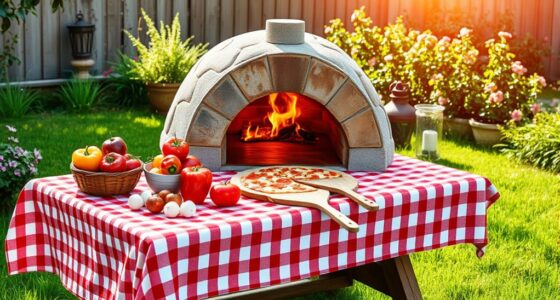
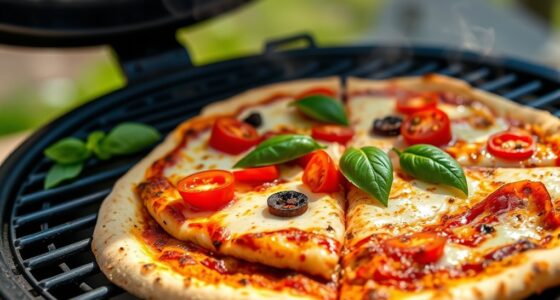
If you want a traditional smoky flavor and high heat, wood logs are a great choice, but they require proper storage and take longer to ignite. Wood pellets, on the other hand, offer convenience, cleaner burning, and easier temperature control, making them ideal for consistent results. Your decision depends on whether you prioritize authentic flavor and ambiance or ease and precision. Keep exploring to discover which option suits your pizza oven best and how to maximize their benefits.
Key Takeaways
- Wood logs provide traditional flavor and high heat but require proper storage and longer ignition time.
- Wood pellets burn cleaner, ignite quickly, and offer more consistent temperature control for pizza ovens.
- Logs need ventilated, covered storage to stay dry; pellets are stored in sealed containers for moisture resistance.
- Pellets produce less ash and simplify cleanup, while logs can add smoky aroma depending on airflow management.
- Choose logs for authentic flavor and higher heat; opt for pellets for convenience, precise control, and easier handling.

When choosing between wood pellets and wood logs for heating, understanding their differences can help you make the best decision for your needs. This is especially true if you’re fueling a pizza oven or any other wood-fired appliance. Both options have unique qualities that influence how you handle them, from storage methods to smoking techniques. Your choice will impact not only the flavor and heat but also how easily you manage the fuel.
Choosing between wood logs and pellets depends on your flavor, convenience, and cooking style.
Wood logs have been the traditional choice for centuries, prized for their natural aroma and high heat output. They require proper storage to ensure they stay dry and ready for use. You’ll want to keep logs in a well-ventilated, covered space—preferably off the ground—to prevent moisture absorption. Proper storage methods ensure your logs stay dry, which is critical for efficient burning and consistent heat. When using logs, you’ll develop smoking techniques that involve controlling airflow and fire size to achieve the desired flavor profile. For example, adjusting air vents can help produce a cleaner burn or introduce more smoky flavor. Logs tend to produce more visible smoke initially, which can add to the flavor complexity of your pizza. Keep in mind that logs generally take longer to ignite and require careful stacking to promote effective airflow.
On the other hand, wood pellets are compressed sawdust, offering a cleaner and more convenient option. They burn more efficiently and produce less ash, making cleanup easier. Because pellets are uniform in size, you won’t have to worry much about moisture once stored properly. Storage methods for pellets are straightforward—keep them in a dry, sealed container or bag to prevent moisture absorption. This ease of storage makes them highly convenient, especially if you don’t have a dedicated outdoor storage space. When it comes to smoking techniques, pellets are often favored for their ability to produce consistent smoke and heat. You can easily regulate temperature by adjusting the pellet feed rate, leading to more precise control over smoke flavor and cooking conditions. This consistency can be a significant advantage when aiming for a specific flavor profile or steady heat in your pizza oven. Additionally, the fuel density of pellets allows for longer burns and more efficient use of space during storage.
Both wood logs and pellets have their benefits, but your choice depends on your priorities. If you prefer the traditional experience, rich aroma, and don’t mind longer preparation, logs are ideal. If you value convenience, consistency, and easier storage, pellets are the way to go. Whichever you choose, mastering the smoking techniques and storage methods will imply you get the best performance from your fuel, creating delicious, perfectly cooked pizzas every time.
Frequently Asked Questions
Which Fuel Type Produces Less Ash in a Pizza Oven?
You’ll find that wood pellets produce less ash compared to wood logs, making the ash comparison favorable for pellets. Pellets burn more efficiently, leaving minimal fuel residue, which means less cleaning and maintenance. Logs tend to generate more ash and larger residue, requiring more frequent cleanup. If you want a cleaner burn with less ash, using wood pellets is your best choice for a pizza oven.
How Do Pellet and Log Fuels Affect Pizza Flavor?
Did you know that wood pellets produce about 50% less smoke than logs? This difference markedly impacts flavor enhancement, as smoke contributes to the smoky depth in your pizza. Wood logs tend to produce more smoke, infusing a richer, more complex flavor. Pellets offer a cleaner taste with subtler smoky notes, so your choice affects how pronounced the smoky flavor becomes in each slice.
Are Wood Pellets More Environmentally Friendly Than Logs?
Yes, wood pellets are generally more environmentally friendly than logs because they offer a better sustainability comparison. Pellets come from compressed sawdust and wood waste, making them a renewable source that reduces waste. They burn cleaner and more efficiently, producing fewer emissions. By choosing pellets, you support eco-friendly practices and help minimize deforestation, making them a smarter choice for a greener, more sustainable pizza oven experience.
Can I Mix Wood Pellets and Logs in the Same Oven?
You can mix wood pellets and logs in your oven, but you need to prioritize fuel compatibility and oven safety. Always verify if your oven supports both fuel types, as incompatible fuels can cause dangerous flare-ups or damage. Use a balanced mix to guarantee consistent heat, but monitor closely to prevent overheating. Keep safety precautions in mind, and follow the manufacturer’s guidelines for peak performance and safety.
Which Fuel Is More Cost-Effective for Frequent Pizza Baking?
You’ll find that wood logs tend to be more cost-effective for frequent pizza baking due to their lower purchase options and longer burn time. Logs often cost less per use compared to pellets, especially if you source them locally. A cost comparison shows logs provide better value over time, making them ideal if you bake often. Just guarantee you select quality logs to get the best flavor and efficiency.
Conclusion
So, whether you choose wood pellets or logs, you might find yourself surprised by what fuels your perfect pizza. After all, the one that’s easier and cleaner isn’t always the one that delivers that authentic, smoky flavor—ironic, isn’t it? In the end, the true secret isn’t in the fuel itself but in your passion and patience. So, pick your fuel wisely; your pizza’s destiny depends on it—and maybe, just maybe, on a little irony.