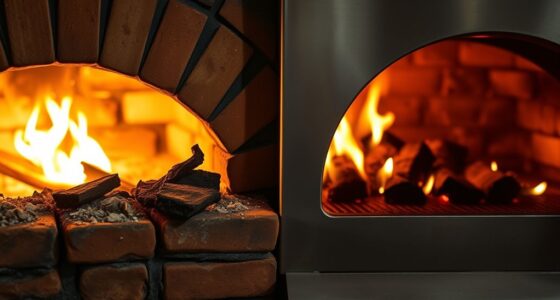
If your pizza crust is burning, it’s usually because your oven is too hot or you’re baking it too long. High temperatures (above 500°F) can cause the crust to brown or burn before the toppings finish cooking. To fix this, try lowering the oven temp slightly and extending the baking time, or use an oven thermometer to guarantee accuracy. Adjusting placement and using a pizza stone can also help prevent burning—exploring these solutions reveals more ways to perfect your pizza.
Key Takeaways
- Oven temperatures set too high can cause the crust to burn quickly; use an oven thermometer to ensure accuracy.
- Baking pizza for too long or at excessively high temperatures leads to charring; monitor closely and adjust time accordingly.
- Placing the pizza on the middle rack and using a pizza stone helps promote even heat distribution, preventing hot spots.
- Thick or heavily topped pizzas require lower temperatures and longer baking times to avoid burning the crust.
- Frequent checks near the expected finish time help catch the crust before it burns, especially when using high heat.

Burning the crust is one of the most common issues when baking pizza, and it can ruin an otherwise perfect pie. Often, this happens because the oven temperature is too high or the baking time is too long. When your oven runs hotter than needed, the outer layer of the crust can brown too quickly and burn before the center is fully cooked. Similarly, leaving the pizza in the oven for too long can cause the crust to become charred. To prevent this, you need to find the right balance between oven temperature and baking time.
Start by setting the oven to a temperature suitable for pizza, usually between 475°F and 500°F. However, every oven is different, so it’s crucial to understand how your oven heats. Some models run hotter or cooler at the same setting, so use an oven thermometer to monitor the actual temperature. If you notice your crust burning quickly, consider lowering the oven temperature slightly and extending the baking time. This allows heat to penetrate more evenly, giving the crust a golden finish without burning. Conversely, if the crust isn’t cooking fast enough or remains pale, increasing the temperature slightly might help, but always keep a close eye on it to avoid charring.
Baking time plays an equally important role. Typically, a pizza at high heat should be done in about 10 to 15 minutes. If you leave it in longer, the crust will likely burn, especially at the edges. To get the timing right, check the pizza frequently as it approaches the expected finish time. Look for a golden-brown crust with some bubbling cheese. If you notice the edges turning dark too quickly, remove the pizza sooner. Remember, thin-crust pizzas cook faster than thick ones, so adjust your baking time according to the dough thickness. Also, placing the pizza on the middle rack ensures even heat distribution, preventing hot spots that can cause burning.
Additionally, choosing the right projector technology for your home cinema setup can influence how well you visualize your favorite movies, especially in a dedicated room optimized for viewing. Finally, consider the type of crust and toppings, which influence baking time and temperature. A heavily topped pizza may need a slightly lower temperature to prevent the toppings from burning while the crust finishes baking. Using a pizza stone or steel can also help distribute heat evenly, reducing the risk of burning. In summary, controlling oven temperature and baking time is key to avoiding burnt crusts. Adjust these factors based on your oven’s behavior, your dough thickness, and topping load, and you’ll achieve a perfectly baked pizza every time.
Frequently Asked Questions
Can Using a Pizza Stone Prevent Crust Burning?
Using a pizza stone can definitely prevent your crust from burning. The stone promotes even heat distribution, which helps cook the pizza uniformly and reduces hotspots that cause burning. When you preheat the stone properly, it acts as a buffer, absorbing and evenly spreading heat across the crust. This way, your pizza bakes thoroughly without burning the edges, giving you a perfectly crispy crust every time.
Does Type of Oven Affect Pizza Crust Burning?
Just like a chef chooses the right cast iron skillet, you need the right oven type to prevent burning. Your oven temperature plays a vital role—gas and electric ovens heat differently, affecting how quickly the crust chars. For even cooking, opt for a convection oven or a pizza oven, which distributes heat more uniformly. Adjust your oven temperature accordingly, and you’ll achieve a perfect crust without burning.
How Does Dough Thickness Influence Burning Risk?
Thicker dough increases the risk of burning because it takes longer to cook through, especially if the oven’s heat is high or the rack placement is too close to the heat source. To prevent this, adjust dough hydration for better moisture, and place your oven rack lower to avoid direct heat contact. These tweaks help your crust cook evenly without burning, giving you a perfect, crispy pizza every time.
Is Pre-Baking the Crust Helpful to Avoid Burning?
Pre-baking your crust can be helpful, as it benefits by creating a barrier that reduces crust dryness and prevents burning. When you pre-bake, the crust firms up, so toppings don’t soak in moisture and cause uneven cooking. This technique allows you to control the bake time better, ensuring a crisp, golden crust without burning. Just make sure not to overdo it, or the crust may become too dry.
What Are Alternative Toppings That Cause Crust Burning?
Think of your pizza as a canvas; some toppings are like vibrant paints that can scorch the wall. Heavy, oily, or sugary alternative toppings, like extra cheese, processed meats, or sweet sauces, can cause crust burning by trapping moisture and creating hotspots. To prevent this, opt for toppings that retain moisture evenly and avoid overly greasy or sugary ingredients, ensuring your crust stays golden and delicious, not burnt.
Conclusion
Now that you know the common causes behind your pizza crust burning, you’re better equipped to prevent it. Remember, a perfectly baked pizza isn’t just a meal—it’s a masterpiece that can make your kitchen feel like a five-star restaurant. Don’t let burnt crust ruin your pizza dreams; with these simple fixes, you’ll create crispy, golden perfection every time. Your pizza journey just got way easier—get ready to impress everyone with your new skills!