To manage your pizza oven like a pro, monitor the temperature closely using infrared or oven thermometers and adjust the heat accordingly. Keep an eye on how your crust and toppings turn out, and tweak the heat by moving the pizza or adjusting burners as needed. Practice and observation will help you develop an intuitive feel for the right heat levels, ensuring crispy crusts and perfect toppings every time—stay tuned to learn more about mastering this skill.
Key Takeaways
- Use accurate thermometers to monitor oven temperature for precise control.
- Adjust flame or heat source based on baking progress to maintain consistent heat.
- Move pizza within the oven to cooler or hotter zones as needed for even cooking.
- Recognize signs of over or under-temperature and fine-tune accordingly.
- Practice ongoing adjustments to develop instinctive heat management skills for professional results.
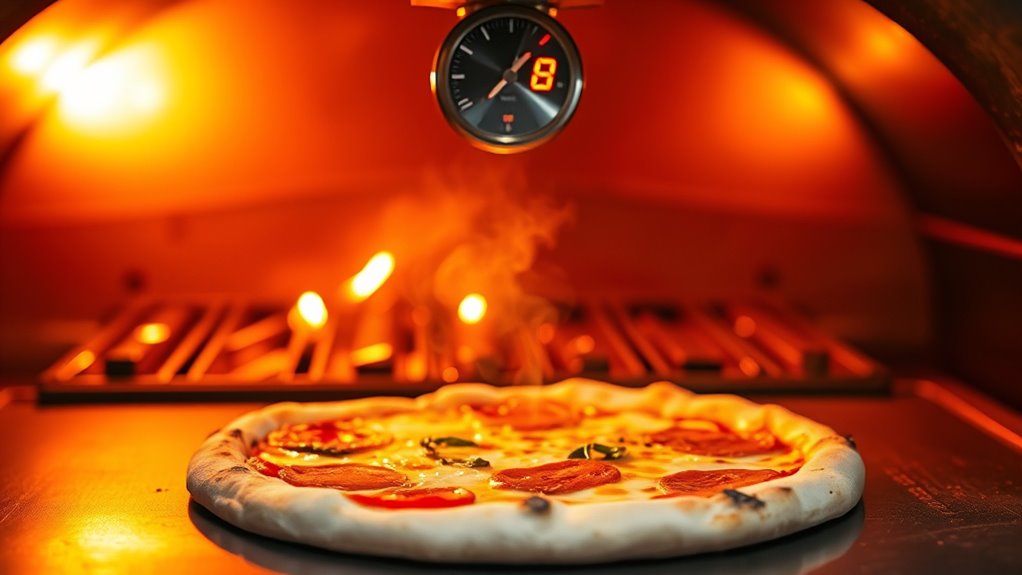
Controlling the temperature of your pizza oven is vital for achieving perfect pies with crispy crusts and evenly cooked toppings. When your oven temperature is just right, it guarantees that the dough maintains ideal dough consistency, which is essential for shaping and baking. If the oven’s too hot, the dough can become overly crispy or burnt on the outside while remaining undercooked inside. Conversely, if it’s too cool, your crust may turn out pale and soggy. To get the dough right, you need to monitor the oven’s heat closely and adjust the flame or heat source as needed. This balance helps you develop the perfect dough consistency, giving your pizza that professional texture and chewiness.
Controlling your pizza oven temperature ensures perfect crusts and evenly cooked toppings for professional-quality pies.
Topping placement also hinges on precise temperature control. When the oven is at ideal heat, toppings cook evenly without overdoing it—keeping cheese melted just right and preventing vegetables or meats from burning. If the oven’s too hot, toppings might burn or cook unevenly, resulting in a less appealing pizza. Too cool, and toppings won’t melt properly, leaving your pizza lacking that inviting, gooey look. By managing the heat well, you guarantee toppings are placed correctly and cooked to perfection. For example, placing delicate ingredients like fresh herbs or thin slices of prosciutto on top after the initial bake can prevent overcooking and preserve flavor and texture.
Understanding how temperature impacts your pizza allows you to fine-tune your process. For instance, if you notice the crust browning too quickly while the toppings remain undercooked, you know to lower the temperature or move the pizza to a cooler zone in your oven. Conversely, if the toppings are done but the crust isn’t crisp enough, increasing the heat or adjusting the pizza’s position can help. This ongoing adjustment helps you develop a consistent technique, ensuring each pie turns out just the way you want. Maintaining a consistent oven temperature is key to mastering your pizza craft and achieving reliable results.
Achieving mastery over your oven’s heat also means using tools like infrared thermometers or oven thermometers to gauge exact temperatures. With practice, you’ll instinctively know when to tweak the heat to maintain ideal dough consistency and proper topping placement. Ultimately, controlling your pizza oven’s temperature is about precision and observation—making small adjustments that lead to big improvements in your pizza quality. When you master this, you’ll consistently produce pizzas with perfectly baked crusts and toppings that look as good as they taste.
Frequently Asked Questions
How Often Should I Calibrate My Pizza Oven Thermometer?
You should calibrate your pizza oven thermometer at least once a year to verify accuracy, but more often if you notice inconsistent temperatures or after moving the oven. Regular calibration helps maintain thermometer accuracy and consistent results. If you use your oven frequently or experience temperature fluctuations, consider calibrating every few months. Proper calibration frequency keeps your oven cooking at the right heat, ensuring perfect pizzas every time.
Can I Use a Digital Thermometer for Precise Temperature Control?
Yes, you can use a digital thermometer for precise temperature control. It provides excellent temperature accuracy, making it easier to monitor and adjust your oven’s heat. Just make certain you select a high-quality digital thermometer designed for high temperatures, and calibrate it regularly for consistent results. With a digital thermometer, you’ll achieve better control, ensuring your pizzas cook perfectly every time.
What’s the Ideal Temperature for Different Types of Pizza?
You should aim for about 450-500°F for most pizzas to guarantee proper dough hydration and cheese melting. Thin-crust pies do well around 500°F, providing a crispy crust, while thicker, pan-style pizzas might need slightly lower temps to prevent burning. Monitor your oven’s heat carefully, using a digital thermometer if possible, to keep the temperature steady, so your dough hydrates evenly and cheese melts perfectly every time.
How Does Ambient Outdoor Temperature Affect Oven Heat?
Imagine your oven as a bonfire, flames dancing in harmony with the weather. Outdoor humidity can dampen your heat, like rain snuffing out embers, while wind impacts the flame’s strength, making it harder to maintain steady temps. You’ll notice fluctuations when wind blows strongly or humidity rises, requiring you to adjust your heat management. Stay vigilant, and treat your oven like a living, breathing part of the outdoor environment.
Are There Safety Tips for Managing High Oven Temperatures?
When managing high oven temperatures, always handle hot surfaces with heat-resistant gloves to prevent burns. Follow fire safety protocols by keeping a fire extinguisher nearby and ensuring proper ventilation. Stay alert and never leave the oven unattended. Keep flammable materials away from the heat source, and educate everyone working around the oven on safety procedures. These tips help prevent accidents and make certain a safe, enjoyable cooking experience.
Conclusion
Mastering pizza oven temperature control might seem tricky at first, but with practice, you’ll turn out perfect pies every time. Remember, maintaining the right heat is key to achieving that crispy crust and melty cheese everyone loves. So, why settle for anything less? Once you get the hang of managing your oven’s heat like a pro, you’ll wonder how you ever cooked without it. Ready to elevate your pizza game?