If your pizza oven is smoking too much, the main cause is likely using green or unseasoned wood, which contains more moisture and resin, leading to inefficient combustion and excess smoke. Make sure you’re burning well-seasoned hardwoods like oak, hickory, or maple, and avoid overcrowding the fire with damp wood. Proper airflow management is also key—keep vents open and free of obstructions. For more tips on reducing smoke, keep exploring these solutions.
Key Takeaways
- Use properly seasoned, dry hardwoods like oak or maple to ensure cleaner, less smoky combustion.
- Keep the vents and chimney unobstructed to promote good airflow and proper smoke venting.
- Avoid burning green, damp, or resinous woods such as pine or cedar, which produce more smoke.
- Arrange the fire with larger logs at the bottom and kindling on top for steady, efficient burning.
- Regularly clean the chimney and vents to prevent buildup that restricts smoke escape.
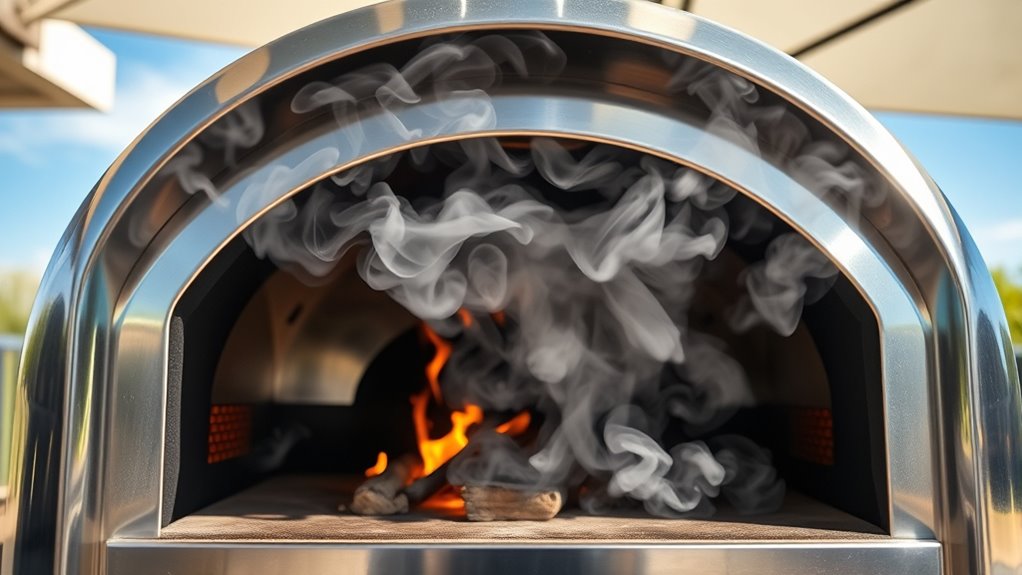
If your pizza oven is smoking more than usual, it can be concerning and confusing. You might wonder if there’s a problem with your setup or if you’re using the wrong materials. Often, the cause comes down to the type of wood you’re using and how you’re managing airflow. Understanding these factors can help you regulate smoke levels and keep your pizza experience enjoyable.
First, consider the wood types you’re burning. Not all woods produce the same amount of smoke when burned. Hardwoods like oak, hickory, and maple tend to burn cleaner and produce less smoke because they contain less moisture and resin. On the other hand, softwoods such as pine, cedar, or fir can generate more smoke due to their higher resin content and moisture levels. If you’re using softwoods or woods that haven’t been properly seasoned, you’re likely to see more smoke and even an unpleasant odor. To fix this, switch to well-seasoned, dry hardwoods that have been cured for at least six months. Properly seasoned wood burns more efficiently, produces less smoke, and enhances the flavor of your pizza.
Using well-seasoned hardwoods reduces smoke and odor, ensuring cleaner burning and better-tasting pizza.
Another key factor is airflow management. Your pizza oven needs proper airflow to burn wood efficiently and minimize smoke. If airflow is restricted, incomplete combustion occurs, leading to excess smoke. Make sure your oven’s vents are open and unobstructed, allowing fresh air to feed the fire. Also, organize your fire so that larger, denser pieces of wood are placed at the bottom, with smaller kindling on top, promoting better airflow and combustion. Avoid overcrowding the firebox, as too much wood can smother the airflow and cause smoke buildup. Additionally, ensure that the chimney or flue is functioning correctly; a blocked or narrow chimney restricts smoke escape, causing it to billow out of the oven. Regularly cleaning ash and soot buildup from vents and chimneys helps maintain ideal airflow.
Finally, how you manage the fire during cooking plays a role. Keep the fire burning steadily with a good supply of dry wood, and avoid smothering the fire with damp or green wood. Adjust the vents as needed to maintain a strong, consistent flame. This control over airflow not only reduces smoke but also ensures your oven heats evenly, giving you that perfect pizza crust.
Frequently Asked Questions
Can I Use My Pizza Oven Indoors Safely?
You can’t use your pizza oven indoors safely unless it’s specifically designed for indoor use. For indoor safety, make certain proper ventilation requirements are met; this means installing exhaust fans or venting systems to remove smoke and fumes. Always follow the manufacturer’s guidelines and never operate a traditional outdoor pizza oven inside a closed space, as poor ventilation can lead to dangerous buildup of smoke and carbon monoxide, risking health and safety.
Is Excessive Smoke Harmful to My Health?
Excessive smoke from your pizza oven can be harmful to your health because smoke inhalation can cause respiratory issues and irritate your air quality. Breathing in too much smoke over time may lead to headaches, coughing, or more serious lung problems. To protect yourself, guarantee proper ventilation, avoid indoor use of outdoor pizza ovens, and limit exposure to smoky environments. Your health depends on keeping the air safe and clean.
How Often Should I Clean My Pizza Oven?
You should clean your pizza oven at least once a month, especially if you use it frequently. Regular cleaning helps maintain ideal cooking temperature and prevents smoke buildup caused by residue from fuel type or food debris. After each use, wipe down the interior and remove ashes or ash buildup. Deep clean with proper tools and cleaning solutions every few weeks to keep your oven functioning efficiently and guarantee delicious, smoky-free pizzas.
Are Certain Types of Wood Better for Less Smoke?
You get what you pay for, so choosing the right wood makes a big difference. Hardwoods like oak, maple, or cherry burn cleaner and produce less smoke compared to softwoods like pine or cedar, which release more sap and resin. For smoke reduction, opt for well-seasoned, dry hardwoods. This way, you’ll enjoy a flavorful pizza without the excess smoke, keeping your oven functioning smoothly and your neighbors happy.
What’s the Best Way to Prevent Smoke Buildup?
To prevent smoke buildup, focus on proper ventilation tips and effective smoke prevention methods. Guarantee your oven has good airflow by clearing vents and using a chimney or exhaust system. Use seasoned, dry wood to reduce excess smoke and avoid overloading the fire. Regularly clean out ash and soot, and keep the fire at a steady, controlled temperature. These steps help maintain minimal smoke and improve your pizza oven experience.
Conclusion
If your pizza oven smokes too much, don’t worry—most issues are easy to fix. Regular cleaning and using the right fuel can substantially reduce smoke. Did you know that a clean oven can cut smoke emissions by up to 50%? Keeping your oven well-maintained not only improves your pizza’s flavor but also makes cooking safer and more enjoyable. With a few simple steps, you’ll be back to perfect, smoky-free pizzas in no time!