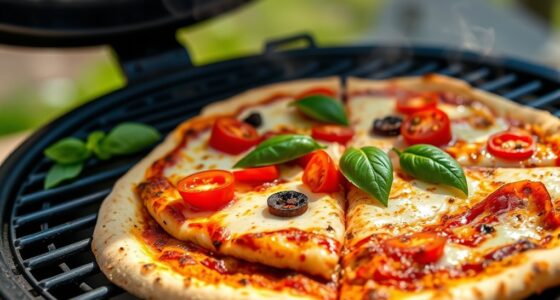
A pizza oven and a tandoor oven showcase two rich culinary traditions, each using heat differently to craft unique flavors and textures. With a pizza oven, you get quick, high-temperature baking that creates crispy, chewy crusts and caramelized toppings. In contrast, a tandoor uses even hotter, retained heat to produce smoky, flavorful breads and grilled meats through rapid cooking on hot walls. Explore how these methods shape dishes, and you’ll uncover the fascinating cultural techniques behind each oven.
Key Takeaways
- Pizza ovens are designed for quick, high-temperature baking to produce crispy, chewy crusts, while tandoors focus on aromatic breads and smoky meats.
- Tandoors use intense heat (over 900°F) with thick walls for heat retention, creating distinct flavors and rapid cooking of ingredients.
- The dough types differ: pizza dough is elastic for stretching, whereas tandoor dough is softer and more pliable for rolling or stretching.
- Both ovens reflect their cultural traditions—pizza ovens for Western fast-casual cuisine and tandoors for South Asian breads and grilled dishes.
- Heat retention and temperature control in each oven influence the final texture, flavor, and appearance of the cooked dishes.
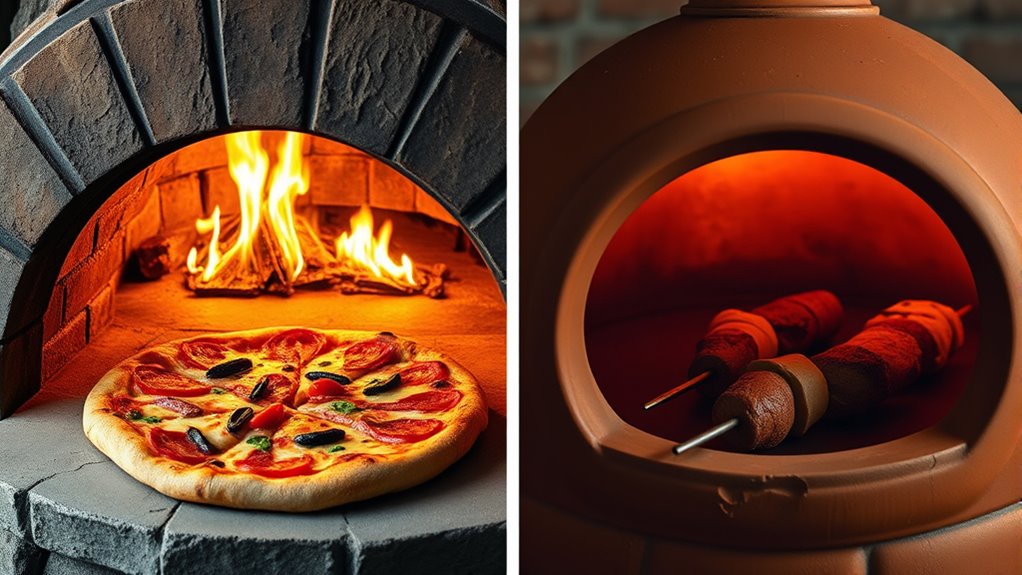
Pizza and tandoor ovens each bring unique flavors and cooking techniques that transform simple ingredients into delicious dishes. When it comes to pizza, the process begins with dough preparation. You want a dough that’s soft yet elastic, capable of stretching without tearing. This balance is essential because it guarantees the crust will cook evenly and develop that perfect chewy texture. The way you handle your dough directly impacts the final result, influencing both flavor and structure. Once shaped, the dough is ready for baking in a pizza oven, which is designed to reach high temperatures quickly. The heat retention of a pizza oven is vital here; it keeps the temperature stable, allowing your pizza to cook rapidly and evenly. This rapid cooking retains the moisture in the toppings and crisps the crust to perfection, giving you that desirable balance of a chewy interior and crispy exterior. The intense heat also enhances the flavors, caramelizing the sugars in the toppings and creating those iconic charred spots.
Switching gears to a tandoor oven, you’re working with a different set of traditions and techniques. The dough preparation for dishes like naan or roti involves a different approach, often softer and more pliable to allow for stretching or rolling. In a tandoor, heat retention plays an even more crucial role. These clay or metal cylindrical ovens are preheated to extremely high temperatures, sometimes over 900°F. Because of their thick walls and material composition, they retain heat remarkably well, maintaining consistent temperatures throughout the cooking process. This consistent heat allows you to cook bread and meats quickly, locking in moisture and imparting a distinctive smoky flavor. When you stick dough onto the hot walls of a tandoor, it cooks rapidly, creating a unique char and flavor profile that’s hard to replicate elsewhere. The high heat also causes Maillard reactions, giving the bread a beautiful golden-brown crust with complex flavors. Unlike pizza ovens, which often focus on baking at high temperatures for a short time, tandoors utilize their heat retention to cook dishes thoroughly in a matter of minutes, ensuring the ingredients stay tender and flavorful.
In essence, both ovens harness heat retention to achieve their signature textures and flavors, but they do so in different ways that reflect their cultural origins. Your choice between them depends on what you want to prepare. If you’re after a crispy, chewy pizza with a quick turnaround, a pizza oven is your best bet. For aromatic breads or smoky grilled meats with a distinctive character, the tandoor offers unmatched advantages. Understanding these differences helps you appreciate how each method transforms ingredients, elevating simple cooking into an art form rooted in centuries of tradition.
Frequently Asked Questions
Can Both Ovens Be Used for Baking Bread?
Yes, both ovens can be used for bread baking. You can prepare your dough and place it in either a pizza oven or a tandoor oven to get delicious crusts. The pizza oven’s even heat distribution makes it ideal for baking bread, while the tandoor’s high temperatures give a unique flavor. Just guarantee you adjust your dough preparation and baking times accordingly for the best results.
Which Oven Is More Energy-Efficient?
Surprisingly, a pizza oven often uses less energy than a tandoor, making it more energy-efficient. While you might assume the traditional tandoor’s high heat consumes more power, its design can lead to greater energy consumption and environmental impact. You’ll find that pizza ovens typically heat up faster and retain heat better, reducing overall energy use. So, if you’re eco-conscious, picking the more efficient option isn’t just smart—it’s a tasty choice.
Are There Health Differences Between Pizza and Tandoori Cooking?
You’ll find that tandoori cooking often preserves more nutrients, offering a better nutritional impact because of its high heat and quick cooking time. However, both methods can pose health risks if you use excessive oil or spices. Pizza cooking, especially with processed toppings, might lead to higher fat and sodium intake. So, moderating ingredients and cooking techniques can help you enjoy flavorful dishes while minimizing health risks.
How Does Cleaning and Maintenance Compare?
Think of your oven as a trusted garden that needs regular tending. For both, you’ll remove ash regularly to keep things tidy, like clearing fallen leaves. Surface cleaning involves scrubbing away grease and residue, much like pruning branches to promote healthy growth. Tandoor ovens may need more frequent deep cleaning due to soot buildup, while pizza ovens often require simpler maintenance. Regular upkeep keeps your cooking space vibrant and efficient.
Can These Ovens Be Used for Outdoor Cooking?
Yes, both pizza and tandoor ovens can be used for outdoor cooking, but their outdoor durability varies. Pizza ovens often have weather-resistant materials, making them suitable for outdoor use, while tandoor ovens require extra protection from elements due to less weather resistance. You should guarantee proper shelter and maintenance to extend their lifespan outdoors, especially in harsh weather conditions. Proper care ensures your oven stays durable and weather-resistant over time.
Conclusion
Whether you prefer the modern charm of a pizza oven or the traditional heat of a tandoor, both bring unique flavors to your cooking. Each has its own history and style, making them suited for different tastes and occasions. Remember, you can’t judge a book by its cover, so why not try both? Embrace the culinary adventure and discover which one truly hits the spot — after all, variety is the spice of life.