If you want crispy, well-cooked crusts quickly, a pizza steel is your best choice because it heats up fast and transfers heat efficiently. A pizza stone offers a more traditional, evenly baked crust but takes longer to heat and recover. Both can produce great results, depending on your style. Want to discover which option perfectly fits your baking needs? Keep exploring to find the ideal choice for your pizza adventures.
Key Takeaways
- Pizza steels heat up faster and recover temperature quickly, producing crispier crusts and more even cooking.
- Pizza stones provide gentle, even heat distribution, resulting in softer, chewier crusts with a traditional texture.
- Steel’s durability and high heat conductivity make it a long-lasting, efficient option for consistent pizza baking.
- Stones are more affordable but may crack over time and require careful handling and preheating.
- The choice depends on preferred crust texture, baking style, and maintenance willingness for optimal pizza results.
Material Composition and Heat Conductivity

When it comes to making the perfect pizza at home, understanding the material composition and heat conductivity of your baking surface is essential. A pizza steel, typically made from steel or carbon steel, has high heat conductivity, which means it heats quickly and transfers heat efficiently. This results in a crisp crust and enhances pizza flavor, giving you a restaurant-quality taste. In contrast, pizza stones, usually made from ceramic or cordierite, heat more slowly but evenly, promoting consistent baking. The material also influences aesthetic appeal—steel surfaces often produce a sleek, modern look, while stones offer a rustic charm. Your choice impacts not just how your pizza cooks but also how it looks and tastes, making material composition a key factor in your pizza-making success.
Heat Retention and Recovery

Your choice of material affects how well your baking surface retains heat and recovers it during cooking. A pizza steel heats up quickly and restores temperature faster, ensuring consistent results, whereas a pizza stone holds heat longer but takes more time to recover. Understanding these differences helps you maintain a steady baking temperature for perfect pizzas every time.
Material Heat Capacity
Material heat capacity plays a crucial role in how well a pizza stone or steel retains and recovers heat during cooking. A higher heat capacity means the material can store more thermal energy, helping maintain consistent oven temperatures. When considering pizza design, choosing a material with a suitable heat capacity ensures your pizza cooks evenly, with a crisp crust and well-melted toppings. Oven compatibility also matters; thicker or denser materials like steel often have higher heat capacities, making them ideal for high-temperature ovens. Conversely, thinner stones might heat up quickly but don’t hold heat as long. Understanding the heat capacity of your chosen material helps you optimize your cooking process for better results, regardless of your pizza style or oven setup.
Recovery Speed Differences
While a high heat capacity helps a pizza stone or steel store thermal energy, how quickly they regain that heat after a burst of oven temperature drop is equally important. Steel generally has a faster recovery speed than stone because it conducts heat more efficiently. When you place a pizza with toppings into a hot oven, the initial oven temperature can drop slightly, especially if you open the door. A steel’s quick recovery helps maintain that high temperature, ensuring your toppings cook evenly and crisply without losing heat. Conversely, a pizza stone might take longer to regain its temperature, which could result in uneven baking or soggy toppings. So, if you want consistent, fast heat recovery, steel often outperforms stone in maintaining the ideal oven environment.
Consistent Baking Temperature
Maintaining a consistent baking temperature is essential for achieving perfect pizza crusts and evenly cooked toppings. Both pizza stones and steels excel in heat retention and recovery, but their performance impacts your pizza’s flavor and aesthetic appeal. Here’s what to consider:
- Heat Retention: Steel heats faster and retains heat longer, providing a steady temperature that enhances crust crispness and vibrant toppings.
- Recovery Speed: Steel recovers heat quickly after you open the oven, ensuring consistent baking conditions.
- Temperature Stability: Pizza stones warm gradually but hold their heat well, resulting in a more traditional, evenly baked crust.
- Impact on Pizza: Consistent temperatures improve pizza flavor by promoting proper caramelization, and the even heat distribution boosts aesthetic appeal with a well-cooked, golden crust.
Cooking Performance and Pizza Crust Texture

When it comes to cooking performance, pizza stones and steels each have distinct advantages that can impact your crust’s texture. A pizza steel heats faster and delivers higher, more consistent temperatures, resulting in a crispier, more evenly cooked crust. This helps you achieve perfect dough stretch, giving you a thin yet sturdy base. Stones, on the other hand, provide even heat distribution over time, which promotes a softer, chewier crust. The rapid heat transfer from steels also helps create a better environment for cheese to melt evenly and improve cheese distribution across the pizza. Your choice influences crust texture; steels tend to produce a crunchier crust, while stones yield a more traditional, tender bite. Both can elevate your pizza, but their performance shapes the final result.
Ease of Use and Maintenance

When choosing between a pizza stone and steel, you’ll want to take into account how easy they are to set up and handle. Cleaning can vary, with some materials requiring more effort to maintain, so think about your routine. Durability matters too—how long each option will last with regular use makes a big difference in your decision.
Setup and Handling
Setting up and handling a pizza stone or steel is straightforward, but each surface offers a different experience. With a pizza stone, you’ll need to preheat it thoroughly, which can take time, and handle it carefully to avoid cracks. A steel heats up quickly and is more durable, making setup faster. When working on dough stretch and topping placement, both surfaces require a steady hand. For the stone, you might need to use a paddle to transfer the pizza, while steel’s smooth surface allows easy sliding. To handle each:
- Preheat the surface properly, whether stone or steel
- Use a pizza peel or paddle for transfer
- Practice dough stretch to avoid sticking
- Be mindful of hot surfaces during handling.
Cleaning Requirements
Cleaning a pizza stone or steel is an important part of maintenance, and each surface has different requirements. For pizza stones, you should use gentle cleaning techniques, such as wiping with a damp cloth and avoiding soap, which can be absorbed and affect future pizzas. Let the stone cool completely before cleaning, and never submerge it in water. Steel surfaces are easier to clean; simply scrub with warm water and a brush if needed, and avoid harsh detergents. Regular maintenance routines involve removing leftover debris immediately after use and avoiding abrasive scrubbers that could damage the surface. Both require careful handling to prevent cracks or warping. By following proper cleaning techniques, you ensure your pizza surface remains in good condition, ready for consistent, quality results over time.
Durability and Longevity
Pizza stones and steels vary considerably in durability and longevity, impacting how often you’ll need to replace or maintain them. Material strength plays a key role—steel generally resists chips and cracks better than stone. Surface finish also matters; a smooth, well-finished surface reduces sticking and makes cleaning easier. To maximize lifespan:
- Avoid sudden temperature changes to prevent cracking.
- Use a gentle scrub to maintain surface finish without damage.
- Store in a dry place to prevent rust on steels.
- Season or cure your stone or steel to enhance durability and surface quality.
While steels tend to last longer due to superior material strength, stones might require more careful handling. Proper maintenance ensures both surfaces stay effective for years.
Versatility and Compatibility With Ovens

Both pizza stones and pizza steels are highly versatile tools that can work with most standard home ovens, making them popular choices for home bakers. Their oven compatibility allows you to achieve professional-quality pizzas without special equipment. Pizza stones excel at mimicking traditional brick oven effects, thanks to their ability to absorb and evenly distribute heat. Pizza steels, on the other hand, heat up quickly and transfer heat more efficiently, offering excellent pizza versatility. You can place both directly on your oven rack or a preheated baking surface, making them adaptable to various oven types and sizes. This flexibility guarantees you can experiment with different pizza styles and baking techniques, enhancing your overall pizza-making experience.
Cost and Durability
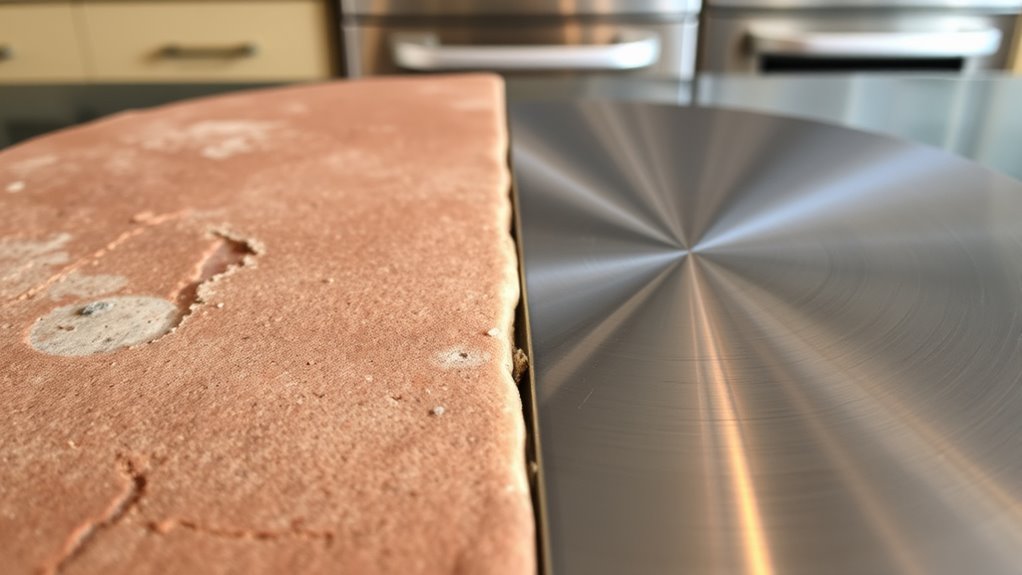
When considering cost and durability, pizza steels generally require a higher upfront investment but tend to last longer with proper care.
Here’s a quick look at what you should consider:
- Cost comparison: Steel can cost twice or more than a pizza stone initially.
- Durability factors: Steel resists cracking and can handle high temperatures without damage.
- Longevity: With proper cleaning and care, steel can last years, while stones might chip or crack over time.
- Maintenance: Steel is easier to clean and less prone to absorbing odors, boosting its durability.
Tips for Optimal Pizza Baking Results
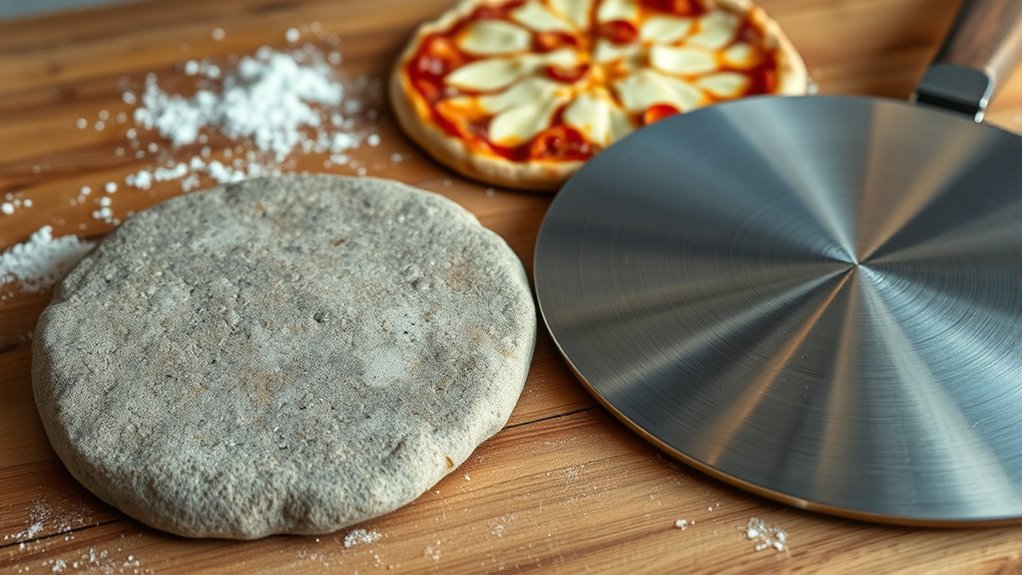
Achieving the best pizza results requires paying attention to a few key techniques. First, make certain your dough hydration is just right—too dry and it won’t stretch properly, too wet and it can become difficult to handle. Proper dough hydration promotes a crisp crust and even baking. Next, focus on topping placement; avoid overloading your pizza, as excess toppings can prevent proper heat transfer and result in soggy spots. Place toppings evenly, with lighter ingredients near the edges and heavier ones centered, to promote uniform cooking. Preheat your pizza stone or steel thoroughly before baking, and use a pizza peel for easy transfer. These tips help you maximize heat transfer, ensuring a crispy crust and perfectly cooked toppings every time.
Frequently Asked Questions
Which Material Heats up Faster for Pizza Baking?
You’ll find that a pizza steel heats up faster than a pizza stone because of its higher thermal conductivity. Steel transfers heat more efficiently, allowing you to reach the desired temperature quickly. While both materials have excellent heat retention, steel’s quick heating gives you a faster start, ensuring your pizza crust gets that perfect crispness sooner. So, if speed is your priority, a pizza steel is the way to go.
Can Pizza Stones or Steels Be Used on Outdoor Grills?
Yes, you can use pizza stones and steels on outdoor grills for outdoor cooking. Make sure to check grill compatibility, as some materials may not withstand high heat or direct contact with flames. Place the stone or steel on the grill grates, preheat thoroughly, and monitor closely to prevent damage. Using these tools outdoors can help you achieve crispy, restaurant-quality pizza right in your backyard.
How Do Cleaning Methods Differ Between Stones and Steels?
When cleaning pizza stones and steels, your cleaning techniques differ markedly. For stones, avoid soap—just scrape off residue and wipe with a damp cloth, then let it air dry; maintenance routines are gentle. For steels, you can scrub with a brush or steel wool, rinse with water, and dry thoroughly to prevent rust. Regular cleaning keeps both in top shape, but always tailor your approach to avoid damage.
Are There Size Limitations for Different Oven Types?
You’ll be amazed at how some pizza stones and steels seem to stretch as far as the eye can see, but in reality, oven size restrictions are real! Larger steels and stones can barely fit in compact ovens, making oven compatibility a must-check before buying. Measure your oven carefully, because trying to cram something too big will turn your pizza-making dreams into a frustrating puzzle. Always match your equipment to your oven’s size!
Which Option Is Better for Beginners?
For beginners, a pizza steel is a better choice because it heats faster and provides more consistent cooking, improving pizza flavor and ensuring even cooking. Its durability and ease of use make it simpler to achieve that perfect crust. With a steel, you can focus on mastering techniques without worrying about uneven heat distribution, leading to better results and more confidence in your pizza-making skills right from the start.
Conclusion
Choosing between a pizza stone and steel depends on your baking style. Both can deliver a delicious pie, but steel’s quick heat transfer is like having a secret recipe from an ancient artisan—fast, reliable, and consistent. Think of it as wielding a legendary sword versus a trusty shield; each has its charm. Whichever you pick, master your craft, and you’ll be turning out pizza fit for a king, no matter the era.