To prevent burnt pizza edges in ultra-hot ovens, focus on controlling dough consistency by kneading well and resting it properly, so it’s supple but not sticky. Use a baking stone or steel for even heat distribution and place your pizza on the middle or lower rack. Regularly check your oven’s calibration with a thermometer and adjust the temperature if needed. Watching closely and making gradual changes can help, and there’s more to optimize your results if you keep exploring.
Key Takeaways
- Use a baking stone or steel for even heat distribution and to prevent hot spots that cause burning.
- Place the pizza on a lower rack or middle position to avoid direct heat contact.
- Preheat the oven thoroughly and monitor actual temperature with a reliable thermometer.
- Adjust oven temperature downward by 10-20°F if edges start to burn too quickly.
- Keep an eye on the pizza and remove or rotate it if edges brown faster than the center.
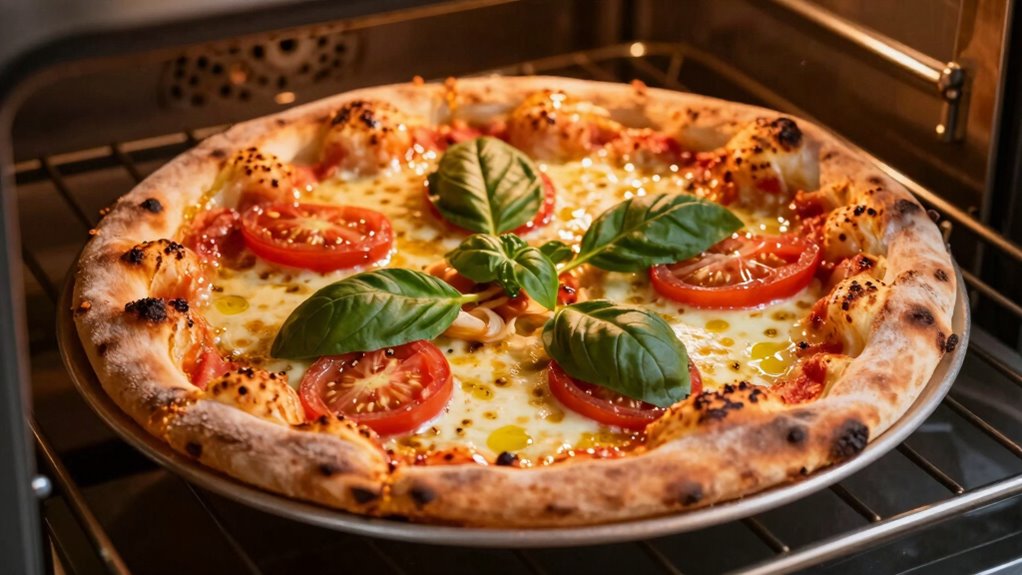
Burnt pizza edges can ruin an otherwise perfect slice, but you don’t have to accept this as inevitable. When baking in ultra-hot ovens, the key lies in understanding and controlling the factors that cause those blackened, crispy edges. One of the most important aspects is guaranteeing your pizza dough consistency. If your dough is too thin or too sticky, it’s more likely to burn quickly at the edges because it doesn’t hold up well against high temperatures. To prevent this, aim for a dough that’s supple but not overly sticky, with enough elasticity to hold its shape during baking. Proper kneading and resting times help develop the gluten structure, which contributes to even cooking and prevents edges from crisping too rapidly. Ensuring your oven’s heat distribution is even can also minimize hot spots that lead to burnt edges, similar to how contrast ratio impacts image quality by enhancing darker areas without losing detail. Additionally, using a baking surface that promotes even heat transfer can further help prevent uneven burning. Regularly cleaning your oven and removing any residues can also improve heat distribution, reducing the chance of localized scorching. Investing in a baking stone or steel can provide a consistent surface that helps regulate heat transfer and evenly brown the crust, avoiding overly burnt edges.
Another essential factor is oven temperature calibration. Many home ovens, especially high-end or commercial models, can run hotter than their dial suggests. If your oven isn’t calibrated correctly, you may be baking at a temperature that’s too intense, causing the edges to burn before the rest of the pizza has a chance to cook through. Investing in an oven thermometer allows you to accurately measure the internal temperature. Regular calibration ensures your oven maintains a consistent heat, giving you better control over baking times and preventing those dreaded burnt edges. Without proper calibration, you might unknowingly be baking at higher temperatures than intended, leading to uneven results. Additionally, temperature accuracy can be improved by checking oven settings against a reliable thermometer, ensuring more precise control during baking. Adjusting your baking techniques can also make a significant difference. Use a pizza stone or steel preheated in the oven for at least 30 minutes; this helps distribute heat evenly and moderates the temperature at the crust’s edges. When placing your pizza, position it on a middle or lower rack to avoid direct heat exposure that could scorch the edges. Keep a close eye on the baking process, especially if you’re using ultra-high temperatures—set timers and check frequently to prevent overbaking. If you notice the edges browning too quickly, consider using baking time adjustments like reducing the oven temperature by 10 to 20 degrees or lowering the rack position. Monitoring your oven’s actual performance with a reliable thermometer and making temperature adjustments can further optimize your results. By paying careful attention to your dough’s consistency and guaranteeing your oven temperature is accurately calibrated, you’ll gain better control over your pizza’s outcome. With practice, you’ll master the art of baking pizzas that have a perfectly cooked crust without those undesirable burnt edges.

Old Stone Round Pizza Stone, 16-Inch
- Creates restaurant-quality dishes: Pizzas, bread, pastries, vegetables
- Durable and non-cracking: Made from lead-free clay blend
- Even heat transfer: Absorbs and distributes oven heat
As an affiliate, we earn on qualifying purchases.
As an affiliate, we earn on qualifying purchases.
Frequently Asked Questions
Can Using a Pizza Stone Prevent Burnt Edges?
Using a pizza stone can help prevent burnt edges, especially if you focus on dough thickness and oven calibration. A well-calibrated oven guarantees even heat distribution, while a thicker dough can resist burning better. Place the stone properly and preheat it thoroughly. This combination allows heat to distribute evenly across your pizza, reducing the risk of burnt edges. Adjust your oven settings and dough thickness for the best results.
What Types of Cheese Help Reduce Burning?
Think of cheese as your pizza’s guardian angel, softly melting instead of raging into flames. Use cheeses like mozzarella or fontina that melt smoothly, reducing cheese browning and preventing burnt edges. These cheeses melt evenly, creating a creamy layer that shields the crust. Avoid high-fat cheeses like cheddar or Parmesan for this purpose, as they tend to brown quickly and can cause uneven melting, risking burnt edges.
Does Oven Placement Affect Edge Burning?
Yes, oven placement affects edge burning because heat distribution varies across different areas. You should place your pizza where oven insulation minimizes hot spots, typically closer to the center or lower racks. Proper placement guarantees even heat transfer, reducing chances of burning edges. By understanding your oven’s heat distribution pattern and adjusting pizza placement accordingly, you can prevent burnt edges and achieve perfectly cooked pizza every time.
Are There Specific Pizza Dough Recipes for High-Temperature Baking?
Think of high-temperature baking as a dance where your dough needs the perfect rhythm. You can try alternative dough recipes designed for high heat, like those with higher hydration levels for better flexibility. Incorporate gluten development techniques, such as extended kneading or autolyse, to strengthen the dough structure. These adjustments help the crust cook evenly, preventing burnt edges while giving you that crispy, restaurant-quality pizza you crave.
How Does Humidity Influence Pizza Edge Burning?
Humidity considerably influences pizza edge burning by affecting crust moisture and humidity control. When humidity is high, the dough retains more moisture, slowing browning and preventing edges from burning too quickly. Conversely, low humidity dries out the crust, making edges prone to burning. To avoid this, manage humidity levels in your environment or oven, ensuring the crust stays moist enough for even baking and preventing burnt edges in ultra-hot ovens.

Etekcity Infrared Thermometer Laser Temperature Gun 774
- Versatile Measurement Applications: Measures objects indoors and outdoors
- High Accuracy: 12:1 distance-to-spot ratio for precise readings
- User-Friendly Operation: Quick temperature readings on bright LCD display
As an affiliate, we earn on qualifying purchases.
As an affiliate, we earn on qualifying purchases.
Conclusion
By following these simple tips, you can enjoy perfectly cooked pizza with beautifully golden edges every time. Keep an eye on your crust, adjust your oven rack, and consider using a pizza stone for even heat distribution. Isn’t it worth a little extra effort for that delicious, crispy edge? With these tricks, you’ll master the art of pizza baking and avoid those burnt edges, ensuring every slice is a slice of perfection.

ThermiChef 16" x 16" Pizza Steel – 1/4" Steel, 17.6 lbs
- Fast, Even Cooking: Cooks pizza in under 8 minutes with efficient heat transfer
- Generous 16×16 Size: Fits most standard ovens and 15-inch pizzas
- Optimal Thickness: 1/4 inch steel balances heat retention and weight
As an affiliate, we earn on qualifying purchases.
As an affiliate, we earn on qualifying purchases.

Rubbermaid Commercial Products Stainless Steel Monitoring Thermometer, Safe for Inside Oven/Grill/Smoker, 60-580°F Range, Easy to Read Food Thermometer For Food Resturant/Home Cooking
- Food Safety Monitoring: Displays true oven temperature instantly
- Wide Temperature Range: Reads 60°F to 580°F / 20°C to 300°C
- Versatile Kitchen Use: Suitable for home and professional kitchens
As an affiliate, we earn on qualifying purchases.
As an affiliate, we earn on qualifying purchases.