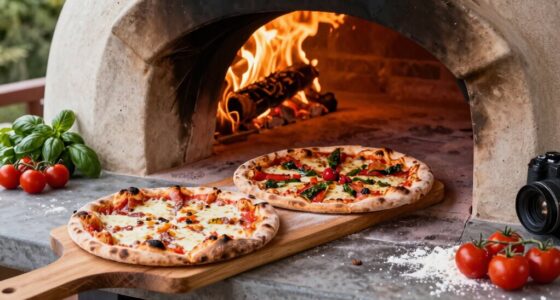

To mimic wood-fired pizza flavor at home, use a hot pizza stone or steel in a high-temperature oven to get that authentic char and crust texture. Incorporate smoked ingredients like smoked paprika or a splash of liquid smoke, and finish with a torch or under the broiler for smoky, blistered spots. Using these techniques along with proper toppings can help you craft a pizza that tastes just like it was cooked in a wood-fired oven—keep exploring for all the details.

Get kitchen gear delivered free with Prime
- Fast, free delivery on millions of items
- Prime Video, Amazon Music and more included
- Member-only deals all year
Key Takeaways
- Preheat a pizza stone or steel at maximum temperature for even heat transfer and authentic crust.
- Use a culinary torch, broiler, or grill to create charred spots and smoky flavors on the crust.
- Incorporate smoked spices, liquid smoke, or smoked ingredients into sauce or toppings for added smoky depth.
- Finish with a brief blast of high heat using broiler or torch to develop blistered, smoky crusts.
- Preheat heavy pans or cookware to high temperatures to mimic the Maillard reactions and crust texture of wood-fired pizza.
pizza stone for high temperature oven
As an affiliate, we earn on qualifying purchases.
As an affiliate, we earn on qualifying purchases.
Using a Cast Iron Skillet or Heavy-Duty Pan to Enhance Flavor
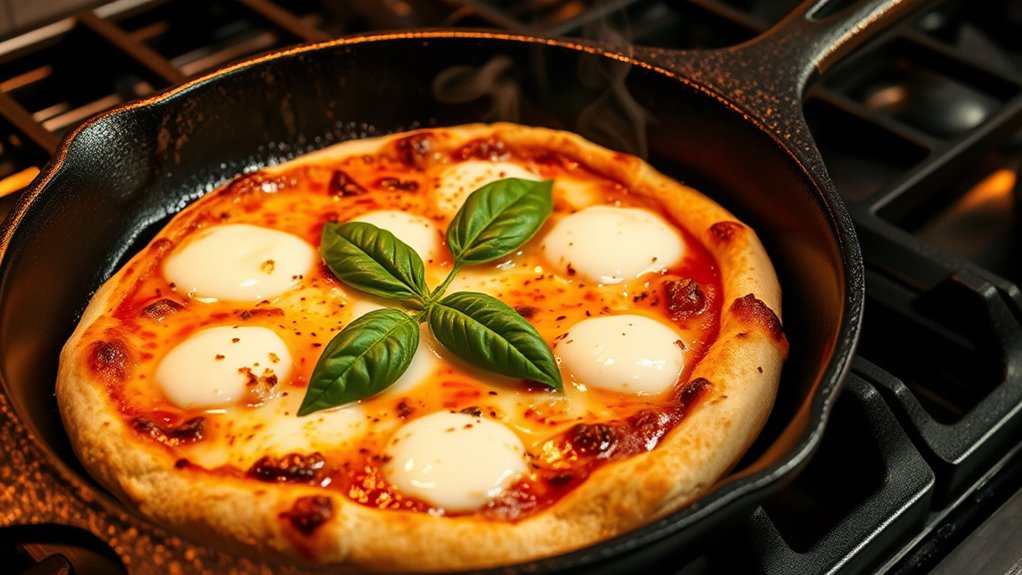
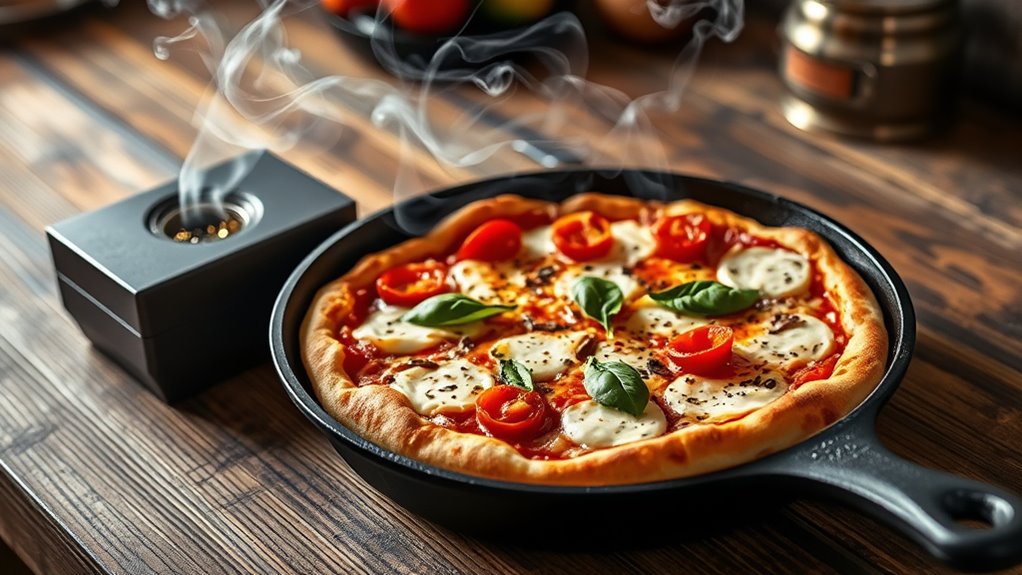
Using a cast iron skillet or heavy-duty pan can markedly boost your pizza’s flavor by creating a crisp, caramelized crust reminiscent of wood-fired ovens. The intense heat from these pans mimics the high temperatures needed for authentic texture and helps develop complex flavors. When you preheat the skillet, it absorbs and retains heat, enhancing the Maillard reaction for better flavor and texture. To add a subtle hint of wood smoke flavor enhancement, briefly broil your pizza with a few aromatic wood chips or infuse the dough with smoked ingredients beforehand. This method allows you to achieve a smoky depth without an actual wood oven, elevating your homemade pizza with a richer, more authentic profile. The result is a crust that’s both crispy and infused with smoky undertones.
As an affiliate, we earn on qualifying purchases.
Incorporating Smoked Ingredients for Authenticity
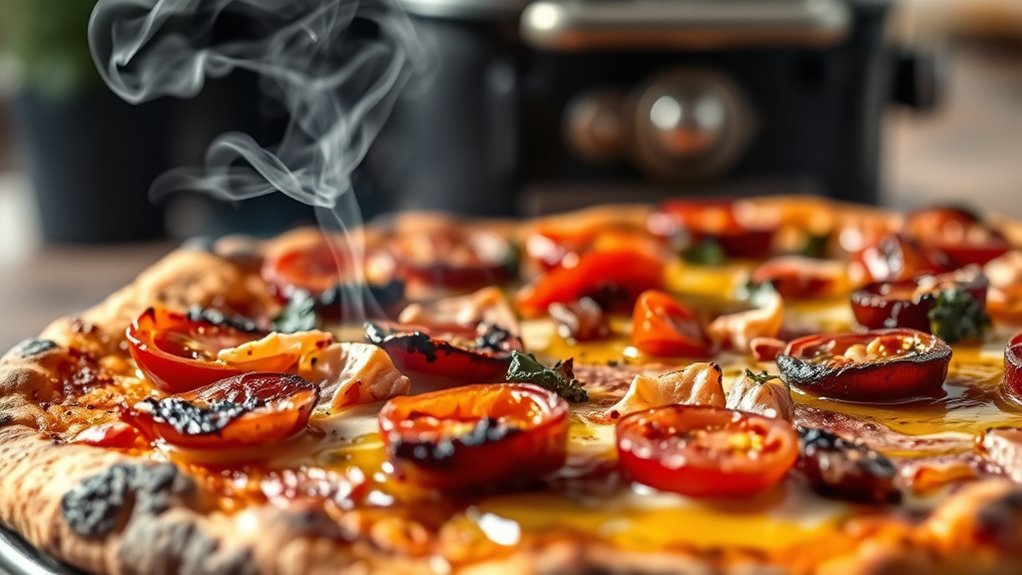
Adding smoked spices and herbs can instantly boost your pizza’s smoky depth. You might also consider liquid smoke to subtly enhance the flavor without extra effort. These simple touches help create an authentic wood-fired taste that truly stands out.
Smoked Spices and Herbs
Incorporating smoked spices and herbs into your pizza can instantly evoke the rich, smoky depth characteristic of wood-fired flavors. Use carefully crafted spice blends that include smoked paprika, chipotle, or smoked sea salt to add authentic smokiness. These blends can be sprinkled directly onto toppings or mixed into tomato sauce for a layered flavor boost. Herb infusions, such as smoked thyme or oregano, also work well; gently toast the herbs to release their smoky aroma before adding them to your dough or toppings. By thoughtfully selecting and combining smoked spices and herbs, you enhance your pizza’s complexity and create a more authentic wood-fired experience without needing a traditional oven. These simple additions make a noticeable difference in capturing that signature smoky essence.
Liquid Smoke Enhancements
Liquid smoke is a powerful tool for replicating the smoky essence of wood-fired pizza without an actual flame. It allows you to achieve a convincing smoke infusion by adding a few drops to your dough, sauce, or toppings. Use it strategically to layer flavors, enhancing the depth and complexity of your pizza. Start with small amounts—too much can overpower the dish—and taste as you go. Incorporate liquid smoke early in the preparation process to give your ingredients time to absorb the smoky notes. This method boosts authenticity, mimicking the flavor layering you’d get from a traditional wood oven. With careful use, liquid smoke can transform your homemade pizza into a smoky, flavorful masterpiece.
As an affiliate, we earn on qualifying purchases.
Achieving a Charred Crust With a Torch or Broiler
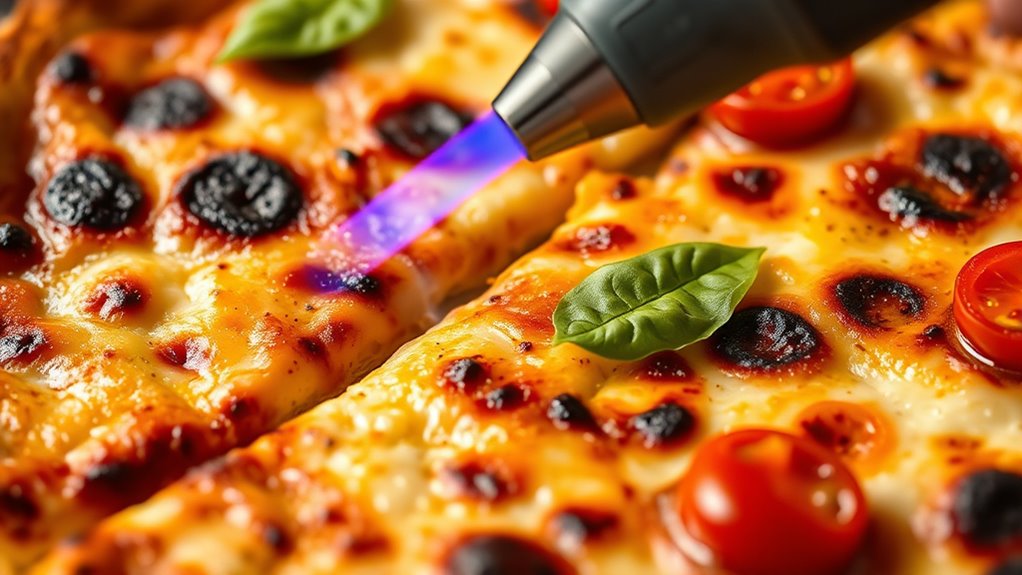
To achieve a perfectly charred crust without a high-temperature oven, you can use a culinary torch or the broiler setting on your oven. This method creates those signature charred crusts that mimic wood-fired flavor infusion.
Here are three tips to master this technique:
Master these three tips for perfectly charred pizza crusts at home.
- Use a culinary torch carefully—hold it close enough to scorch the crust evenly without burning.
- Preheat your broiler and position the pizza close to the heat source for quick, controlled charring.
- Monitor constantly—keep an eye on the crust to prevent over-charring and ensure a balanced, smoky flavor infusion.
This approach delivers the smoky, flavorful crusts you crave, elevating your homemade pizza to a new level without a traditional wood oven.
As an affiliate, we earn on qualifying purchases.
Utilizing a Pizza Stone or Steel for High-Heat Results
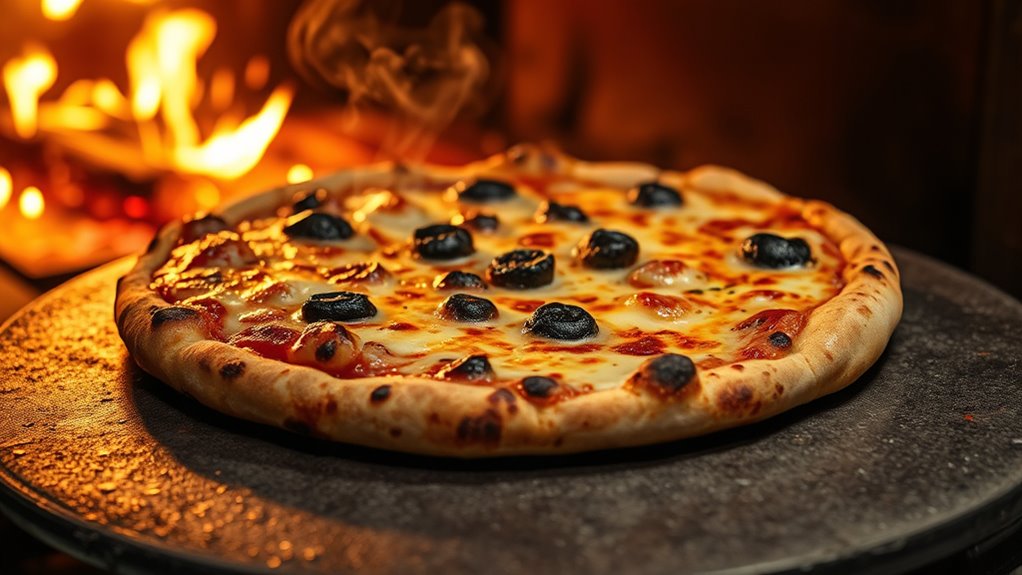
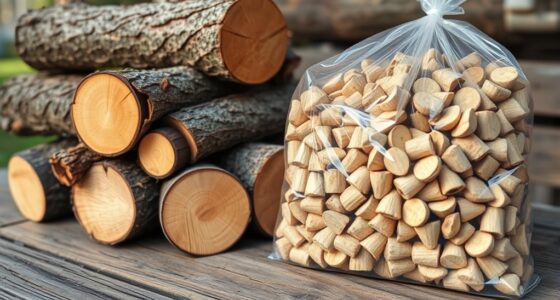
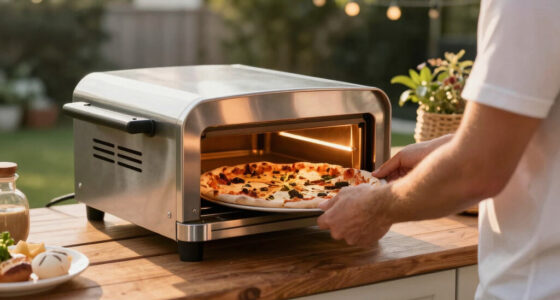
Using a pizza stone or steel transforms your home oven into a high-heat pizza station, delivering results that mimic traditional wood-fired pies. Preheat your oven with the stone or steel inside at its maximum temperature for at least 45 minutes. This guarantees even heat transfer, creating a perfect crust. Regular pizza stone maintenance involves avoiding soap and soaking, instead scraping off residue and occasionally re-seasoning if needed. While you won’t be firewood harvesting yourself, choosing quality firewood can inspire authentic flavors. To visualize, here’s how the setup looks:
| Element | Description |
|---|---|
| Pizza Steel/Stone | Heavy, heats quickly, retains high temperatures |
| Oven Temperature | Crank up to 500-550°F for best results |
| Preparation | Use a floured peel for easy transfer |
| Maintenance | Keep clean, avoid soap, re-season as needed |
This method elevates your pizza game with high, consistent heat.
Creating a Smoke Flavor With Liquid Smoke or Wood Chips
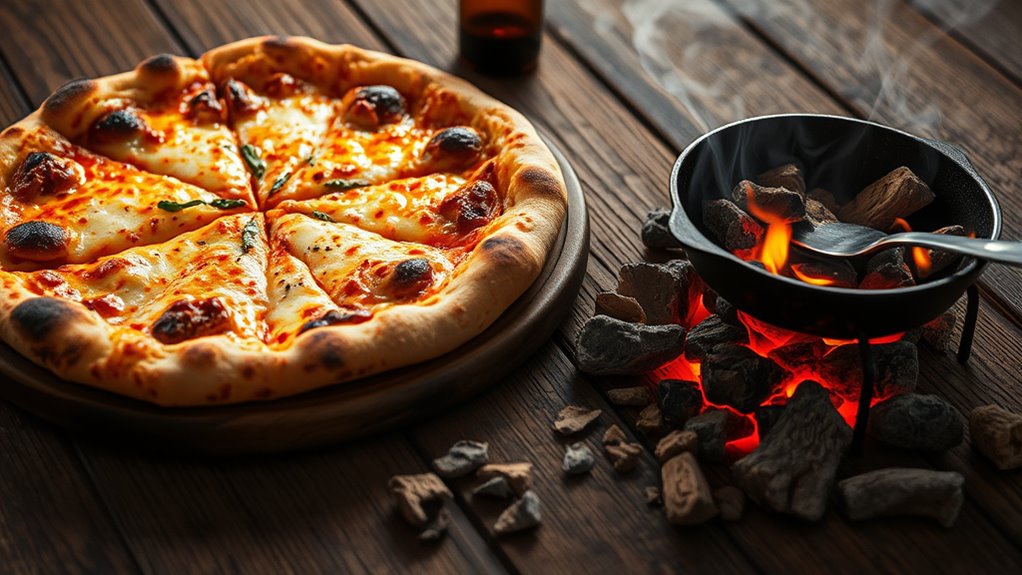
Ever wondered how to infuse your homemade pizza with that authentic smoky aroma? Using liquid smoke or wood chips can deliver that flavor without a traditional wood oven. Here are three ways to do it:
Discover simple ways to add smoky flavor to homemade pizza using liquid smoke or wood chips.
- Add a few drops of liquid smoke directly to your tomato sauce or brush it onto the crust before baking, giving a subtle smoky depth.
- Soak wood chips in water for 30 minutes, then scatter them on a hot grill or in a smoker box inside your oven to produce smoky vapors.
- Use a smoking pouch made from aluminum foil filled with wood chips, poked with holes, and placed near your heat source for a gentle smoke infusion.
These methods are simple but effective for capturing that wood-fired essence.
Mimicking the Fire’s Heat With a Grill or Oven Technique
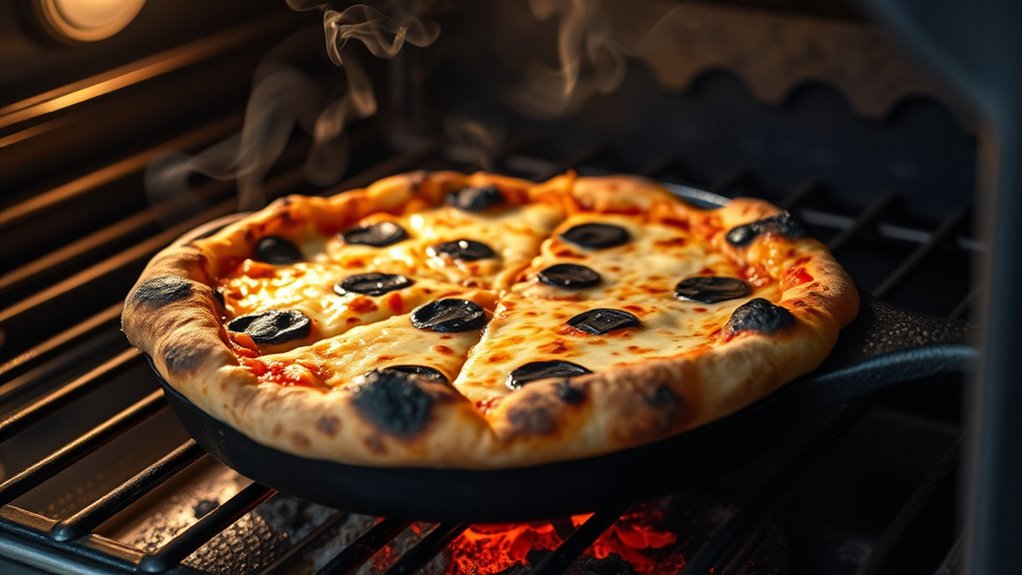
If you don’t have a wood-fired oven, creating high, direct heat with your grill or oven can help replicate that intense fire’s effect. Preheat your grill or broiler to a high temperature, ideally over 500°F. Use a cast iron skillet or a pizza stone to simulate the hot surface of a wood-fired oven. Position the pizza close to the heat source to achieve a quick, intense cook, which helps develop that signature char and crispy crust. To infuse wood smoke flavor, add wood chips to your grill or create a smoke pocket in your oven. This method not only mimics the fire’s heat but also allows subtle wood smoke to infuse your pizza, bringing you closer to that authentic, wood-fired flavor experience.
Applying Proper Dough Preparation and Toppings for Better Results

Getting the dough just right is key, so handle it gently to create a thin, even crust. Be mindful of your toppings—too much can weigh down the pizza and prevent that perfect, crispy finish. Striking the right balance guarantees each bite delivers the authentic wood-fired flavor you’re aiming for.
Dough Handling Techniques
Proper dough handling is essential for achieving that authentic wood-fired pizza flavor. When you master techniques like managing dough elasticity and fermentation timing, you’ll produce a crust with perfect texture and flavor. To do this effectively, focus on these key steps:
- Gentle Shaping: Handle the dough with care to preserve elasticity, preventing tears and ensuring a uniform rise.
- Controlled Fermentation: Allow adequate fermentation time to develop complex flavors, but avoid over-proofing, which can weaken the dough.
- Proper Resting: Let the dough rest before shaping; this relaxes gluten, making stretching easier and promoting an airy, crispy crust.
Topping Layer Balance
Once you’ve mastered dough handling techniques, the next step is to focus on achieving the right balance of toppings. Proper cheese layering guarantees even melting and a rich flavor without overpowering the crust. Distribute vegetables evenly to prevent sogginess and ensure each bite has flavor. Too much cheese can make the pizza greasy, while too many toppings can hinder heat transfer. Use the table below to guide your topping placement:
| Topping Type | Layering Tip | Distribution Focus |
|---|---|---|
| Cheese | Spread thinly and evenly | Cover entire surface |
| Vegetables | Slice uniformly, space out | Avoid pile-ups |
| Meats | Pre-cook if necessary, layer thin | Balance with other toppings |
| Herbs & Spices | Add after baking or in small amounts | Enhance flavor without overpowering |
| Extra Sauces | Use sparingly, drizzled on top | Prevent sogginess |
Finishing Your Pizza With a Quick Blast of High Heat
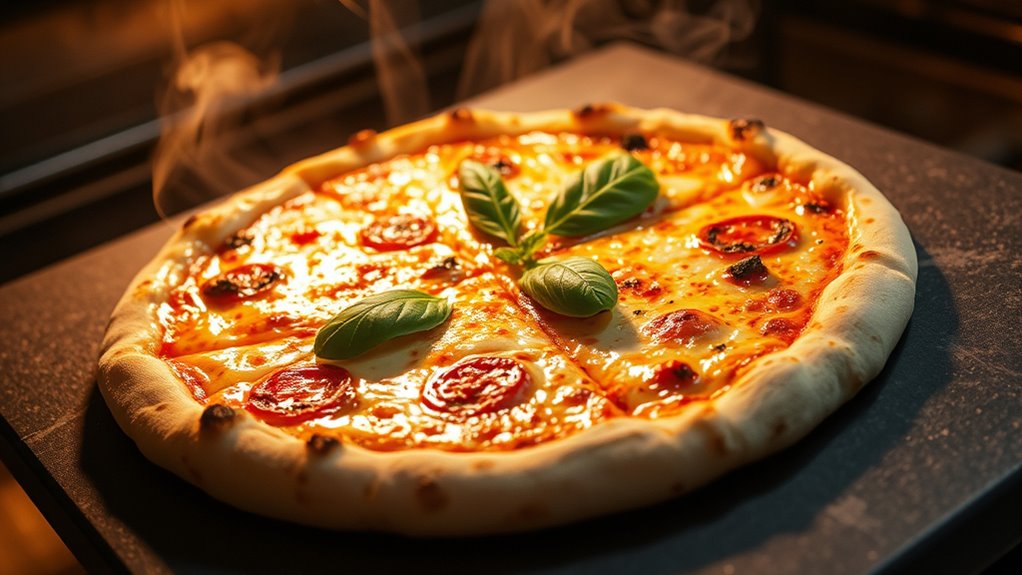
To achieve that perfectly blistered, smoky crust, finishing your pizza with a quick blast of high heat is vital. This step locks in flavors, enhances dough fermentation, and guarantees cheese melting that rivals a wood-fired oven. When your pizza is almost done, turn up the heat for 30 seconds to a minute.
Here’s what you’ll do:
- Create intense heat: Use your broiler or a preheated grill to mimic that fiery blast, pushing your dough to develop those signature charred spots.
- Boost cheese melting: The rapid heat ensures cheese turns beautifully gooey, adding depth and richness.
- Achieve crispy edges: The brief high heat crisps the crust’s surface, giving you that authentic wood-fired texture and flavor.
Frequently Asked Questions
Can I Replicate the Smoky Aroma Without Using Any Smoke Products?
Yes, you can replicate the smoky aroma without using smoke products. Use ingredients like smoked paprika, chipotle powder, or liquid smoke to add that distinctive smoke flavor. Additionally, incorporate aromatic herbs like thyme or rosemary during cooking, or use a cast iron skillet to create a smoky effect. These methods help achieve authentic smoke aroma replication, enhancing your pizza’s flavor without relying on actual smoke products.
What Are the Best Types of Smoked Ingredients for Flavor Enhancement?
You should prioritize smoked spices like smoked paprika, chipotle, or smoked salt to enhance your pizza. They add a rich, smoky depth without overpowering. Additionally, a few drops of liquid smoke can mimic the smoky aroma, giving your crust and toppings an authentic flavor. Use these ingredients sparingly, tasting as you go, to achieve that delicious, wood-fired taste without needing a wood oven.
How Does Dough Hydration Affect the Final Crust’s Char and Flavor?
Think of dough hydration as the water that fuels your pizza’s fire. Higher hydration makes your dough more elastic, allowing it to develop a better char and richer flavor during baking. But if you overdo it, the crust can become too sticky and difficult to handle. Proper fermentation timing helps balance this, ensuring the dough develops complex flavors without losing structure. Adjust hydration carefully for that perfect, smoky crust.
Are There Specific Oven Settings That Mimic Wood-Fired Heat Effectively?
You can mimic wood-fired heat by setting your oven to a high temperature, around 500-550°F, and maximizing airflow control to create a convection-like environment. Use a pizza stone or steel to replicate the intense heat of a wood-fired oven, and preheat it thoroughly. Keep the oven door slightly ajar if possible, to boost airflow, which helps achieve that crisp crust and smoky flavor characteristic of wood-fired pizzas.
How Long Should I Preheat My Pizza Stone or Steel for Optimal Results?
Imagine a rocket launch—your pizza stone or steel needs to reach escape velocity. Preheat it for 45 minutes to an hour at 500-550°F, ensuring temperature consistency. This duration allows the material to fully absorb heat, creating a hot surface that mimics wood-fired results. Rushing the process risks uneven cooking, so patience guarantees a perfectly crisp crust and evenly melted toppings every time.
Conclusion
Think of your oven as a trusty forge, transforming simple ingredients into a masterpiece. With a few clever tricks—like using smoky elements and high heat—you’re forging your own wood-fired flavor right at home. Like a skilled blacksmith shaping metal, you craft each pizza’s crust and char with care. So, embrace these methods and turn your kitchen into a culinary workshop, creating delicious, smoky masterpieces that rival the real thing.
Halloween Picks
halloween
As an affiliate, we earn on qualifying purchases.