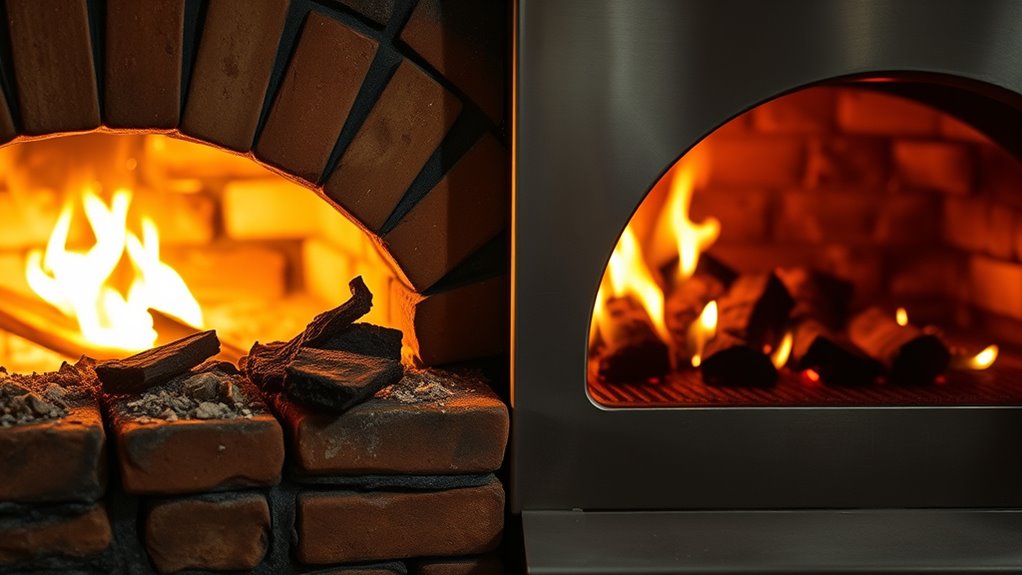

You’ll notice that wood-fired and coal-fired ovens differ in flavor, sustainability, and ease of use. Wood ovens give a smoky, complex taste and are more eco-friendly if sourced responsibly, but they require more effort to manage. Coal ovens offer reliable, consistent heat and are simpler to operate, though they have a higher environmental impact. To find out which suits your style and needs best, keep exploring the key differences and benefits.
Key Takeaways
- Wood-fired ovens produce smoky flavors and are more sustainable when using responsibly sourced wood.
- Coal-fired ovens offer consistent, easily controlled heat but generate higher carbon emissions.
- Managing wood in a wood-fired oven requires active fire tending; coal ovens are simpler to operate.
- Wood imparts a complex aroma, while coal provides a subtler, cleaner flavor profile.
- Sustainability and flavor preferences often favor wood-fired ovens, whereas operational ease leans toward coal-fired options.
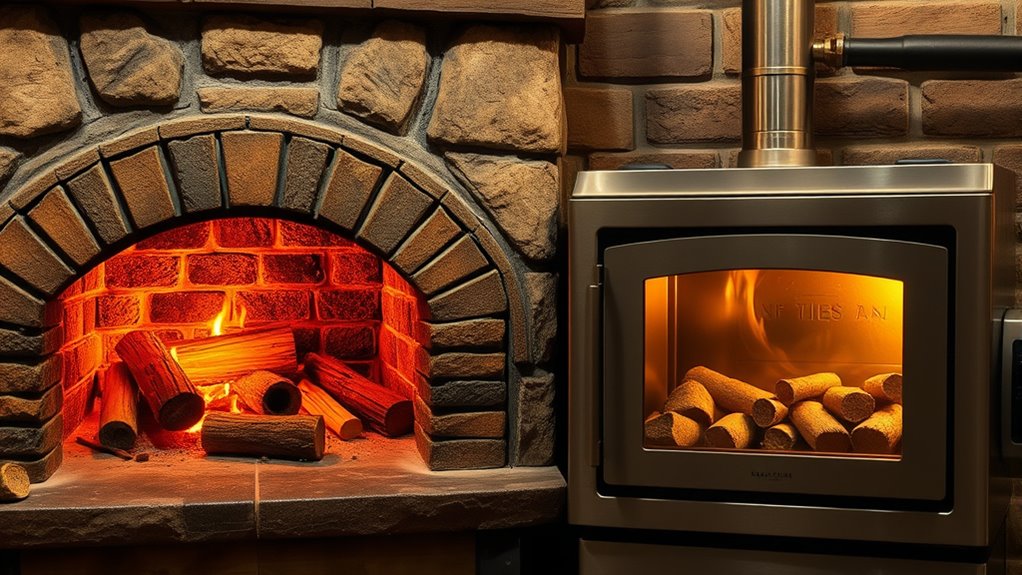
When choosing between wood-fired and coal-fired ovens, understanding their differences can help you make the best decision for your cooking needs. Both types of ovens have unique characteristics that influence not only the cooking process but also their environmental impact and the flavors they produce. One of the key aspects to consider is sustainability. Wood-fired ovens are often viewed as more sustainable because wood is a renewable resource, especially when sourced responsibly. If you prioritize eco-friendly practices, you’ll appreciate that managing wood supplies and ensuring proper burning techniques can reduce emissions and waste. Coal-fired ovens, on the other hand, rely on coal, a non-renewable fossil fuel that produces higher levels of carbon emissions. From a sustainability perspective, coal ovens tend to have a bigger environmental footprint, which might influence your choice if you’re committed to reducing your carbon footprint.
Beyond environmental concerns, flavor profiles play a significant role in deciding between these two ovens. Wood-fired ovens impart a smoky, complex aroma to the food that many chefs and home cooks find irresistible. The natural variation in wood types—such as oak, hickory, or fruitwoods—allows you to customize the flavor, creating a distinctive taste that’s hard to replicate with other cooking methods. The open flame and live embers in wood-fired ovens contribute to a unique, slightly charred flavor that enhances everything from pizza to roasted vegetables. Coal-fired ovens, however, produce a steadier, more intense heat, which can lead to a different flavor profile. They tend to impart a subtle smokiness, but the taste is often cleaner and more uniform compared to wood. This consistency can be advantageous when aiming for precise control over cooking conditions, especially in professional kitchens.
The choice also hinges on your cooking style and the atmosphere you want to create. Wood-fired ovens usually require more hands-on management, with tending to the fire and adjusting airflow, which can be part of the charm but also demands more time and effort. Coal ovens tend to be simpler to operate once the fire is established, offering a reliable heat source with less frequent tending. Ultimately, your decision depends on balancing sustainability considerations with the flavor profiles you desire, along with how much effort you’re willing to put into managing the heat. If authentic smoky flavors and eco-consciousness are priorities, a wood-fired oven might be the better fit. If consistency and ease of use are more important, then a coal-fired oven could suit your needs better.
Frequently Asked Questions
Which Oven Type Is More Environmentally Friendly?
You’ll find that wood-fired ovens are more environmentally friendly because they use renewable resources like sustainably harvested wood, which produces less air pollution than coal. Coal-fired ovens release higher levels of pollutants, contributing more to air pollution and climate change. By choosing a wood-fired oven, you reduce your carbon footprint and support cleaner energy practices, making it the better option for the environment.
How Do Maintenance Needs Compare Between Wood and Coal Ovens?
Your maintenance needs are pretty intense—these ovens demand more than just a quick clean. Wood-fired ovens typically require frequent cleaning to remove ash and soot, and parts like burners may need replacement more often due to creosote buildup. Coal ovens also need regular cleaning, but their components tend to last longer, making upkeep slightly easier. Overall, expect to spend time on cleaning and occasional part swaps to keep your oven running smoothly.
Can Both Oven Types Reach the Same Cooking Temperatures?
Yes, both wood-fired and coal-fired ovens can reach high cooking temperatures, but heat consistency and fuel efficiency vary. Wood ovens often provide more even heat, making temperature control easier, while coal ovens can heat faster and sustain high temperatures longer. Your choice depends on your priorities—if you value steady heat, a wood oven might be better; for quick, intense heat, coal could be advantageous.
Are There Health Risks Associated With Coal-Fired Ovens?
Yes, coal-fired ovens pose health risks linked to air quality. You risk inhaling harmful particles, including carbon monoxide and soot, which can cause respiratory issues and other health concerns. Poor ventilation worsens these risks, making exposure more dangerous. To protect yourself, guarantee proper ventilation and limit prolonged exposure. Being aware of these air quality concerns helps you make safer choices when using coal-fired ovens.
Which Oven Type Is More Cost-Effective Long-Term?
You’ll find coal-fired ovens more cost-effective long-term because they often have better fuel efficiency, meaning you use less fuel over time. Although installation costs for coal ovens can be higher initially, their lower operational costs save you money in the long run. Wood-fired ovens might be cheaper upfront but could cost more over time due to higher fuel consumption and maintenance needs.
Conclusion
In the end, choosing between wood-fired and coal-fired ovens is like picking between Apollo and Atlas — each has its own strength and charm. Wood-fired ovens evoke a rustic, primal warmth, while coal-fired ones offer a steady, powerful heat. Your decision depends on what kind of culinary adventure you seek. Whichever you choose, remember that, like Prometheus stealing fire, you’re harnessing ancient elements to craft something truly memorable.