When choosing a pizza peel, consider your baking needs. Wooden peels are great for handling dough and transferring it without sticking, but they aren’t ideal for high temperatures over time. Metal peels are durable, heat-resistant, and perfect for quick oven handling, especially in high-heat environments. Perforated peels reduce flour buildup and work well with sticky dough. To find the best fit for your baking style, explore the key differences further.
Key Takeaways
- Wooden peels are best for dough handling and shaping, offering gentle contact and easy flour dusting.
- Metal peels are durable and ideal for high-temperature oven use and quick, safe handling.
- Perforated peels reduce excess flour and are suitable for sticky dough and airflow during transfer.
- Wooden peels require careful maintenance and are less suitable for prolonged high-temperature baking.
- Metal and perforated peels excel in frequent, high-heat baking environments due to durability and ease of cleaning.
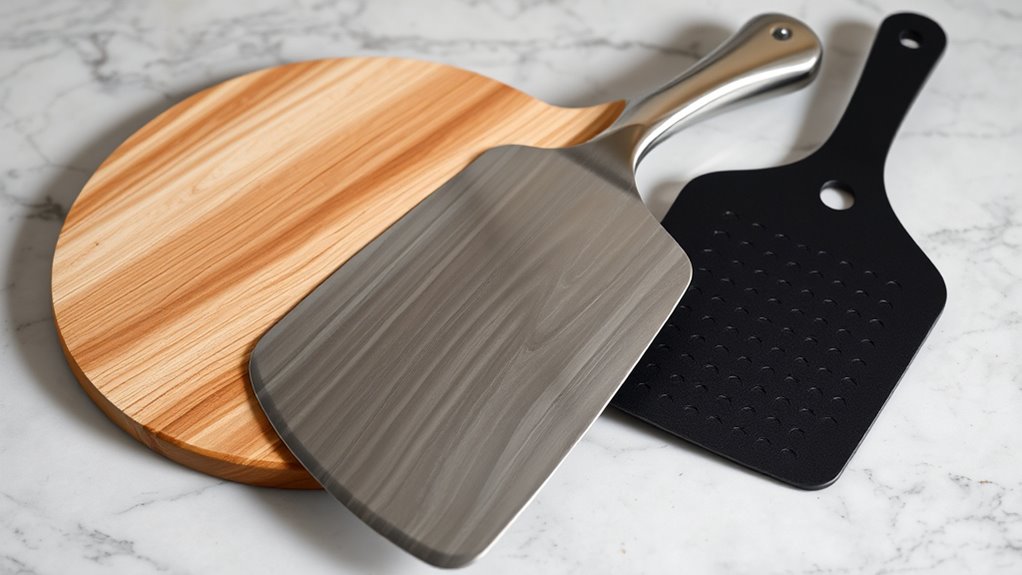
Finding the right pizza peel is essential for making perfect homemade pies. Your choice impacts how you handle the dough and maintain oven safety. A well-suited peel makes sliding your pizza into and out of the oven smoother, reducing the risk of burns or accidents. It also helps you handle the dough more confidently, preventing tearing or sticking, which can ruin your pizza before it even hits the heat.
Choosing the right pizza peel ensures safer handling and perfect pies every time.
Wooden peels are popular for their gentle touch on dough. They’re excellent for handling your dough during shaping and transferring it onto the peel without sticking. The natural surface allows for easy dusting with flour or cornmeal, helping you keep the dough from sticking as you work. However, wooden peels aren’t as durable in high-temperature ovens, so you need to be cautious about oven safety—exposing wood to extreme heat can cause warping or cracking over time. Plus, wooden peels require more maintenance; they need to be cleaned properly and occasionally oiled to prevent cracking and prolong their lifespan.
Metal peels, usually made of aluminum or stainless steel, excel when it comes to oven safety and durability. They’re lightweight and sturdy, making it easier to handle dough and transfer it quickly into very hot ovens. Metal peels are less likely to warp or crack, even after repeated use at high temperatures. This durability ensures safer oven handling because you won’t worry about the peel breaking or contaminating your pizza. Metal peels also heat up quickly, so they can help you manage oven temperature better. A disadvantage is that dough tends to stick more to metal, so you’ll need to dust it generously with flour or cornmeal and work swiftly to prevent sticking issues.
Perforated peels combine features of both wood and metal, featuring holes that allow excess flour and air to escape. This design helps with dough handling, especially if your dough tends to be sticky, by reducing excess flour on the surface and making it easier to slide the pizza into the oven. Perforated peels are often made of metal, offering the same oven safety benefits, but with a slight advantage in managing dough stickiness. They’re easy to clean and maintain, and their airflow design minimizes the risk of sticking, which enhances oven safety by reducing the need for excessive flour that could create flare-ups or smoky conditions.
Choosing the right pizza peel depends on your specific needs—whether it’s handling delicate dough or ensuring oven safety during high-temperature baking. Each type offers distinct advantages, but all aim to make your pizza-making experience safer, easier, and more enjoyable.
Frequently Asked Questions
Can I Use a Wooden Peel for High-Temperature Ovens?
You can use a wooden peel in high-temperature ovens, but be aware that wooden durability diminishes with extreme heat. Wood insulates better but isn’t as heat-conductive as metal, which means it might not handle rapid temperature changes well. If you choose a wooden peel, guarantee it’s well-crafted and sturdy. For high-temperature baking, a metal peel offers better metal conductance and withstands the heat more effectively, making it a safer choice.
How Do Perforated Peels Affect Pizza Baking?
Perforated peels really cut the mustard when it comes to pizza baking. Their perforated design improves airflow, allowing moisture to escape and reducing the risk of a soggy crust. This airflow improvement helps your pizza cook more evenly and creates a crispier bottom. By using a perforated peel, you guarantee your pizza gets that perfect balance of texture and flavor, making it a handy tool in your baking arsenal.
Are Metal Peels Suitable for Outdoor Pizza Ovens?
Yes, metal peels are suitable for outdoor pizza ovens because they offer excellent durability and heat resistance. Unlike wooden peels, which add rustic aesthetics but can wear over time, metal peels withstand outdoor conditions and frequent use. They’re lightweight and easy to maneuver, making them ideal for handling pizzas in outdoor settings. Just make certain you choose a sturdy, high-quality metal peel to maximize its durability and performance.
What Maintenance Is Required for Different Peel Materials?
Think of your pizza peel as a trusty steed—each material needs different care. Wooden peels require gentle hand washing and dry storage to prevent warping. Metal peels should be cleaned with warm water and dried promptly to avoid rust. Perforated peels need thorough cleaning to clear trapped dough and stored in a dry place. Regular cleaning techniques and proper peel storage keep your tools in top shape, ready for your next perfect pie.
Which Peel Type Is Best for Neapolitan-Style Pizza?
For Neapolitan-style pizza, a wooden peel is your best choice. Its gentle surface helps with dough hydration, preventing sticking, and allows for easy transfer without damaging the delicate crust. The wood’s natural texture also promotes better topping adhesion during handling. Plus, it absorbs excess moisture, keeping your dough manageable. Use a wooden peel to guarantee your pizza slides smoothly into the oven, preserving that authentic, tender Neapolitan crust.
Conclusion
So, now that you know the differences between wooden, metal, and perforated pizza peels, which one feels right for your style? Remember, the perfect peel makes baking easier and more enjoyable. Don’t settle for just any tool—choose the one that matches your needs and helps you craft delicious pizzas with ease. After all, isn’t it worth investing in the right equipment to elevate your pizza game? Happy baking!