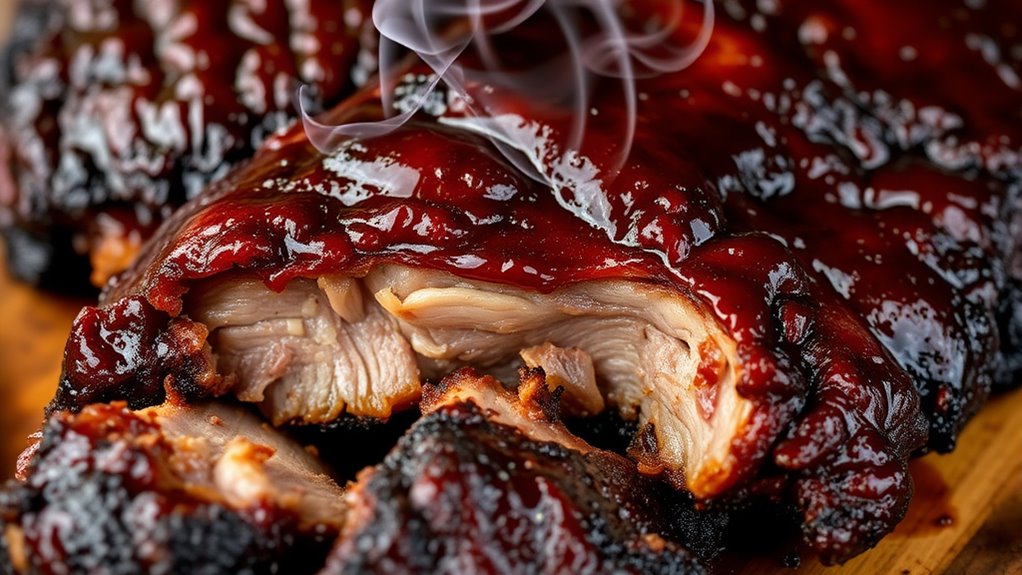

To make delicious BBQ brisket burnt ends, start with a quality point-end brisket and smoke it low and slow at 225°F to 250°F using hickory, oak, or mesquite for flavor. Smoke until it hits 195°F to 203°F, then cube the meat and coat generously with your favorite BBQ sauce. Return the coated cubes to the smoker or grill to caramelize, creating a sticky, flavorful crust. Continue to build layers of flavor and perfection by mastering each step along the way.
Key Takeaways
- Smoke brisket low and slow at 225°F–250°F until it reaches 195°F–203°F internal temperature.
- Use quality wood like hickory, oak, or mesquite to add rich smoky flavor.
- Cube the smoked brisket and coat generously with your favorite BBQ sauce.
- Return the sauced cubes to the smoker or grill to caramelize and develop a sticky crust.
- Finish with a high-heat or direct flame for a smoky, slightly charred edge and optimal tenderness.
If you’re a barbecue enthusiast looking to elevate your grilling game, then BBQ brisket burnt ends are a must-try treat. These flavorful, tender bites come from the point end of a smoked brisket, and mastering their preparation can turn your cookout into a feast. The key to perfect burnt ends lies in mastering smoking techniques; you want to guarantee your brisket is smoked low and slow, allowing the meat’s connective tissues to break down and develop that rich, smoky flavor. Using indirect heat and maintaining a steady temperature around 225°F to 250°F creates an ideal environment for this process. You’ll want to use quality wood—hickory, oak, or mesquite—to infuse your meat with a deep smoky aroma. Patience is crucial here, as smoking the brisket for several hours ensures it reaches the desired tenderness before you move on to the next step.
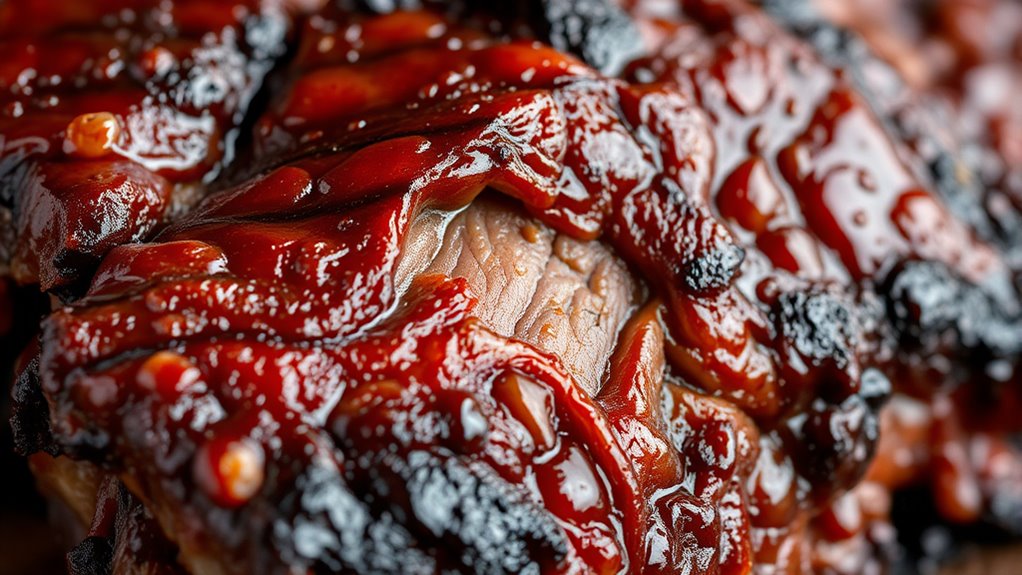
Once your brisket reaches the right internal temperature—typically around 195°F to 203°F—you’ll need to carefully trim and cube the meat into bite-sized pieces. This is where sauce recipes come into play, as they help elevate the burnt ends from simply delicious to downright addictive. A good BBQ sauce can be a simple blend of ketchup, molasses, apple cider vinegar, Worcestershire sauce, and spices, but don’t be afraid to experiment with your own twists. When coating the meat, apply a generous layer of sauce and return the cubes to the smoker or a hot grill. This allows the sauce to caramelize slightly and develop a sticky, flavorful crust that’s characteristic of burnt ends.
During this final phase, you can brush on additional sauce or glaze periodically, building layers of flavor. If you prefer a smoky, slightly charred edge, finishing the burnt ends on high heat or direct flame works wonders. Remember, the goal is to develop a balance between smoky richness, tender meat, and sweet, tangy sauce. Keep a close eye on the texture—your burnt ends should be juicy inside with a slight crisp on the outside. Resting the meat for a few minutes after removing it from heat helps the juices redistribute, ensuring each bite is moist and flavorful. Additionally, using proper smoking techniques can significantly influence the final quality of your burnt ends. With proper smoking techniques and a killer sauce recipe, you’ll craft burnt ends that impress every time, turning your backyard into a top-tier barbecue spot.
Frequently Asked Questions
What Types of Wood Are Best for Smoking Brisket Burnt Ends?
You should choose wood like oak, hickory, or mesquite for smoking brisket burnt ends. These woods provide a robust flavor that enhances the meat’s richness. Oak offers a balanced, versatile smoke, while hickory adds a sweet, smoky aroma. Mesquite delivers a bold, intense flavor. Your wood selection plays a key role in flavor enhancement, so pick based on your preferred taste profile to achieve perfect burnt ends.
How Long Can I Store Burnt Ends in the Refrigerator?
Did you know that cooked meats like burnt ends can last up to 3-4 days in the fridge? To guarantee refrigerator safety and spoilage prevention, store your burnt ends in an airtight container or wrap them tightly. Keep the temperature at or below 40°F (4°C), and avoid leaving them out for more than two hours. Proper storage helps maintain flavor while keeping your food safe to eat.
Can I Make Burnt Ends in a Standard Oven?
Yes, you can make burnt ends in a standard oven. Start with oven cooking the brisket until tender, then cut into cubes. For flavor variations, brush with your favorite sauce or spices before baking. Use a high temperature to achieve that caramelized, crispy exterior. This method allows you to enjoy smoky, flavorful burnt ends without needing a smoker, making it a convenient and delicious alternative.
What’s the Ideal Internal Temperature for Perfect Burnt Ends?
You should aim for an internal temperature of about 195°F to 205°F for perfect burnt ends. Using smoking techniques, you can enhance the flavor by maintaining steady heat and adding wood smoke. Once the brisket reaches this range, the collagen breaks down, making the meat tender and flavorful. This temperature guarantees your burnt ends are juicy, smoky, and rich in taste, delivering that ideal texture and flavor that everyone loves.
Are Burnt Ends Suitable for Freezing and Reheating?
Think of burnt ends like a treasure chest—they freeze well and can be enjoyed later. You can freeze burnt ends using proper freezing tips, like wrapping tightly in foil or plastic wrap, then placing them in an airtight container. To reheat, use methods like oven or smoker for best results, ensuring they stay tender and flavorful. Just be sure not to overheat, which can dry them out.
Conclusion
Now that you know how to craft juicy, flavorful brisket burnt ends, you’re all set to impress your friends at your next cookout. Remember, patience is a virtue—good things come to those who wait, especially when it’s slow-cooked to perfection. As the smoky aroma fills the air, you’ll realize that the effort was worth every bite. So fire up that smoker and enjoy the delicious journey of turning simple meat into a mouthwatering masterpiece!