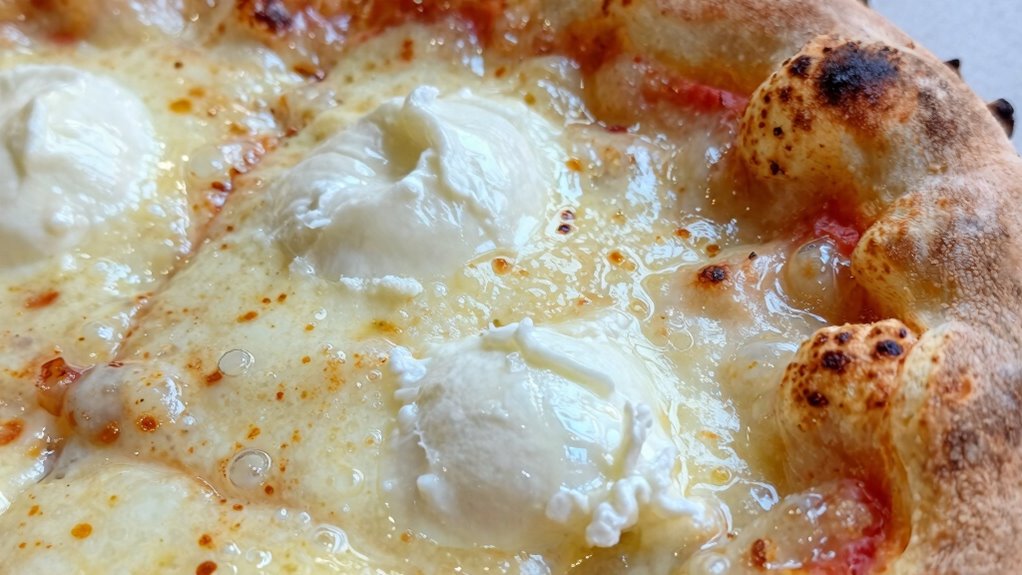

Using fresh mozzarella on your pizza can ruin it if you don’t handle it properly. Its high moisture content causes a soggy crust, uneven melting, and water pooling that can drown out other toppings. Thick slices trap steam, preventing heat from spreading evenly. To avoid this, you need to drain or pat it dry and slice thinly. Keep these tips in mind, and you’ll see how proper handling makes all the difference. Stay tuned to learn more.
Key Takeaways
- Excess moisture from improperly handled fresh mozzarella causes soggy crust and uneven melting.
- Thick or uneven slices trap steam, preventing proper melting and leading to a rubbery texture.
- Not draining or drying the cheese increases water release during baking, resulting in a watery, flavor-dominant pizza.
- Using low or inappropriate oven temperatures hinders proper melting and can cause cheese to burn or remain undercooked.
- Failing to layer cheese evenly can disrupt heat transfer, causing cold spots and an inconsistent texture.
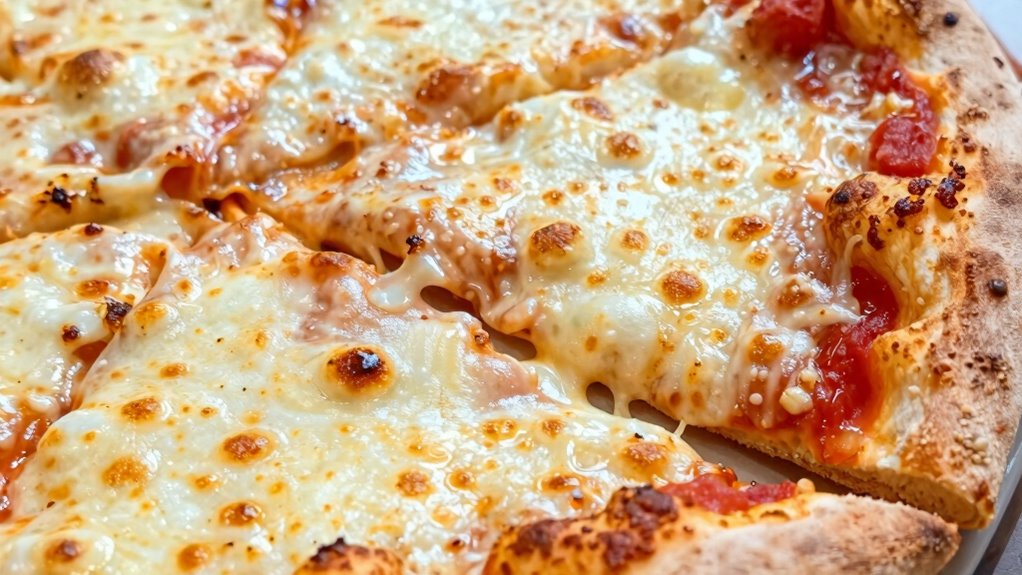
Fresh mozzarella might seem like the perfect topping for pizza, but if you don’t handle it correctly, it can actually ruin your masterpiece. The key lies in understanding how cheese melting and flavor balance work together. When fresh mozzarella isn’t prepared properly, it tends to release excess moisture, resulting in a soggy crust and uneven cheese melting. This excess moisture can cause the cheese to pool rather than evenly blanket your pizza, creating a watery mess that distracts from the overall flavor and texture.
Properly prepared fresh mozzarella prevents soggy crusts and ensures even, delicious melting for perfect pizza balance.
To prevent this, you need to pay attention to how you handle the cheese before baking. One effective strategy is to drain or even pat the fresh mozzarella dry with paper towels. Removing excess water ensures that the cheese melts smoothly without releasing too much moisture during cooking. This not only improves cheese melting but also helps maintain a crisp crust, which is essential for a balanced bite. If you skip this step, the cheese’s high moisture content can overpower the other toppings and dominate the flavor profile, throwing off your flavor balance. Additionally, moisture management is crucial for achieving that perfect pizza texture. Proper handling of moisture can make a significant difference in the final outcome.
Another mistake you might make is layering the cheese too thick. While it might seem tempting to pile on generous amounts of fresh mozzarella, doing so can hinder proper melting. Thick layers trap steam and prevent the cheese from melting evenly, leaving parts of your pizza with cold, rubbery cheese that doesn’t blend well with the toppings. The goal is to achieve a harmonious flavor balance, where the cheese complements rather than overwhelms the other ingredients. Thin, even slices allow the cheese to melt uniformly, integrating seamlessly with the tomato sauce and toppings, creating that perfect melt-in-your-mouth texture.
Temperature also plays a critical role. Baking your pizza at a high enough heat ensures the cheese melts quickly and evenly, locking in flavors and preventing the cheese from becoming greasy or rubbery. If you bake at too low a temperature, the cheese won’t melt properly, and the flavors won’t meld. Conversely, overly high heat can burn the cheese’s surface before it melts inside, upsetting the flavor balance and texture. Additionally, understanding how heat transfer affects melting can help you fine-tune your oven settings for optimal results. Mastering temperature control is key to achieving a perfectly cooked pizza with well-melted cheese every time.

Cheesemaking Molds – Ricotta Cheese Draining Baskets for Home Cheese making Made in Italy
Set of 5 Premium Italian Cheese Mold – Includes 2 small round (300g), 1 medium round, 1 medium…
As an affiliate, we earn on qualifying purchases.
As an affiliate, we earn on qualifying purchases.
Frequently Asked Questions
How Long Should I Drain Fresh Mozzarella Before Using?
You should drain fresh mozzarella for about 15-20 minutes before using. This allows excess cheese moisture to escape, preventing a soggy pizza. Use effective draining techniques like placing the cheese in a fine strainer or on paper towels, pressing gently to remove more liquid. Proper draining guarantees your pizza’s crust stays crisp and the cheese melts perfectly, avoiding the common mistake of over-saturating your pie with too much moisture.
Can I Freeze Fresh Mozzarella for Later Use?
Yes, you can freeze fresh mozzarella for later use. Use proper freezing techniques by wrapping it tightly in plastic wrap or placing it in an airtight container to prevent freezer burn. Keep in mind, freezing causes texture changes, making the cheese more crumbly or rubbery once thawed. For best results, use frozen mozzarella in cooked dishes like pizza or lasagna, where texture changes won’t be as noticeable.
Does the Type of Milk Affect Mozzarella Quality?
Yes, the milk source greatly affects mozzarella quality. Milk from grass-fed cows often yields richer, more flavorful cheese, while milk from different sources can produce varying textures. Cheese grading also plays a role, with higher-grade mozzarella offering better consistency and taste. When choosing fresh mozzarella, look for high-quality milk and proper grading to ensure you’ll get a product that melts well and tastes authentic on your pizza.
What’s the Best Way to Store Leftover Fresh Mozzarella?
To store leftover fresh mozzarella, you should place it in an airtight storage container to preserve its delicate cheese flavor. Keep it submerged in its brine or lightly salted water to maintain freshness and prevent drying out. Store it in the refrigerator, ideally between 34-40°F, and consume within 2-3 days for the best taste and texture. Proper storage keeps your mozzarella fresh and flavorful for future use.
How Does Fresh Mozzarella Compare to Aged Mozzarella for Pizza?
Like a tender love letter, fresh mozzarella offers gentle cheese melting properties and mild flavor intensity, perfect for a delicate, creamy pizza. Aged mozzarella, however, brings boldness with sharper flavor and firmer texture, ideal for a more robust experience. If you crave softness and subtlety, fresh mozzarella is your soulmate. For a punch of flavor, aged mozzarella commands the stage. Choose wisely to craft the pizza that speaks to your heart’s desire.

ALLTOP Pizza Cutter Rocker,Stainless Steel Blade Knife With Double Wooden Handle & Plastic Cover, Large Pizza Slicer/Chopper, Essential Kitchen Tool -14 In
Superior Quality: The blade of the pizza rocker cutter is made from durable stainless steel, ensuring long-lasting performance…
As an affiliate, we earn on qualifying purchases.
As an affiliate, we earn on qualifying purchases.
Conclusion
Using fresh mozzarella the right way guarantees your pizza turns out delicious, not soggy or overly watery. Remember, only about 15% of pizza enthusiasts prefer fresh mozzarella on their slices, but those who do often rave about its creamy texture. If you’re not careful, that moisture can ruin your crust. So, drain, dry, and use it sparingly. A little attention to detail makes all the difference—your perfect pizza is just a few tweaks away!

Cheese Tea Towel, Multi
100% Cotton
As an affiliate, we earn on qualifying purchases.
As an affiliate, we earn on qualifying purchases.

Etekcity Infrared Thermometer Laser Temperature Gun 774, Meat Food Candy Oven Thermometer for Griddle Accessories, Heat Gun for Cooking Refrigerator Tools, Adjustable Emissivity & Max Measure, Yellow
𝐕𝐞𝐫𝐬𝐚𝐭𝐢𝐥𝐞 𝐓𝐨𝐨𝐥𝐬: Infrared technology allows you to measure various objects at home and outdoors; Use it for 𝒎𝒆𝒂𝒕,…
As an affiliate, we earn on qualifying purchases.
As an affiliate, we earn on qualifying purchases.