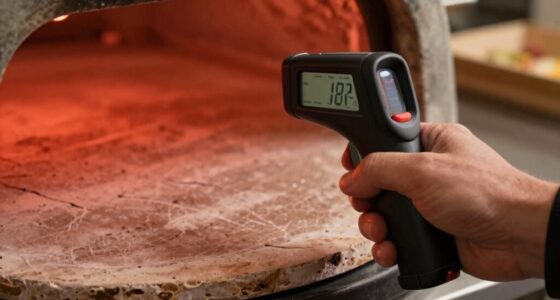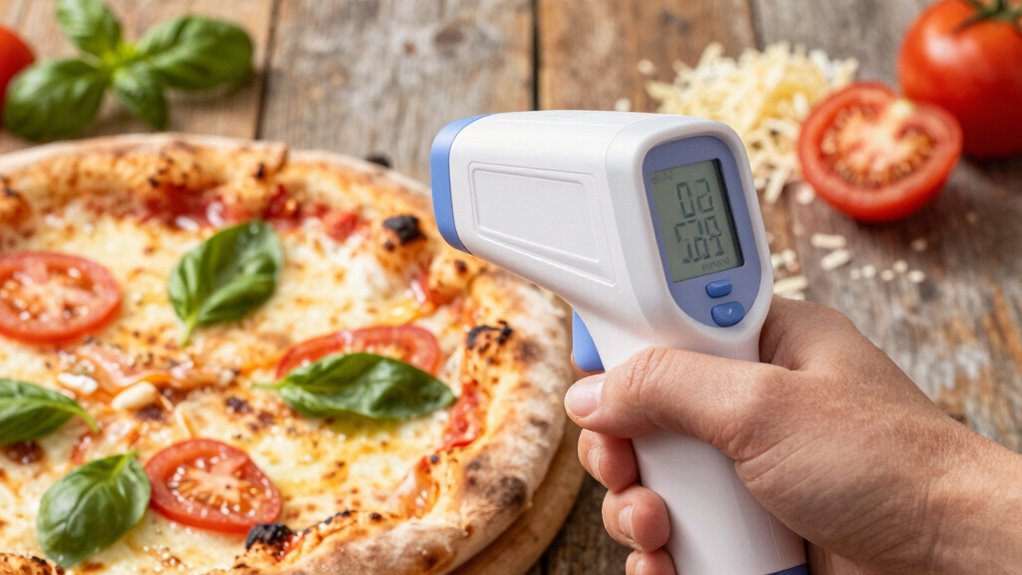
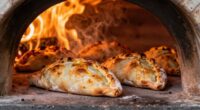
To use an infrared thermometer for better pizza results, point it at your oven’s surface and quickly scan different spots to check the temperature. Focus on identifying hot spots and cold zones for even heat distribution. Use the readings to adjust your oven settings or move your pizza to optimize baking. Monitoring ingredient temperatures and crust surface during baking can also improve your results. Keep exploring to uncover more tips for precision pizza baking.

Get kitchen gear delivered free with Prime
- Fast, free delivery on millions of items
- Prime Video, Amazon Music and more included
- Member-only deals all year
Key Takeaways
- Aim the infrared thermometer at the oven surface to quickly measure its temperature before baking.
- Check multiple points inside the oven to identify hot spots and ensure even heat distribution.
- Use the thermometer to verify ingredient temperatures, like dough and toppings, for optimal baking conditions.
- Monitor the pizza crust surface temperature during baking to determine doneness and prevent burning.
- Regularly calibrate your oven based on infrared readings to maintain consistent, ideal baking temperatures.
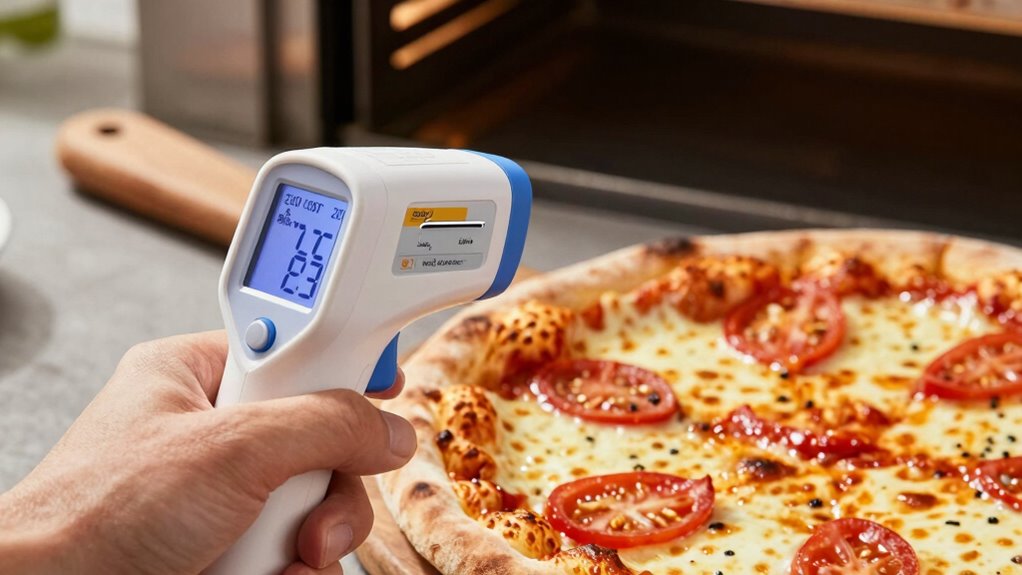
Getting the perfect pizza crust often depends on precise oven temperatures, and an infrared thermometer can be your best tool for achieving that. When you’re aiming for a crispy, evenly baked crust, knowing the exact temperature of your oven’s surface is vital. Many home ovens aren’t perfectly calibrated, which can lead to uneven cooking or a crust that’s either underdone or burnt. Using an infrared thermometer helps you quickly check the oven’s surface temperature, allowing you to fine-tune your oven calibration for consistent results. It also guarantees that your ingredients, especially toppings like cheese and vegetables, are at the right temperature before baking. Proper ingredient temperature prevents soggy toppings or uneven cooking, making your pizza turn out just right.
To get started, point your infrared thermometer at different areas inside your oven to get an accurate reading. Most ovens have hot spots, so measuring multiple points helps you identify areas that are hotter or cooler than others. Adjust your oven’s temperature settings or move your pizza to different zones within the oven to maximize heat distribution. This process helps you create a stable environment where your pizza can bake evenly, leading to better crust development and overall quality.
In addition to oven calibration, use your infrared thermometer to check the temperature of ingredients before assembling your pizza. For example, letting the dough come to room temperature ensures it stretches easily and bakes evenly. Cold toppings can lower the oven’s overall temperature, resulting in uneven cooking. By measuring ingredient temperature, you can plan your prep work more effectively, guaranteeing everything is at an ideal temperature before it hits the oven. This step minimizes surprises and guarantees your toppings melt perfectly while the crust crisps up just right.
As you become more familiar with your oven’s behavior, you’ll learn how to use the infrared thermometer to monitor baking progress. Keep an eye on the crust’s surface temperature during baking to judge when it’s ready. If the crust is browning too quickly, you might need to lower the oven temperature or adjust your rack position. Conversely, if it’s not browning enough, a slight increase or moving the pizza closer to the heat source can help. These adjustments, guided by real-time temperature readings, ensure you produce a consistently excellent pizza. Understanding oven temperature calibration and how it impacts your baking results can significantly improve your culinary outcomes.
As an affiliate, we earn on qualifying purchases.
Frequently Asked Questions
Can Infrared Thermometers Measure the Internal Temperature of Pizza?
Infrared thermometers can’t measure the internal temperature of pizza directly. They only read surface temperatures, so you won’t get an accurate reading of dough moisture or cheese quality inside. To guarantee your pizza is cooked perfectly, use a digital probe thermometer for internal temps. Infrared thermometers are great for checking crust temperature and oven heat, helping you optimize cooking conditions for better dough moisture and cheese melt.
How Do Environmental Conditions Affect Infrared Thermometer Readings?
Environmental conditions can throw off your infrared thermometer readings like a gust of wind disturbs a calm pond. High ambient humidity can cause moisture to interfere with the sensor, leading to inaccurate results. Surface reflectivity also plays a role—shiny surfaces reflect infrared signals, skewing measurements. To get precise readings, make certain the surface isn’t overly reflective, and try to measure in stable, dry conditions for the best pizza results.
What Is the Ideal Surface Temperature for Perfectly Baked Pizza?
For a perfectly baked pizza, aim for a surface temperature of about 450-500°F. This makes certain your pizza crust crisps nicely without burning. Keep your oven temperature high, around 500°F, to achieve that perfect balance. Use your infrared thermometer to check the pizza crust’s surface during baking, making sure it’s within this ideal range. Proper temperature helps you get a crispy crust and evenly melted toppings every time.
Are Infrared Thermometers Safe to Use on All Types of Pizza Toppings?
You can confidently use infrared thermometers on most pizza toppings, but be mindful of topping sensitivity and surface variability. Imagine aiming the device at a bubbling cheese topping or a crisped pepperoni—infrared thermometers measure surface temperature without contact, so they’re safe and precise. However, delicate toppings like fresh herbs or thin, sensitive ingredients might give inconsistent readings due to their surface variability. Use caution and adjust your approach accordingly.
How Often Should I Calibrate My Infrared Thermometer for Accurate Results?
You should calibrate your infrared thermometer at least once every year to guarantee ideal thermometer accuracy. If you use it frequently or notice inconsistent readings, consider calibrating more often—every few months. Regular calibration helps maintain precise temperature readings, which is essential for perfect pizza results. Always follow the manufacturer’s instructions for calibration procedures, and keep a record to track when your thermometer was last calibrated for consistent, reliable performance.
digital infrared temperature gun
As an affiliate, we earn on qualifying purchases.
As an affiliate, we earn on qualifying purchases.
Conclusion
Don’t worry if using an infrared thermometer feels intimidating at first—you might think it’s complicated or unnecessary. In reality, it’s a simple tool that can seriously elevate your pizza game. Just a quick scan of your oven or stone reveals exactly when it’s at the perfect temperature, ensuring crispy crust and perfectly melted cheese every time. Once you try it, you’ll wonder how you ever baked without it!
As an affiliate, we earn on qualifying purchases.
As an affiliate, we earn on qualifying purchases.
Halloween Picks
halloween
As an affiliate, we earn on qualifying purchases.