To craft a perfect wood-fired Margherita pizza, start with a well-fermented dough using high-quality flour and gentle handling to create a light, airy crust with charred spots. Use fresh, ripe tomatoes blended into a simple sauce, and top with authentic mozzarella di bufala and fragrant basil leaves added at the right moment. Maintain steady oven heat by managing your fire, and bake until cheese melts smoothly and crust is beautifully charred. For a step-by-step guide, keep exploring further.
Play games included with Prime
Start a Prime free trial and play with Amazon Luna on your devices.
As an affiliate, we earn on qualifying purchases.
Key Takeaways
- Use properly fermented dough with high-quality flour for a light, elastic crust that withstands high oven temperatures.
- Prepare a fresh, flavorful Margherita sauce with blended basil and high-quality olive oil; add basil after baking for vibrant aroma.
- Properly stretch the dough evenly, spread a thin layer of sauce, and distribute mozzarella and basil carefully for balanced baking.
- Maintain a steady, hot fire in your wood-fired oven, shifting coals and removing ashes regularly for even heat and optimal crust charring.
- Bake until cheese melts smoothly and crust develops charred spots; serve on a wooden board with minimal toppings for maximum flavor.
As an affiliate, we earn on qualifying purchases.
Selecting the Right Dough for Wood-Fired Pizza
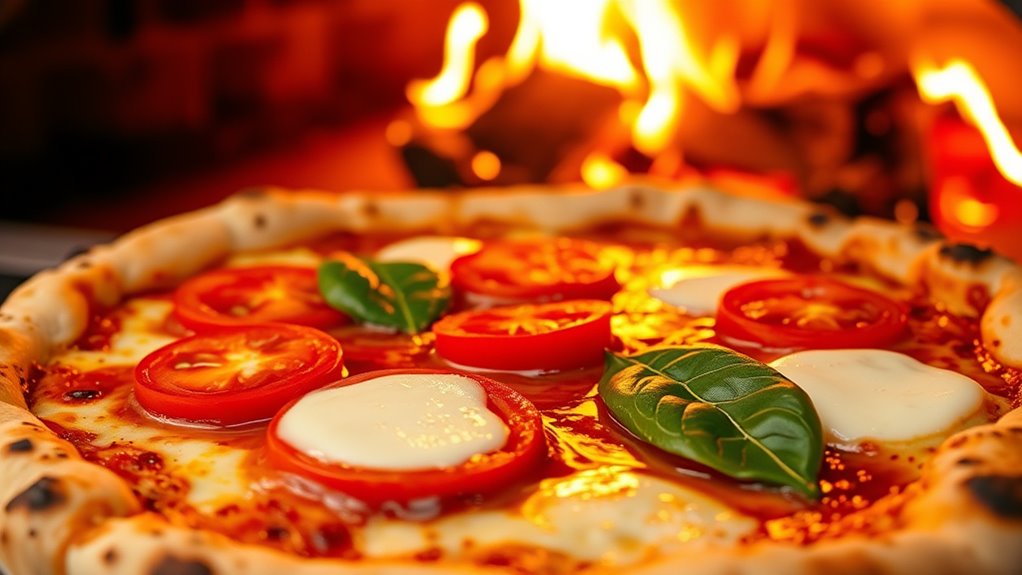
Choosing the right dough is crucial for achieving an authentic wood-fired Margherita pizza. Proper dough fermentation is key, as it allows the flavors to develop fully and improves texture. During fermentation, the yeast produces gases that help the dough rise, creating a light, airy crust. It also enhances gluten development, which gives the dough its elasticity and strength. Strong gluten formation ensures the dough can stretch thin without tearing, indispensable for a crisp, well-structured pizza base. You should aim for a dough that ferments slowly, often overnight, to maximize flavor and gluten structure. Using high-quality flour and controlling fermentation time allows you to craft a dough that will withstand high temperatures, resulting in that perfect balance of chewiness and crunch in your wood-fired Margherita pizza.
As an affiliate, we earn on qualifying purchases.
Preparing a Classic Margherita Sauce From Scratch
To make a flavorful Margherita sauce from scratch, start with ripe, fresh tomatoes for the best taste. Add a good quality olive oil to enhance the richness, then season generously with fresh basil for that signature aroma. Focus on these key points to create a vibrant, authentic sauce that elevates your pizza.
Select Fresh Tomatoes
Start by selecting ripe, plump tomatoes that feel firm yet yield slightly under gentle pressure. Tomato ripeness is key to a flavorful sauce, so choose tomatoes at their peak for the best taste. If you opt for selecting heirloom varieties, you’ll notice their vibrant color and rich flavor, which enhance your sauce’s complexity. Look for tomatoes with smooth, unblemished skin and a fresh aroma. Avoid those with wrinkles, soft spots, or signs of over-ripeness, as they can affect the sauce’s texture and flavor. Ripe tomatoes will break down easily when cooked, releasing their natural sweetness and acidity. By carefully selecting fresh, ripe tomatoes, you’ll lay a solid foundation for a classic, delicious Margherita sauce that complements your wood-fired pizza perfectly.
Use Quality Olive Oil
A good quality olive oil can elevate your Margherita sauce from simple to exceptional. The olive oil quality makes a real difference, providing a rich, smooth base that enhances the overall flavor. Use a high-quality extra virgin olive oil, as its fresh, fruity notes add depth and complexity. When you drizzle it over your sauce, it acts as a flavor enhancer, balancing the acidity of the tomatoes and bringing a subtle richness. Avoid cheap or processed oils, which can introduce off-flavors and diminish the sauce’s natural brightness. Remember, a little goes a long way; just a splash is enough to discover the sauce’s full potential. Selecting the right olive oil guarantees your sauce tastes vibrant and authentic, setting the stage for a perfect pizza.
Season With Basil
How do you infuse your Margherita sauce with authentic flavor? It starts with mastering basil pairing. Fresh basil adds vibrant aroma and depth, so add it late in the cooking process to preserve its bright, herbal notes. For basil preservation, consider blending some fresh leaves into the sauce for a subtle infusion, while slicing others for garnish after baking. This approach ensures your sauce remains flavorful without becoming bitter or muddled. Use high-quality basil, ideally organic, to maximize flavor. Remember, the key to a perfect Margherita is balancing the freshness of basil with the simplicity of ripe tomatoes and good olive oil. Proper basil seasoning elevates your sauce, making every bite taste like an Italian summer in your own kitchen.
As an affiliate, we earn on qualifying purchases.
Choosing Authentic Mozzarella and Fresh Basil
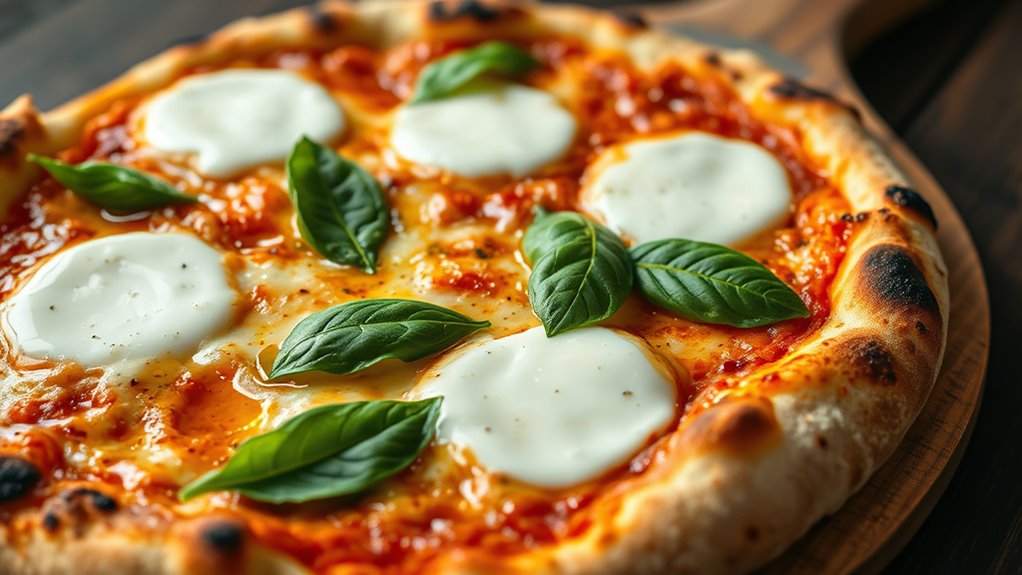
Choosing authentic mozzarella and fresh basil is essential to capturing the true essence of a wood-fired Margherita pizza. Use authentic mozzarella, preferably fresh mozzarella di bufala, for its creamy texture and rich flavor that melts perfectly in the hot oven. Avoid low-quality or processed cheese, as it won’t deliver the authentic taste you’re after. When selecting fresh basil, look for vibrant green leaves with a fragrant aroma. Fresh basil adds a bright, herbal note that balances the richness of the cheese and the acidity of the tomato sauce. Incorporate the basil just before baking or immediately after, so its aroma remains vibrant. Prioritizing high-quality ingredients guarantees your pizza embodies the simplicity and freshness that define a classic Margherita.
As an affiliate, we earn on qualifying purchases.
Building Your Pizza: Assembling for Perfect Flavor

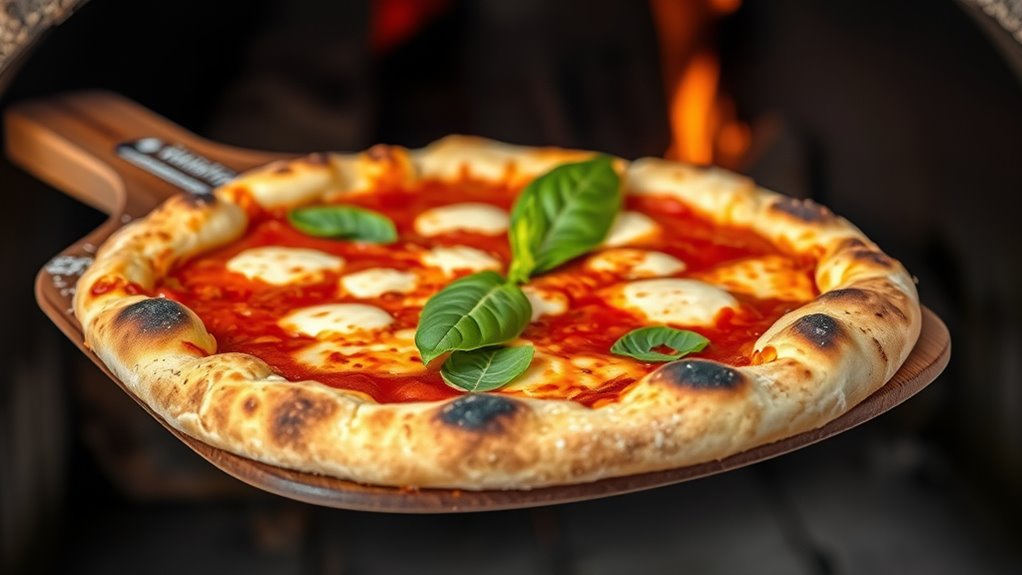
To achieve the perfect flavor, assembling your pizza with care is essential. Start by ensuring your dough has undergone proper fermentation; this process develops the flavor and creates a light, airy crust. When shaping your dough, handle it gently to preserve the air bubbles and fermentation benefits. For topping layering, spread a thin, even layer of tomato sauce directly on the dough, leaving a small border for the crust. Add slices of authentic mozzarella, distributing them evenly to melt uniformly. Place fresh basil leaves on top of the cheese or after baking for ideal aroma. Be mindful not to overload your pizza, as too many toppings can hinder proper cooking and flavor balance. With careful assembly, each bite delivers a harmonious blend of flavors and textures.
Heating and Maintaining Your Wood-Fired Oven
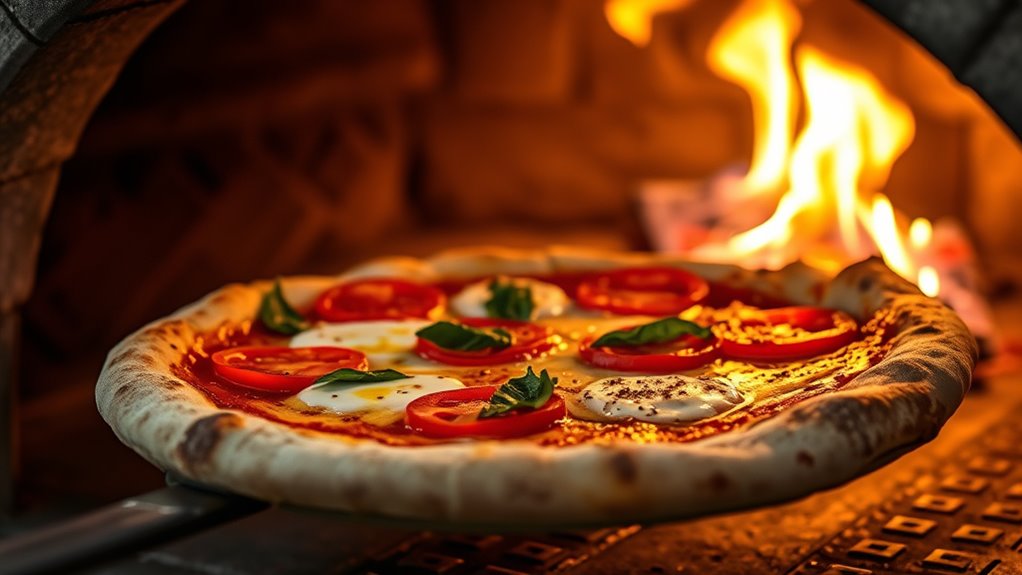
Starting your wood-fired oven correctly is crucial for ideal heat and consistent cooking. Proper fire management ensures steady temperatures, while smart fuel selection maintains those temps. Begin by choosing seasoned hardwood like oak or hickory for reliable heat and minimal smoke. Build your fire gradually, stacking fuel to promote airflow. Keep an eye on the flames, adjusting the fire as needed to sustain the target temperature. Use the table below to guide your process:
| Step | Tip |
|---|---|
| Fuel selection | Use dry, seasoned hardwood for consistent heat |
| Building the fire | Start small, add more wood as needed |
| Fire management | Maintain a lively, steady flame |
| Temperature control | Shift coals or add wood to stabilize heat |
| Maintenance | Remove ashes regularly for airflow |
This approach keeps your oven ready for perfect pizza every time.
Techniques for Achieving the Ideal Crust and Charring
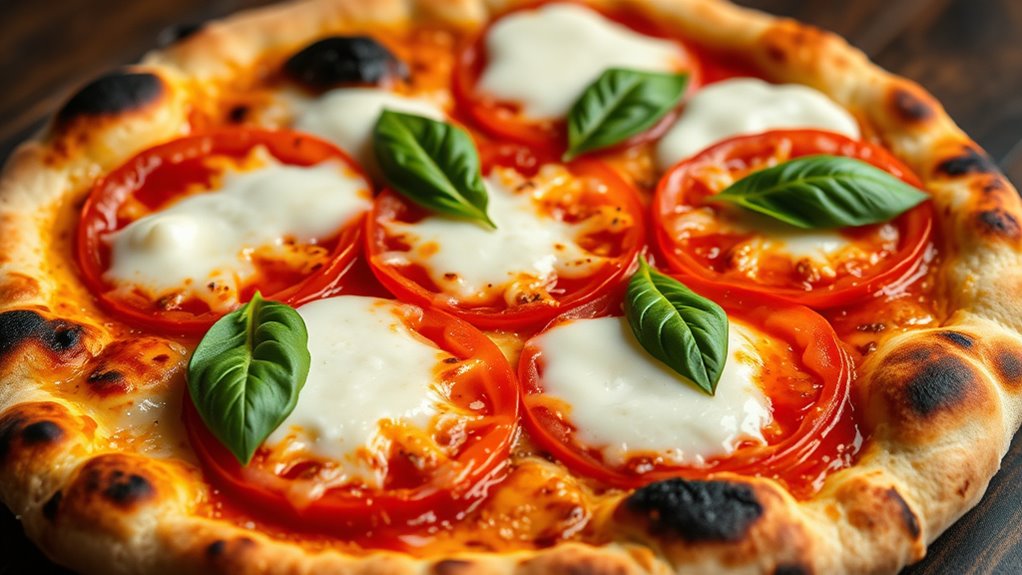
Achieving the perfect crust and charring requires precise control over the oven’s heat and positioning of the pizza. Start by adjusting your oven temperature to reach a high heat, ideally around 700-900°F, to create authentic charring. Ensuring proper dough hydration helps develop a sturdy yet tender crust that withstands intense heat without burning. Keep the dough slightly wetter, around 65-70% hydration, for better oven spring and crispness. Use a pizza peel to rotate the pizza frequently, positioning it closer to the flames for even charring. Pay attention to your oven’s hot spots and move the pizza accordingly. Maintaining consistent temperature and mindful placement are key to achieving that beautifully blistered, flavorful crust with perfect charring.
Baking Your Margherita Pizza to Perfection

Once your pizza has been properly positioned and charred to your liking, it’s time to focus on baking it to perfection. Confirm your dough fermentation developed the right elasticity and flavor, which helps the pizza cook evenly. As the pizza hits the heat, the high temperature will quickly melt the cheese, creating a gooey, bubbling surface. Keep an eye on the crust edges—those should become crisp and golden, with the char adding flavor complexity. Rotate the pizza if needed to promote even baking, especially if your fire is uneven. The key is to balance heat and timing so the cheese melts smoothly while the crust remains chewy and charred in spots. When done right, you’ll have a beautifully baked Margherita with perfectly melted cheese and a crisp yet tender crust.
Tips for Serving and Presenting Your Pizza
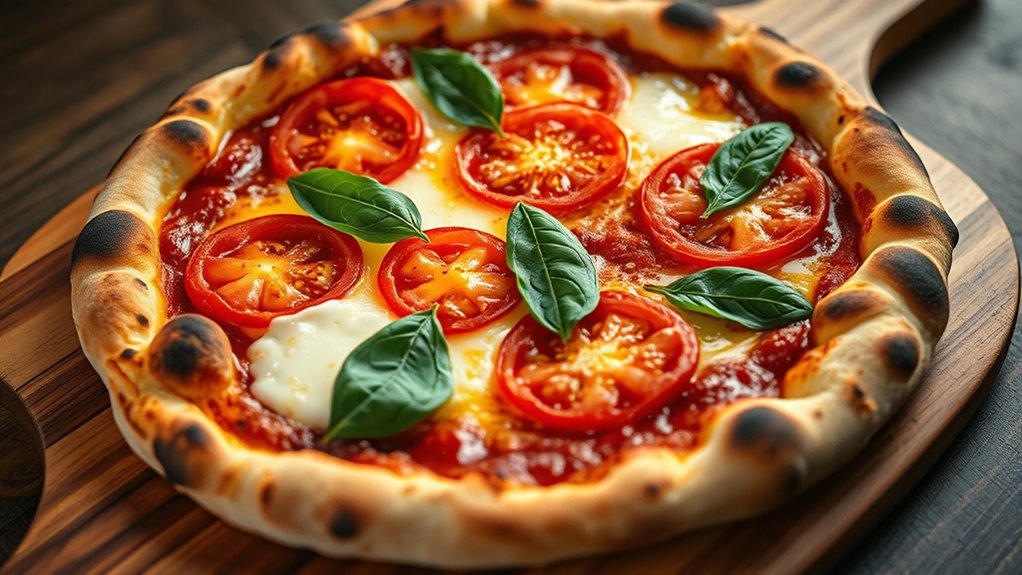
To serve and present your pizza beautifully, focus on highlighting its vibrant colors and textures. Use thoughtful plating presentation by placing the pizza slightly off-center on a wooden board or a simple white plate to make the colors pop. Slice the pizza neatly to showcase the melted cheese, bright basil leaves, and crispy crust. For serving suggestions, consider adding a drizzle of olive oil or a sprinkle of flaky sea salt for extra flavor. You can also pair it with a small side salad or fresh lemon wedges for contrast. Keep the presentation clean and minimal to draw attention to the pizza’s rustic appeal. Remember, a well-presented dish enhances the overall dining experience and invites everyone to enjoy your delicious creation.
Troubleshooting Common Issues and Perfecting Your Technique
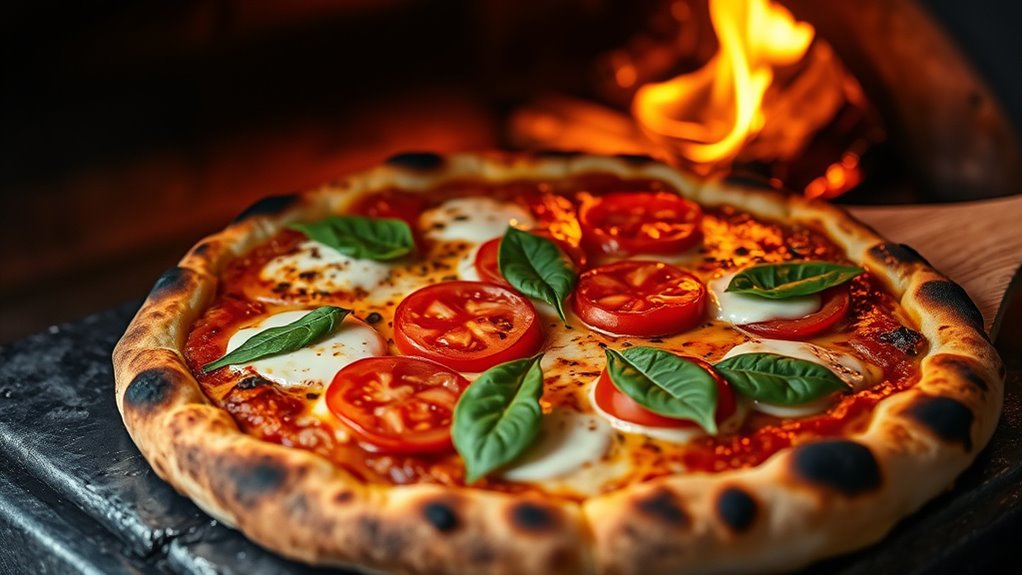
Even experienced home bakers encounter common issues when making wood-fired Margherita pizza, but most can be resolved with a few simple adjustments. If your dough isn’t fermenting properly, it might be due to inadequate proofing time or temperature; allow it to ferment longer at a consistent warmth for better elasticity and flavor. When toppings aren’t evenly distributed, it’s often a result of rushing or uneven spreading, which can cause hot spots or soggy spots during baking. Make certain you gently stretch the dough to an even thickness and carefully place the toppings, avoiding overload. Also, pay attention to topping placement—distribute the cheese, tomatoes, and basil evenly to promote uniform cooking and flavor. Small tweaks in fermentation and topping distribution can considerably improve your pizza’s quality.
Frequently Asked Questions
What Type of Wood Best Enhances Pizza Flavor?
For the best flavor enhancement, you should choose hardwoods like oak, hickory, or fruitwoods such as apple or cherry. These woods burn hot and produce a clean, smoky aroma that complements your pizza’s toppings. Avoid softwoods like pine, which can release sap and create undesirable flavors. Your wood selection plays a vital role in developing that authentic wood-fired taste, so pick wisely to elevate your margherita pizza experience.
How Do I Prevent My Pizza From Sticking?
To prevent your pizza from sticking, start by dusting your baking surface with flour alternatives like cornmeal or semolina; these create a barrier and help achieve that crispy crust. Consider using a pizza peel or a baking stone to provide a smooth, non-stick surface. Make sure your dough isn’t too wet, and always slide the pizza carefully to avoid tearing. These tips will guarantee a perfect, non-stick pizza every time.
Can I Make This Pizza in a Standard Oven?
Yes, you can make this pizza in a standard oven. To get that authentic wood-fired flavor, use a pizza stone and preheat your oven to the highest temperature, usually around 500°F (260°C). Place the stone in the oven while it heats to mimic a wood-fired environment. When ready, slide your pizza onto the hot stone and bake until the crust is golden and crispy.
What’s the Ideal Pizza Dough Hydration Level?
You should aim for a dough hydration level of around 60-65%, which promotes good gluten development and a light, airy crust. Higher hydration levels, like 70%, can improve fermentation and create a more open crumb, but they require careful handling to prevent stickiness. Adjust hydration based on your flour type and ambient conditions, and guarantee proper dough fermentation to develop flavor and structure.
How Do I Achieve a Smoky Aroma Without Over-Charring?
To achieve a smoky aroma without over-charring, focus on smoke infusion by controlling your wood selection. Use hardwoods like oak, hickory, or fruitwoods, which provide rich, balanced smoke. Keep a steady, moderate fire and avoid overloading the oven with too much wood. Position the flames carefully, and maintain a consistent temperature. This way, you get a deep smoky flavor without burning the crust or toppings.
Conclusion
By mastering these techniques, you’ll craft a wood-fired Margherita pizza that rivals pizzerias. Imagine hosting friends and impressing them with your perfectly blistered crust, fresh basil, and bubbly mozzarella — just like a seasoned pro. With practice, you’ll turn your backyard into a pizzeria, delighting everyone with your homemade masterpiece. Keep experimenting and refining your skills, and soon, pizza nights will become your favorite tradition.
Fall yard work Picks
leaf blowers
As an affiliate, we earn on qualifying purchases.