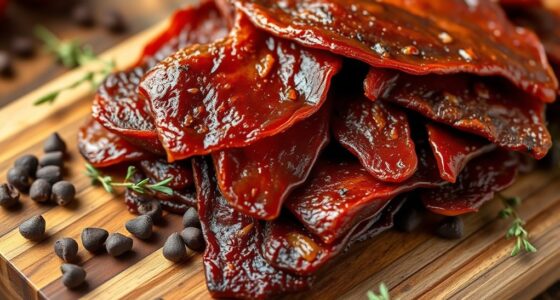
To smoke pork belly for backyard burnt ends, start by cutting it into uniform cubes and seasoning generously with a dry rub. Keep your smoker at 225-250°F and maintain steady temperature control by adjusting vents or adding fuel. Smoke the cubes for 3-4 hours, spritzing occasionally, until they reach 195-200°F. Close attention to timing, temperature, and moisture helps create tender, flavorful burnt ends with a caramelized crust. Continue on to learn more tips for perfect results.
Key Takeaways
- Cut pork belly into 1.5-inch cubes and season generously with a dry rub before smoking.
- Maintain smoker temperature between 225°F and 250°F for slow, even cooking.
- Smoke for 3-4 hours, spritzing occasionally with apple juice or vinegar to keep moist.
- Remove burnt ends at 195°F–200°F internal temperature when a deep crust forms.
- Toss with sauce during the last 30 minutes or after smoking for maximum flavor.
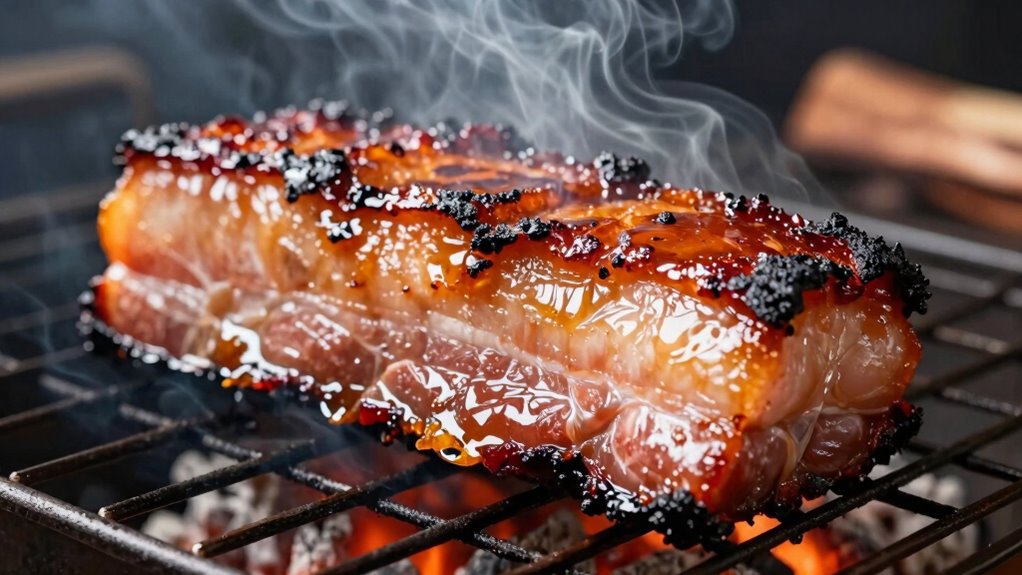
If you’re looking to impress your friends with a delicious backyard barbecue, smoking pork belly into burnt ends is an excellent choice. This flavorful cut, when properly prepared, transforms into tender, smoky bites that everyone will rave about. To start, you want to focus on the cooking temperature. Maintaining a steady 225°F to 250°F is key, as this range allows the fat to render slowly while infusing the meat with smoky goodness. Use a reliable smoker and keep an eye on the temperature throughout the process, adjusting vents or adding fuel as needed. The low and slow approach ensures the pork belly becomes tender and develops that signature bark on the outside.
Maintain a steady 225°F to 250°F for tender, smoky burnt ends with perfect bark.
When preparing the pork belly, cut it into uniform cubes, typically about 1.5 inches, so they cook evenly. Season generously with your favorite dry rub, which can include paprika, brown sugar, garlic powder, and black pepper. After seasoning, place the cubes on the smoker grates, making sure they’re spaced out enough for smoke to circulate freely. The smoking process generally takes around 3 to 4 hours, during which you’ll want to occasionally spritz or brush the meat with apple juice or a vinegar-based solution to keep it moist and enhance flavor. As the cubes cook, the fat will melt, creating a rich, juicy interior. Proper temperature control is crucial during this process to prevent overcooking or undercooking the meat. Monitoring the internal temperature can help ensure consistent results, as smoke penetration can vary depending on the setup.
As the burnt ends near completion, you’ll notice a deep, caramelized crust forming—this is exactly what you want. Once they reach an internal temperature of around 195°F to 200°F, you can remove them from the smoker. To ensure safety and optimal flavor, monitoring the cooking temperature closely is essential. At this point, many pitmasters like to toss the burnt ends in a sauce of their choice. Sauce pairings can range from classic BBQ sauce to a spicy glaze or even a sweet honey mustard. Applying sauce during the last 30 minutes of cooking or after removing from the smoker allows the flavors to set without burning. This final step amps up the flavor and offers that sticky, savory finish everyone loves.
In the end, the secret to perfect smoked burnt ends lies in your attention to cooking temperature and your choice of sauce pairings. Keep your smoker steady, check the internal temperature, and add your favorite sauce at the right moment. Proper temperature control is crucial for achieving tender, flavorful results. With patience and practice, you’ll produce tender, smoky, irresistibly flavorful burnt ends that will become the highlight of your backyard barbecue.
As an affiliate, we earn on qualifying purchases.
Frequently Asked Questions
What Type of Wood Is Best for Smoking Pork Belly?
For smoking pork belly, hickory or applewood are your best choices for flavor infusion. Hickory provides a strong, smoky flavor that enhances the richness of the pork, while applewood offers a milder, slightly sweet aroma. Your wood selection depends on your taste preference—choose hickory for boldness or applewood for subtle sweetness. Both woods complement the pork belly beautifully, resulting in tender, flavorful burnt ends.
How Long Should I Let the Pork Belly Rest Before Slicing?
You should let the pork belly rest for about 15 to 20 minutes before slicing. Resting is essential because it allows the juices to redistribute, enhancing marbling and ensuring moist, flavorful burnt ends. During this resting duration, the meat’s internal temperature stabilizes, making it easier to carve clean slices. Don’t skip this step, as it greatly impacts the tenderness and overall quality of your smoked pork belly.
Can I Use a Gas Smoker for This Recipe?
Yes, you can definitely use a gas smoker for this recipe. Many believe gas smokers lack the flavor infusion techniques of traditional wood smokers, but that’s a myth. As you set your gas smoker’s temperature, imagine the gentle hum as smoke billows, infusing your pork belly with rich, smoky flavors. With proper setup, you’ll achieve tender, flavorful burnt ends that rival any smoked over wood.
What Temperature Should the Pork Belly Reach Internally?
You should aim for an internal temperature of about 195-205°F when smoking pork belly for burnt ends. This temperature guarantees the meat becomes tender enough to shred easily, enhancing the flavor and texture. Using proper cooking techniques like maintaining consistent smoker temperature and wrapping during the process helps lock in moisture. These steps, combined with flavor enhancements like seasoning and glaze, will give you delicious, melt-in-your-mouth burnt ends.
How Do I Prevent the Burnt Ends From Drying Out?
To keep your burnt ends juicy, think of them as tender dancers needing the right embrace. Use marinade options like apple juice or a splash of bourbon to add moisture, or try alternative seasoning with a touch of honey or brown sugar to lock in flavor. Wrap the burnt ends in foil during the final stage, and baste them with their juices. This guarantees your burnt ends stay moist, flavorful, and melt-in-your-mouth delicious.

ThermoMaven Sub-1G Smart Wireless Meat Thermometer with Standalone Base
- Smart Display with Control: Real-time readings and temperature setting
- Easy One-Click Setup: Connect probe and pair quickly
- Long-Range Sub-1G Connectivity: Up to 3000 ft unobstructed
As an affiliate, we earn on qualifying purchases.
As an affiliate, we earn on qualifying purchases.
Conclusion
Now that you know how to smoke pork belly for backyard burnt ends, you’re all set to impress your friends and family with your barbecue skills. Just remember, patience is a virtue—let the meat take its time to develop that perfect smoky flavor and tender texture. When you finally dig in, you’ll see it’s worth the wait. After all, good things come to those who wait, and your burnt ends will prove just that.
As an affiliate, we earn on qualifying purchases.
As an affiliate, we earn on qualifying purchases.