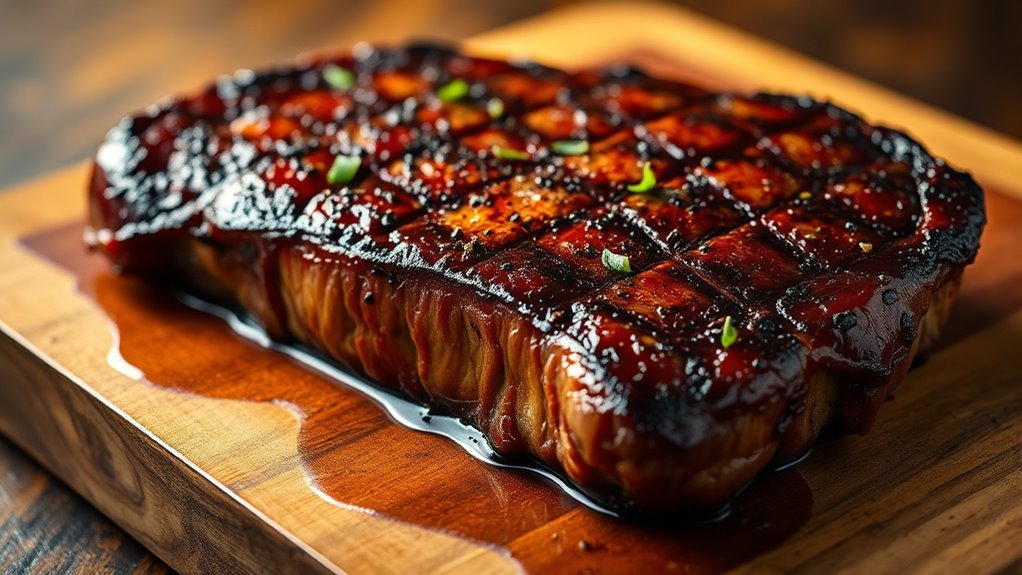

Marinating after grilling, often called reverse marinating, can boost surface flavor and help create a tasty crust without risking over-tenderizing the meat. It’s especially useful for adding quick flavor bursts or finishing touches on already cooked meat, but it won’t penetrate deeply or tenderize like traditional pre-cooking marinating. If you want to know the best techniques and when to use this method, there’s more to discover about how reverse marinating can work for your dishes.
Key Takeaways
- Reverse marinating involves applying marinade after grilling to enhance surface flavor and create a flavorful crust.
- It primarily adds surface flavor; deep infusion of flavors is limited compared to traditional marinating.
- This method is effective for finishing touches and boosting taste without over-tenderizing the meat.
- Ideal for tender cuts or leftovers, but less suitable for deep flavor or tenderization of tougher meats.
- Using thick, sticky marinades and timing carefully prevents over-marinading and maintains desired meat texture.
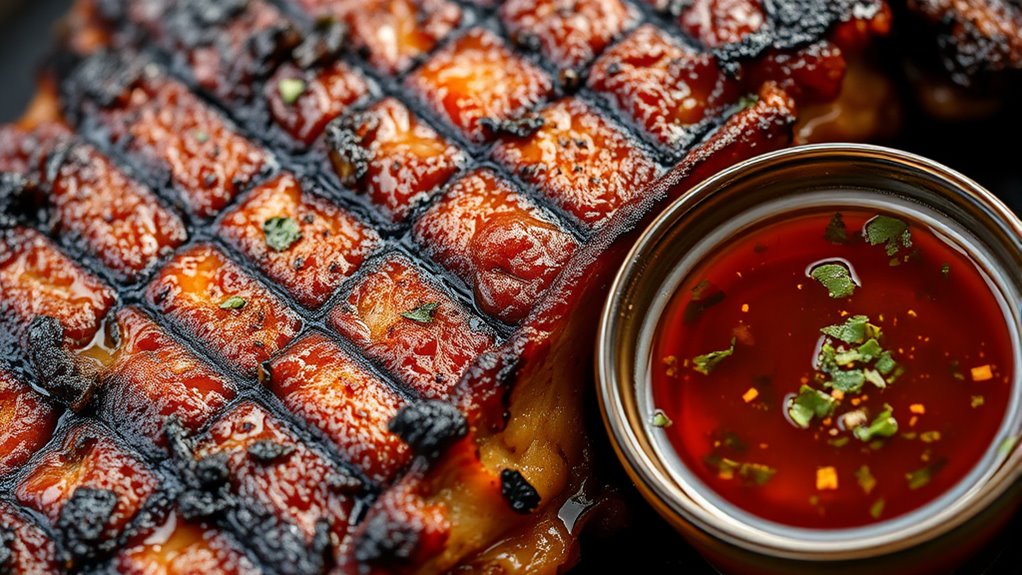
Traditionally, marinades are applied before grilling to infuse meat with flavor and tenderize it. This process allows the marinade’s acids, herbs, and spices to penetrate the meat, resulting in a richer taste and a more tender texture. But what if you flip the script? The idea of marinating after grilling—known as reverse marinating—may seem unconventional, but it’s gaining some attention. You might wonder, does it really work, and how does it compare to the classic approach?
When you marinate after grilling, the goal shifts from tenderizing to flavor enhancement and surface treatment. Instead of deep penetration, the marinade primarily coats the exterior of the meat, creating a flavorful crust. This method can be especially effective if you’re looking to add a burst of flavor right at the end or want to intensify the taste of the grilled surface. Since the meat has already been cooked, your focus is on enhancing the texture and adding layers of flavor, not tenderizing.
Marinating after grilling boosts surface flavor and creates a delicious crust without tenderizing.
One advantage of this approach is that it allows you to control the timing of flavor application. For instance, after grilling, you can brush or dip your meat into a marinade to boost its taste without risking over-tenderization or losing the desired texture. This is particularly useful for tougher cuts that benefit from tenderization beforehand, but still need a flavor boost after cooking. Plus, it can help you prevent over-marinading, which sometimes leads to mushy meat if acids are involved.
However, you should be aware of some limitations. Since the marinade is applied after grilling, it won’t penetrate deeply into the meat like traditional marinating does. Instead, it mainly adds surface flavor. To maximize flavor infusion, consider using a marinade that’s thick or sticky, such as a glaze or BBQ sauce, which adheres well to the surface. Also, keep in mind that marinating after grilling won’t tenderize the meat, so it’s best suited for already tender cuts or for adding flavor to grilled leftovers.
Frequently Asked Questions
Can Reverse Marinating Improve Tenderness More Than Traditional Methods?
Yes, reverse marinating can improve tenderness more than traditional methods because it allows the meat to absorb flavors while resting after grilling. This technique enhances marination techniques by maximizing flavor infusion and tenderizing properties. You can experiment with reverse marinating to see if it produces a juicier, more tender result, as it allows the marinade to penetrate the meat more effectively, especially if you use acidic ingredients for better tenderization.
What Types of Meats Are Best Suited for Reverse Marinating?
You should choose tougher cuts of meat like brisket, flank steak, or pork shoulder for reverse marinating, as these cut types benefit most from the technique’s tenderizing effects. The key is selecting meats with connective tissues that respond well to marination techniques, allowing flavors to develop after grilling. This approach enhances tenderness and flavor, making it an excellent choice for meats that typically require longer cooking times or special marination methods.
How Long Should I Reverse Marinate After Grilling?
You should reverse marinate for about 10 to 30 minutes after grilling to boost marinade absorption and enhance flavor penetration. During this time, the meat absorbs the marinade’s richness, making each bite more flavorful. Keep in mind that longer periods might cause the meat to become overly soaked or mushy. So, stick to this timeframe for ideal results, ensuring your grilled meat stays tender and flavorful.
Does Reverse Marinating Affect the Smoky Flavor?
Ever wondered if reverse marinating affects smoky flavor? It doesn’t substantially impact it if you’re aiming for flavor retention, but it might slightly dilute the smoky notes because the marinade can dilute surface smoke. Reverse marinating enhances marinade absorption after grilling, locking in moisture and flavors. So, while it’s great for juicy meat, don’t expect it to boost smoky intensity. Instead, focus on good smoking techniques to keep that flavor bold.
Is Reverse Marinating Safe for All Types of Marinades?
Reverse marinating is generally safe for all types of marinades if you follow proper food safety guidelines. You should always keep marinade ingredients cold and marinate in the refrigerator to prevent bacteria growth. Avoid reusing leftover marinade that has touched raw meat unless you boil it thoroughly. By handling your marinade properly, you can enjoy reverse marinating without risking food safety, regardless of the marinade ingredients.
Conclusion
So, next time you’re grilling, why not try reverse marinating? Imagine biting into perfectly seasoned meat, the flavors sinking deep after that quick sizzle. It’s a simple trick that could transform your barbecue game, giving you juicy, flavorful results. Are you ready to flip the script on traditional marinades and see how the reverse method brings new life to your favorite dishes? Give it a shot—you might just discover your new go-to technique.