To make competition-style smoked chicken at home, start by choosing a heritage breed like Bresse for rich flavor and juicy meat. Prepare and marinate the chicken, then apply a flavorful rub with paprika, garlic, and honey. Set your smoker to 225-250°F, maintain steady smoke, and monitor the internal temperature until it hits 165°F. Rest the chicken before carving for maximum tenderness. Keep exploring for detailed tips to master this impressive smoked chicken technique.
Key Takeaways
- Select heritage breeds like Bresse or Bourbon for richer flavor and optimal texture.
- Use a flavorful marinade and a generous, evenly applied rub, then rest for maximum absorption.
- Maintain a steady smoker temperature between 225°F-250°F with consistent, thin smoke flow.
- Monitor internal temperature until reaching 165°F, then rest the chicken loosely with foil before carving.
- Present with simple, elegant plating, garnished to highlight smoky flavor and visual appeal.
Selecting the Perfect Chicken for Smoking

Choosing the right chicken is essential for achieving tender, flavorful smoked meat. Start by selecting a suitable chicken breed; heritage breeds like Bresse or Bourbon are known for their rich flavor and better texture. These breeds tend to have more marbling, which helps keep the meat juicy during smoking. Next, prioritize chicken freshness—look for plump birds with firm, moist skin and no signs of spoilage, such as bad odor or sliminess. Fresh chicken guarantees your smoked meat will be moist and flavorful rather than dry or bland. Avoid older or frozen chickens that may lack the tenderness needed for ideal smoking results. By selecting a good breed and ensuring freshness, you set a solid foundation for a delicious, competition-quality smoked chicken.
Preparing the Chicken for Smoking
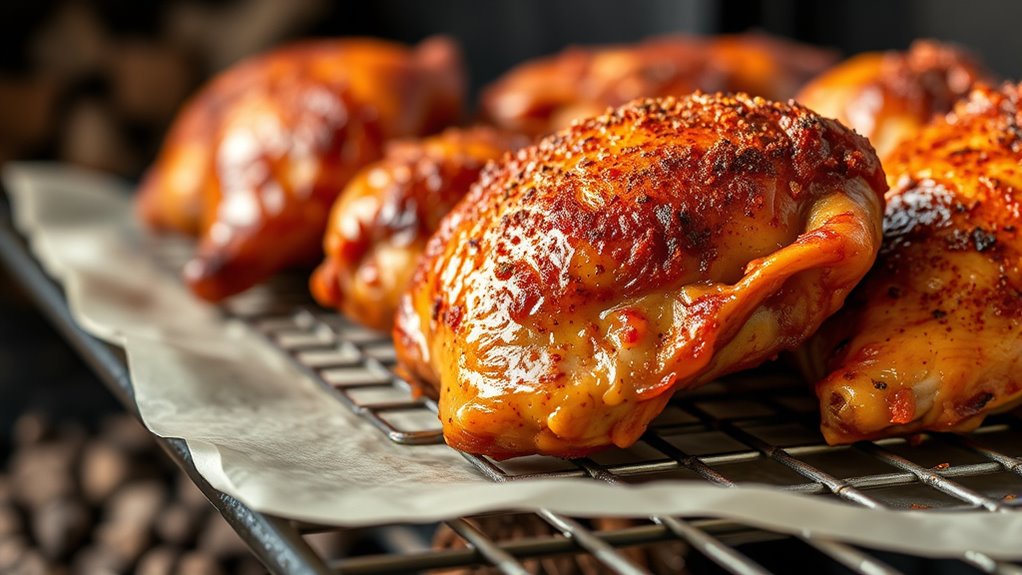
Before you smoke, properly preparing the chicken is essential to guarantee maximum flavor and tenderness. Start by selecting appropriate chicken portion sizes—thighs, breasts, or whole birds—based on your preference and cooking time. Use marinade techniques to infuse flavor and moisture, ensuring the chicken stays juicy and tender. Marinate for at least 2 hours, or overnight for deeper taste. Consider the following options:
| Marinade Type | Duration | Recommended Chicken Portion |
|---|---|---|
| Citrus-based | 2-4 hours | Breasts |
| Herb & Garlic | 4-6 hours | Thighs |
| Spicy | Overnight | Whole chicken |
| Sweet & Tangy | 2-3 hours | Wings or drumsticks |
Adjust marinade times to match portion sizes for ideal results.
Crafting a Flavorful Rub
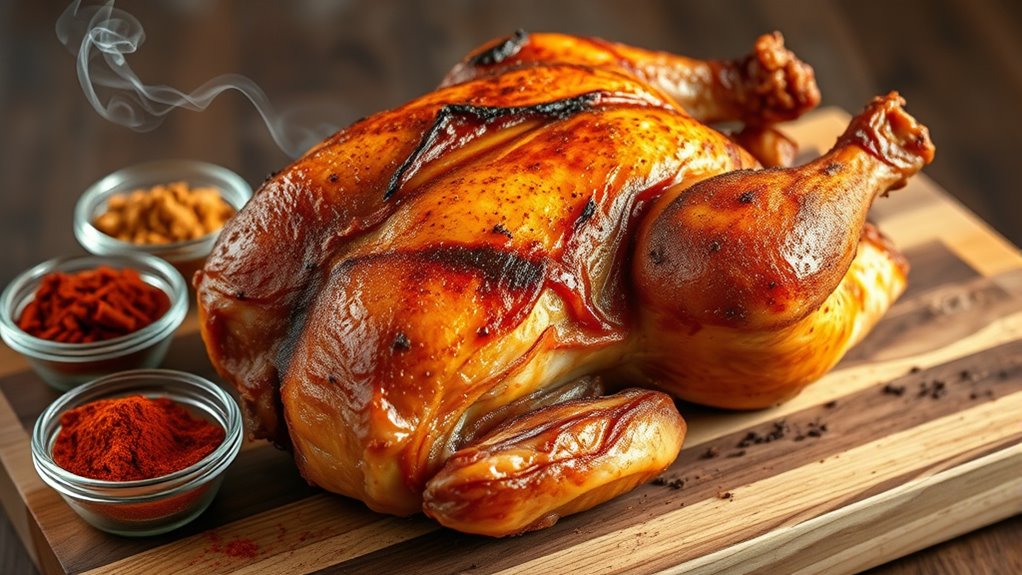
To enhance the flavor of your smoked chicken, crafting a flavorful rub is essential. Start by combining seasoning blends that balance salt, sweetness, and spice. Use ingredients like paprika, garlic powder, onion powder, black pepper, and cayenne to build a solid base. Incorporate flavor enhancers such as a touch of sugar or honey for caramelization and depth. Adjust the proportions to suit your taste or the desired heat level. Mix the ingredients thoroughly to ensure even distribution. Applying the rub generously all over the chicken creates a flavorful crust during smoking. Let the seasoned chicken rest for at least an hour, or overnight if possible, to allow the flavors to penetrate. A well-crafted rub makes all the difference in achieving competition-style smoked chicken.
Setting Up Your Smoker for Success
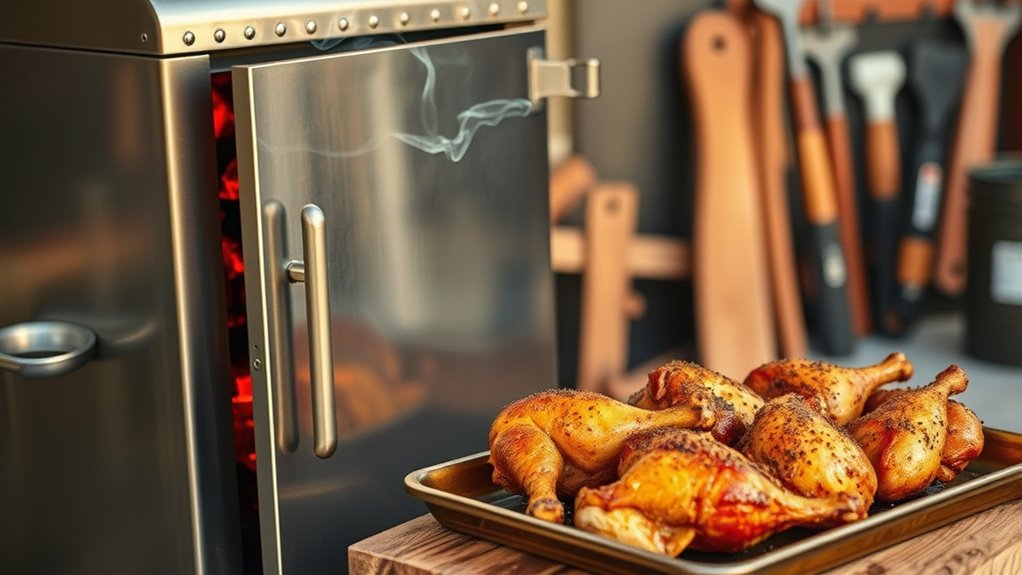
Getting your smoker ready is the essential first step toward achieving perfectly smoked chicken. Start by setting your remote temperature gauge to guarantee precise control throughout the process. Maintaining a steady temperature, around 225°F to 250°F, creates ideal conditions for even cooking. Adjust your airflow to achieve the right smoke density—too much smoke can make the chicken bitter, while too little can hinder flavor development. Use quality wood chunks or chips and keep them adding smoke consistently. Keep the lid closed as much as possible to stabilize temperature and smoke levels. Regularly monitor your remote temperature, making small adjustments to vents if needed. Proper setup ensures your chicken absorbs smoky flavor evenly while remaining tender and juicy.
Applying the Rub and Letting It Rest
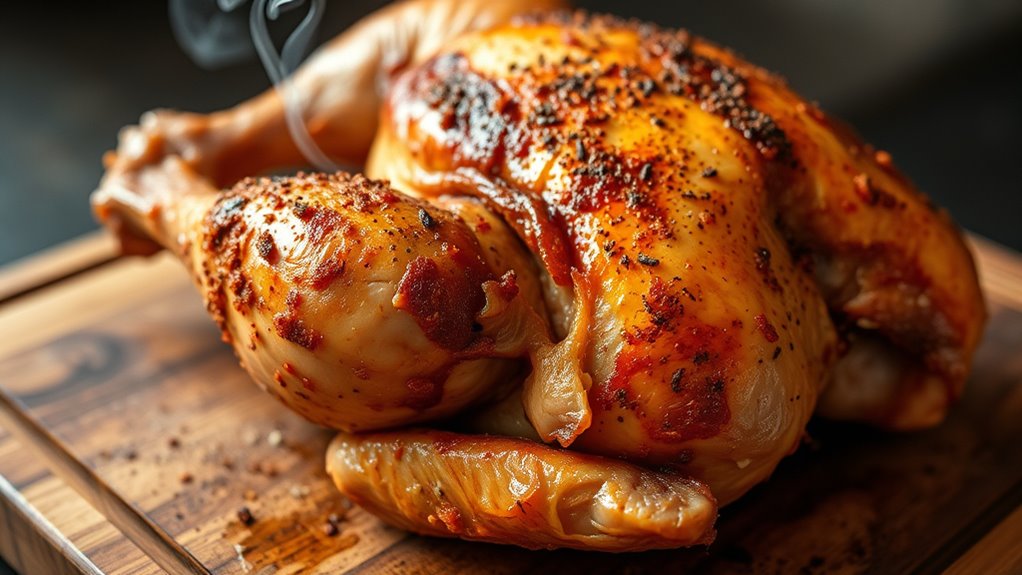
To get that perfect flavor, apply the rub evenly over the chicken so every bite is seasoned. Let the meat rest for at least 30 minutes to maximize flavor absorption and tenderize the skin. Use gentle pressure when applying the rub to make certain it sticks well without damaging the meat.
Even Coat Application
Applying the rub evenly is essential for flavorful, consistent smoked chicken. To achieve this, use your hands or a brush to spread the spice blend uniformly over the surface, ensuring every part is coated. This step enhances marinade techniques by allowing the flavors to penetrate the meat evenly. When working with spice blend variations, pay attention to coverage, especially around crevices and joints. After applying the rub, let the chicken rest, giving the spices time to set and infuse the meat. An even coat prevents uneven cooking and flavor distribution, resulting in a more professional finish. Take your time during this process, and avoid pressing the rub too hard—gentle, thorough coverage is key for a well-seasoned, competition-style smoked chicken.
Rest Time Optimization
Once you’ve evenly coated the chicken with the spice rub, allowing it to rest is essential for maximum flavor infusion. The marinating duration influences how deeply the flavors penetrate the meat, so giving it enough resting time ensures ideal results. Typically, a resting period of at least 1 to 2 hours works well, but overnight marinating can enhance flavor even further. During this time, the spices meld with the meat, creating a richer, more complex taste. Keep the chicken refrigerated during the resting period to maintain safety and freshness. Avoid rushing this step, as it directly impacts the flavor profile of your smoked chicken. Proper rest time balances the seasoning’s penetration with practicality, setting the stage for a perfectly smoked, flavorful finish.
Flavor Absorption Tips
Ensuring the spice rub adheres properly to the chicken is key to maximizing flavor absorption. Use proper marinade techniques by applying a generous layer of rub, pressing it into the meat to enhance seasoning depth. Let the chicken rest after applying the rub, allowing the flavors to penetrate more deeply. Cover the chicken tightly and refrigerate for at least an hour, or overnight if possible. This resting period helps the spices meld with the meat, boosting overall flavor. Avoid rushing the process; patience guarantees a more flavorful, well-seasoned chicken. Proper application and resting maximize marinade techniques, resulting in a richer, more complex taste. With these tips, your smoked chicken will boast enhanced seasoning depth and irresistible smoky flavor.
Smoking the Chicken to Perfection

To smoke your chicken perfectly, you need to select the right wood, like apple or hickory, for the flavor you want. Keep the smoke level steady so it enhances, not overpowers, the meat’s taste. Finally, sustain a consistent temperature around 225°F to ensure even cooking and juicy results.
Choose the Right Wood
Choosing the right wood is essential for achieving the perfect smoky flavor in your chicken. Hickory flavor provides a robust, smoky taste that pairs well with poultry, creating a classic BBQ aroma. If you prefer a milder, sweeter smoke, fruitwood benefits like apple or cherry are excellent choices—they add subtle sweetness and enhance the chicken’s natural flavors without overpowering. Avoid using softwoods like pine or cedar, as they produce harsh smoke and can leave unpleasant tastes. Opt for seasoned, dry wood chunks or chips to ensure steady, clean smoke. The type of wood you select impacts the overall flavor profile, so choose based on whether you want a strong, smoky presence or a more delicate, fruity note.
Control the Smoke Level
Controlling the smoke level is essential for achieving tender, flavorful chicken without overwhelming its natural taste. To do this, monitor the smoke density closely; too much smoke creates a bitter, acrid flavor, while too little can leave the meat underwhelming. Adjust your airflow to regulate smoke production—good air circulation prevents excess smoke buildup and keeps the smoke density at a steady, manageable level. Use a vent or damper to fine-tune airflow, ensuring a consistent, light layer of smoke that penetrates the meat without overpowering it. Keep an eye on your smoker’s vents and avoid opening it frequently, as sudden air exchanges can cause fluctuations in smoke density. Proper control of smoke levels guarantees a perfectly smoked chicken with balanced flavor.
Maintain Optimal Temperature
Maintaining the right temperature throughout the smoking process guarantees your chicken cooks evenly and develops its full flavor. Aim for a steady 225-250°F (107-121°C) to ensure tender, juicy results. Use a reliable thermometer to monitor your smoker’s temperature constantly. When choosing chicken breed options, leaner breeds like Cornish Cross need slightly more attention to prevent drying out. Marinade options also influence temperature control—marinades high in sugar can cause flare-ups, so keep heat consistent. Consider this table to help keep your temp steady:
| Tip | Benefit |
|---|---|
| Use a digital thermometer | Accurate temp readings |
| Maintain smoker vents | Consistent airflow to stabilize temperature |
| Avoid opening the lid | Keeps heat from escaping |
| Select appropriate chicken breed | Ensures ideal moisture retention |
Stay vigilant, and your smoked chicken will be perfect every time.
Monitoring Temperature and Smoke Levels

Monitoring temperature and smoke levels is essential to achieving perfectly smoked chicken. You need to keep a close eye on the internal temperature, ensuring it reaches about 165°F for safe, juicy meat. Use a reliable meat thermometer placed in the thickest part of the chicken. Simultaneously, monitor the smoke density; too much smoke can cause bitterness, while too little may result in bland flavor. Keep the smoke steady and thin, maintaining a consistent flow throughout the process. Adjust your vents or fuel as needed to control these factors. Properly monitoring both internal temperature and smoke levels guarantees your chicken develops that ideal smoky flavor and texture, making your smoked chicken competition-worthy. Consistent oversight is key to mastering this technique at home.
Resting and Carving the Smoked Chicken
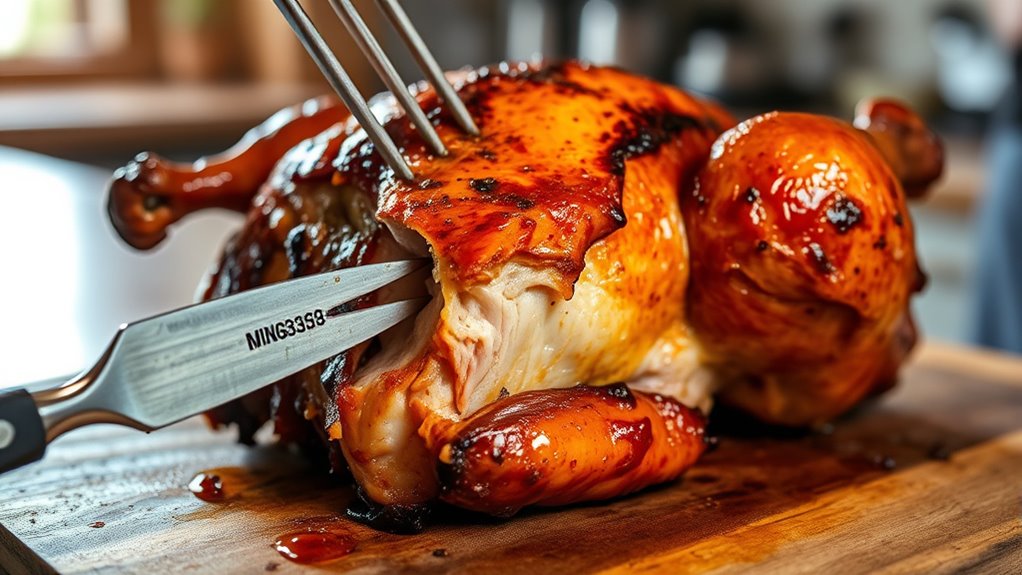
Once your smoked chicken reaches the right internal temperature, it’s time to let it rest. Resting allows juices to redistribute, ensuring moistness and flavor. During this period, bacteria growth is minimized, maintaining food safety. To maximize benefits:
Let your smoked chicken rest to lock in juices, enhance flavor, and ensure food safety.
- Cover the chicken loosely with foil to keep it warm
- Rest for at least 10-15 minutes before carving
- Use a sharp knife to carve against the grain for tenderness
- Slice carefully to avoid tearing the meat
- Store leftovers promptly in airtight containers for storage safety
Resting not only enhances texture but also prevents bacteria from thriving on warm surfaces. Proper carving ensures even slices, and quick storage after resting keeps your smoked chicken safe to enjoy later. Always prioritize food safety when handling cooked poultry.
Tips for Serving and Presenting Your Dish

Presenting your smoked chicken with appealing plating and garnishes can elevate the dining experience and highlight its smoky flavor. Use simple yet elegant plating techniques, such as arranging slices neatly or placing the chicken on a bed of fresh herbs. Garnish ideas like sliced citrus, chopped herbs, or smoked paprika add color and aroma. To deepen your understanding, consider this table:
| Plating Techniques | Garnish Ideas |
|---|---|
| Use contrasting plates | Fresh herbs for aroma |
| Create height with stacking | Citrus slices for brightness |
| Keep presentation clean | Cracked pepper for texture |
These methods enhance visual appeal and flavor, making your dish more enticing. Focus on balance and simplicity, ensuring each element complements the smoky richness of the chicken.
Frequently Asked Questions
How Long Should I Smoke the Chicken for Competition Results?
You should smoke the chicken for about 3 to 4 hours at a cooking temperature of 225°F to 250°F for competition results. This allows the meat to absorb flavors and attain a tender, juicy texture. Keep an eye on the internal temperature, aiming for 165°F, to guarantee proper doneness. The slow smoking process enhances flavor infusion, giving your chicken that perfect, competition-worthy taste and appearance.
What Types of Wood Are Best for Competition-Style Smoked Chicken?
You should use fruit woods like apple or cherry and hardwood varieties such as hickory or oak for competition-style smoked chicken. These woods complement the meat’s natural flavors and add a subtle smokiness without overpowering it. Fruit woods tend to be milder and sweeter, while hardwoods provide a richer, more intense smoke. Mixing them can create a balanced flavor profile that impresses judges and elevates your smoked chicken.
How Do I Prevent the Chicken From Drying Out During Smoking?
To prevent your smoked chicken from drying out, focus on marinade tips like using a flavorful brine or injection to keep it moist. Also, control the temperature carefully, maintaining it around 225°F to 250°F. Avoid overcooking by using a meat thermometer, and consider wrapping the chicken in foil during the final stages. These steps help retain moisture and ensure tender, juicy smoked chicken every time.
Can I Use a Gas or Electric Smoker for Competition-Style Results?
Absolutely, you can use a gas or electric smoker for competition-style results. Just make certain you keep the smoker temperature steady, usually around 225°F, to mimic traditional smoking conditions. Proper meat preparation is key—brine the chicken and season it well. While electric and gas smokers lack the smoky flavor of wood, you can add wood chips or chunks for authentic taste, helping you achieve that professional, competition-quality smoked chicken.
What Are Common Mistakes to Avoid in Competition-Style Smoked Chicken?
You should avoid overcooking your smoked chicken, which makes it dry and tough, and neglecting temperature control, leading to uneven cooking. Keep a close eye on your smoker’s temperature, ensuring it stays steady around 225°F to 250°F. Don’t rush the process—patience is key for tender, juicy results. By monitoring these factors, you’ll produce competition-quality smoked chicken that’s flavorful and perfectly cooked every time.
Conclusion
With the right techniques, you can craft competition-quality smoked chicken right at home. Remember, smokers maintain about 225°F, and that low-and-slow approach guarantees tender, flavorful meat. Did you know that competition smoked chicken can take up to 6 hours to perfect? Stick to your process, monitor carefully, and soon you’ll be impressing friends and family with your delicious, expertly smoked chicken—your new go-to for any special occasion.