To make smoked pulled pork sandwiches, start by selecting a well-marbled pork shoulder and season it thoroughly with a rub of paprika, garlic, and onion powders. Prepare your smoker with wood like hickory or apple, and set the temperature between 225°F and 250°F. Smoke until the internal temp hits 195°F–205°F, then wrap and rest the meat for juicy tenderness. Assemble your sandwiches with sauce, coleslaw, and garnishes for a delicious, flavorful meal. Continue for detailed steps and tips!
Key Takeaways
- Select a well-marbled pork shoulder, season with a rub, and marinate overnight for maximum flavor.
- Set up the smoker with appropriate wood and maintain a steady temperature of 225°F–250°F.
- Smoke the pork until it reaches an internal temperature of 195°F–205°F, approximately 1.5–2 hours per pound.
- Wrap the meat in foil or butcher paper after several hours and rest for at least 20 minutes before shredding.
- Assemble sandwiches with pulled pork, your favorite sauces, toppings like coleslaw, and serve for optimal flavor and presentation.
Selecting the Perfect Pork Shoulder for Smoking

Choosing the right pork shoulder is essential for achieving tender, flavorful smoked pulled pork. When selecting your pork shoulder, focus on choosing cuts with good marbling, as the fat helps keep the meat moist and adds flavor during smoking. Look for a well-trimmed pork shoulder with a balanced fat cap, ideally around 1/4 inch thick. Avoid cuts that appear overly lean or have large patches of excess fat, which can impact texture and taste. Freshness matters too—choose pork shoulder that’s firm and pink, with no signs of discoloration or an off smell. By carefully selecting your cuts, you ensure your smoked pulled pork will be juicy, tender, and packed with flavor. The right pork shoulder sets the foundation for a perfect barbecue experience.
Preparing and Seasoning the Pork
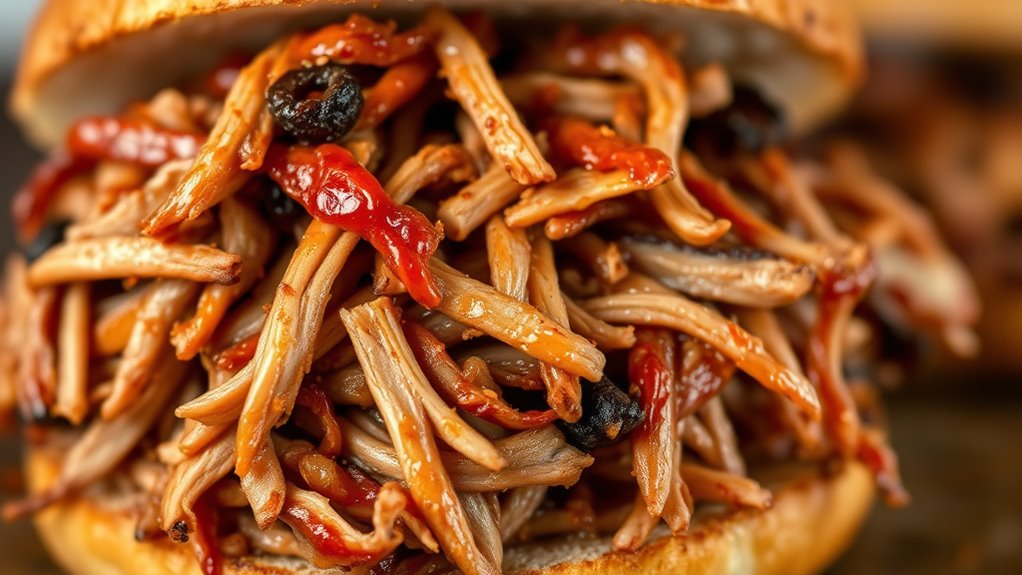
Before you begin smoking, preparing and seasoning the pork properly is essential for developing rich flavor and ensuring tender results. Start by choosing your marinade options, such as apple cider vinegar or a simple spice-infused brine, to add moisture and flavor. Next, apply a generous seasoning rub, combining ingredients like paprika, garlic powder, onion powder, salt, and pepper. Massage the rub into all sides of the pork shoulder, ensuring even coverage. Let the meat sit for at least an hour, or overnight if possible, to allow the flavors to penetrate deeply. Proper preparation and seasoning set the foundation for a flavorful, juicy smoked pork that will shred easily and taste incredible in your sandwiches.
Setting Up Your Smoker for Optimal Cooking

To get the best results, you need to set up your smoker properly from the start. Choose the right wood to enhance flavor, and keep a close eye on temperature control to maintain consistent heat. Make sure your smoke vents are adjusted correctly for proper ventilation and steady smoke flow.
Choosing the Right Wood
Selecting the right wood is essential for infusing your smoked pulled pork with rich, smoky flavor. Different wood types deliver distinct wood flavors, so choose based on the taste you want to achieve. For a mild, sweet smoke, fruit woods like apple or cherry work well. For a stronger, more robust flavor, hardwoods like oak or hickory are ideal. Avoid softwoods, as they produce undesirable chemical flavors. When setting up your smoker, ensure the wood is properly prepared—chunk or split pieces burn more evenly than chips alone. Keep a steady supply of wood throughout the cooking process to maintain consistent smoke. Remember, the right wood type enhances the pork’s natural flavors without overpowering them, creating a balanced, delicious smoked pulled pork.
Temperature Control Techniques
Maintaining a steady temperature is essential for achieving tender, evenly cooked smoked pulled pork. To do this, focus on temperature accuracy by regularly checking your smoker’s thermometer and calibrating it if needed. Proper heat distribution is equally important; ensure the heat source is balanced to prevent hot spots that could overcook or undercook sections of the meat. Use vents to control airflow and maintain consistent heat levels. Keep the lid closed as much as possible to stabilize temperature and avoid fluctuations. Investing in a reliable digital thermometer helps monitor both the smoker’s air temperature and the internal meat temperature. By carefully managing these factors, you’ll create ideal conditions for perfectly smoked, juicy pulled pork every time.
Proper Smoke Ventilation
Proper smoke ventilation is key to achieving consistent heat and ideal smoke flow throughout your cooking process. Guarantee good ventilation helps maintain steady temperatures and promotes even smoke distribution. To optimize your smoker’s performance, focus on these three points:
- Check your ventilation systems regularly, making sure vents are clear and adjustable for airflow control.
- Use a reliable smoke exhaust to safely vent out excess smoke and prevent buildup that could hinder flavor.
- Adjust vents during cooking to balance oxygen flow, which sustains steady heat and enhances smoke absorption.
Proper ventilation prevents overheating and ensures smoke from your wood chips circulates effectively around the meat, resulting in tender, flavorful pulled pork. Good smoke exhaust and ventilation management are essential for perfect results.
Smoking the Pork: Temperature and Time Guidelines

To achieve tender, flavorful smoked pulled pork, it’s vital to monitor the temperature closely throughout the process. Use the right wood selection—hardwoods like oak, hickory, or fruit woods—to create a steady smoke that promotes a good smoke ring. Maintain a smoker temperature between 225°F and 250°F; this range ensures the meat cooks evenly and stays moist. Plan for a cooking time of about 1.5 to 2 hours per pound, but always rely on internal temperature rather than time alone. The pork is ready when it reaches an internal temperature of 195°F to 205°F and easily pulls apart. This balance of temperature and time develops that signature smoky flavor and tender texture you’re aiming for.
Monitoring and Maintaining the Smoker Temperature

Keeping a close eye on your smoker’s temperature is key to producing tender, flavorful pulled pork. To do this effectively, you need accurate tools and regular checks. First, verify your smoker calibration is correct; an uncalibrated smoker can lead to inconsistent heat. Second, rely on a high-quality temperature gauge—preferably a digital one—for precise readings. Third, monitor the gauge frequently, adjusting vents or fuel as needed to maintain a steady temperature. Remember, small fluctuations are normal, but significant temperature swings can affect the meat’s tenderness and flavor. Regularly calibrate your smoker and verify your temperature gauge’s accuracy to keep your smoke consistent from start to finish. This attention to detail ensures perfectly smoked pulled pork every time.
Wrapping the Pork for Tenderness and Juiciness

Wrapping the pork during the smoking process can markedly enhance its tenderness and juiciness. After several hours of smoking, wrapping the meat tightly in foil or butcher paper traps moisture and heat, preventing it from drying out. Before wrapping, you can apply marinade options to boost flavor and moisture, or use seasoning rubs to add a savory crust. The wrap helps the meat break down connective tissues more effectively, resulting in tender, juicy pork. For best results, add a splash of apple juice, cider, or your favorite marinade inside the wrap to infuse extra moisture. Keep in mind, wrapping too early can hinder smoke flavor absorption, so wait until the pork reaches the ideal internal temperature before wrapping to lock in those flavors and juices.
Resting the Pulled Pork Before Shredding

Resting the pulled pork is essential to locking in juices and ensuring it stays moist. When you let it rest, the meat redistributes its juices, making it easier to shred evenly. Using proper resting techniques will give you tender, flavorful pork every time.
Importance of Resting Time
Allowing the pulled pork to rest after it finishes cooking is a crucial step that many overlook, but it markedly impacts the final texture and flavor. Resting helps the meat redistribute its juices, resulting in improved meat tenderness and enhanced flavor development. Skipping this step can lead to dry, tough meat and less aromatic results.
Here are three key benefits of resting:
- Increases meat tenderness by letting the fibers relax.
- Enhances flavor development as juices settle, concentrating taste.
- Prevents excess juice loss during shredding, keeping the meat moist.
How Resting Affects Juiciness
When you let the pulled pork rest before shredding, it naturally retains more of its juices, guaranteeing each bite stays moist and flavorful. Resting benefits include allowing the meat’s internal juices to redistribute evenly, which helps preserve juiciness. Without this step, the juices can escape when you shred, leaving the meat drier. By resting, you give the pork time to reabsorb moisture, resulting in a tender, succulent texture. This process enhances the overall flavor and ensures your sandwiches stay juicy with every bite. Proper resting is a simple yet essential step that maximizes juiciness preservation, elevating your smoked pulled pork to restaurant-quality standards. Take a few extra minutes to rest your meat, and you’ll notice the difference in taste and mouthfeel.
Resting Techniques for Best Results
To achieve the best results, focus on the technique and timing of resting your pulled pork. Proper resting allows juices to redistribute, ensuring moist, flavorful meat. After removing the pork from the smoker, let it rest for at least 20 minutes, tented loosely with foil. This step enhances juiciness and makes shredding easier. For leftovers preservation, transfer the rested pork to an airtight container and store it in cold storage within two hours. Resting also helps prevent excess moisture loss during storage. Keep these tips in mind:
- Rest the meat before shredding to lock in juices.
- Use foil tenting to retain heat without steaming the meat.
- Cool leftovers quickly and store in airtight containers for maximum freshness.
Following these techniques ensures your pulled pork remains tender, flavorful, and perfect for leftovers.
Assembling the Classic Pulled Pork Sandwiches

Assembling the classic pulled pork sandwiches is straightforward and rewarding. Start by placing a generous heap of the tender, smoky pork onto the bottom bun, allowing its rich pork flavor to shine. To enhance the taste, choose your preferred sauce options—barbecue, tangy vinegar, or spicy mustard—adding them liberally over the meat. If you like a bit of crunch, layer on some coleslaw or pickles before topping with the top bun. Make sure the pork is evenly distributed so every bite delivers maximum flavor. Using quality buns is essential; they should be sturdy enough to hold the juicy pork without falling apart. Once assembled, give the sandwich a gentle press to meld the flavors, and you’re ready to enjoy a classic, mouthwatering pulled pork sandwich.
Tips for Serving and Garnishing

Once you’ve assembled your pulled pork sandwiches, the way you serve and garnish them can elevate the experience. To make your presentation appealing and flavorful, consider these garnishing suggestions and serving tips:
- Use fresh herbs like chopped cilantro or parsley to add color and brightness.
- Drizzle a little extra BBQ sauce or a tangy vinegar-based sauce for added flavor.
- Serve with colorful pickles, sliced jalapeños, or onion rings to enhance visual appeal and taste.
Focusing on a striking serving presentation helps your guests appreciate the effort and flavor of your smoked pulled pork. Keep garnishes simple yet vibrant, and arrange your sandwiches neatly on a platter or in baskets for a memorable meal. These small touches make a big difference in presentation and enjoyment.
Troubleshooting Common Smoking Challenges

Smoking meat can sometimes present challenges, but many of these issues are easy to troubleshoot with a few simple adjustments. If your pork isn’t tender enough, consider revisiting your marinating techniques to enhance moisture and flavor. For dryness, check your smoking temperature and duration. If the smoke flavor is weak, ensure your wood chunks are fresh and your smoker is at the right heat. For pairing, selecting the right sauce can elevate your dish, so experiment with tangy barbecue or smoky chipotle sauces.
| Issue | Solution |
|---|---|
| Pork is tough | Extend smoking time or use a higher marinating-technique for moisture |
| Weak smoke flavor | Use fresh wood and maintain proper temperature |
| Dry meat | Adjust smoking temperature and wrap with foil if needed |
These tips help you troubleshoot common challenges and perfect your smoked pulled pork.
Frequently Asked Questions
Can I Use a Different Type of Wood for Smoking?
Yes, you can use wood alternatives for smoking your pulled pork, and they offer exciting flavor variations. For instance, apple or cherry wood provides a sweet, fruity aroma, while mesquite adds a bold, smoky taste. Experimenting with different woods allows you to customize your dish to your liking. Just verify the wood is properly seasoned and free of chemicals to achieve the best flavor and aroma in your smoked pulled pork.
How Do I Make My Pulled Pork More Flavorful?
To make your pulled pork more flavorful, you’ve got to hit the nail on the head. Start with marinade techniques that infuse the meat with moisture and taste, like apple cider vinegar or beer. Then, experiment with spice blends—paprika, cumin, and chili powder add depth. Let the pork sit longer, and don’t be shy with seasoning; the more love you give it, the better it tastes.
What’s the Best Bread for Serving Pulled Pork Sandwiches?
For the best pulled pork sandwiches, opt for sturdy bread types like brioche buns, potato rolls, or pretzel buns, which hold up well to juicy pork and flavorful toppings. You might also consider classic hamburger buns or artisanal bread options like ciabatta or baguettes. Choose bun options that add a touch of flavor and texture, ensuring your sandwich is both delicious and easy to handle.
How Long Can I Store Leftover Smoked Pulled Pork?
Ever wonder how long leftovers stay safe? You can store smoked pulled pork in an airtight container in the fridge for up to four days. For longer storage, freeze it for 2 to 3 months, but always follow food safety guidelines. Proper storage tips, like keeping it refrigerated promptly and reheating thoroughly, help prevent foodborne illnesses. Are you making sure your leftovers stay fresh and safe?
Can I Make This Recipe Without a Smoker?
Yes, you can make this recipe without a smoker. Instead, you can use smoker alternatives like a slow cooker or oven roasting. For oven roasting, wrap your pork in foil and cook it low and slow at around 300°F until tender, then shred. This method mimics the smoking process and yields delicious, juicy pulled pork perfect for sandwiches without needing a smoker.
Conclusion
Now that you’ve mastered the art of smoking pulled pork, your sandwiches will elevate any meal to legendary status. With patience and precision, you’ve created a mouthwatering masterpiece that’s sure to impress even the most discerning palate. Remember, each step builds on the last, transforming simple ingredients into a culinary symphony. So fire up that smoker and enjoy the incredible, smoky goodness you’ve crafted—your taste buds will thank you for a lifetime!