
TL;DR

Get kitchen gear delivered free — and shop member deals
- Fast, free delivery on millions of items
- Access to Prime Big Deal Days deals on October 6–7
- Prime Video, Amazon Music and more included
Online search and coverage interest in techniques for reviving bland soup is spiking, according to the trend metadata accompanying this topic. The specific trigger is unconfirmed, but the interest aligns with long-established cooking guidance on seasoning in stages, adding acid, and building umami.
Interest in techniques for reviving bland soup is spiking across search and food content channels, according to the trend metadata attached to this topic. No specific event — a product launch, a viral recipe, or a seasonal campaign — has been confirmed as the trigger. What is well established is the underlying subject: cooks have long relied on a small set of core methods, chiefly adjusting salt, adding acid, and layering umami-rich ingredients, to rescue flat-tasting soups and broths.
The surge is a trend signal rather than a news event. The metadata identifying this topic describes it as a food-related search term arriving via RSS syndication, with elevated reader interest. It does not reference a particular chef, cookbook, study, or publication, and no named source or announcement is attached to it.
The substance behind the search interest, however, is stable and widely documented in cooking references. The most commonly cited first step is seasoning in stages rather than all at once: salt added gradually during cooking, with a final taste-and-adjust step before serving, because flavors concentrate as liquid reduces. Many soup recipes fail not from too little salt but from salt added only at the end or only at the start.
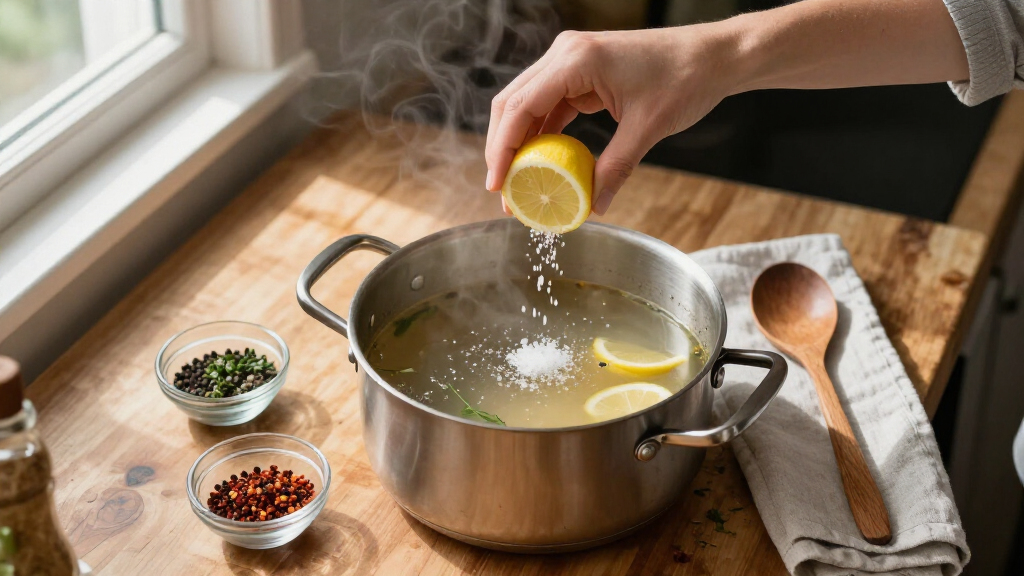
Beyond salt, standard culinary guidance points to three other levers. Acid — a squeeze of lemon or lime juice, a splash of vinegar, or a spoonful of yogurt — is routinely recommended to brighten soups that taste flat despite adequate salting. Umami boosters such as soy sauce, fish sauce, Worcestershire sauce, miso, tomato paste, Parmesan rind, or dried mushrooms are used to deepen savory character, particularly in vegetable and broth-based soups. Aromatics — garlic, ginger, onion, and fresh herbs added late in cooking — are suggested when a soup tastes one-dimensional. These are long-standing techniques found across mainstream cooking references and culinary education; none of them is new.
Why Soup Seasoning Searches Matter Now
The practical stakes for readers are straightforward: under-seasoned soup is one of the most common and most fixable failures in home cooking. Unlike a broken sauce or overcooked meat, a bland soup can usually be corrected at the end of cooking with ingredients most kitchens already hold, which is likely part of why the topic generates reliable search traffic whenever cooking interest rises.
The current spike also fits a broader, well-documented pattern of seasonal food-search behavior. Interest in soups, stews, and braises typically climbs in colder months, and guidance articles on tasting, adjusting, and rescuing dishes tend to ride the same wave. For food publishers, the trend indicates reader demand for troubleshooting content rather than new recipes. For home cooks, it points to a low-cost, low-skill improvement path: taste before serving, adjust salt first, then consider acid and umami.
The Established Science of Flavor Balance
The techniques driving the searches rest on long-settled culinary principles. Professional kitchens commonly teach that perceived flavor depends on the balance of salt, fat, acid, and aromatic intensity, and that a dish tasting “flat” often lacks one of these rather than more cooking time. Cookbooks and culinary-school curricula have repeated versions of this framework for decades.
Two habits are repeatedly emphasized in standard references. First, liquid reduction concentrates flavor, so soup seasoned early can become over-salted as it simmers — which is why staged seasoning and a final adjustment are recommended. Second, acid and umami are separate dials from salt: a soup that is salty enough but still dull usually needs brightness or depth, not more salt. Fat, such as a finishing drizzle of olive oil or a swirl of cream, is also used to carry and round out flavor.
What Is Driving the Spike
The trigger for the current interest surge is unconfirmed. The available metadata does not indicate whether it stems from a viral social post, a seasonal shift, a popular article, or general cooking-cycle behavior. No specific publication, chef, recipe, or product launch has been identified in connection with it.
It is also unclear how large the spike is relative to baseline, how long it has been building, or which specific technique readers are searching for most. The comparison basis and time window for the trend are not provided, so the surge can be described only as a relative signal, not a measured increase.
How the Trend May Play Out
If the pattern follows prior seasonal cooking trends, interest is likely to remain elevated through colder months and taper as attention shifts toward spring cooking topics. Food publishers may respond with additional troubleshooting guides on seasoning and flavor balancing. If a specific viral source for the spike emerges, it could be identified in follow-up coverage; at present, no such source has been confirmed, and readers should treat any single attributed origin claim with caution until verified.
Key Questions
What is the most common fix for bland soup?
Standard cooking guidance says to taste and adjust salt first, adding it gradually because liquid reduces and concentrates during cooking. If the soup is properly salted but still flat, add acid such as lemon juice or vinegar.
What ingredients add depth to soup?
Commonly recommended umami-rich additions include soy sauce, fish sauce, miso, tomato paste, Parmesan rind, and dried mushrooms. These are long-established pantry options, not new techniques.
Why is there sudden interest in this topic?
Search and content interest is spiking, but the specific trigger is unconfirmed. It is consistent with normal seasonal interest in soups and stews during colder months.
Can over-salted soup be fixed?
Cooking references commonly suggest diluting with unsalted broth or water, adding starchy ingredients such as potato or rice, or increasing other ingredients. Results vary by soup type, and there is no guaranteed reversal for heavy over-salting.
Is there anything genuinely new in this advice?
No. The core techniques — staged salting, acid adjustment, umami layering — are long-established culinary practice found across mainstream cookbooks and training materials. The current news is the interest spike, not the methods themselves.
Source: rss
Fall Picks
fall essentials
As an affiliate, we earn on qualifying purchases.