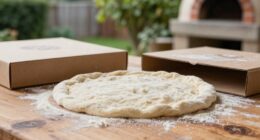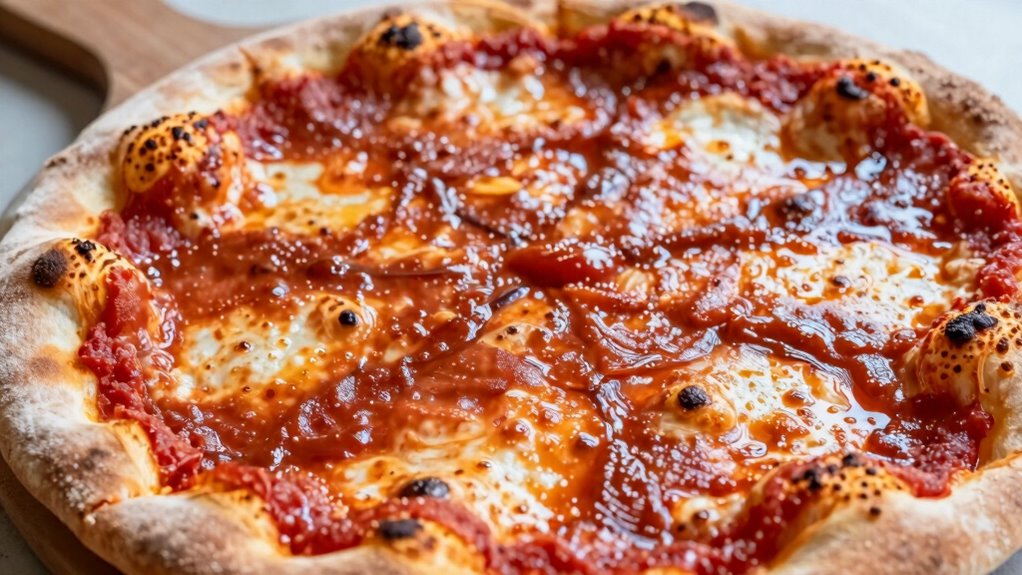
Too much or watery pizza sauce can make your dough soggy because it adds excess moisture that the crust absorbs, resulting in a limp texture. To fix this, simmer the sauce longer to reduce water or add thickening agents like tomato paste. Applying a thin, even layer of sauce and leaving a small border around the crust helps prevent sogginess. You’ll discover more tips to keep your pizza crisp if you keep going.
Key Takeaways
- Watery sauce increases moisture absorption, leading to a soggy crust, so simmer and reduce its water content before using.
- Applying a thin, even layer of sauce prevents excess moisture from soaking into the dough.
- Using thickening agents like tomato paste or simmering sauce longer concentrates flavors and reduces water content.
- Baking at high temperatures and using a pizza stone helps evaporate moisture, maintaining crust crispness.
- Pre-draining watery toppings and avoiding overloading prevents additional moisture from making the dough soggy.
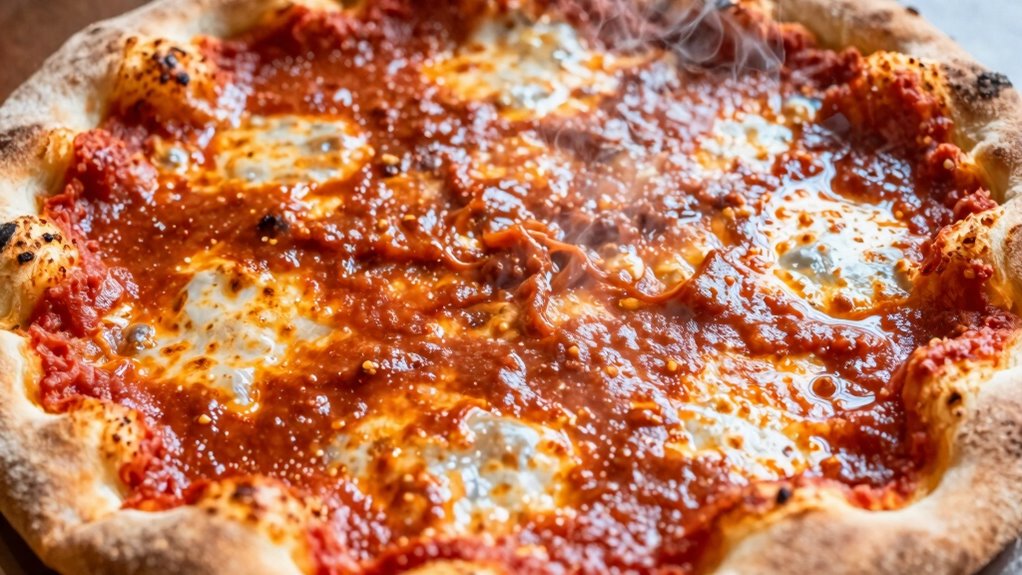
If you’ve ever made a pizza only to end up with a soggy crust, the culprit is often the sauce. Too much sauce, or sauce that’s too watery, can seep into the dough, preventing it from crisping up properly. When the crust becomes soggy, it’s not just about texture; it also affects the cheese melt and toppings balance. A soggy base can make the cheese slide off and make your toppings soggy or unevenly cooked. To keep that crust crisp and your pizza delicious, you need to know how to control the sauce’s moisture content and application.
First, consider the consistency of your sauce. If it’s too runny, it’ll easily soak into the dough. You can fix this by simmering the sauce longer to reduce excess water or adding a thickening agent like tomato paste. This gives you a thicker, more concentrated sauce that stays on top of the dough rather than sinking in. When spreading the sauce, use a light hand—apply a thin, even layer, leaving a small border around the edge. This not only helps prevent sogginess but also ensures the crust can crisp up without being weighed down by excess moisture.
Thicken your sauce and spread it thinly for a crispier, less soggy pizza crust.
Next, pay attention to toppings balance. Overloading your pizza can trap moisture, especially if you pile on lots of watery vegetables or extra cheese. Keep the toppings light and choose options that don’t release too much liquid during baking. For example, pre-drain mushrooms or marinated vegetables, and use cheese sparingly to avoid excess moisture that can make the crust soggy. When it comes to cheese melt, a well-distributed, moderate amount of cheese melts smoothly without overwhelming the toppings or releasing too much moisture. Proper cheese distribution also helps create a barrier that shields the crust from sogginess while enhancing the overall texture. Moisture control is essential in preventing sogginess, especially when working with watery ingredients or sauces.
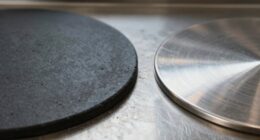
Additionally, baking at the right temperature is vital. A hot oven—around 475°F or higher—helps evaporate moisture quickly, sealing off the crust and promoting a crispy finish. Using a pizza stone or steel can also improve heat transfer, resulting in a crisper crust that resists sogginess. Remember, patience is key: give your pizza enough time to bake thoroughly so that the moisture from the sauce and toppings evaporates, leaving behind a crisp crust, a perfectly melted cheese melt, and a balanced topping spread. Incorporating proper projector technology techniques, such as high heat and even heat distribution, can be likened to baking, where consistent temperature control is key to achieving the perfect result. Developing a good understanding of content relevance and authority can help you make better choices about ingredient quality and preparation methods that influence moisture levels.

365 by Whole Foods Market, Organic Pizza Sauce, 14 Ounce
14 oz organic pizza sauce
As an affiliate, we earn on qualifying purchases.
As an affiliate, we earn on qualifying purchases.
Frequently Asked Questions
Can I Use Less Sauce Without Affecting the Flavor?
Yes, you can use less sauce without sacrificing flavor. Adjust the sauce quantity to prevent sogginess, but still spread enough to maintain the pizza’s taste. You might want to use a slightly more flavorful or concentrated sauce so that even with less, the flavor remains strong. This way, you preserve the taste while avoiding excess moisture, keeping your crust crispy and delicious.
Does the Type of Cheese Influence Sogginess?
Did you know that cheese moisture varies greatly among cheese types, affecting sogginess? Yes, your choice of cheese influences sogginess—moisture-rich cheeses like fresh mozzarella release more liquid, making the crust soggy. Harder cheeses like Parmesan contain less moisture, helping keep your pizza crisp. So, selecting cheese types with lower moisture content can prevent sogginess, and you can even reduce cheese moisture by draining or drying cheeses before topping.
How Does Oven Temperature Impact Soggy Crust?
Oven temperature directly impacts soggy crust by controlling oven heat and moisture. When you crank up the heat, the crust cooks faster and develops a crisp exterior, reducing sogginess caused by excess moisture. A hotter oven also helps evaporate moisture from the sauce and toppings, preventing sogginess. Make sure to preheat thoroughly and use high heat to improve moisture control, resulting in a crisp, well-cooked crust.
Are There Specific Pizza Dough Recipes Resistant to Sogginess?
A stitch in time saves nine, and the same applies to soggy pizza crusts. You can make dough resistant to sogginess by choosing recipes with lower dough hydration and focusing on proper gluten development. These recipes create a sturdy, elastic crust that withstands moisture from sauce. By kneading well and balancing hydration, you guarantee your pizza stays crispy, even with a generous layer of sauce.
Can Pre-Baking the Crust Prevent Sogginess?
Pre-baking the crust can help prevent sogginess by creating a barrier that stops moisture from seeping in. If you choose a thicker crust, it needs a longer baking duration to set properly, making it less likely to absorb excess moisture. By adjusting the crust thickness and baking duration, you guarantee the crust stays crispy even with toppings and sauce. This simple step makes your pizza crust more resistant to sogginess.

5 PCS Round Pizza Stone Set, 13" Pizza Stone for Oven and Grill with Pizza Peel(OAK),Serving Rack, Pizza Cutter & 10pcs Cooking Paper for Free, Baking Stone for Pizza, Bread
5 PCS Pizza Stones set:The round pizza stone measures 13" Come with OAK solid wood pizza paddle(12" X…
As an affiliate, we earn on qualifying purchases.
As an affiliate, we earn on qualifying purchases.
Conclusion
Think of your pizza as a delicate dance between flavors and textures. When the sauce is too watery, it’s like a heavy rain that dampens the dance floor, making the dough soggy and unsteady. To keep your pizza dancing happily, drain excess moisture and spread a thin layer of sauce. With these steps, you’ll prevent sogginess, allowing your crust to stay crisp and your toppings to shine—creating a perfect harmony in every bite.

Orblue Pizza Dough Docker Pastry Roller with Spikes, Pizza Docking Tool for Home & Commercial Kitchen – Pizza Making Accessories that Prevent Dough from Blistering, Black
Perfect Dough, Perfect Pizza – Even first-time bakers can use this pizza dough roller. Press and roll over…
As an affiliate, we earn on qualifying purchases.
As an affiliate, we earn on qualifying purchases.

Small Cast Iron Sauce Pot with Lid – Pure Cast Iron Melting Pot for Butter Melting & BBQ Basting, Includes Silicone Brush for Grilling, Camping, Oven Use
✅ 【Pure Cast Iron Excellence】Crafted from solid cast iron for superior heat retention and even cooking. Perfect as…
As an affiliate, we earn on qualifying purchases.
As an affiliate, we earn on qualifying purchases.