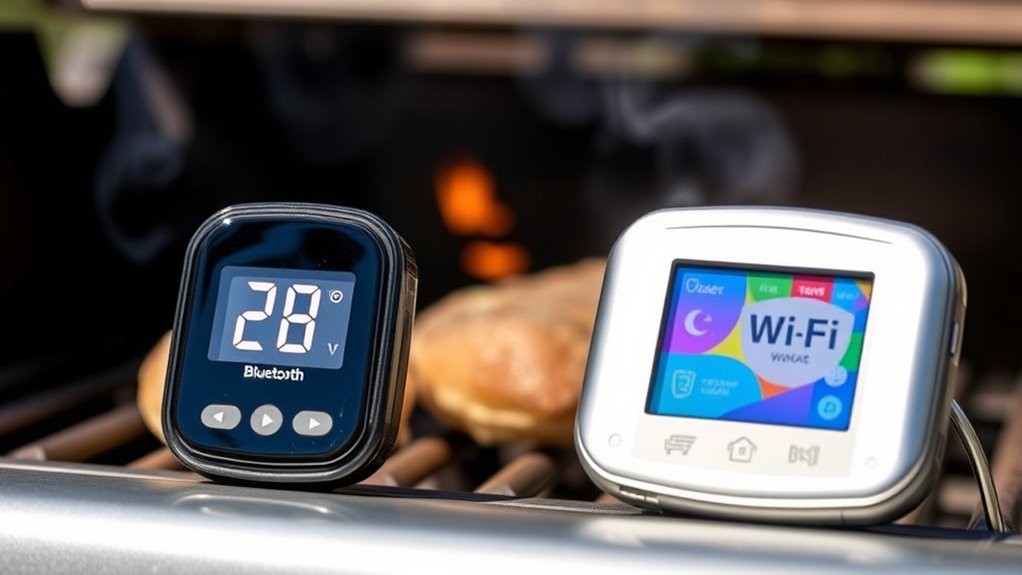

If you want simple, long-lasting battery life and minimal setup, a Bluetooth thermometer is a good choice, especially for casual grilling. It connects within a short range and works well if you monitor nearby. If remote access, multiple devices, or advanced features matter to you, a WiFi thermometer offers more flexibility and control, though it drains batteries faster. To find out which option best suits your cooking style, keep exploring the details.
Key Takeaways
- Bluetooth thermometers are ideal for casual grilling with longer battery life and simple setup, while WiFi models suit remote monitoring and advanced features.
- WiFi thermometers allow remote access from multiple devices and locations, whereas Bluetooth requires proximity for real-time monitoring.
- Bluetooth devices consume less power, offering longer battery life; WiFi models tend to drain batteries faster due to constant network use.
- WiFi thermometers often include alerts, multiple probes, and smart home integration, providing more functionality at a higher cost.
- Choose Bluetooth for straightforward, low-maintenance use; opt for WiFi if remote control and advanced features are priorities.

When choosing a grill thermometer, you might wonder whether Bluetooth or WiFi models are better suited for your needs. Both options connect to your smartphone to monitor cooking temperatures, but they differ in how they do it and what features they offer. One of the first considerations is smartphone compatibility. Bluetooth thermometers typically work well with most smartphones, provided the app is compatible with your device’s operating system. They usually connect within a limited range, around 30 feet, which means you’ll need to stay near your grill to get real-time updates. On the other hand, WiFi thermometers connect via your home network, allowing you to monitor your grill from virtually anywhere, whether you’re inside the house or miles away. This makes WiFi models more versatile if you want remote access or use multiple devices.
Bluetooth thermometers offer simple, long-lasting convenience within a limited range.
Battery life is another key factor to weigh. Bluetooth thermometers generally have longer-lasting batteries because they use less power, often lasting several months on a single charge or set of batteries. Their low energy consumption means you can spend less time worrying about frequent replacements. WiFi models, however, tend to drain batteries faster because they constantly maintain a connection to your network and sometimes require more power to keep the device online. This means you might need to replace or recharge batteries more often, especially if you use the thermometer frequently. If convenience and minimal maintenance are priorities, a Bluetooth model might be the better choice, especially if you don’t need remote monitoring.
Additionally, considering the technology used in home theatre projectors can help you understand the importance of features like connectivity and display quality, which are crucial for an optimal grilling experience as well. However, the convenience of WiFi can outweigh the battery concerns if you’re someone who wants to check your grill from across the yard or even from a different location. WiFi thermometers also tend to offer more advanced features, such as alerts sent directly to your phone, multiple probe readings, and integration with smart home systems. But these added features often come with increased complexity and sometimes higher price points.
Ultimately, your decision will depend on your specific needs. If you’re a casual griller who prefers simplicity and longer battery life, a Bluetooth thermometer should suffice. But if you’re serious about remote monitoring and want to keep tabs on your cook from anywhere, investing in a WiFi model makes more sense, despite the higher power consumption. Contemplate your smartphone compatibility and how often you’re willing to change batteries to make the best choice for your grilling style.
Frequently Asked Questions
Which Type Offers Better Battery Life for Long Grilling Sessions?
Bluetooth grill thermometers generally offer better battery efficiency for long grilling sessions because they have lower power consumption compared to Wi-Fi models. With less energy required for connectivity, Bluetooth devices tend to last longer on a single charge. If you’re planning extended grilling, you’ll appreciate the longer battery life, making Bluetooth thermometers a more practical choice. Just keep in mind, they might have a shorter range than Wi-Fi options.
Are Bluetooth Thermometers More Affordable Than Wifi Options?
Bluetooth thermometers are generally more affordable than WiFi options. In a price comparison, you’ll find that Bluetooth models typically cost less due to fewer advanced features and simpler connectivity. The main feature differences include WiFi thermometers offering remote monitoring via smartphone apps and better range, while Bluetooth devices focus on close-range use. If budget is your priority, Bluetooth thermometers are a cost-effective choice with essential grilling capabilities.
Can Bluetooth and Wifi Thermometers Be Used Simultaneously?
Yes, you can use Bluetooth and Wi-Fi thermometers simultaneously if your devices support wireless connectivity and are compatible. Many modern thermometers are designed to sync with multiple devices via different protocols, allowing you to monitor your grill from your phone or tablet at the same time. Just make certain each thermometer is compatible with your app and device, so you can enjoy seamless monitoring without any technical issues.
Do Wifi Thermometers Require a Smartphone App for Setup?
Yes, WiFi thermometers typically require a smartphone app for the setup process. You’ll need to download the app compatible with your device to connect and configure the thermometer. During setup, verify your device compatibility, like Android or iOS, matches the app requirements. Once set up, the app allows you to monitor temperatures remotely, providing a seamless grilling experience. Just follow the instructions, and you’ll be ready in no time.
Which Type Provides More Accurate Temperature Readings?
They say “trust, but verify,” and when it comes to temperature readings, WiFi thermometers usually provide more accurate sensor accuracy because they connect to a wider network, reducing interference. Bluetooth thermometers can be affected by signal stability issues in larger spaces. So, if you want consistent, precise measurements, WiFi models tend to be more reliable, especially for long cooks or when monitoring remotely.
Conclusion
Ultimately, choosing between Bluetooth and WiFi grill thermometers depends on your grilling style. Bluetooth offers simplicity and quick connectivity, perfect for backyard cooks. WiFi provides remote monitoring, ideal for busy or tech-savvy chefs. Think of Bluetooth as a direct chat and WiFi as a full conversation across distances. Both tools help you master your grilling game—just pick the one that fits your needs and enjoy perfectly cooked meals every time.