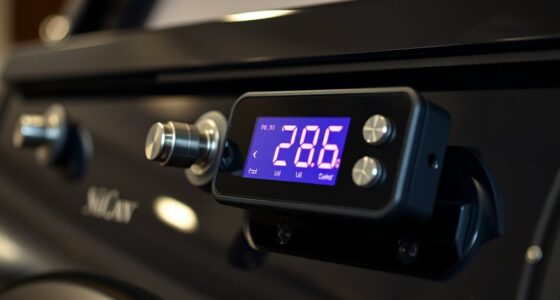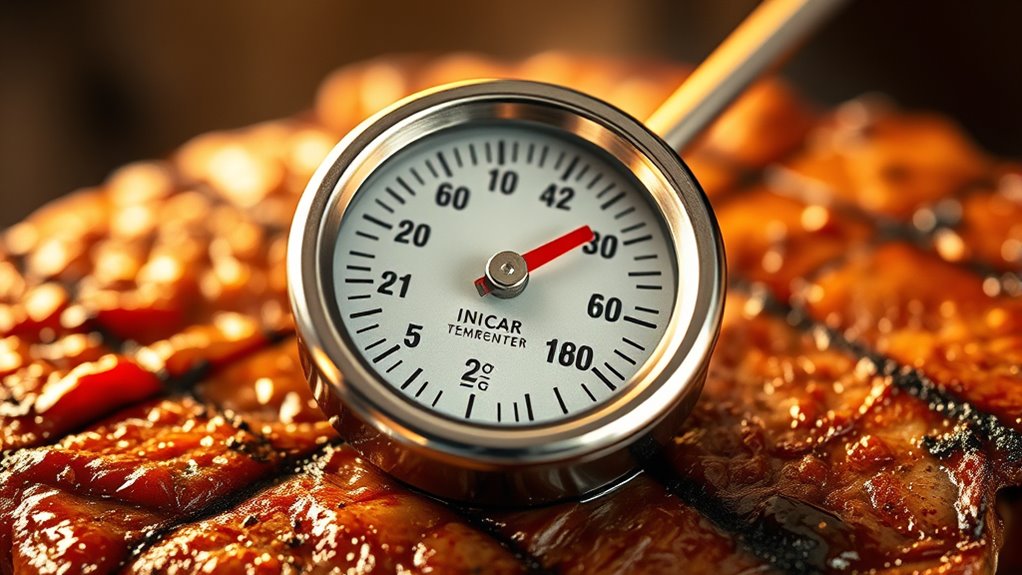

Meat thermometers work by detecting temperature changes inside your food using sensitive materials like bi-metallic strips or thermistors. Analog models use metal strips that expand as they heat up, moving a dial to show the temperature. Digital ones rely on thermistors that change resistance with heat, processed by a microchip to display a reading. Understanding these mechanisms helps guarantee accurate results, so if you keep exploring, you’ll discover even more about how they work.
Key Takeaways
- Meat thermometers detect internal temperature changes using materials like bi-metallic strips or thermistors that respond to heat.
- Bi-metallic strips expand or contract with temperature, causing mechanical movement to indicate temperature on analog dials.
- Thermistors change electrical resistance as temperature varies, allowing digital thermometers to process and display accurate readings.
- Proper calibration ensures thermometers provide reliable measurements, maintaining their sensitivity and accuracy over time.
- The combination of sensitive materials and calibration techniques underpins the precise functioning of meat thermometers.
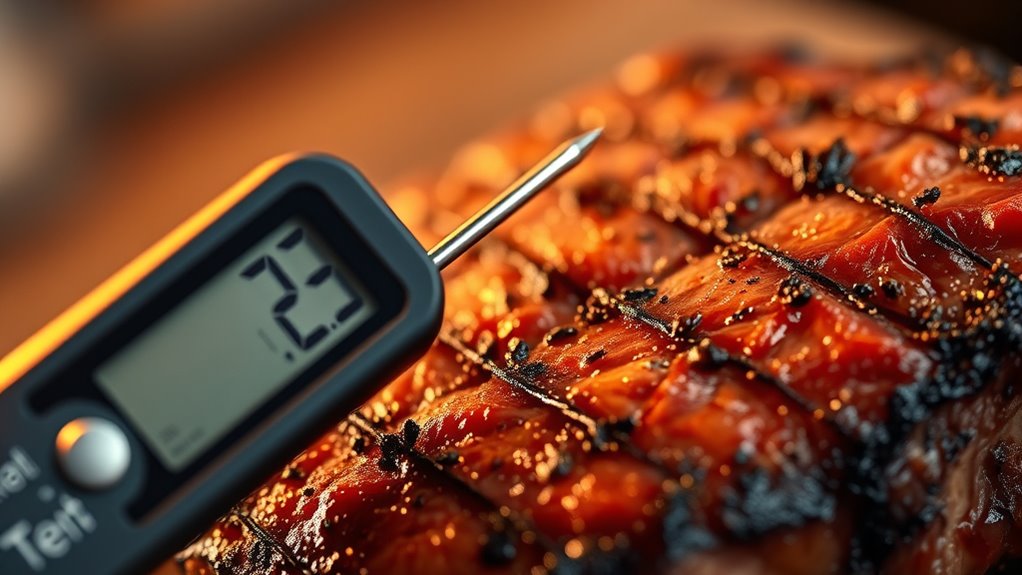
Meat thermometers are essential tools that help guarantee your food is cooked safely and to perfection. Understanding how they work begins with recognizing their core function: measuring the internal temperature of meat accurately. This process relies heavily on the thermometer’s temperature sensitivity, which determines how quickly and precisely it responds to changes in heat. A highly sensitive thermometer reacts swiftly to temperature shifts, giving you a clear reading without delay, while less sensitive models might lag behind, risking overcooking or undercooking your meat. Ensuring your thermometer’s probe calibration is accurate is crucial; if it’s off, your readings won’t reflect the true temperature, potentially leading to unsafe or imperfect results. Regularly calibrating your probe—either through ice water tests for a 32°F (0°C) benchmark or boiling water for 212°F (100°C)—keeps your measurements reliable. Many digital thermometers feature auto-calibration functions, but manual calibration remains a good practice, especially for analog models. Calibration methods are vital to maintain consistent accuracy over time.
The way a meat thermometer works fundamentally involves detecting temperature changes within the meat and translating those changes into a readable display. Traditional analog dial thermometers use a bi-metallic strip, which expands or contracts as it heats up, moving a needle to indicate temperature. Modern digital models, on the other hand, use thermistors—resistors that change resistance with temperature. When your probe is inserted into the meat, these thermistors respond to the heat, sending electrical signals to a microchip that quickly processes and displays the temperature. This electronic response offers faster readings and often greater accuracy, especially when the probe is properly calibrated.
Probe calibration is vital because even a small deviation can skew your results, especially when cooking poultry or beef to specific safety temperatures. If your thermometer isn’t calibrated correctly, you might think your meat is done when it’s not, risking foodborne illnesses or ruining your dish. To maintain accuracy, you should test your thermometer periodically and recalibrate if needed, following the manufacturer’s instructions. Proper probe calibration ensures your thermometer’s temperature sensitivity remains consistent over time, maintaining its reliability. Remember, the precision of your thermometer directly impacts your cooking outcomes, so investing in a model with adjustable calibration and regularly checking its accuracy can make all the difference.
In essence, the science behind meat thermometers combines sensitive materials and precise calibration to give you dependable readings. Whether it’s a simple analog device or a sophisticated digital model, understanding how these tools respond to heat and how to keep them accurate ensures you’re always cooking to perfect, safe temperatures. By mastering the principles of temperature sensitivity and probe calibration, you can confidently cook meat that’s both safe to eat and perfectly tender.
Frequently Asked Questions
Are Digital Meat Thermometers More Accurate Than Analog Ones?
You’ll find that digital meat thermometers generally offer better digital accuracy, making them more precise for checking your meat’s temperature. They often display readings quickly and clearly, reducing guesswork. However, analog reliability can be solid, especially if you calibrate them regularly. While digital models tend to be more accurate overall, both types can serve well if maintained properly. Your choice depends on your preference for ease of use and consistency.
How Often Should I Calibrate My Meat Thermometer?
Think of your thermometer as a trusted compass guiding your cooking journey. To keep its accuracy as sharp as ever, you should calibrate it at least once a year, especially before big holidays or if it’s dropped. Regular calibration guarantees your thermometer’s readings stay true, helping you cook meat perfectly every time. Remember, consistent calibration maintains your thermometer’s accuracy, so your culinary adventures stay safe and delicious.
Can Meat Thermometers Be Used for Other Cooking Tasks?
Yes, meat thermometers can be used for other cooking tasks because of their cooking versatility and temperature range. You can use them to check the temperature of baked goods, liquids, or even candied foods. Just make certain the thermometer’s temperature range suits your specific task. This way, you get accurate readings across different foods, helping you cook everything perfectly and safely.
What Is the Ideal Storage Method for a Meat Thermometer?
You should store your meat thermometer in a dedicated case or a clean, dry spot to keep it safe and accurate. Follow storage tips like avoiding extreme temperatures, keeping it away from moisture, and avoiding metal objects that could damage the probe. Using thermometer cases protects the device from damage and dirt, ensuring it remains precise when you need it. Proper storage prolongs its lifespan and maintains your cooking confidence.
Do Wireless Thermometers Have Any Lag in Readings?
Yes, wireless thermometers can have some signal lag or wireless delay, which might cause a slight delay in readings. This lag depends on the distance between the probe and the receiver, as well as interference from other devices. You might notice the temperature updates a few seconds after the actual change, but generally, this delay is minimal and shouldn’t affect your cooking accuracy appreciably.
Conclusion
Now that you understand how meat thermometers work, imagine the perfect meal waiting just for you. Will you trust your instincts, or will you rely on this tiny device to open juicy, perfectly cooked meat? The science is clear, but the choice is yours. Next time you cook, remember: a simple thermometer could be the secret to your next culinary masterpiece. Are you ready to take that step and master the art? The delicious results await.