If you want quick, reliable readings, wired thermometers are better because they connect directly to the meat and are less affected by interference. Wireless models offer convenience with remote monitoring and perfect for outdoor grilling, but they can be more expensive and less consistent in accuracy. Consider your cooking style and budget—if you keep exploring, you’ll find how to choose the best for your needs.

Get kitchen gear delivered free with Prime
- Fast, free delivery on millions of items
- Prime Video, Amazon Music and more included
- Member-only deals all year
Key Takeaways
- Wired thermometers offer higher accuracy and reliability due to direct probe contact and minimal signal interference.
- Wireless models provide remote monitoring, greater convenience, and portability for outdoor grilling and busy cooking sessions.
- Wired thermometers are generally more affordable and easier to maintain, while wireless options tend to be pricier with advanced features.
- Wired thermometers are ideal for quick, indoor tasks requiring immediate readings without app connectivity.
- Wireless thermometers excel in long cooks and outdoor use, allowing users to monitor temperatures remotely from a distance.
wireless meat thermometer with app
As an affiliate, we earn on qualifying purchases.
As an affiliate, we earn on qualifying purchases.
Accuracy and Reliability

When it comes to accuracy and reliability, wired meat thermometers generally outperform wireless options because they maintain a direct connection to the probe, reducing the chance of signal interference. Since the probe is physically connected, you don’t have to worry about disruptions that can occur with wireless signals. Proper sensor calibration is easier with wired models, ensuring consistent readings over time. Wireless thermometers depend on signals that can be affected by external interference from other electronics, leading to potential inaccuracies. Wired devices offer more stable and precise temperature measurements because they eliminate the risk of lost data or delayed readings caused by interference. If you prioritize dependable results, wired thermometers give you a more consistent and trustworthy way to monitor your meat’s temperature.
As an affiliate, we earn on qualifying purchases.
Convenience and Usability
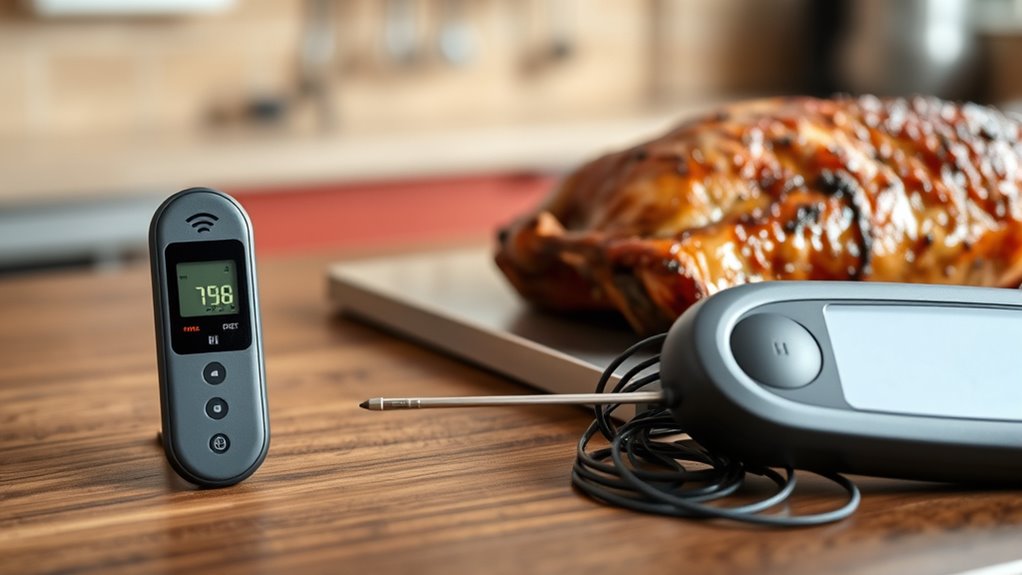
Wireless meat thermometers offer a high level of convenience by allowing you to monitor your meat remotely through smartphone apps or digital displays. They are easy to set up, often requiring just a few simple steps, so you can start cooking quickly. Their portability features make them ideal for outdoor grilling or camping, as you can move around without losing connection. With wireless thermometers, you don’t have to stay tied to your grill or oven, giving you more freedom and flexibility during cooking. The user-friendly interfaces and quick connectivity options improve usability, making it simple even for beginners to operate. Overall, their convenience and portability make wireless thermometers a practical choice for those who value ease of use and mobility.
Bluetooth meat thermometer for grilling
As an affiliate, we earn on qualifying purchases.
As an affiliate, we earn on qualifying purchases.
Durability and Maintenance
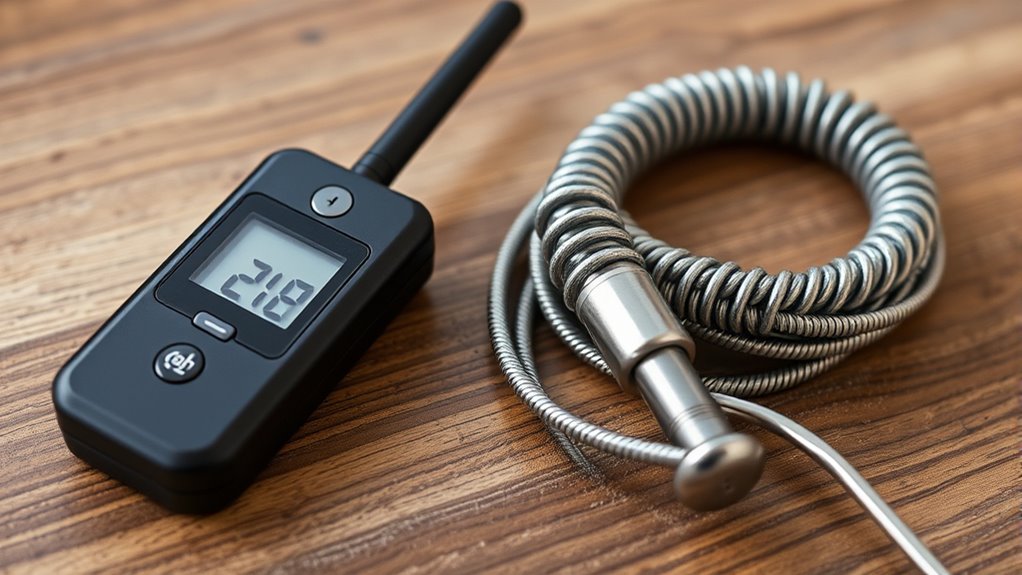
Durability and maintenance are crucial factors to take into account when choosing a meat thermometer, especially if you plan to use it frequently or outdoors. Wireless models often feature sealed sensors that enhance sensor longevity, making them more resistant to moisture and dirt, which reduces breakage risk. Wired thermometers might require more careful handling to prevent cable damage. Cleaning requirements vary: wireless devices usually need gentle wiping, while wired ones might need more thorough cleaning around the probe. Proper maintenance extends your thermometer’s lifespan, ensuring accurate readings over time.
| Feature | Wired | Wireless |
|---|---|---|
| Sensor Longevity | Slightly lower, cable wear | Higher, sealed sensors |
| Cleaning Requirements | More detailed cleaning | Easier, wipe-down-friendly |
| Durability | Moderate, cable risk | Generally more durable |
instant read wired meat thermometer
As an affiliate, we earn on qualifying purchases.
As an affiliate, we earn on qualifying purchases.
Price and Value

Price and value are key considerations that can influence your choice between wired and wireless meat thermometers. Budget options typically cost less upfront, making them ideal if you want basic functionality without breaking the bank. Wireless models tend to be priced higher but often include premium features like app connectivity and remote monitoring. Here’s what to contemplate:
- Budget options offer affordability but may lack advanced features.
- Wireless thermometers generally come with more premium features, justifying their higher price.
- Wired thermometers often provide reliable performance at a lower cost, but with fewer tech integrations.
Ultimately, your decision hinges on how much value you place on features versus initial investment. Weigh your needs carefully to find the best fit for your cooking style.
Best Use Cases and Recommendations

Choosing the right meat thermometer depends on how you typically cook and monitor your food. Wireless models excel in remote monitoring, letting you keep an eye on your meat from a distance, perfect for busy cooks or outdoor grilling. Wired thermometers often feature clear color displays, offering instant readouts without the need for apps or Bluetooth. Consider your cooking style: if you prefer to stay away from the grill or oven, wireless is ideal. If quick, on-device readings matter most, a wired thermometer with a bright color display will serve you well.
| Use Case | Best Option |
|---|---|
| Remote monitoring | Wireless thermometer with app connectivity |
| Indoor roasting | Wired thermometer with color display |
| Outdoor grilling | Wireless for convenience |
| Quick readings | Wired with instant display |
| Long cooks | Wireless for monitoring from afar |
Frequently Asked Questions
How Do Wireless Thermometers Handle Interference in Crowded Kitchens?
Wireless thermometers handle signal interference in crowded kitchens by using robust, frequency-hopping technology that minimizes disruptions caused by kitchen congestion. You’ll notice they automatically switch channels if interference occurs, ensuring a steady connection. Additionally, many models have strong signal ranges and antenna designs that help penetrate walls and appliances. This way, you can monitor your meat accurately without worrying about signal drops, even in busy, congested kitchen environments.
Are Wired Thermometers Compatible With Smart Home Systems?
Imagine you’re stepping into the future, and your wired thermometer seamlessly integrates with your smart home system. Yes, wired thermometers are compatible with smart home setups, allowing you to monitor temperatures remotely. Compatibility depends on the device’s features and your system’s protocol, like Wi-Fi or Zigbee. You may need a compatible hub or app, but once set, you’ll enjoy real-time updates and remote control, making cooking smarter and more convenient.
What Is the Typical Battery Life Difference Between Wireless and Wired Models?
Wireless meat thermometers typically have shorter battery longevity than wired models because their higher power consumption requires more frequent battery replacements or recharges. Wired thermometers draw power through their cables, so they don’t rely on batteries, making them more consistent regarding power use. If you want a device with less maintenance and longer battery life, wired models are usually the better choice for minimizing power consumption.
Can Wireless Thermometers Operate Effectively in Outdoor Environments?
Yes, wireless thermometers can operate effectively outdoors if they have good signal strength and weather resistance. Make sure your device is designed to withstand rain, wind, and temperature fluctuations. A strong signal helps maintain reliable communication between the probe and receiver, preventing data loss. With these features, wireless thermometers are convenient for outdoor cooking, giving you real-time temperature updates without worrying about environmental damage or signal issues.
Do Wired Thermometers Require Regular Calibration for Accuracy?
You might think wired thermometers are set and forget, but no, they do require regular calibration for accuracy. Over time, sensors can drift, making calibration importance clear. If you skip this step, you risk inaccurate readings, which could ruin your meal or mislead your cooking process. So, to maintain accuracy and guarantee perfect results, don’t overlook calibration—your taste buds will thank you.
Conclusion
Choosing between wireless and wired meat thermometers is like picking between a trusted compass and a reliable map—you’ll get there, but the journey feels different. Wireless models offer freedom and modern flair, while wired ones provide steady, unwavering accuracy. Think about your cooking style and needs, and you’ll find the perfect match. Whichever you choose, know that with the right thermometer, you’ll turn your kitchen into a culinary symphony—precision that hits every note.
Evergreen bestsellers Picks
bestsellers
As an affiliate, we earn on qualifying purchases.