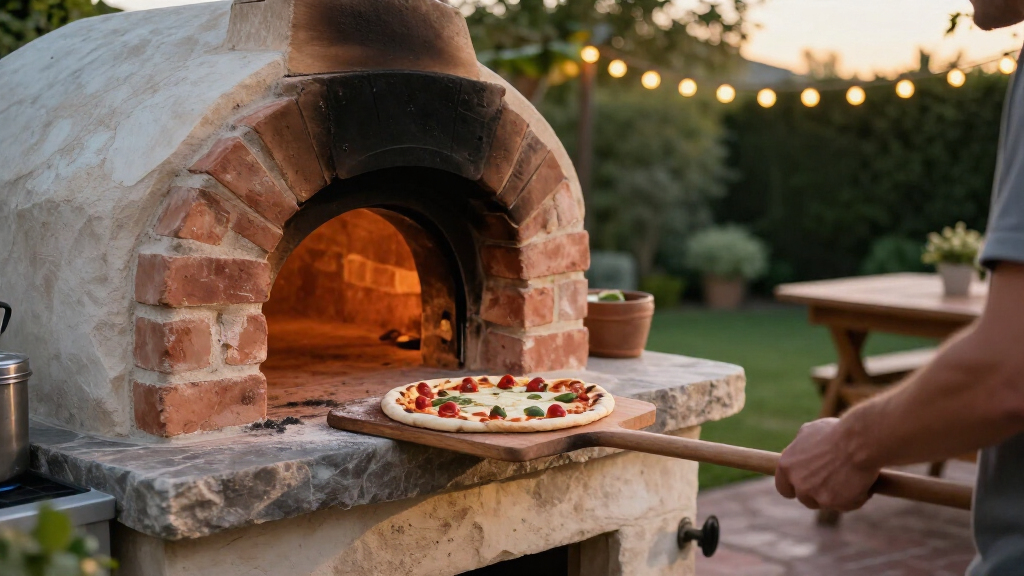
This guide provides a comprehensive process for installing and using a pizza oven in your outdoor kitchen. It is designed for homeowners with basic DIY skills who want to add a high-quality pizza oven to enhance outdoor cooking. The instructions cover selecting the right oven, preparing the site, installation, and initial use, ensuring you can achieve perfectly cooked pizzas reliably.

Get kitchen gear delivered free — and shop member deals
- Fast, free delivery on millions of items
- Access to Prime Big Deal Days deals on October 6–7
- Prime Video, Amazon Music and more included

Big Horn 12-Inch Outdoor Pizza Oven, 1110°F, Wood Pellet, Gas & Electric
- ✔ Material: Stainless Steel
- ✔ Fuel Types: Wood Pellet, Gas, Electric (attachments sold separately)
- ✔ Maximum Temperature: 1110°F

Outdoor Wood-Fired Pizza Oven for Backyard
- ✔ Diameter: 12 inches (pizza stone)
- ✔ Maximum Temperature: 550°F (287°C)
- ✔ Cooking Time for Pizza: 6-7 minutes

Ooni Karu 12 Multi-fuel Outdoor Portable Pizza Oven
- ✔ Maximum Temperature: 950°F
- ✔ Pizza Size: 12 inches
- ✔ Weight: 26.4 lbs
Difficulty: Intermediate | Time: 1-2 days (including setup and initial firing)
What You’ll Need
Tools & Materials:
- drill
- level
- measuring tape
- wrench set
- masonry trowel
- protective gloves
- safety glasses
Knowledge:
- basic construction or DIY skills
- understanding of outdoor electrical or gas connections if applicable
Check local building codes and regulations before installation. Ensure proper permits if required. Confirm the weight and size of your chosen oven to accommodate your available space and foundation.
Big Horn 12-Inch Outdoor Pizza Oven, 1110°F, Wood Pellet, Gas & Electric
The Big Horn 12-inch outdoor pizza oven stands out for its high maximum temperature of 1110°F, allowing for quick and authentic-style pizzas. Its multi-fuel capability makes it versatile, accommodating wood pellets, gas, or electric attachments (sold separately), which is ideal for users wanting flexibility. Compared with the Ooni Karu, it’s less portable but offers a larger cooking area and broader fuel options. However, the need for separate attachments and the reliance on hardwood pellets for pellet mode can complicate setup and increase ongoing costs.
Pros:
- High maximum temperature for authentic pizza crusts
- Multi-fuel options increase cooking versatility
- Suitable for indoor and outdoor use
- Portable and easy to assemble
Cons:
- Gas and electric attachments sold separately
- Limited to 12-inch pizzas
- Requires hardwood pellets for optimal pellet mode
Best for: Buyers seeking a versatile, high-heat outdoor pizza oven that can adapt to different fuel sources and is suitable for year-round use.
Not ideal for: Those prioritizing ultra-portability or a compact footprint; users who prefer an all-in-one solution without additional attachments.
Bottom line: The Big Horn offers the best combination of temperature, versatility, and adaptability, making it ideal for serious outdoor pizza enthusiasts willing to handle some setup complexity.
“The Big Horn offers the best combination of temperature, versatility, and adaptability, making it ideal for serious outdoor pizza enthusiasts willing to handle some setup complexity.”
Outdoor Wood-Fired Pizza Oven for Backyard
This outdoor oven excels in multifunctionality, capable of cooking pizzas, roasts, bread, and vegetables with ease. It heats rapidly to 550°F in about 10 minutes, and its durable iron and steel construction ensures even heat distribution, making it a reliable choice for varied outdoor cooking needs. Compared to the Ooni Karu, it offers a broader range of cooking temperatures and comprehensive accessories, including a pizza peel, baking trays, and more. However, its size and need for outdoor space mean it’s less suited to compact yards or those seeking portability. Assembly might also be necessary, and it’s strictly outdoor-focused.
Pros:
- Multi-functional for diverse outdoor cooking
- Fast heat-up and quick cooking times
- Durable construction with even heat distribution
- Includes comprehensive accessories
Cons:
- Requires ample outdoor space
- Assembly may be needed
- Limited to outdoor use
Best for: Outdoor cooks wanting a versatile, durable oven with extensive accessories and fast heat-up for varied cooking styles.
Not ideal for: Small patios or users who prioritize portability and minimal setup; those who only want to cook small pizzas regularly.
Bottom line: This robust outdoor oven combines versatility and durability, perfect for those who want a multi-purpose outdoor cooking station with quick results.
“This robust outdoor oven combines versatility and durability, perfect for those who want a multi-purpose outdoor cooking station with quick results.”
Ooni Karu 12 Multi-fuel Outdoor Portable Pizza Oven
The Ooni Karu 12 is designed for portability and speed, reaching temperatures up to 950°F and cooking 12-inch pizzas in just 60 seconds. Its multi-fuel capability, including wood, charcoal, and gas (with an attachment), offers versatile outdoor cooking options. Weighing only 26.4 lbs, it’s perfect for backyard gatherings or outdoor adventures where space and weight matter. Compared to the Big Horn, it’s less versatile in fuel types but excels in quick, high-temperature baking and ease of transport. Its setup requires some preheating, and gas attachment is sold separately, which could be inconvenient for some buyers.
Pros:
- Reaches high temperatures ideal for authentic pizza
- Cooks 12-inch pizzas in just 60 seconds
- Lightweight and portable for outdoor adventures
- Multi-fuel options for versatile outdoor cooking
Cons:
- Gas attachment sold separately
- Requires preheating and setup time
- Limited to outdoor use
Best for: Outdoor enthusiasts seeking a lightweight, fast-cooking pizza oven for backyard use or portable outdoor activities.
Not ideal for: Those wanting a multi-fuel setup with extensive accessory options; users with limited outdoor space or preferring a larger cooking surface.
Bottom line: The Ooni Karu 12 combines portability with impressive speed and high heat, making it perfect for quick, authentic outdoor pizza on the go.
“The Ooni Karu 12 combines portability with impressive speed and high heat, making it perfect for quick, authentic outdoor pizza on the go.”
As an Amazon Associate we earn from qualifying purchases.
Before You Start
Determine the best location in your outdoor kitchen for the oven, considering wind direction, proximity to cooking and seating areas, and access to utilities. Clear the installation area of debris and level the surface if necessary. Verify that the chosen spot complies with local safety and building codes.
Step-by-Step Instructions
Step 1: Select the appropriate pizza oven
Research available models suitable for outdoor installation, considering size, fuel type (wood, gas, or dual), and insulation. Choose an oven that fits your space, budget, and cooking needs. Check specifications for weight, clearance requirements, and ventilation.
Tip:Opt for a reputable brand with good reviews and available support. Confirm the oven’s heat capacity and cooking surface size based on your typical pizza size and quantity.
Check: You have selected an oven that matches your space and cooking preferences, with clear specifications documented for installation.
Step 2: Prepare the foundation
Construct a stable, fireproof base such as a concrete slab or a reinforced brick platform. Ensure the foundation is level and can support the weight of the oven. Allow concrete to cure fully if used, following manufacturer recommendations.
Tip:Use a level frequently during construction to ensure even support. Incorporate proper drainage if installing outdoors to prevent water pooling.
Check: The foundation is level, stable, and capable of supporting the oven’s weight without shifting or cracking.
Step 3: Install the oven according to manufacturer instructions
Follow the specific installation manual provided with your oven. Position the oven on the prepared foundation, ensuring adequate clearance from combustible materials and adherence to ventilation guidelines. Use a level to verify the oven is perfectly horizontal.
Tip:Double-check the oven’s placement before securing it permanently. Use shims if necessary to achieve level alignment.
Check: The oven sits level, securely positioned, with proper clearance and ventilation space.
Step 4: Connect utilities (if applicable)
Connect the oven to its fuel source—gas line or wood supply—according to the manufacturer’s instructions. For gas models, hire a licensed professional to ensure safe, code-compliant connections. For wood models, prepare a proper wood storage area nearby.
Tip:Test the fuel connection for leaks or blockages before firing the oven. Ensure proper ventilation if using gas.
Check: The oven is connected to its fuel source securely, with no leaks or safety issues detected.
Step 5: Perform a safety check and initial firing
Inspect the installation area for safety hazards. Wear protective gear and light an initial small fire, gradually increasing heat to cure the oven and check for proper operation. Observe for any smoke, leaks, or structural issues.
Tip:Start with small fires to prevent thermal shock. Follow manufacturer recommendations for curing times.
Check: The oven heats evenly, with no smoke or leaks, and reaches the desired cooking temperature without issue.
Common Mistakes to Avoid
- Installing the oven on an uneven or unstable surface. — Ensure the foundation is level, stable, and capable of supporting the oven’s weight before installation.
- Incorrect clearance or ventilation setup. — Follow manufacturer guidelines for minimum clearance from combustible materials and proper ventilation paths.
- Neglecting to properly connect and test utilities. — Hire qualified professionals for gas connections and thoroughly check for leaks before firing the oven.
- Starting with a large fire immediately after installation. — Begin with small fires to allow the oven to cure gradually and avoid thermal shock.
Troubleshooting
Problem: Oven is not reaching the desired temperature.
Solution: Check fuel supply and connections, ensure the oven is properly sealed and insulated, and verify ambient conditions are not excessively cold or windy.
Problem: Excessive smoke during initial firing.
Solution: Use seasoned, dry wood, and ensure the oven is properly cured. Remove any residual protective coatings or debris from installation.
Problem: Uneven cooking or hot spots.
Solution: Allow the oven to reach temperature gradually and rotate pizzas during cooking to promote even heat distribution.
What Success Looks Like
The oven maintains a consistent high temperature (around 700–900°F), heats evenly across the cooking surface, and produces well-cooked, crispy pizzas with properly melted toppings. The oven shows stable operation during multiple firing cycles without smoke leaks or structural issues.
Next Steps
Regularly clean the oven interior after use, check for any signs of wear or damage, and follow manufacturer maintenance guidelines. Experiment with different fire-starting techniques and pizza recipes. Consider adding a cover to protect the oven during harsh weather or when not in use. Schedule periodic inspections if your oven is built into a permanent outdoor structure.
Frequently Asked Questions
Can I install a pizza oven on my existing outdoor countertop?
Yes, if the countertop is made of heat-resistant, non-combustible material and is structurally sound to support the oven’s weight. Confirm the size and clearance requirements before proceeding.
What type of fuel is best for outdoor pizza ovens?
Wood-fired ovens produce authentic flavor and high heat, but require more maintenance. Gas ovens are easier to operate and control. Dual-fuel models combine both benefits.
How long does it take to cure a new pizza oven before use?
Fire small, controlled fires for several hours over 2-3 days, gradually increasing heat each day. Follow the manufacturer’s curing instructions to prevent cracking or damage.
How often should I clean and maintain my outdoor pizza oven?
Clean ashes and residue after each use. Perform a thorough inspection and cleaning every few months, especially before winter or extended periods of inactivity. Follow the manufacturer’s maintenance guidelines.
Fall Picks
fall essentials
As an affiliate, we earn on qualifying purchases.