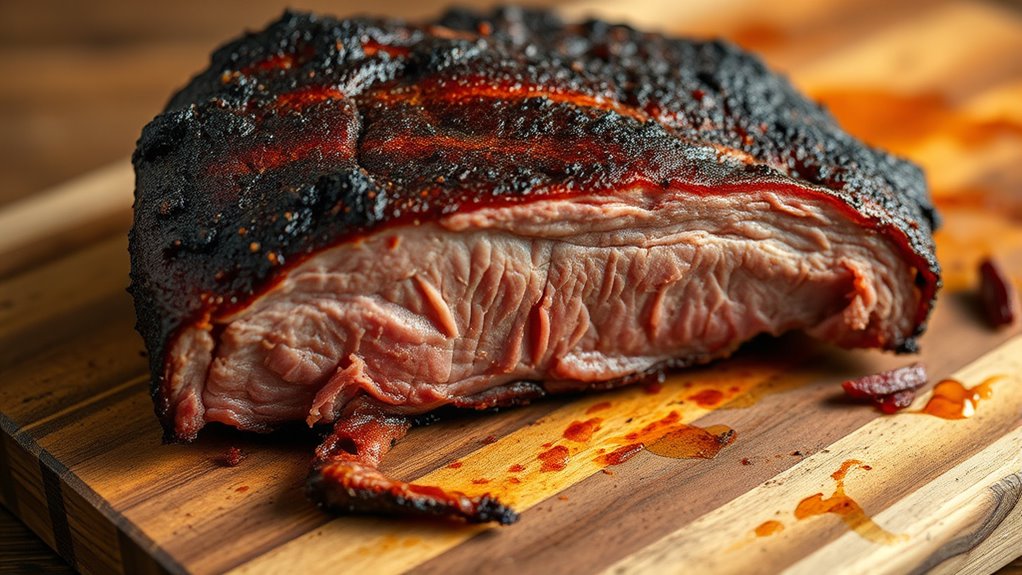

Start by choosing a well-marbled brisket with a consistent fat cap for flavor and moisture. Prepare your smoker to maintain a steady temperature of 225-250°F, using hardwoods like oak or hickory for good smoke flavor. Apply a balanced rub evenly over the meat and keep the smoke thin and bluish. Monitor internal temperature regularly, aiming for around 195-205°F, and let it rest before slicing. Keep these tips in mind to master your brisket, and you’ll uncover more secrets to perfect smoking.
Key Takeaways
- Select a well-marbled brisket with a consistent fat cap and ask your butcher for guidance.
- Preheat your smoker to 225-250°F, clean vents, and use hardwood like oak or hickory for steady smoke.
- Apply a balanced rub with paprika, brown sugar, and garlic, pressing it into the meat for even coverage.
- Maintain steady temperature by adjusting vents, adding wood chunks as needed, and monitoring with a digital meat thermometer.
- Smoke until the internal temperature reaches about 200°F, then let the brisket rest before slicing for best tenderness.

TempPro TempSync 1000FT Wireless Meat Thermometer for Grilling and Smoking
- Stable RF Connection: Reliable up to 1,000 feet away
- Easy Setup: No apps or complex installation needed
- 4 Color-Coded Probes: Track multiple meats simultaneously
As an affiliate, we earn on qualifying purchases.
As an affiliate, we earn on qualifying purchases.
Selecting the Right Cut and Preparing Your Brisket
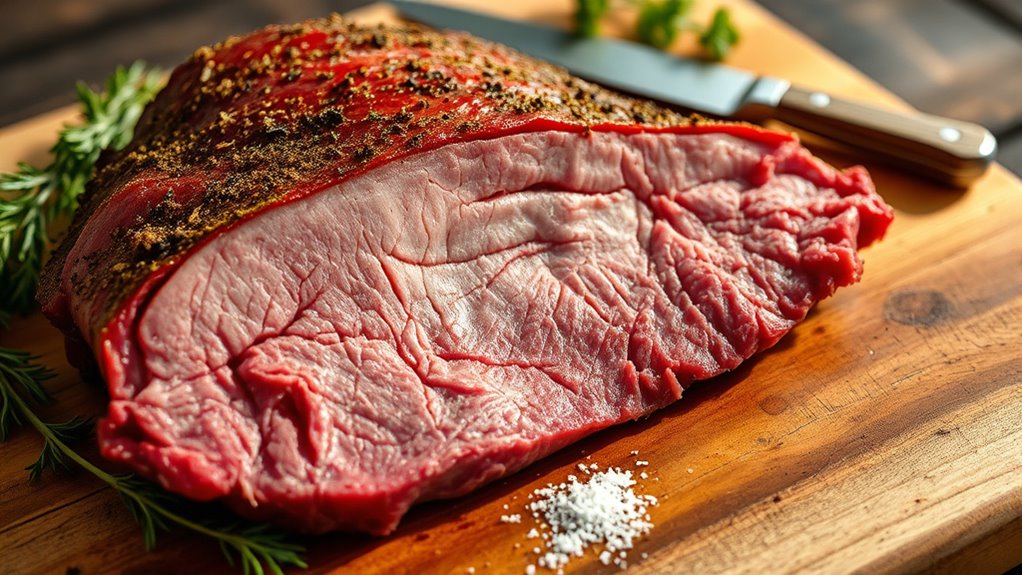
Choosing the right cut of brisket is essential for a juicy, tender smoked result. Start by choosing a reputable butcher; they can guide you to a quality piece with the right characteristics. Look for briskets with a good balance of fat content—preferably a well-marbled cut—since fat keeps the meat moist and enhances flavor during smoking. Avoid briskets that are too lean, as they tend to dry out. When selecting, check for a consistent layer of fat on one side, called the fat cap, which protects the meat and adds flavor. Ask your butcher about the cut’s grade and fat distribution to ensure you get the best piece for smoking. Properly selecting your brisket sets the foundation for a successful, flavorful smoked dish.

VIVOHOME 3-in-1 Vertical Charcoal Smoker
- Versatile 3-in-1 Design: Functions as smoker, grill, or fire pit
- Even Heat Distribution: Vertical barrel design for consistent temperature
- Built-in Temperature Monitor: Thermometer for easy internal temperature tracking
As an affiliate, we earn on qualifying purchases.
As an affiliate, we earn on qualifying purchases.
Gathering Essential Equipment and Ingredients
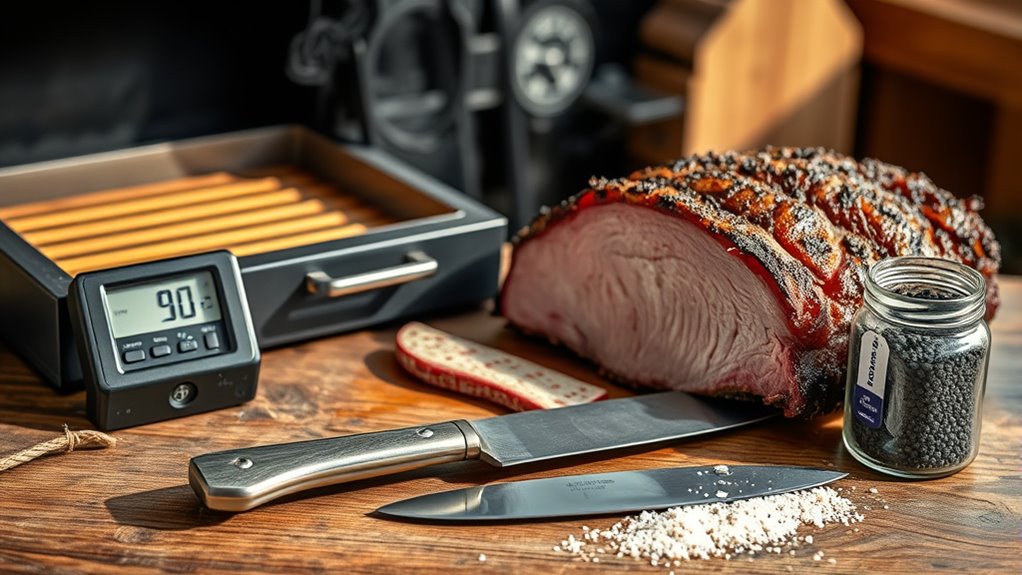
To guarantee your brisket smoking process goes smoothly, gather all the essential equipment and ingredients before you start. You’ll need a reliable smoker, and it’s a good idea to check smoker maintenance—clean out ashes and ensure proper airflow. Prepare your ingredients, including the brisket, salt, pepper, and other seasonings. If you don’t have a specific spice, ingredient substitutions like paprika or garlic powder work well. Don’t forget tools like a meat thermometer, cutting board, and sharp knives. Having everything ready saves time and reduces stress during the process. Double-check your supplies, and make sure your smoker is functioning correctly. With your equipment and ingredients in place, you’re set for a smooth smoking experience that results in tender, flavorful brisket.
As an affiliate, we earn on qualifying purchases.
Setting Up Your Smoker for Success
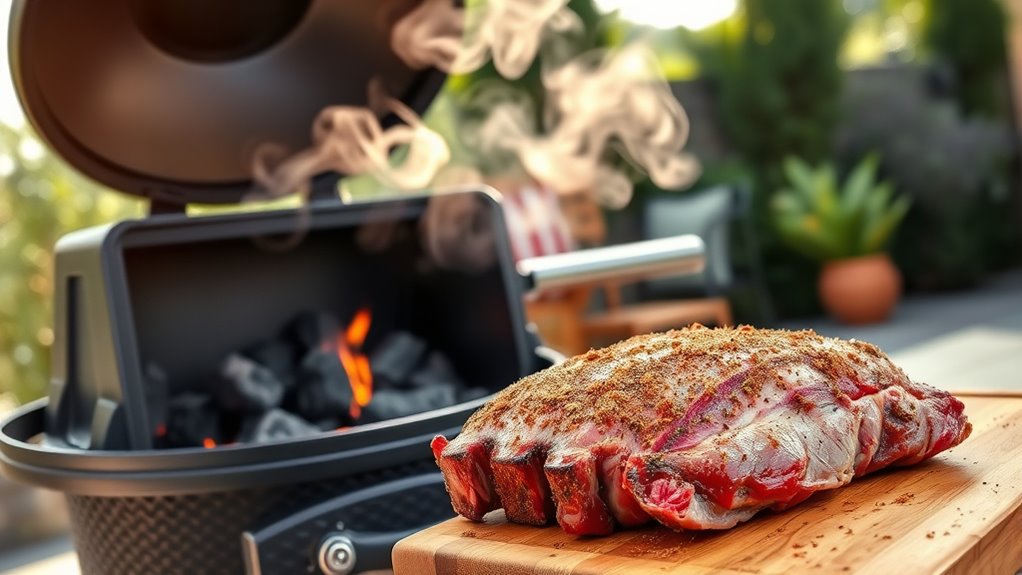
Setting up your smoker properly is essential for achieving the perfect brisket. Start with smoker maintenance by cleanly removing ashes and residue from previous uses, ensuring proper airflow. Check that vents are functioning smoothly to control temperature and smoke flow. When selecting wood chunks, choose hardwoods like oak or hickory for consistent flavor; avoid softwoods that produce unwanted chemicals. Soak wood chunks briefly if you prefer a slower, steady release of smoke, but this isn’t always necessary. Place the wood strategically to promote even smoke production without over-smoking. Maintain a steady temperature, typically between 225°F and 250°F, and ensure your smoker is stable before adding the brisket. Proper setup creates the ideal environment for a flavorful, tender smoked brisket.
As an affiliate, we earn on qualifying purchases.
Applying the Perfect Rub and Managing the Smoke

Once your smoker is properly set up and at the right temperature, it’s time to focus on adding flavor with the perfect rub and managing the smoke. Applying a well-balanced rub enhances the brisket’s taste, and using proper rub application techniques ensures even coverage. Experiment with flavor combinations like smoky paprika, brown sugar, and garlic for depth. Be gentle when applying the rub—press it into the meat to help it adhere. To manage the smoke, maintain a steady, thin bluish smoke—too thick can ruin flavor. Use the following chart to guide your flavor profiles:
| Flavor Focus | Key Ingredients | Technique |
|---|---|---|
| Sweet & smoky | Brown sugar, paprika | Rub evenly, pat firmly |
| Herbaceous | Rosemary, thyme | Light coating, massage in |
| Spicy | Chili powder, cumin | Apply generously, coat all sides |
Monitoring and Maintaining Temperature Throughout the Cook
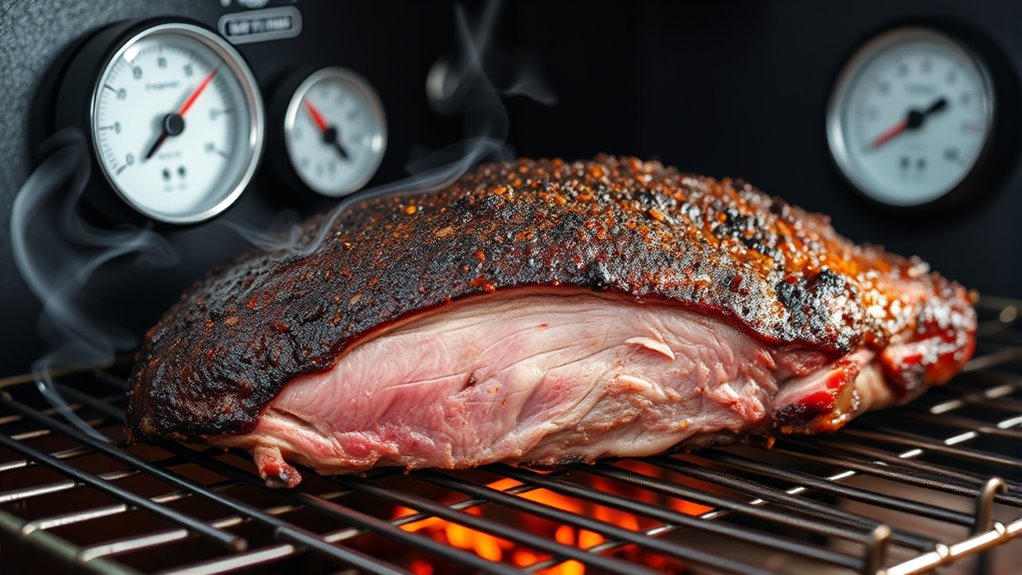
Maintaining a consistent temperature during your brisket cook is essential for tender, flavorful meat. Proper temperature control guarantees the smoke stays consistent, preventing fluctuations that could ruin your results. To achieve this, follow these steps:
- Regularly check your smoker’s thermometer to stay within the ideal range of 225-250°F.
- Adjust vents to regulate airflow, maintaining steady heat and smoke flow.
- Add fuel or wood chunks as needed to keep the temperature steady.
- Use a digital probe thermometer to monitor internal meat temperature without opening the smoker frequently.
Resting, Slicing, and Serving Your Brisket
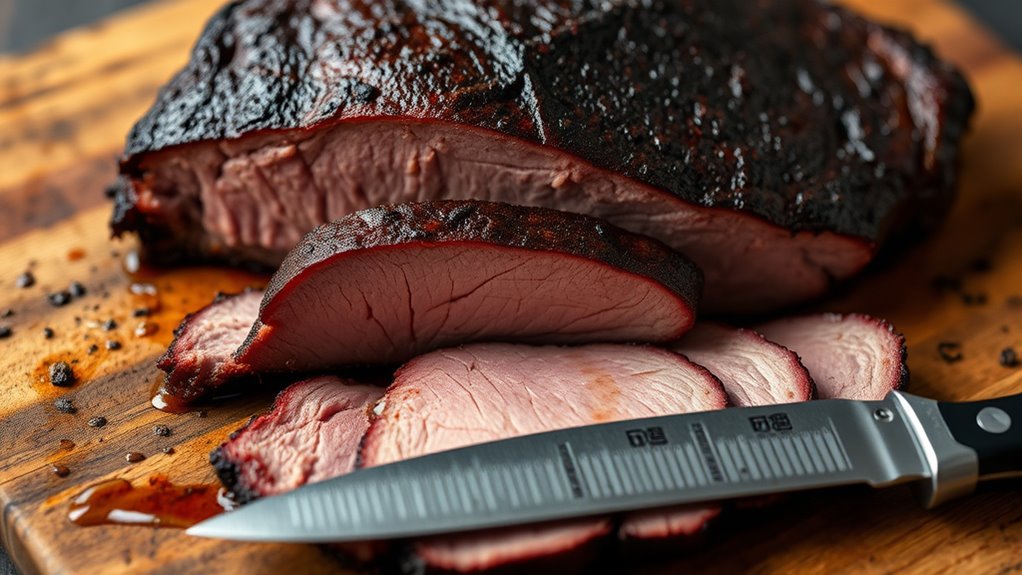
After removing the brisket from the smoker, it’s essential to let it rest for at least 30 minutes to allow the juices to redistribute and enhance tenderness. Resting also helps preserve flavor infusions you worked to develop during smoking. When slicing, cut against the grain to ensure each bite is tender and easy to chew. Use a sharp knife for clean, even slices that look professional. For presentation tips, arrange slices neatly on a platter, showcasing the smoky bark and juicy interior. Resting and proper slicing make a noticeable difference in flavor and texture, elevating your dish. Serve immediately to enjoy the full depth of flavors and a beautiful, mouthwatering display. This final step guarantees your brisket looks as good as it tastes.
Frequently Asked Questions
How Long Does It Typically Take to Smoke a Brisket?
You’ll typically spend about 1 to 1.5 hours per pound for smoking a brisket, but smoking duration varies based on size and temperature control. Maintain a steady smoker temperature of around 225°F to 250°F to make certain of even cooking. Keep an eye on internal temperature; when it hits 195-205°F, your brisket’s ready. Patience and consistent temperature control are key to achieving tender, flavorful smoked brisket.
Can I Use a Charcoal Smoker Instead of Electric or Pellet?
Yes, you can definitely use a charcoal smoker instead of electric or pellet. Think of it as choosing your favorite paintbrush; each fuel option offers a unique flavor and experience. With charcoal, you control the smoking temperature by adjusting the vents, giving you that hands-on feel. It’s like tending a campfire, where patience and attention turn simple fuel into smoky perfection, making your brisket truly memorable.
What Are Common Mistakes to Avoid When Smoking Brisket?
Avoid common mistakes by focusing on temperature control; keep your smoker steady between 225-250°F. Don’t rush the process or open the smoker too often, which can cause temperature swings. Using paper wrapping at the right time helps retain moisture and improve tenderness. Also, resist the urge to slice too early—wait until the brisket reaches an internal temperature of about 195°F for ideal results.
How Do I Know When My Brisket Is Done?
You’ll know your brisket is done when its meat tenderness reaches an internal temperature of about 195-205°F. Use a reliable meat thermometer to check the temperature, and when the brisket feels tender and a probe slides in easily, it’s ready. Don’t rely solely on time; instead, focus on tenderness and internal temp. Rest it for at least an hour before slicing for the best results.
Should I Wrap the Brisket During the Smoking Process?
You should definitely wrap your brisket during smoking; it’s like giving it a cozy blanket that transforms the cooking process! Wrapping techniques, like the Texas Crutch, help retain moisture and speed up cooking. If you’re feeling adventurous, try alternative smoking methods like wrapping with foil or butcher paper. This keeps your brisket tender and juicy, making your BBQ legendary and your smoke session an epic success!
Conclusion
Now, with your brisket perfectly smoked and tender as a lullaby, you’ve painted a masterpiece of flavor on a canvas of smoke and heat. Each slice reveals a symphony of smoky notes and juicy goodness, like a treasure waiting to be discovered. As you carve and serve, remember you’ve crafted more than just a meal—you’ve created a smoky tapestry that beckons friends and family to gather ‘round and savor every mouthful.