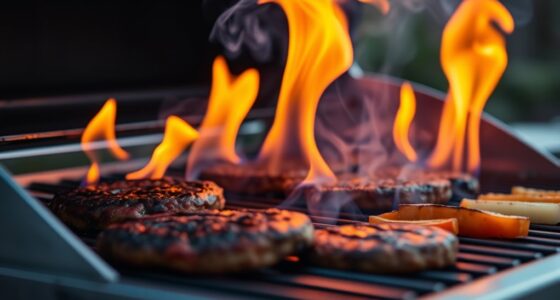
To smoke meat on a gas grill without a smoker, set up indirect heat by turning on only one or two burners and placing a drip pan underneath your meat. Soak wood chips in water, then place them in a foil pouch or smoker box over the heat source. Maintain the grill temperature around 225-275°F, add wood chips as needed, and keep the lid closed. For more tips on managing heat, smoke, and perfecting your smoked meat, keep exploring.

Get kitchen gear delivered free with Prime
- Fast, free delivery on millions of items
- Prime Video, Amazon Music and more included
- Member-only deals all year
Key Takeaways
- Use soaked wood chips in a foil pouch or smoker box placed over indirect heat to generate smoke without a dedicated smoker.
- Set your gas grill to create an indirect heat zone, turning on only one or two burners, and keep the meat away from direct flames.
- Maintain a steady temperature between 225°F and 275°F using a reliable thermometer, and keep the lid closed during the smoking process.
- Replenish wood chips as needed during long sessions for continuous smoke, and ensure proper ventilation for optimal smoke absorption.
- Rest the meat after smoking, then carve against the grain and serve for maximum tenderness and flavor.
As an affiliate, we earn on qualifying purchases.
Gathering the Necessary Supplies and Tools

Before you begin smoking meat on your gas grill, you need to gather the right supplies and tools. To achieve that rich smoke flavor, select high-quality wood chips or chunks, and have a smoker box or foil pouch ready. Grilling accessories like tongs, a meat thermometer, and a spray bottle for moisture are essential for monitoring and maintaining your cook. You might also want a clean brush or cloth for cleanup, along with aluminum foil to create a makeshift smoker box if needed. Make sure your gas grill has a side burner or enough space to set up indirect heat. Having these supplies organized ensures you can control temperature, add smoke flavor effectively, and keep your meat tender and flavorful throughout the smoking process.
As an affiliate, we earn on qualifying purchases.
Preparing Your Meat for Smoking
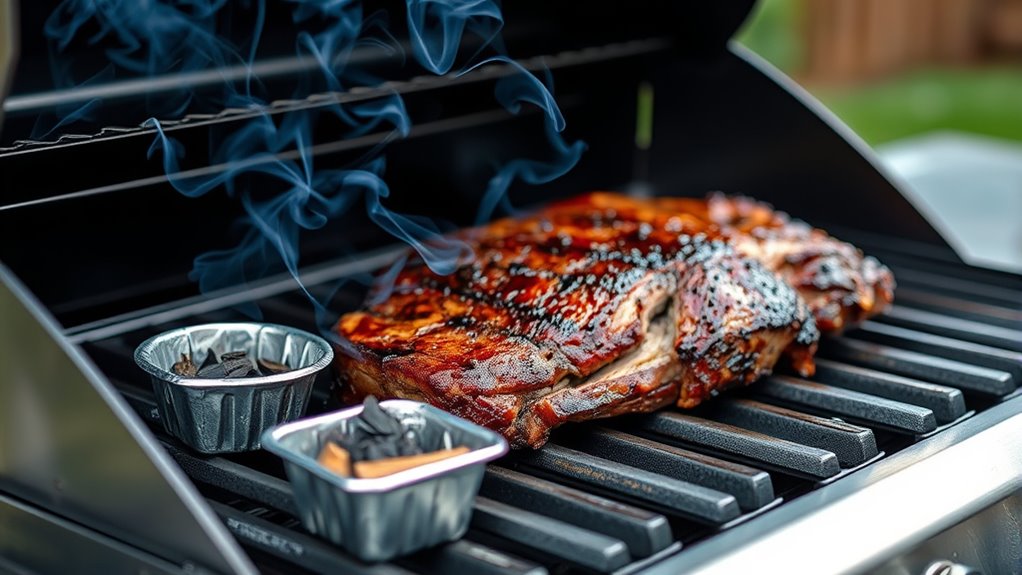
To guarantee your meat turns out tender and flavorful, proper preparation is essential. Start with selecting quality meat that suits smoking, like brisket, ribs, or pork shoulder. Use marinating techniques to infuse flavor and tenderize the meat, choosing marinades with acids, herbs, and spices. Before smoking, trim excess fat to prevent flare-ups and ensure even cooking. Let the meat sit in the marinade for several hours or overnight for better flavor absorption. Pat the meat dry to promote good smoke adhesion. Rest the meat after marinating to allow juices to redistribute. Proper preparation assures your meat is flavorful, tender, and ready for that perfect smoke.
Proper prep—select quality meat, marinate, trim fat, and rest—to ensure tender, flavorful smoked meat.
- Meat selection for smoking
- Marinating techniques
- Trimming excess fat
- Marinating duration
- Resting time after marinating
As an affiliate, we earn on qualifying purchases.
Creating a Smoke Box or Using Foil Pouches

To add smoky flavor to your meat, you can create a dedicated smoke box or use foil pouches. Choosing the right smoking materials and crafting a proper smoke chamber are key steps in this process. These methods let you control smoke production and enhance your grilling results.
Selecting Smoking Materials
Selecting the right smoking materials is essential for infusing your meat with rich, smoky flavor. Your goal is to create a steady, flavorful smoke that enhances without overpowering. Use wood chips or flavored woods to achieve this. Soak the wood chips in water for about 30 minutes to prevent flare-ups and promote slow burning. Choose different types of woods like hickory, mesquite, apple, or cherry for unique flavors. Place the soaked wood chips in a smoke box or foil pouch with holes to allow smoke to escape. Confirm the pouch is positioned directly over the heat source. Regularly check and replenish the chips to maintain consistent smoke throughout your cooking process.
- Wood chips soaked in water
- Flavored woods like apple or cherry
- Small foil pouches with holes
- Pre-soaked chips in a smoke box
- Replenishing chips as needed
Crafting the Smoke Chamber
Creating a smoke chamber on your gas grill involves making a dedicated space for smoke to develop without directly exposing your meat to high heat. You can craft this chamber using a metal box or foil pouches filled with soaked wood chips. Proper smoke chamber design ensures consistent smoke production and airflow control, crucial for perfect smoking. To optimize airflow, position the smoke box or pouches over indirect heat, allowing smoke to circulate without flare-ups. Use the table below to understand key aspects:
| Feature | Purpose | Tips |
|---|---|---|
| Smoke box/foil pouch | Holds wood chips for smoke source | Keep chips soaked, avoid overfilling |
| Placement | Controls airflow and smoke flow | Place over indirect heat, not directly on burners |
| Ventilation | Regulates airflow and smoke escape | Leave small gaps for proper ventilation |
| Material | Ensures durability and safety | Use heavy-duty aluminum or metal boxes |
As an affiliate, we earn on qualifying purchases.
Setting Up Your Gas Grill for Indirect Heating

Setting up your gas grill for indirect heating is essential for smoking meat evenly without direct exposure to flames. This method helps develop that rich smoke flavor while maintaining grill safety. To achieve this, turn on one or two burners and leave the others off, creating a cooler, indirect heat zone. You can also place a drip pan beneath the meat to catch drippings and improve airflow. Using wood chips or chunks in a foil packet over the heat source adds smoke flavor without flare-ups. Make certain the lid is closed during smoking to maintain consistent temperature and smoke. Regularly monitor your grill’s temperature to avoid hot spots. Proper setup ensures safe, effective smoking and enhances the meat’s flavor profile.
Managing Temperature for Optimal Smoking

Maintaining a consistent temperature is essential for achieving tender, flavorful smoked meat. Proper temperature control ensures your meat cooks evenly and absorbs smokiness without becoming tough or dry. To manage heat regulation, monitor your grill’s internal temperature regularly with a reliable thermometer. Adjust the burners as needed to stay within the ideal smoking range, typically between 225°F and 275°F. Keep the lid closed as much as possible to maintain steady heat and prevent fluctuations. Using a two-zone setup helps you control heat more effectively, with one side providing gentle indirect heat and the other for adjustments. Consistent temperature management is key to successful smoking, ensuring your meat develops rich flavor and tender texture without overcooking.
Adding Smoke and Maintaining Consistent Heat
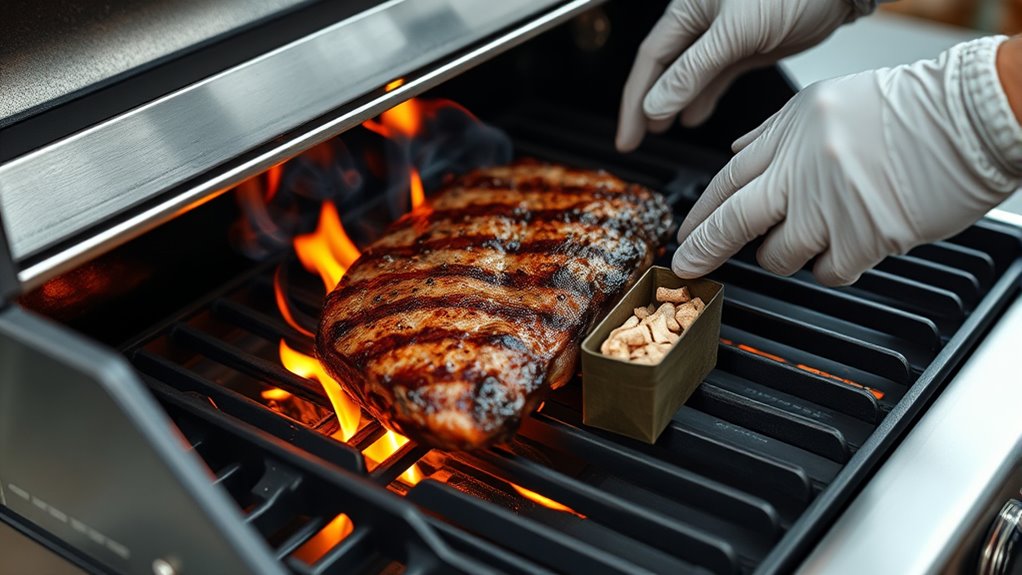
To add smoke to your gas grill effectively, start by choosing the right type of wood chips or chunks—soaked in water for at least 30 minutes to produce steady, consistent smoke. Once prepared, place the wood directly on the heat source or in a smoker box. To maintain consistent heat and maximize smoke flavor, consider these tips:
- Keep the grill lid closed as much as possible
- Regulate burners to prevent temperature fluctuations
- Replenish wood chips as needed during long cooks
- Use a drip pan to stabilize heat and catch drippings
- Adjust vents or burners for a steady, low temperature
Monitoring Internal Temperature and Doneness
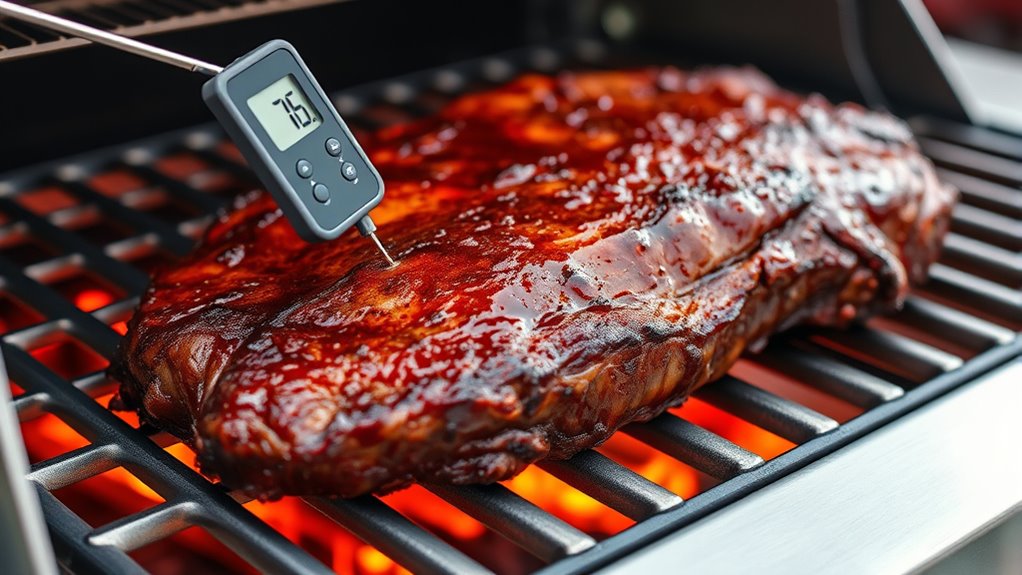
Monitoring the internal temperature of your meat is essential to guarantee it reaches the desired level of doneness and remains safe to eat. Use a reliable meat thermometer to check the internal temperature at different stages. This prevents overcooking or undercooking, ensuring perfect results.
Here’s a quick guide to meat doneness:
| Meat Type | Internal Temperature | Doneness Level |
|---|---|---|
| Beef | 125°F – 130°F | Rare |
| Pork/Chicken | 145°F – 165°F | Medium to well |
| Fish | 125°F | Lightly cooked |
Regular temperature checks help you stay in control and achieve flavorful, perfectly cooked smoked meat.
Resting and Serving Your Smoked Meat
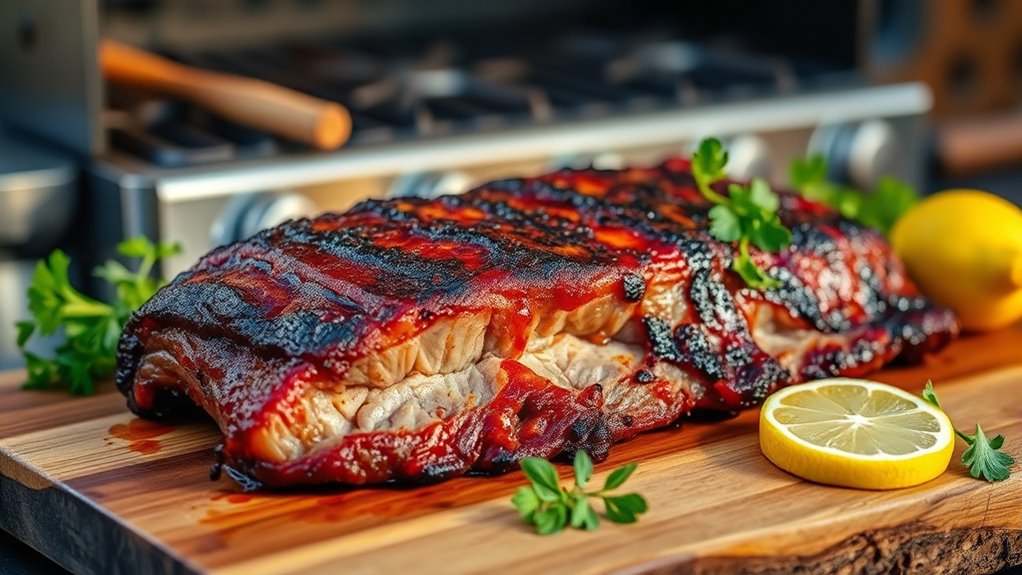
After removing your smoked meat from the grill, let it rest for a few minutes to keep it juicy and tender. Proper resting time allows the juices to redistribute evenly, enhancing flavor and texture. When serving, use the right techniques to present your meat beautifully and make certain each bite is perfect.
Resting Time Importance
Resting your smoked meat is a crucial step that guarantees maximum flavor and juiciness. During this time, the meat’s juices redistribute, enhancing tenderness and flavor development. Skipping this step can result in dry, less flavorful meat. Proper resting allows the meat to relax, making it easier to carve and enjoy.
- Keeps the meat moist and tender
- Enhances overall flavor development
- Prevents juices from running out when sliced
- Improves meat tenderness
- Ensures a more enjoyable eating experience
Proper Serving Techniques
To serve your smoked meat at its best, focus on proper resting and presentation. Proper resting allows juices to redistribute, ensuring moist, flavorful meat. When ready to serve, carve your meat against the grain for tenderness. Use garnishing techniques such as fresh herbs, sliced vegetables, or citrus to enhance visual appeal and flavor. Presentation matters; arrange slices neatly on a platter, and consider drizzle sauces artistically. Here’s a quick guide:
| Step | Technique | Purpose |
|---|---|---|
| Resting | Let meat rest covered loosely | Juices settle for flavor |
| Carving | Against the grain | Tender, easier to eat |
| Garnishing | Fresh herbs, sauces, veggies | Elevates serving presentation |
| Serving | Arrange neatly on platter | Creates an inviting look |
Tips for Enhancing Flavor and Troubleshooting

Enhancing the flavor of smoked meat on a gas grill often involves a few simple adjustments. To boost flavor, experiment with different wood chips, marinades, or rubs to add depth. Keep an eye on temperature and smoke levels—too much smoke can overpower, while too little reduces flavor. Troubleshooting tips include checking for proper ventilation, ensuring the wood chips are dry, and maintaining consistent heat. If your meat isn’t smoky enough, try adding more chips or extending smoking time. Conversely, if it’s too smoky, reduce chip amount or ventilation. Regularly monitor your grill to prevent flare-ups or uneven cooking. These small tweaks help you achieve richer flavor and troubleshoot common issues effectively, making your gas grill smoked meat truly delicious.
Frequently Asked Questions
Can I Use Wood Chips in a Charcoal Grill Instead?
Yes, you can use wood chips in a charcoal grill for smoking. Just soak the wood chips in water for about 30 minutes, then drain them. Place the soaked chips directly on the hot coals or inside a foil pouch with holes. As the charcoal grills, the wood chips will smolder and produce smoke, infusing your meat with delicious flavor. This method enhances your charcoal grilling experience without a dedicated smoker.
How Long Does It Typically Take to Smoke Meat on a Gas Grill?
You can expect the smoke duration for meat on a gas grill to vary between 1.5 to 4 hours, depending on meat types like ribs, brisket, or chicken. You control the process by maintaining consistent temperatures, monitoring your wood chips, and adjusting airflow. Patience is key; slow smoking enhances flavor and tenderness, so stay attentive and enjoy the gradual transformation of your meat into a delicious, smoky masterpiece.
Is It Safe to Leave the Grill Unattended During Smoking?
Leaving your gas grill unattended during smoking isn’t recommended because it can compromise safety. You need to keep an eye on the grill to ensure proper grill supervision and quickly handle any flare-ups or issues that may arise. Always follow safety precautions, like keeping a fire extinguisher nearby and setting the grill on a stable surface. Staying attentive helps prevent accidents and guarantees your smoked meat turns out perfectly.
What Are Common Mistakes to Avoid When Smoking on a Gas Grill?
To avoid common mistakes, focus on temperature control and wood chip placement. Keep the grill at a steady temperature; fluctuations can ruin your smoke. Don’t place wood chips directly over the flames; instead, use a foil pouch with holes or a smoker box to ensure even smoke without flare-ups. Regularly check the temperature and wood supply, and avoid opening the lid too often to maintain consistent heat and moisture.
Can I Use Liquid Smoke to Enhance Flavor Instead of Wood Chips?
Yes, you can use liquid smoke to enhance flavor instead of wood chips. It’s a quick way to add smoky notes to your meat, especially if you’re short on time or don’t want to deal with wood. Just a few drops of liquid smoke mixed into your marinade or sprayed onto the meat during cooking can boost flavor enhancement. Be careful to use it sparingly to avoid overpowering the natural taste.
Conclusion
Now that you know how to smoke meat on a gas grill without a smoker, you’re all set to impress with flavorful, tender results. Some say you can’t truly smoke without a dedicated smoker, but evidence shows you can achieve delicious smoky flavor using just your grill. So, why not challenge that myth? Grab your supplies, follow these steps, and enjoy perfectly smoked meat anytime—no special equipment required!
Halloween Picks
halloween
As an affiliate, we earn on qualifying purchases.