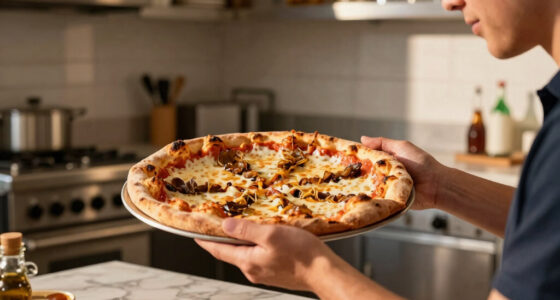
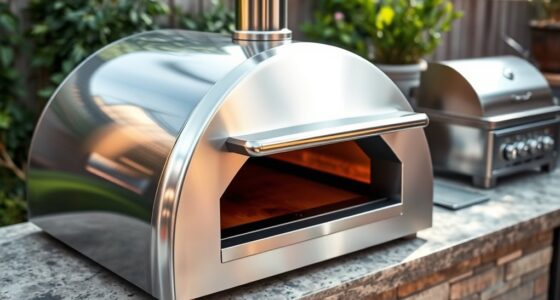
Baking pizza at high heat around 900°F creates a blistered, flavorful crust with a smoky aroma, perfect for authentic Neapolitan styles. In contrast, baking at 400°F results in a less charred crust, with longer cooking times that produce a different texture and flavor profile. Your choice affects crust appearance, flavor complexity, and overall quality. Keep exploring to discover how these differences can help you perfect your pizza craft.
Key Takeaways
- High-heat baking (around 900°F) produces blistered, charred crusts with complex flavors, typical of authentic Neapolitan pizza.
- Low-heat baking (around 400°F) results in more evenly cooked, less blistered crusts, suitable for thicker toppings and gentler cooking.
- High-temperature ovens, especially wood-fired, require excellent insulation to maintain consistent, intense heat.
- Lower-temperature baking offers easier control and is accessible with standard home ovens, but may lack the signature smoky flavor.
- The choice between high and low heat impacts crust texture, flavor development, and overall pizza appearance based on style and equipment.
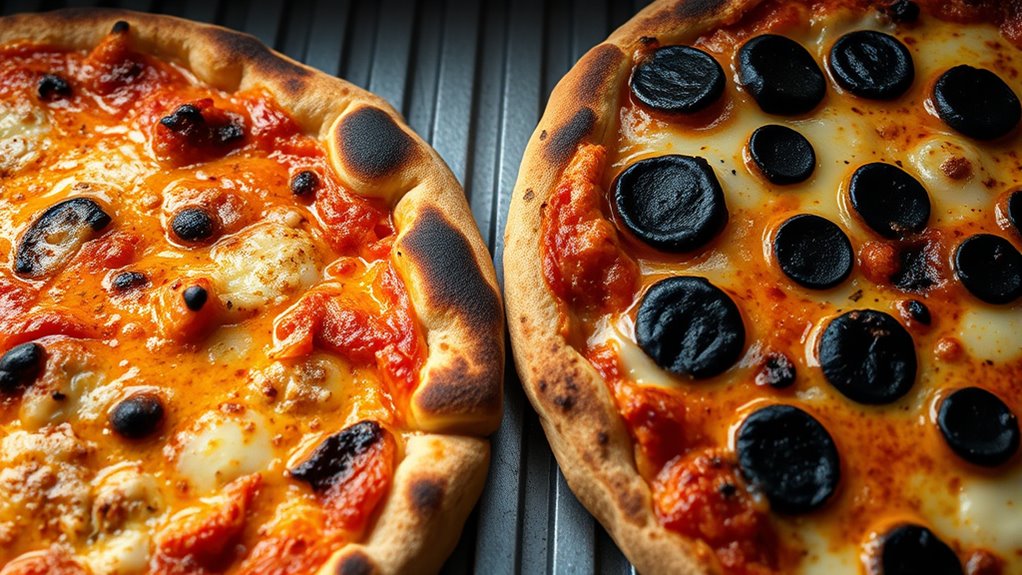
When it comes to baking pizza, the temperature you choose can markedly impact the final result. High-heat baking, typically around 900°F, produces a different crust and flavor profile than lower-temperature methods like 400°F. If you’re aiming for that authentic Neapolitan-style pizza, baking at extremely high temperatures is key. This approach often involves using wood-fired techniques, where a wood-fired oven reaches those intense heat levels quickly. These ovens are designed with excellent oven insulation, trapping heat efficiently and creating a consistent, blazing hot environment. The insulation ensures that the heat stays inside, allowing you to cook pizzas rapidly and evenly. With a well-insulated oven, you can reach and sustain those high temperatures without energy waste or fluctuations, giving you that perfect, blistered crust and chewy interior.
High-heat baking at 900°F with well-insulated wood-fired ovens creates authentic, blistered crusts and complex flavors.
In a wood-fired oven, the rapid transfer of heat from the flames to the dough results in a unique baking process. The intense heat caramelizes the toppings quickly while charring the crust just enough to add flavor complexity. The oven’s insulation plays a critical role here—without proper insulation, heat escapes, and you won’t get the same high temperatures or the signature char that makes wood-fired pizza so special. When you’re working at these temperature levels, every second counts; the pizza develops a smoky aroma and a crispy exterior in mere minutes. This technique requires precision and experience but rewards you with a flavor depth that low-heat baking cannot match.
On the other hand, baking at lower temperatures like 400°F is more forgiving and easier to control, especially with standard home ovens. This method often involves longer baking times, allowing the heat to gradually cook the pizza. While it might not produce the same blistered crust, it’s better suited for thicker toppings or different styles that benefit from gentle, even heat. You don’t need the same level of oven insulation here, as the temperature is manageable within most standard setups. However, if you’re serious about high-heat baking, investing in a well-insulated oven or a dedicated pizza oven can greatly improve your results by maintaining those critical high temperatures.
Ultimately, the choice between high and low heat hinges on the pizza style you want and your equipment. High heat with wood-fired techniques and proper oven insulation can give you that authentic, restaurant-quality pizza with a blistered crust and complex flavors. In contrast, lower heat offers a more controlled, accessible way to bake pizza without specialized equipment, though it may lack some of the depth that high-temperature baking delivers.
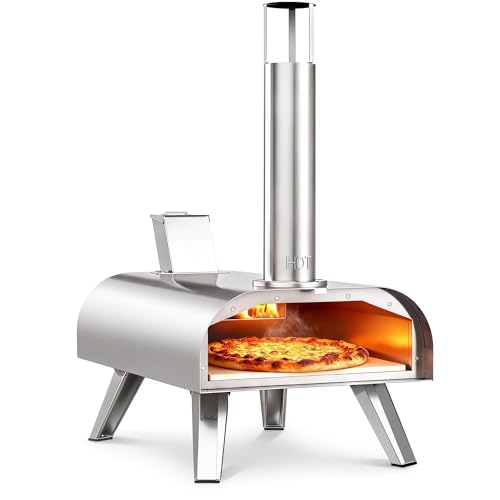
BIG HORN 12" Multi-Fuel Outdoor Pizza Oven Reach up to 1110℉– 3-in-1 Wood,Gas&Electric Compatible(Burners Sold Separately),Pellet Pizza Oven Portable Pizza Maker for Backyard,Camping&Tailgating,Silver
- Material: Premium stainless steel construction
- Fuel Compatibility: Multi-fuel: wood, gas, electric
- Cooking Temperature: Reaches up to 1110°F
As an affiliate, we earn on qualifying purchases.
As an affiliate, we earn on qualifying purchases.
Frequently Asked Questions
How Does Oven Material Affect Pizza Baking at Different Temperatures?
Your oven material greatly impacts pizza baking by influencing insulation and thermal conductivity. A well-insulated oven retains heat better, ensuring consistent temperatures, especially at high heat. Materials with high thermal conductivity, like metal, heat up quickly and transfer heat efficiently, resulting in a crisp crust. Conversely, ceramic or brick retains heat longer, ideal for steady baking at lower temperatures. Choosing the right material enhances your pizza’s texture and overall quality.
Can High Heat Cause Uneven Cooking or Burning?
High heat can turn your pizza into a fiery dance, risking uneven cooking or crust burning if oven hot spots exist. The intense temperature might scorch edges while leaving the center raw, like a sunburned landscape. To prevent this, keep an eye on your pizza, rotate it if needed, and use a good oven thermometer. This way, you tame the flames and achieve a perfectly cooked pie.
What Are the Health Implications of High-Heat Pizza Baking?
Baking pizza at high heat can raise food safety concerns if charring occurs, as it may create harmful compounds like acrylamide. However, when done properly, it preserves nutritional quality by reducing cooking time and preserving nutrients. To minimize health risks, avoid burning the crust and use proper temperature control. This way, you enjoy a delicious pizza without compromising safety or nutrition.
How Does Baking Time Vary Between 400°F and 900°F?
At 400°F, you’ll need a longer baking duration, often around 12-15 minutes, resulting in a well-cooked crust that’s softer and more evenly baked. When you bake at 900°F, the baking time drops to just 90 seconds to 2 minutes, creating a crispy, charred crust with a distinctive texture. The temperature directly influences how quickly your pizza cooks and the final crust texture you achieve.
Is There a Difference in Flavor Development at Different Baking Temperatures?
Yes, you’ll notice a difference in flavor development at different baking temperatures. Higher heat enhances aroma development, creating a more complex flavor profile with crispier crusts and richer tastes. Lower temperatures develop flavors more slowly, resulting in milder, less intense aromas. So, if you want a deeply aromatic, flavorful pizza, baking at higher temperatures will give you that extra flavor complexity and satisfying aroma that’s hard to beat.

BIG HORN 14-Inch Indoor Pizza Oven, 850°F High-Heat Electric Countertop Pizza Oven for Restaurant-Style Artisan Pizza with Pizza Stone and Pizza Peel, PID Precision Temperature Control
- High-Temperature Cooking: Reaches 850°F for fast pizza prep
- Fast Preheat Time: Preheats in 15 minutes
- Precise Temperature Control: PID system maintains accurate heat
As an affiliate, we earn on qualifying purchases.
As an affiliate, we earn on qualifying purchases.
Conclusion
Think of baking your pizza like tending a delicate garden. High heat is like the blazing sun that quickly ripens your fruits, giving you a crisp crust and bubbly cheese in minutes. Low heat’s gentle rays nurture slow growth, creating a more tender, evenly cooked pie. Both paths lead to a delicious harvest—just like your perfect pizza. Choose your heat wisely, and let your culinary garden flourish into a masterpiece you’re proud of.

Old Stone Round Pizza Stone, 16-Inch
- Creates restaurant-quality dishes: Pizzas, bread, pastries, vegetables
- Durable and non-cracking: Made from lead-free clay blend
- Even heat transfer: Absorbs and distributes oven heat
As an affiliate, we earn on qualifying purchases.
As an affiliate, we earn on qualifying purchases.

CALLARON 2pcs Heat-resistant Non-stick Pizza Peel Replacement Cloth High-temperature Baking Mat for Kitchen Oven Liners Reusable Pizza Transfer Baking Tool
- High Temperature Resistance: Withstands up to 500°F for safe baking
- Easy Transfer Design: Smooth sliding for effortless pizza transfer
- Replaceable and Convenient: Easy to replace for easy cleaning
As an affiliate, we earn on qualifying purchases.
As an affiliate, we earn on qualifying purchases.