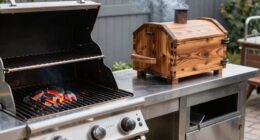
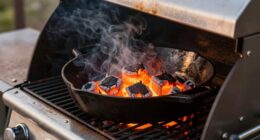
To cold smoke bacon, cheese, and more, you need specialized equipment that maintains low temperatures (68-86°F) to prevent cooking. Use food-safe woods like apple or cherry, soak chips beforehand, and guarantee good airflow. Keep the smoking area well-ventilated, monitor temperature closely, and never leave the setup unattended. Following safe practices will help you achieve flavorful results. If you continue exploring, you’ll discover the best tips for perfect cold smoking projects.
Key Takeaways
- Use dedicated cold smoking equipment to maintain temperatures below 86°F and prevent cooking.
- Select food-safe woods like apple, cherry, or hickory, and soak chips to produce steady, cool smoke.
- Ensure proper ventilation, monitor temperature closely, and keep the workspace free of flammable materials for safety.
- Cold smoke foods like bacon, cheese, and fish over several hours to develop rich, smoky flavors without cooking.
- Follow manufacturer guidelines and safety precautions to achieve consistent results and maintain a safe smoking environment.
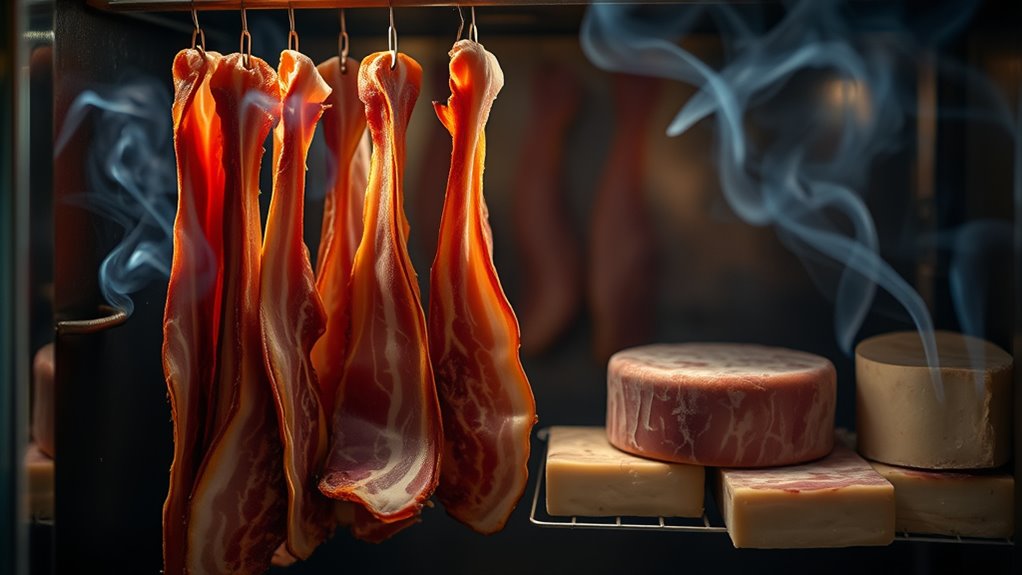
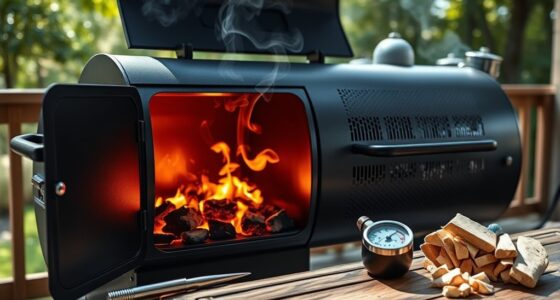
Have you ever wondered how to infuse your foods with rich, smoky flavor without cooking them? Cold smoking offers a perfect solution, especially when you want that delicate, smoky aroma without the heat that cooks your ingredients. To get started, you’ll need the right smoking equipment designed specifically for cold smoking. Unlike traditional smokers, cold smoking devices operate at low temperatures, usually between 68 and 86 degrees Fahrenheit, to prevent cooking while adding flavor. These can range from dedicated cold smoking chambers to modified traditional smokers fitted with external smoke generators. Investing in good quality equipment is essential for consistent results and safety.
Discover how specialized cold smoking equipment can infuse foods with smoky flavor without cooking.
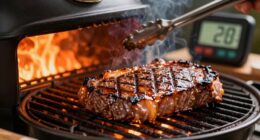
When setting up your cold smoking station, safety precautions are critical. Since cold smoking involves handling smoke over extended periods, you must ensure good ventilation to prevent smoke buildup and reduce the risk of fire. Keep your workspace free of flammable materials and always have a fire extinguisher nearby. Additionally, use a thermometer to monitor temperature closely; even a slight rise above recommended levels can cook your food or create unsafe conditions. Make sure your smoking area is well-ventilated and protected from wind or other environmental factors that could disrupt airflow or cause accidents. Always follow the manufacturer’s instructions for your smoking equipment, and double-check that all connections are secure before starting.
Another important safety tip involves choosing the right wood or smoking chips. Opt for food-safe woods like apple, cherry, or hickory, and avoid anything treated or chemically flavored, which can introduce toxins. When using smoking chips, soak them in water beforehand to produce a steady, cool smoke, and ensure they’re not producing excessive sparks or embers that could ignite nearby materials. During the process, keep a close eye on your setup; never leave it unattended for long periods, especially when you’re new to cold smoking. Maintaining consistent airflow and temperature ensures safety and the quality of your smoked food.
Additionally, understanding the utilitarian principles behind certain smoking practices can help optimize flavor while maintaining safety standards. Cold smoking is a rewarding process that allows you to enhance foods like bacon, cheese, and fish with a nuanced smoky flavor. Properly using the right smoking equipment and adhering to safety precautions makes the experience enjoyable and safe. Once you master these basics, you’ll be able to create deliciously smoked foods that impress family and friends alike. Just remember, patience is key—cold smoking takes time, but the flavor payoff is well worth the effort. Always prioritize safety, monitor your setup diligently, and enjoy the art of cold smoking with confidence.
Top picks for "cold smok bacon"
Open Amazon search results for this keyword.
As an affiliate, we earn on qualifying purchases.
Frequently Asked Questions
How Long Can Cold-Smoked Foods Be Stored Safely?
Cold-smoked foods can be stored safely for up to 2-4 weeks if you follow proper storage guidelines. Keep them in the refrigerator at or below 40°F (4°C), and always check for signs of spoilage before eating. For longer storage, consider vacuum-sealing and freezing, which extends shelf life to several months. Prioritize food safety by maintaining consistent temperatures and practicing good hygiene during handling.
What Are the Best Woods for Cold Smoking Different Foods?
You should choose woods like apple, cherry, or alder for cold smoking, as their wood pairing enhances the smoke flavor without overpowering delicate foods. For richer flavors, use hickory or maple, especially with meats like bacon. Always opt for hardwoods, avoiding softwoods, to guarantee a clean smoke that complements each food’s natural taste. This way, your cold-smoked foods develop a balanced, flavorful smoke profile.
Can Cold Smoking Be Used for Vegetables and Fruits?
Yes, you can cold smoke vegetables and fruits, and it’s a game-changer. Imagine delicate apple slices or vibrant peppers absorbing a subtle smoky aroma, transforming their flavor profile. Cold smoking enhances vegetable flavor and aids in fruit preservation, creating unique treats. Just remember to keep the smoke gentle and cool, so you infuse the foods without cooking them. This method releases new culinary possibilities for fresh, flavorful snacks.
How Does Cold Smoking Affect the Nutritional Content of Foods?
Cold smoking generally preserves nutrient retention because it involves low temperatures that prevent nutrient breakdown. However, it can slightly reduce antioxidant levels due to smoke exposure, which introduces compounds that may degrade some antioxidants. Overall, cold smoking maintains most of the food’s nutritional value, especially compared to other methods like hot smoking or cooking. You’ll still enjoy nutritious foods with added smoky flavor when you cold smoke your favorites.
Is Cold Smoking Suitable for Beginners Without Prior Experience?
Thinking about trying cold smoking? It’s doable for beginners, but you need to prioritize cold smoking safety. Start with simple recipes and invest in a reliable smoker. Keep the temperature low, monitor it carefully, and use proper curing techniques. Follow beginner tips like maintaining cleanliness and avoiding cross-contamination. Once you understand the basics, you’ll unlock delicious smoked foods—just remember, patience and caution are your best friends in cold smoking.
Conclusion
Now that you’ve learned the basics of cold smoking, you’re ready to elevate your culinary game. Think of cold smoking like painting with a gentle breeze—slow, deliberate, and full of flavor. Whether you’re making bacon, cheese, or more, remember patience is your best friend. Experiment, enjoy the process, and soon you’ll craft smoky delights that are as irresistible as a summer sunset. Happy smoking!