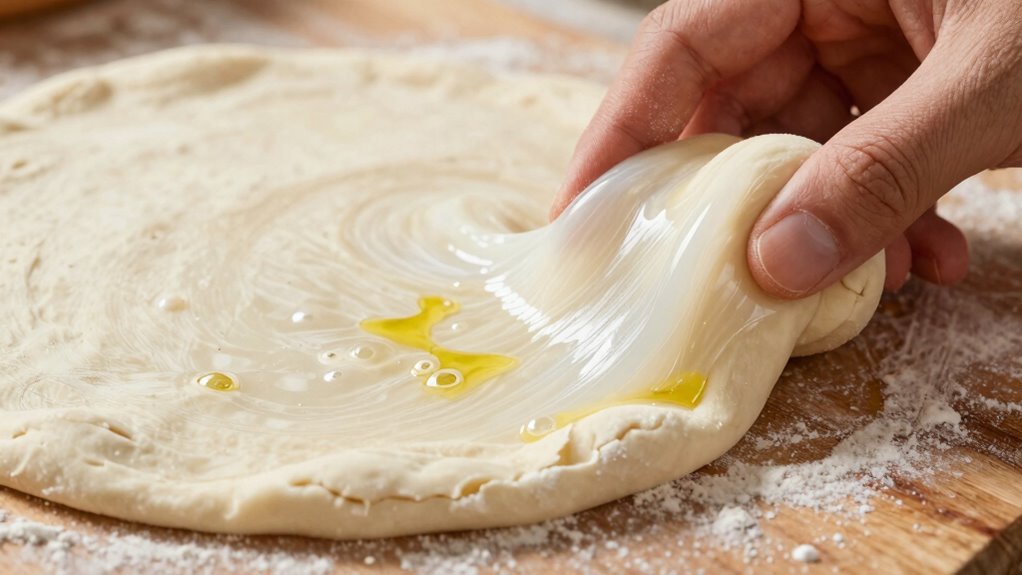

If your pizza dough springs back when you stretch it, it’s likely because the gluten hasn’t fully relaxed or developed enough to hold the shape. Insufficient kneading, short resting times, or too cold a temperature can prevent proper gluten formation and relaxing, making the dough resist shaping. To fix this, give your dough more time to rest, maintain the right temperature, and knead it thoroughly. Keep going to discover more tips for perfect dough elasticity.
Key Takeaways
- Insufficient fermentation leads to weaker gluten, causing the dough to spring back when stretched.
- Cold dough slows gluten development, making it more elastic and resistant to stretching.
- Overly elastic dough results from under-resting, preventing proper gluten relaxation.
- Inadequate kneading or resting hinders gluten network formation, increasing springiness.
- Proper temperature control and resting time improve gluten relaxation, reducing dough springback.
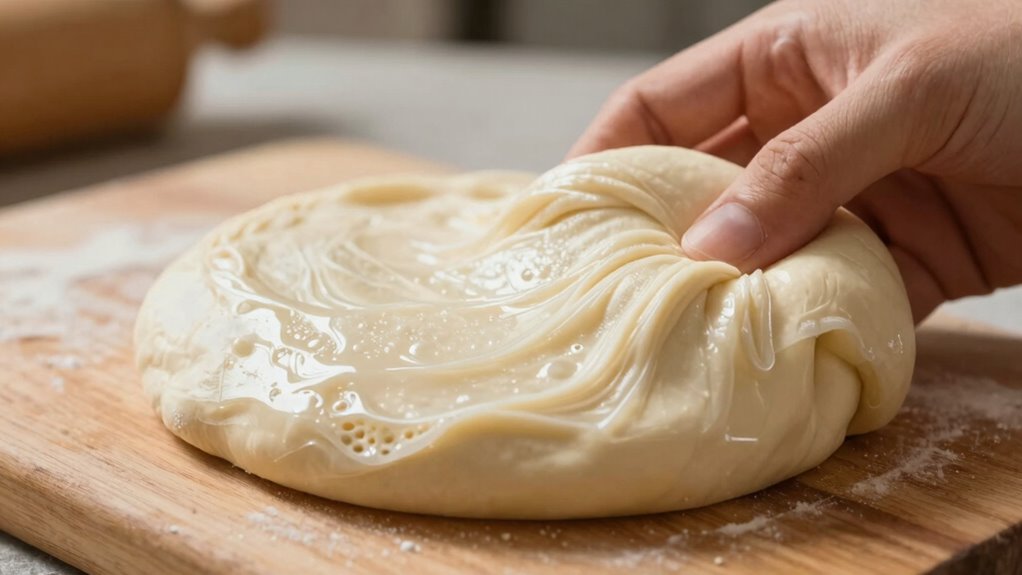
Ever wondered why your pizza dough springs back after you’ve rolled or stretched it? It’s a common frustration, but understanding what’s happening in that dough can help you achieve a perfect crust. The main reason lies in the complex process of yeast fermentation and gluten development. When you mix your ingredients and knead the dough, yeast begins to ferment, producing gases that cause the dough to rise. This fermentation isn’t just about making the dough puff up; it also plays a vital role in developing the gluten structure. Gluten, a protein in wheat flour, forms a network that traps those gases, giving the dough its elasticity and strength. As you knead and let the dough rest, this gluten network becomes more organized and resilient.
Understanding yeast fermentation and gluten development helps you achieve a stretchable, resilient pizza dough.
When you start to roll or stretch the dough, you’re applying a force that temporarily elongates this gluten network. If the gluten isn’t sufficiently developed, the dough lacks the strength to hold its shape and will spring back. This elasticity is a sign that the gluten strands are tightly woven and enthusiastic to return to their original form. In fundamentally, your dough is trying to regain the structure it’s been building through gluten development. The more fermented and kneaded the dough, the more extended and stable this gluten network becomes. That’s why well-fermented dough tends to stretch further before springing back—because the gluten is more elastic and better at holding the gases and structure.
Temperature also plays a role here. If your dough is too cold, gluten development slows down, making it more elastic and prone to springing back. Warm dough, on the other hand, allows yeast fermentation to proceed more efficiently, strengthening the gluten network. Additionally, if you haven’t let the dough rest long enough after kneading, the gluten fibers won’t have fully relaxed and aligned, making the dough bouncier and more resistant to stretching. Proper fermentation and resting times help develop a more elastic gluten network, which facilitates easier stretching and shaping. Resting your dough also allows the gluten to relax, reducing the spring-back effect and making it easier to work with.
A key factor in this process is understanding how gluten development influences dough elasticity and how properly managing fermentation and resting can improve your results. To prevent that spring-back, consider giving your dough ample resting time after kneading. This relaxes the gluten, making it easier to stretch without resistance. Also, make certain your dough is at the right temperature; slightly warmer conditions promote better gluten development and fermentation. Additionally, incorporating a proper resting period can significantly improve dough elasticity and workability. Ultimately, understanding the relationship between yeast fermentation, gluten development, and dough elasticity helps you troubleshoot and improve your pizza-making process, resulting in a perfectly stretchable, resilient dough that doesn’t fight back.

Orblue Pizza Dough Docker Pastry Roller with Spikes, Pizza Docking Tool for Home & Commercial Kitchen – Pizza Making Accessories that Prevent Dough from Blistering, Black
Perfect Dough, Perfect Pizza – Even first-time bakers can use this pizza dough roller. Press and roll over…
As an affiliate, we earn on qualifying purchases.
As an affiliate, we earn on qualifying purchases.
Frequently Asked Questions
Can Hydration Levels Affect Dough Springiness?
Yes, hydration levels considerably affect dough springiness. Higher hydration encourages better gluten development, making the dough more elastic and less likely to spring back when stretched. During the fermentation process, well-hydrated dough develops a stronger gluten network, which helps it stretch smoothly. Conversely, low hydration results in stiffer dough with less elasticity, causing it to spring back more. Adjusting hydration can improve your dough’s stretchiness and handling.
Does Kneading Technique Influence Dough Elasticity?
Think of kneading as gently guiding a dance partner; your technique influences dough elasticity. You want to encourage yeast activity and develop gluten without overworking the dough. Too vigorous kneading can tighten the gluten network excessively, making the dough spring back. Conversely, a gentle, consistent knead allows gluten strands to stretch smoothly, resulting in a more elastic dough. So, your kneading style directly shapes how well your dough stretches and holds its form.
How Does Resting Time Impact Dough’s Stretchability?
Resting time markedly improves your dough’s stretchability by allowing the fermentation process to develop gluten further. As you wait, gluten strands relax and strengthen, making the dough more elastic and easier to stretch without springing back. Proper resting also enhances flavor and texture. So, be patient and give your dough enough time to ferment; this leads to a more manageable, airy crust that stretches beautifully.
Are There Specific Flour Types That Prevent Springback?
Think of gluten development as the magic wand that keeps your dough from springing back. Using flours with higher protein content, like bread flour, creates stronger gluten networks, preventing springback when you stretch. These flours develop more gluten, giving your dough the elasticity and strength needed for perfect pizza. So, choose a flour with a higher protein level to keep your dough smooth, manageable, and ready for that perfect stretch.
Can Adding Fat Reduce Dough Springback?
Adding fat can reduce dough springback because it interferes with gluten development, making the dough more tender and less elastic. Higher fat content coats the gluten strands, preventing them from forming strong networks that cause springback. This results in a softer, more pliable dough that stretches easily without bouncing back. Just be mindful not to add too much fat, as it can affect the dough’s texture and overall structure.

Mowhut Stainless Steel Dough Proofing Bowl With Lid for Sourdough
【Built for dough prep】Designed for everyday bread and pizza work, this dough proofing bowl gives mixed dough a…
As an affiliate, we earn on qualifying purchases.
As an affiliate, we earn on qualifying purchases.
Conclusion
Next time your dough springs back, think of it like a rubber band—full of tension that needs to relax. Just like a musician tunes their instrument, patience and proper resting allow the gluten to settle, making your dough easier to stretch. I once watched a novice stretch dough and get frustrated; after letting it rest, she easily shaped it into the perfect circle. Remember, good pizza starts with gentle patience—your perfect crust is worth the wait.

Lonicera Digital Cooking Thermometer for Bread Baking, 5" Probe, Instant Read 2-3s, IPX6 Waterproof Food Thermometer with Backlight, for Liquid, Water & Meat (Red)
5" Probe & IPX6 Waterproof – Long 5-inch food-grade probe keeps your hands safely away from hot liquid…
As an affiliate, we earn on qualifying purchases.
As an affiliate, we earn on qualifying purchases.

Vtopmart 2 Pcs Pizza Dough Proofing Box with Lids and Latches for 4-6 Balls
【Suitable Size】 Vtopmart Pizza Dough Proofing Box (14.96"L x 10.43"W x 5.31"H) with increased internal height fits most…
As an affiliate, we earn on qualifying purchases.
As an affiliate, we earn on qualifying purchases.