Many old BBQ tips aren’t true; for example, you don’t need charcoal for great flavor—modern gas grills work well with proper maintenance. Opening the lid often doesn’t keep the grill hot—in fact, it causes heat loss and uneven cooking. Marinating isn’t always necessary for tender meat, and soaking wood chips isn’t required either. Resting meat is essential for juiciness, and you can achieve perfect ribs with various methods. Plus, thicker sauces often work better. Continue exploring to uncover more BBQ myths busted.
Key Takeaways
- Modern gas grills can produce authentic flavor with proper maintenance, debunking the myth that only charcoal delivers true BBQ taste.
- Keeping the lid closed during cooking ensures even heat, better smoke retention, and juicier meat, contrary to old advice to open frequently.
- Resting meat after grilling redistributes juices, preventing dryness and enhancing flavor—skipping this step reduces quality.
- Soaking wood chips is unnecessary; dry chips ignite efficiently and produce more smoke than pre-soaked ones.
- Using thicker sauces helps caramelize meat better and enhances flavor, challenging the idea that thinner sauces are always preferable.
Myth: You Should Always Use Charcoal for Authentic Flavor

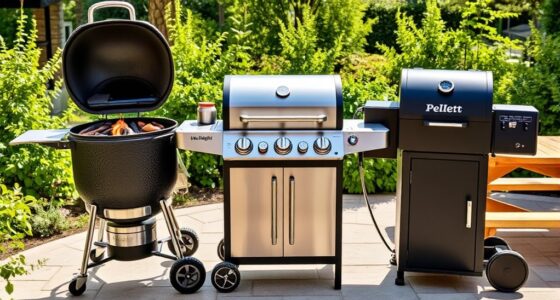
Many believe that charcoal is the only way to achieve authentic BBQ flavor, but that’s not entirely true. While charcoal can add a smoky taste, using it exclusively isn’t necessary to enjoy great barbecue. Modern gas grills offer excellent flavor options with proper grill maintenance, such as regular cleaning and using flavored wood chips. Plus, gas grills tend to be more fuel-efficient, saving you money over time. They heat up faster and maintain consistent temperatures, making it easier to control your cook. If you focus on maintaining your grill properly, you can achieve delicious results without relying solely on charcoal. Don’t get caught up in the myth—there are plenty of ways to make flavorful BBQ while keeping your grill efficient and easy to use.
Myth: Opening the Lid Frequently Keeps the Grill Hot
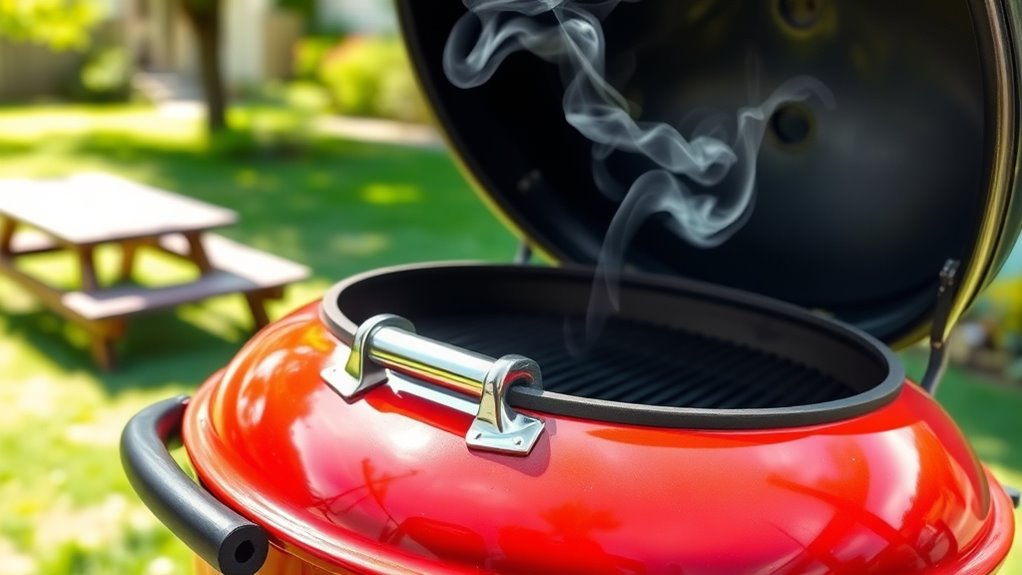
When you open the lid often, your grill loses heat quickly, causing temperature fluctuations. This rapid heat escape means your food takes longer to cook and may not develop the desired sear. To keep things consistent, it’s best to minimize lid openings during grilling.
Temperature Fluctuations Increase
Opening the grill lid frequently might seem like a good way to maintain heat, but it actually causes temperature fluctuations that can hinder your cooking. Every time you lift the lid, the grill temperature drops sharply, making it harder to keep a steady heat. These fluctuations disrupt smoke consistency, which is vital for flavor development in smoked meats. Inconsistent temperatures also prolong cooking times and can lead to uneven results. Instead of opening the lid often, monitor your grill carefully and make adjustments through vents or fuel as needed. Maintaining a stable grill temperature ensures consistent smoke and heat, resulting in better-tasting, evenly cooked barbecue. Trusting this approach helps you achieve the perfect smoke ring and tender texture every time.
Heat Escapes Rapidly
Contrary to popular belief, opening the grill lid frequently doesn’t keep the heat steady; instead, it causes heat to escape rapidly. When you lift the lid, the thermal insulation that retains heat inside the grill is compromised, letting the hot air escape into the ambient temperature environment. Each time you open the lid, the internal temperature drops quickly because the grill struggles to recover lost heat. Modern grills are designed to maintain temperature better, but they still rely on a tight seal to hold heat efficiently. Instead of opening the lid often, trust the grill’s thermal insulation and let it do its job. Keeping the lid closed minimizes heat loss and ensures consistent cooking, saving you time and energy.
Cooking Time Extends
Many believe that opening the grill lid frequently helps maintain a steady temperature, but in reality, it does the opposite. Every time you lift the lid, heat escapes, causing your grill to work harder to reach the desired temperature. This prolongs cooking time and can compromise grilling safety. Understanding BBQ history shows that seasoned grill masters avoid unnecessary lid openings to keep heat consistent. To illustrate, here’s a quick guide:
| Action | Effect on Temperature | Impact on Cooking Time |
|---|---|---|
| Opening the lid often | Heat escapes quickly | Cooking extends overall |
| Keeping lid closed | Maintains stable heat | Shorter cooking time |
| Frequent lid lifting | Disrupts heat flow | Longer grilling sessions |
Stay patient, keep that lid closed, and enjoy perfect, evenly cooked BBQ every time.
Myth: Marinades Are Necessary for Tender Meat

While marinades can add flavor, they aren’t essential for tender meat. Many believe that marinade effectiveness is the key to juicy, tender results, but that’s not always true. Tenderizing techniques like proper cut selection, marinating time, and correct cooking methods often make a bigger difference. Acidic marinades can help break down surface fibers, but over-marinating won’t turn tough meat into tender perfection. Instead, focus on techniques like slow cooking, using a meat tenderizer, or brining to achieve the desired tenderness. Remember, marinades are mainly for flavor enhancement, not a shortcut for tender meat. By mastering tenderizing techniques and choosing the right cuts, you can enjoy perfectly tender BBQ without relying solely on marinades.
Myth: You Need to Soak Wood Chips Before Using Them
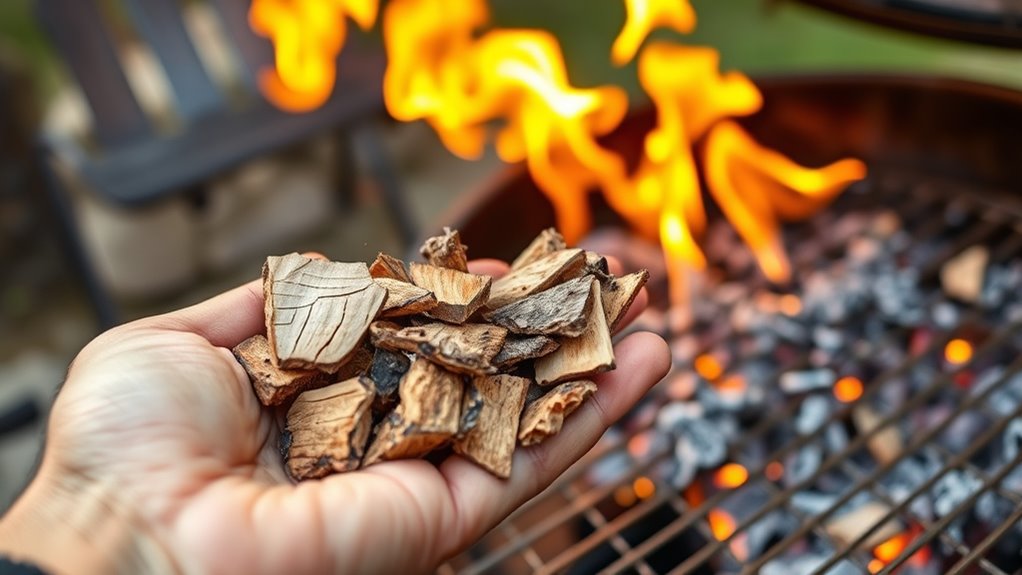
A common belief is that soaking wood chips before grilling enhances their smoke production and prevents flare-ups. However, wood chip soaking isn’t necessary for good flavor infusion. Dry wood chips ignite quickly, producing more smoke efficiently, which helps impart rich smoky flavors to your meat. Soaking can actually delay ignition and reduce the amount of smoke you get, leading to a less flavorful result. If you want maximum flavor infusion, use dry wood chips directly on the heat source. This method creates a steady stream of smoke that penetrates your meat deeply. Remember, the key to great smoky flavor isn’t soaking but selecting the right wood and maintaining proper heat. So, skip the soak and focus on quality wood and consistent heat for the best BBQ results.
Myth: Resting Meat Is Unnecessary and Causes Loss of Juices
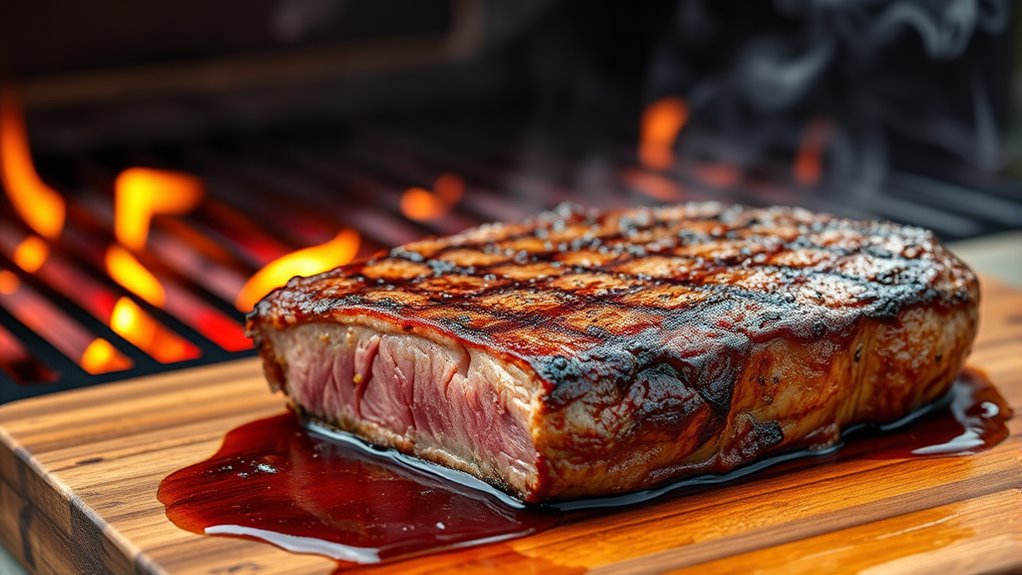
Many believe resting meat causes unnecessary juice loss, but in reality, it helps juices reabsorb and redistribute. Resting also allows flavors to develop fully and temperature to even out naturally. Skipping this step can result in drier, less flavorful meat.
Juices Reabsorb During Rest
Resting meat after cooking actually allows juices to reabsorb into the muscle fibers, resulting in a juicier and more flavorful bite. When you cut into meat immediately, the juices tend to run out, leading to dryness and less meat juiciness. Resting gives the muscle fibers time to reabsorb those valuable juices, enhancing the overall texture and flavor. This process isn’t just about keeping the meat moist; it’s a key resting benefit that maximizes tenderness. As the juices redistribute, your meat stays moist even after slicing. So, don’t skip this step—resting allows the juices to settle back into the meat, making each bite more succulent and satisfying. Proper resting is a simple trick that appreciably improves your barbecue’s juiciness and overall quality.
Resting Enhances Flavor
Some believe that resting meat is unnecessary or even causes the loss of flavor, but this isn’t true. Resting actually enhances flavor by allowing the juices to settle evenly throughout the meat, resulting in a more balanced and richer taste. It also helps with juiciness retention, so your BBQ stays moist and tender. When you let the meat rest, the internal juices redistribute, preventing them from spilling out when you cut into it. This process ensures each bite is flavorful and juicy, elevating your BBQ experience. Skipping resting might save a few minutes, but it sacrifices the full flavor potential and juiciness. Giving your meat a short rest is a simple step that makes a significant difference in the overall quality of your barbecue.
Temperature Equalizes Naturally
A common belief is that resting meat isn’t necessary because the temperature will even out on its own, but this isn’t accurate. In reality, resting allows the heat within the meat to redistribute evenly, balancing the heat distribution caused by the grill temperature. When you remove your meat from the grill, the outer layers are hotter than the center, so resting helps prevent uneven slices and ensures consistent doneness. If you cut into it immediately, juices can escape too quickly, leading to dryness. Resting for just a few minutes lets the internal temperature stabilize naturally, resulting in a juicier, more flavorful bite. So, even though it seems like an extra step, resting is essential for a perfectly cooked piece of BBQ.
Myth: Low and Slow Is the Only Way to Achieve Perfect Ribs

Many people believe that cooking ribs low and slow is the only way to achieve tender, flavorful results. While this method works well, it’s not the only option. Ribs cooking quickly at higher temperatures can also produce delicious, tender meat if you apply proper flavor techniques.
Cooking ribs quickly at higher temperatures can also yield tender, flavorful results with proper techniques.
- Use a good marinade or rub to infuse flavor before cooking
- Wrap ribs in foil to retain moisture and speed up cooking
- Maintain consistent heat to prevent drying out
- Finish with a quick, high-heat sear for added caramelization
You don’t have to stick to the traditional low-and-slow approach. Experimenting with different techniques can help you find the perfect ribs for your taste, without sacrificing moisture or flavor.
Myth: The Thinner the Sauce, the Better the BBQ

Is a thinner sauce always better for BBQ? Not necessarily. Sauce consistency impacts how flavors meld and how the sauce adheres to your meat. While a thinner sauce might seem lighter, it can lack the richness needed for maximum flavor intensity. Thick sauces often cling better, allowing for better caramelization and a more concentrated taste. Conversely, overly thin sauces can become watery and dilute your meat’s natural flavors. The key is balancing sauce consistency to enhance, not overpower, the meat. A good BBQ sauce should complement the smoky, savory qualities of your dish, not mask them. So, don’t assume that the thinner the sauce, the better—it’s about choosing the right balance for flavor and texture.
Frequently Asked Questions
Can Gas Grills Produce Authentic BBQ Flavor?
Gas grills can produce authentic BBQ flavor, but their limitations mean you might need flavor enhancement techniques. To get closer to traditional smoky taste, add wood chips or chunks to the grill. Use marinades and rubs to boost flavor, and control heat carefully for even cooking. While gas grills lack the natural smoke flavor of charcoal or wood, these tricks help you achieve a delicious, authentic BBQ experience.
Does Using a Water Pan Prevent Flare-Ups on the Grill?
Using a water pan can help prevent flare-ups by adding moisture and regulating grill temperature, making it a useful grilling technique. It also helps with charcoal safety, reducing the risk of flames getting out of control. While it may not completely eliminate flare-ups, a water pan is an effective tool for maintaining consistent heat and protecting your food from burning. Just make sure you observe your grill closely for best results.
Are Store-Bought Marinades Better Than Homemade?
Store-bought marinades aren’t necessarily better than homemade ones. When you make your own marinade, you control the ingredients, ensuring freshness and avoiding preservatives or added sugars. Use marinade ingredients like herbs, spices, oil, and acid to customize flavors exactly how you like. Homemade marinades also tend to be more vibrant and flavorful because you can adjust the seasoning and ingredients to suit your taste.
Is It Safe to Reuse Wood Chips That Have Been Soaked?
You shouldn’t reuse soaked wood chips because of wood chip safety concerns. When you soak and reuse chips, they can harbor bacteria or mold, which may contaminate your food. Plus, reused chips tend to burn unevenly or produce excessive smoke, affecting flavor. To keep your BBQ safe and tasty, always use fresh or properly stored dry chips, and avoid reusing soaked ones. Your grill and guests will thank you.
How Long Should Meat Rest for Maximum Juiciness?
For maximum juiciness, you should rest your meat for about 5 to 10 minutes, depending on its size. During this resting time, the juices redistribute, preserving the meat’s moisture and flavor. Cover it loosely with foil to retain heat. Skipping this step can cause juices to run out when you cut, leading to dry meat. So, give your meat enough resting time to enjoy tender, juicy bites every time.
Conclusion
Don’t let old myths hold you back from mastering the grill. Remember, practice makes perfect, and sometimes breaking the rules leads to the best results. Whether it’s choosing the right wood chips or resting your meat, trust your instincts and experiment. The secret to great BBQ isn’t following every tip, but enjoying the process and learning as you go. After all, a journey of a thousand miles begins with a single grill.